
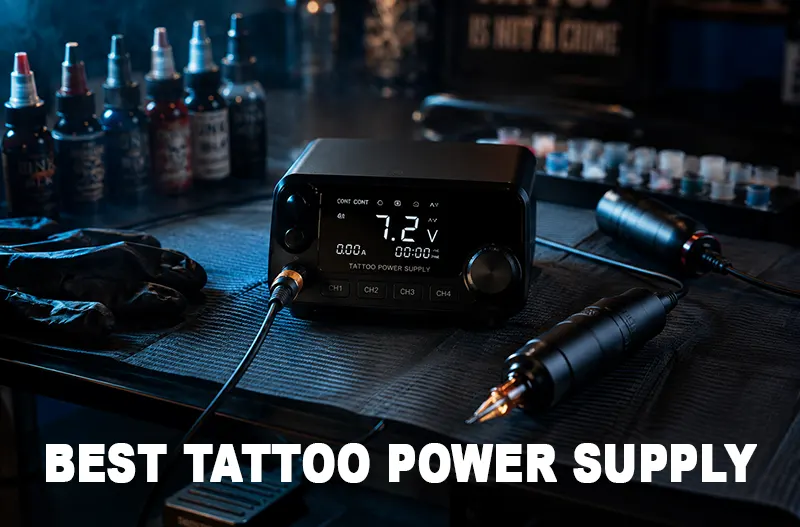
A weak tattoo power supply can throw off the whole session. One minute the machine feels fine, and the next it starts to lag, buzz, or pull uneven lines. That is the kind of small problem that can turn into a big headache fast.
The best tattoo power supply does one simple job well: it keeps the power steady. That matters every day, whether you are lining a small script tattoo or shading a large piece for hours. If the voltage jumps around, the machine does too. And once that happens, the work can start to feel rough instead of smooth.
That is why this guide matters. We are not just looking at fancy features or brand names. We are looking at what actually helps in real use, from digital units and dual-output setups to wireless battery packs and the basic accessories that keep everything running. By the end, you should have a much clearer idea of which tattoo power supply fits your style, your machine, and your budget.
What a tattoo power supply actually does?
A tattoo power supply is the part that gives the machine clean, controlled power. It takes the electricity from the wall and turns it into a lower, usable current for your tattoo machine. That sounds basic, but it is a big deal in real work.
Why does it matter so much? Because a machine only feels as good as the power behind it. If the supply is stable, the machine usually runs more evenly. Lines can look cleaner, shading may feel smoother, and the artist has more control from start to finish. If the power jumps up and down, the whole setup can feel shaky. Even a solid machine can act strange with a bad supply.
This is where voltage control comes in. A good unit lets you adjust the power in a small, precise way, so you can match it to the task. Lining, shading, and packing color often need different settings. A careful adjustment can make the machine hit softer or harder, depending on what you need. That small change can save time and make the result look better too.
Buying Guide:
Choosing a tattoo power supply can look easy at first. Many people focus only on price or brand. But once you start working on real skin for long sessions, the small details start to matter much more.
Here is what actually makes a difference when you pick one.
Voltage range (don’t ignore this)
Most tattoo work runs around 5V to 10V. That is the normal zone for many machines.
A wider range gives you more freedom, though. You are not stuck when switching styles or machines. Some units feel “tight” in range, and that can limit you when you need a softer or stronger hit.
Voltage stability (the real game changer)
This is where cheap units often fail.
A stable power supply keeps the voltage steady even when the machine is under pressure. When it is not stable, you may feel the machine slow down a bit or pulse unevenly.
That usually shows up in the tattoo itself:
- lines may look shaky
- shading can feel patchy
- color packing may lose consistency
It is not always obvious at first, but over a full session, you notice it.
Display type (digital vs analog)
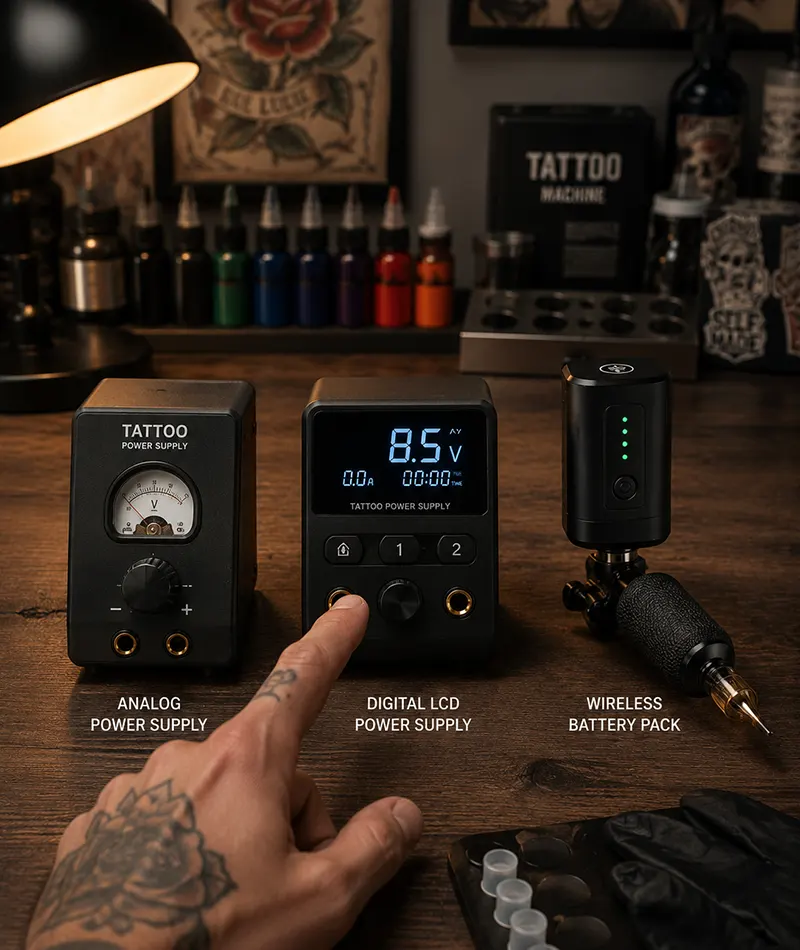
Digital screens are easier to read. You get exact numbers, and small adjustments are simple.
Analog dials feel more “hands-on,” which some artists like. But fine control is harder.
It often comes down to habit, not just performance.
Memory presets (time saver feature)
This one is underrated.
You set your liner voltage once, then your shader, then save them. After that, switching is quick.
On busy days, it keeps your focus on tattooing, not adjusting settings again and again.
Foot pedal response
A foot pedal should feel instant.
If there is delay or stiffness, your rhythm breaks. It may not sound serious, but during lining, even a small delay can throw off your hand flow.
Wireless pedals feel smoother for some artists, but wired ones are still very reliable.
Connection type (compatibility check)
This part is simple but important.
- Coil machines → usually clip cord
- Rotary / pen machines → RCA or wireless
If the connection does not match your machine, nothing else matters. The setup just won’t run properly.
Your working style (studio vs travel)
Think about how you actually work day to day.
Studio artists often prefer larger units with more features. They stay in one place and can handle more setup.
Travel artists or beginners may prefer something small, light, and easy to carry.
There is no perfect universal choice. The right power supply is the one that fits your workflow without slowing you down.
Best Tattoo Power Supplies (for Each Type)
Tattoo power supplies are not all the same. They come in different styles, and each one fits a different way of working. Some are simple and old-school. Some are modern and packed with features. A few even remove cables completely.
Here is a clear breakdown of each type, along with strong product options you can feature in your affiliate blog.
Analog / Manual Tattoo Power Supply
This is the classic style. It uses a simple dial to control voltage. No fancy screen. Just direct control.
It feels raw and simple. Many coil machine artists still like it because it gives a very direct “hand feel.”
Best for:
- Coil machines
- Traditional setups
- Artists who like simple controls
Best 3 Products:
- Musotoku Power Supply
A strong, high-end unit with smooth analog-style control, stable output, and solid build quality. It also handles heavy coil loads very well. - Precision Dual Tattoo Power Supply
Supports two machines at once. Good if you switch between liner and shader often without changing setups. - One Tattoo World Mini Power Supply
Budget-friendly option. Small, simple, and easy to carry. Works well for beginners or practice setups.
Digital LCD Tattoo Power Supply
This is the most common type in modern studios. You get a clear screen, exact voltage reading, and precise control.
It removes guesswork. You see exactly what your machine is running at.
Best for:
- Beginners and professionals
- Rotary and coil machines
- Studio work
Best 3 Products:
- Vlad Blad Power Box 5 Pro
Very stable output, strong current support, and clean digital interface. Feels built for serious daily use. - BIOMASER Hurricane HP-2
Dual machine support with memory settings. Good balance of price and features for busy setups. - Cheyenne Power Unit IV
Compact and premium feel. Precise control and smooth voltage adjustment in small steps.
Wireless / Battery Tattoo Power Supply
This is the modern “no cables” setup. The power unit attaches directly to the machine or connects wirelessly.
It removes clutter and makes movement easier.
Best for:
- Mobile artists
- Conventions
- Pen machine users
Best 3 Products:
- Critical Connect V3 Battery
Clean display, strong battery life, and works with multiple professional machines. Very stable for long sessions. - Cheyenne EnGen
Lightweight and easy to attach. Designed for Cheyenne systems but works smoothly within its ecosystem. - Bishop x Critical Advanced Battery Pack
Premium option with detailed controls and strong compatibility. Feels very refined for pro use.
Dual Output / Multi-Machine Power Supply
This type lets you run two machines at the same time. One for lining, one for shading. No need to unplug or switch constantly.
Best for:
- Busy studios
- Artists who switch machines often
- Full-session workflow setups
Best 3 Products:
- Critical AtomX-R Power Supply
Wireless pedal support, dual output, and strong memory system. Very reliable for professional studios. - Cheyenne PU2 Power Unit
Touch control, dual-machine support, and very clean design. Feels modern and compact. - Precision Dual Tattoo Power Supply
Simple but effective dual setup with analog control. Good for artists who want function without complexity.
Accessories to Include
A tattoo power supply works best as part of a full setup. The unit itself matters, but the small extras often decide how smooth your sessions feel.
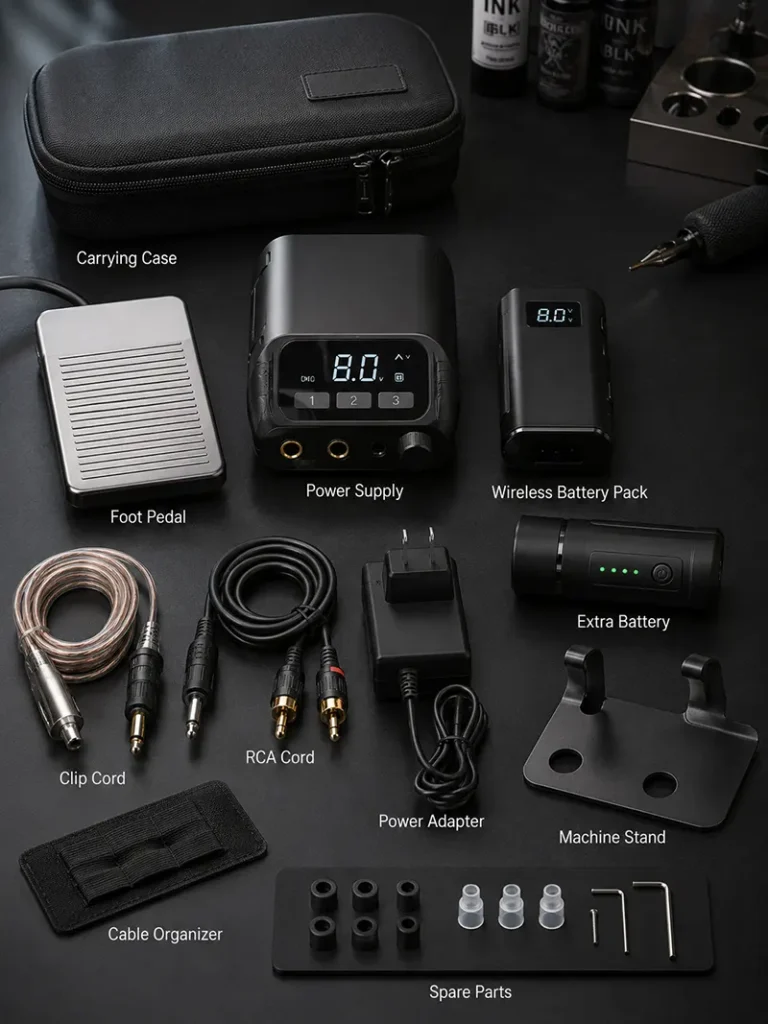
Foot pedal: This lets you turn the machine on and off with your foot. A good pedal feels quick and steady, so your hand stays free and your rhythm stays smooth.
Clip cord: This is the classic cable used with coil machines. It connects the machine to the power supply and helps keep the setup running.
RCA cord: This is the more modern cable style. It is common with rotary and pen machines and usually gives a cleaner, simpler connection.
Wireless battery pack: This removes cords from the setup. It is handy for mobile artists and anyone who wants less clutter on the station.
Power adapter: This is the part that plugs into the wall and feeds the unit. A reliable adapter helps the whole setup stay stable.
Machine stand or dock: This gives the machine or battery pack a safe place to rest between passes. It keeps the workspace cleaner and reduces slips.
Extra battery: If you use a wireless setup, a spare battery can save the day. It helps you keep working without waiting for a recharge.
Carrying case: A hard case or travel pouch keeps the power supply and cables safe. That matters a lot if you move between shops or work at events.
Cable organizer: Small, but useful. It keeps cords from tangling and makes the workstation feel less messy.
Replacement fuse or spare parts: These are easy to forget until something stops working. A few backups can prevent a full stop in the middle of a session.
Final Verdict
A tattoo power supply may look like a small part of the setup, but it has a big effect on how the whole machine feels. The right unit can make your work smoother, steadier, and less frustrating. The wrong one can create tiny problems that show up fast in the tattoo itself.
If you want something simple, an analog unit can still be a solid choice. If you want more control and easier reading, a digital LCD supply is usually the safer pick. Wireless battery packs are great for travel and cleaner stations, while dual-output units make more sense for artists who switch machines often during a session.
The best choice really comes down to how you work. A beginner may care most about ease and price. A studio artist may want stability and memory presets. A mobile artist may care more about freedom and portability. That is why there is no single “perfect” power supply for everyone.
Leave a Reply