
The first time I strummed a ukulele, I felt a spark of pure joy. It wasn’t just a tiny guitar. It felt like a direct line to the heart of the islands. That is why I decided to get it inked on my arm. A ukulele tattoo is a big move. It is a permanent choice that shows your love for music and the “Aloha Spirit”.
Getting a tattoo like this is more than just an aesthetic choice. In Hawaii, there is a word called kuleana. It means responsibility. When you wear this art, you carry the history and the soul of the islands on your skin. In this post, I want to share the story of the “jumping flea” and help you pick the perfect design.
A Long Trip Across the Sea: The True History
Many people think the ukulele is an ancient Hawaiian instrument. But the true story is actually a modern tale of travel. It all started in 1879. A British ship named the SS Ravenscrag sailed over 12,000 miles to reach Honolulu.
The ship came from Madeira, a small island near Portugal. On that boat were 423 people looking for work in the sugar fields. Among them were three skilled woodworkers: Manuel Nunes, Augusto Dias, and Jose do Espirito Santo. They brought a small, four-string instrument called the machete.







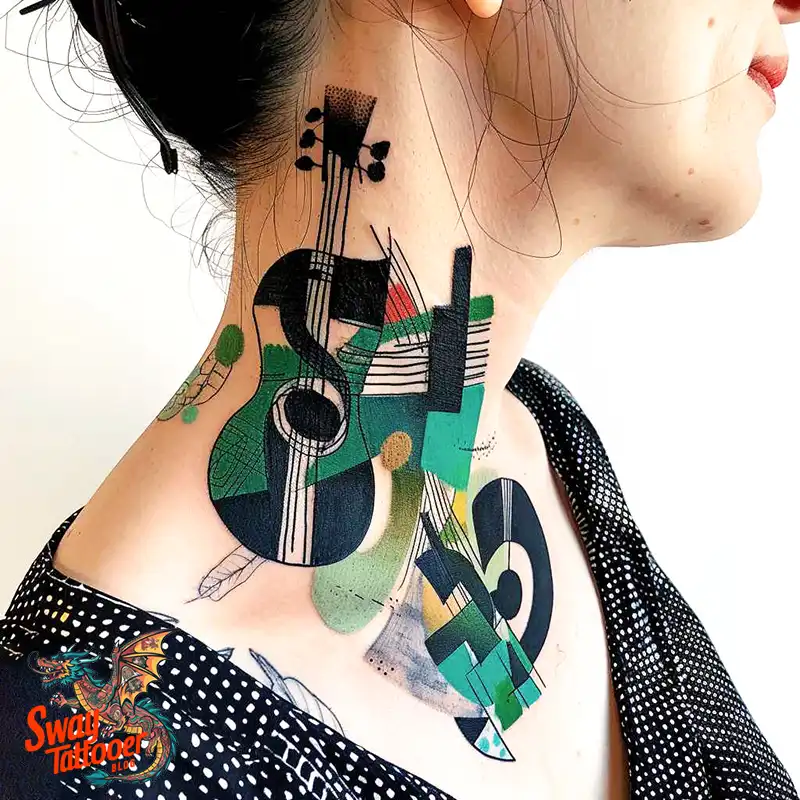
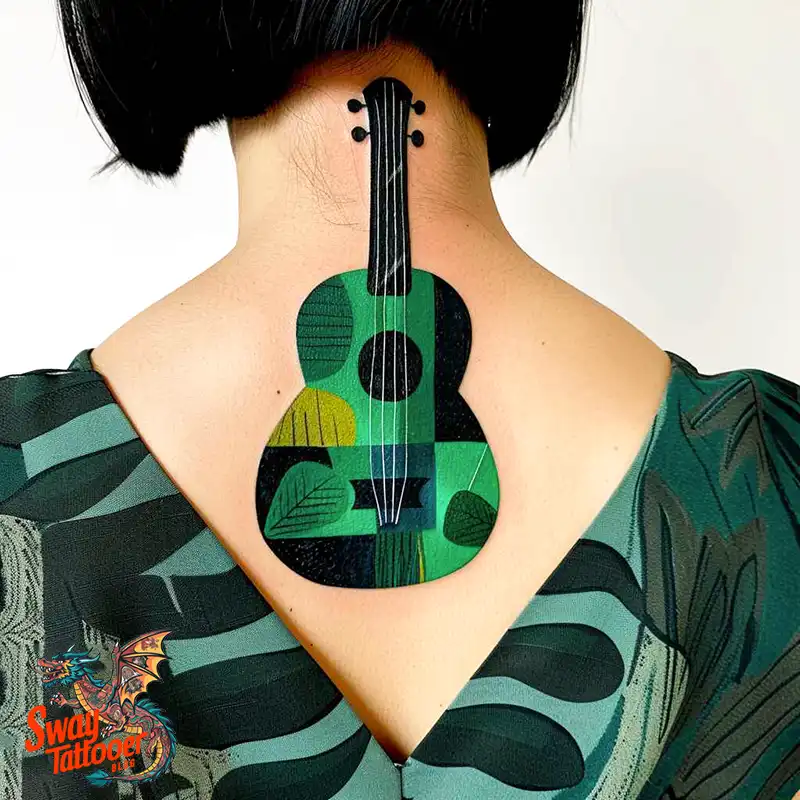

When the ship docked on a Saturday in August, a man named João Fernandes jumped off. He was so happy to be on land that he started playing his instrument right away. He played with such fast fingers that the locals were amazed. They called it the “ukulele,” which means “jumping flea.
Soon, the King of Hawaii, David Kalākaua, fell in love with the sound. He was known as the “Merrie Monarch” because he loved music and parties. He made the ukulele tattoo a symbol of pride for his people. Even Queen Liliʻuokalani wrote songs for it, like the famous “Aloha ʻOe”. When you get this tattoo, you are honoring this royal history.
The Secret Meaning: The ALOHA Spirit
My tattoo reminds me to live my life with a kind heart. In Hawaii, “Aloha” is not just a greeting. It is a set of rules for how to treat others. When I look at my ink, I think of these five values:
- A – Akahai: This means kindness and being tender to others.
- L – Lōkahi: This means unity and living in harmony.
- O – ʻOluʻolu: This means being pleasant and agreeable.
- H – Haʻahaʻa: This means humility and being modest.
- A – Ahonui: This means patience and never giving up.
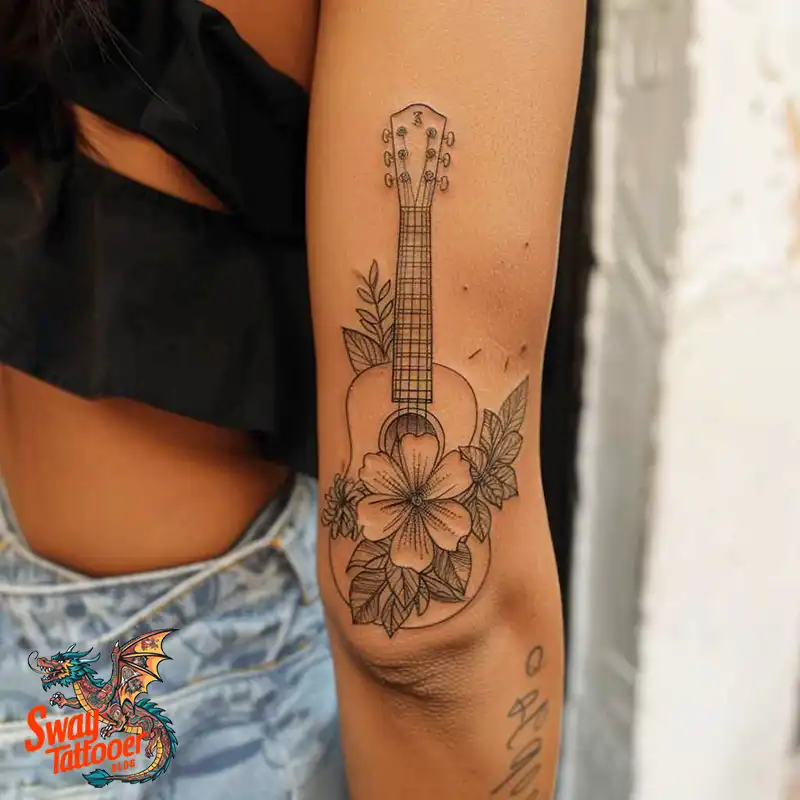
Some people even add symbols to represent these words. For example, a lizard or mo’o can stand for watchfulness. Shark teeth or waves can show strength in the ocean. Using these symbols makes your tattoo unique to your own journey.
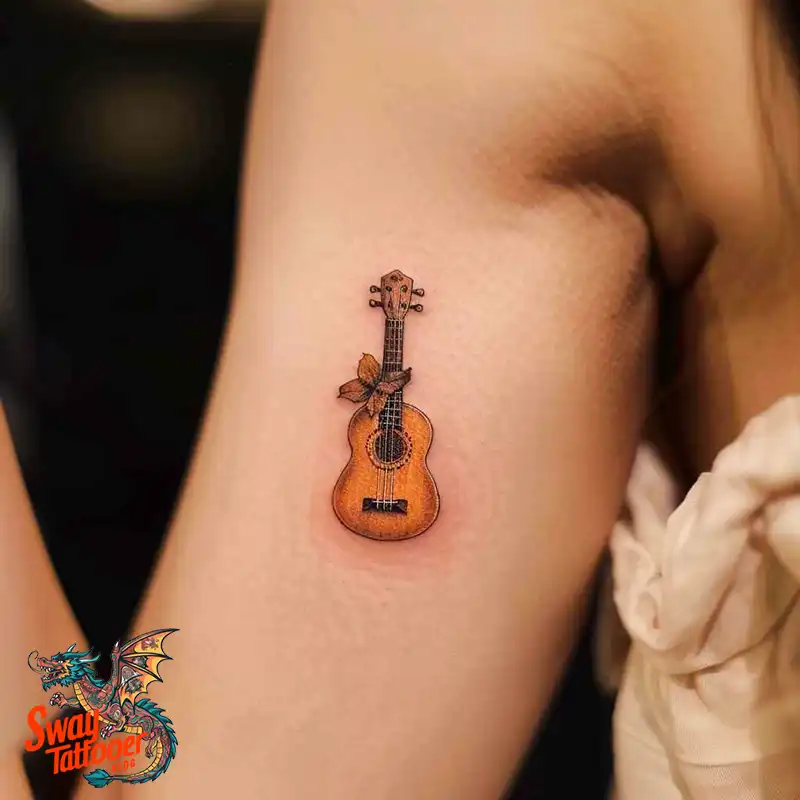
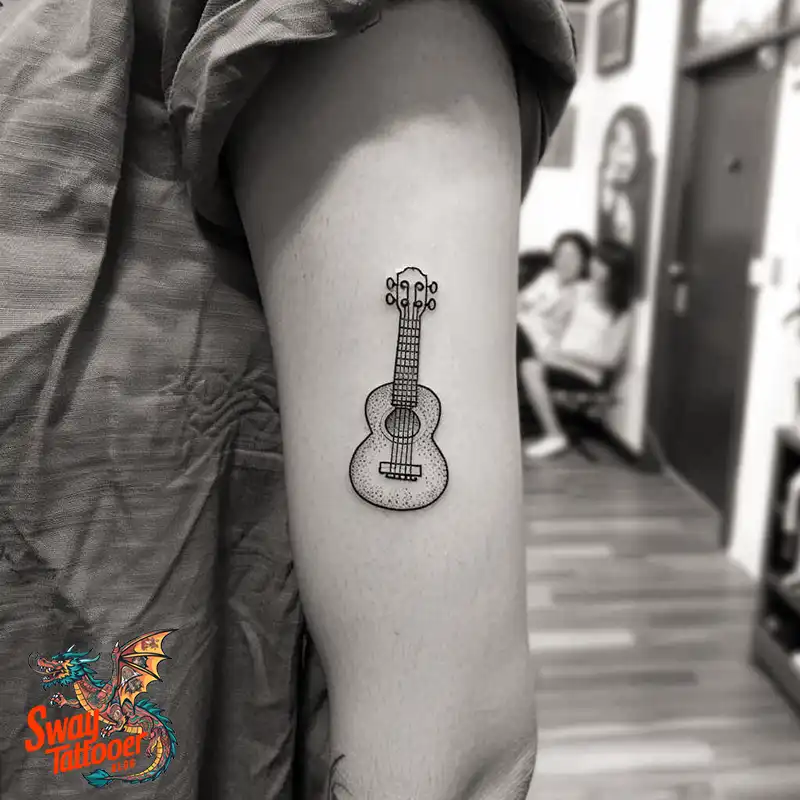
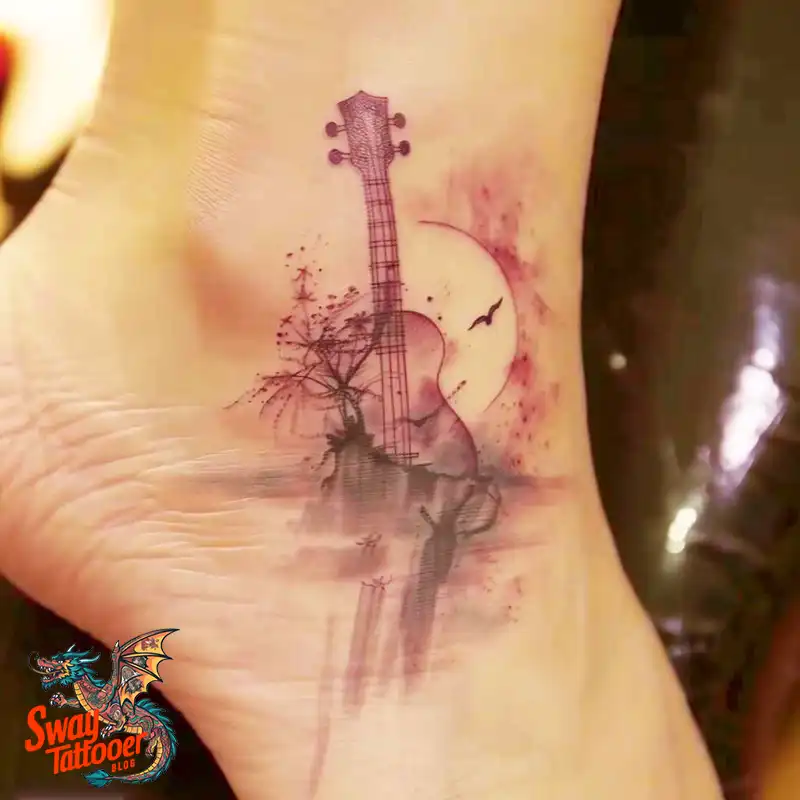
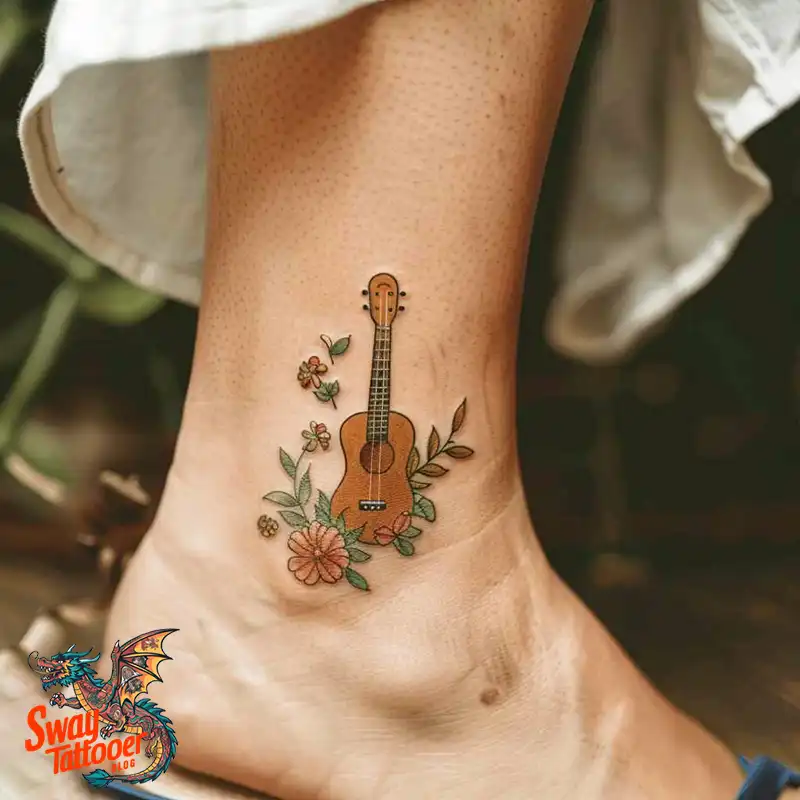
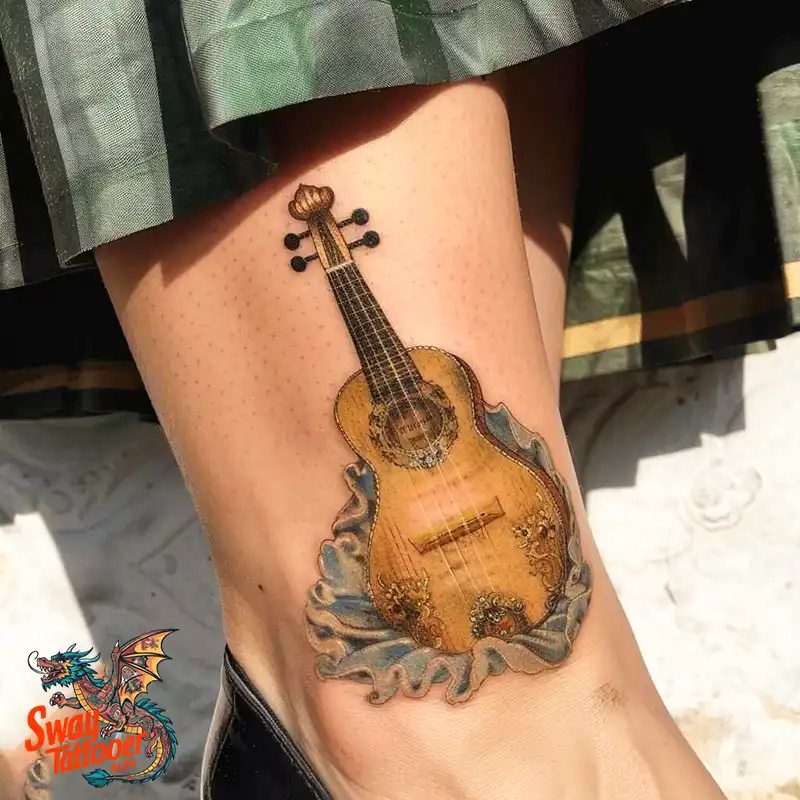
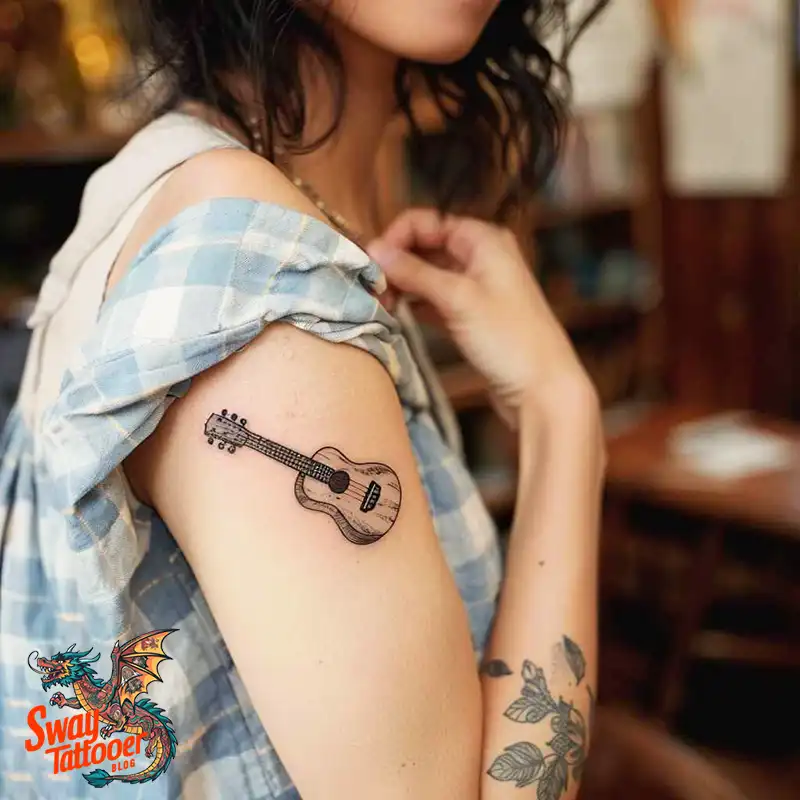
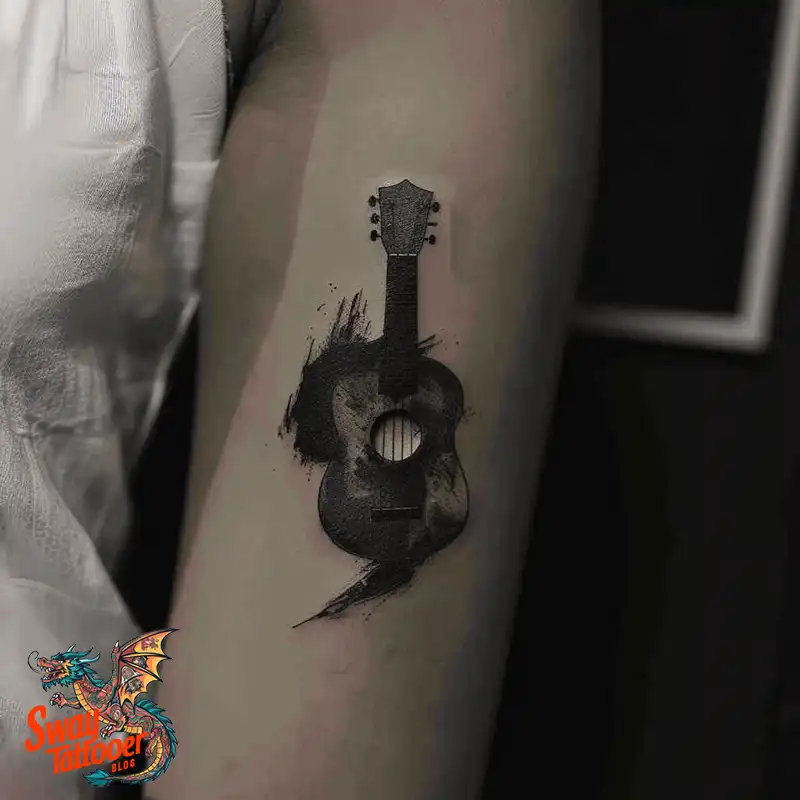
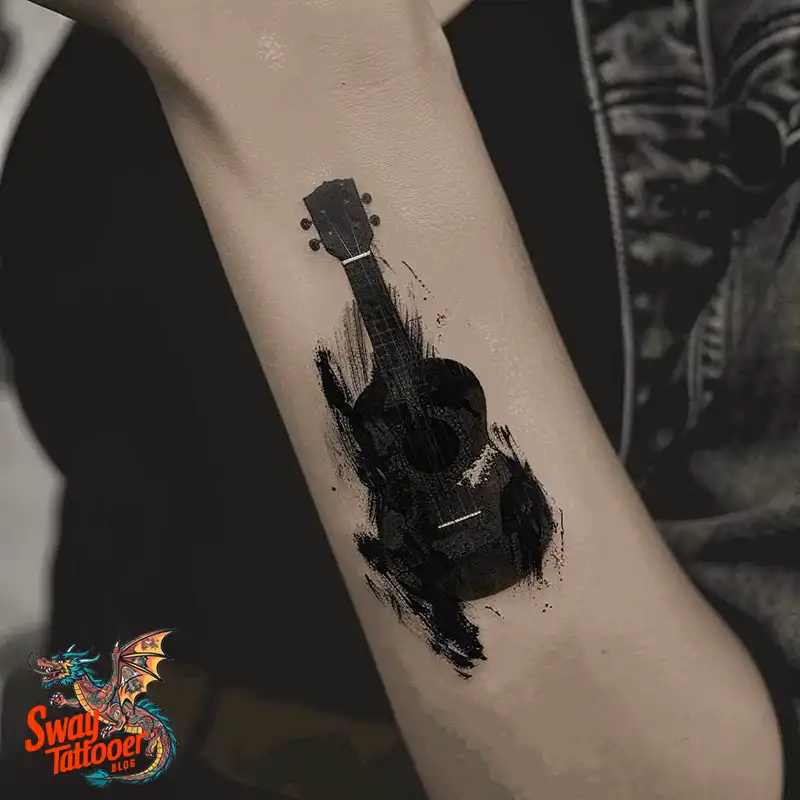
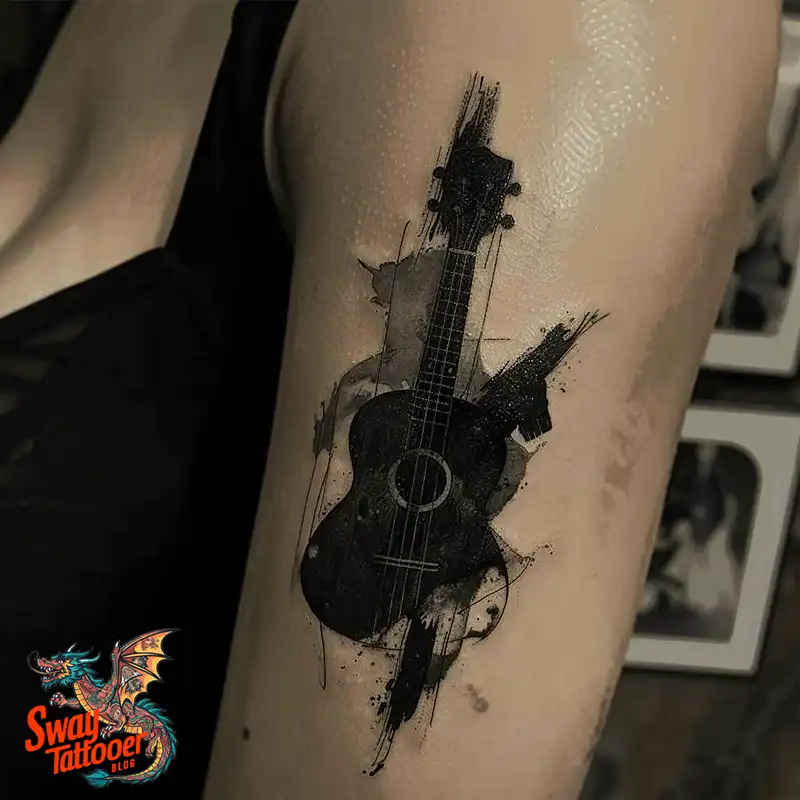
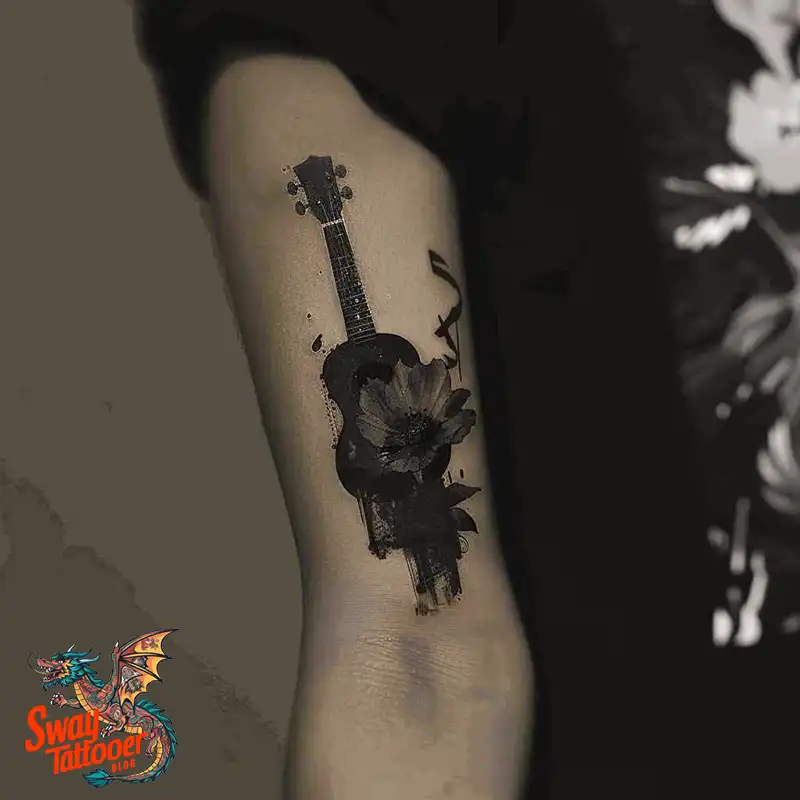
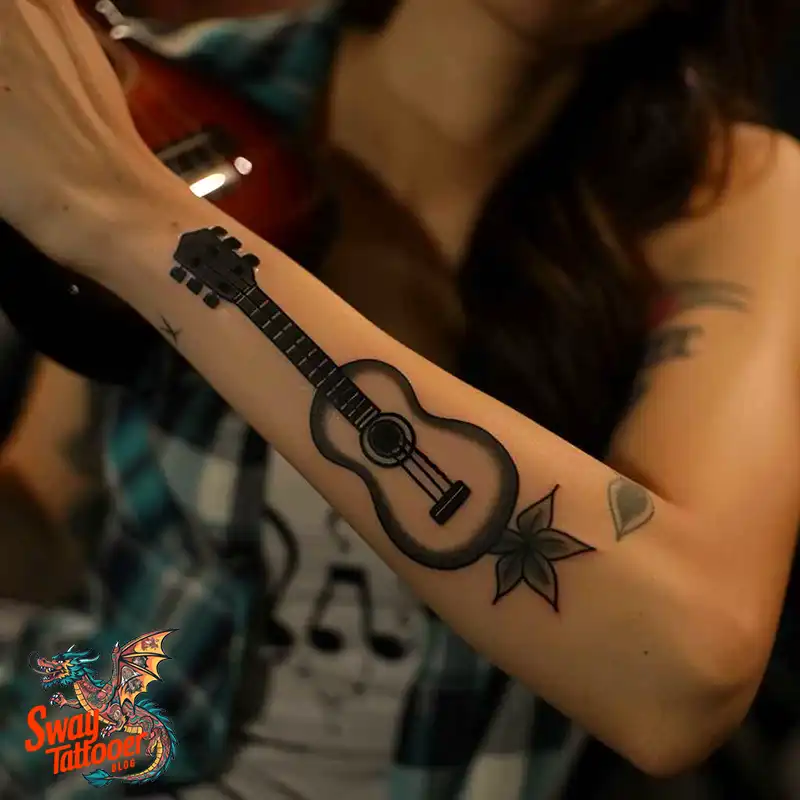
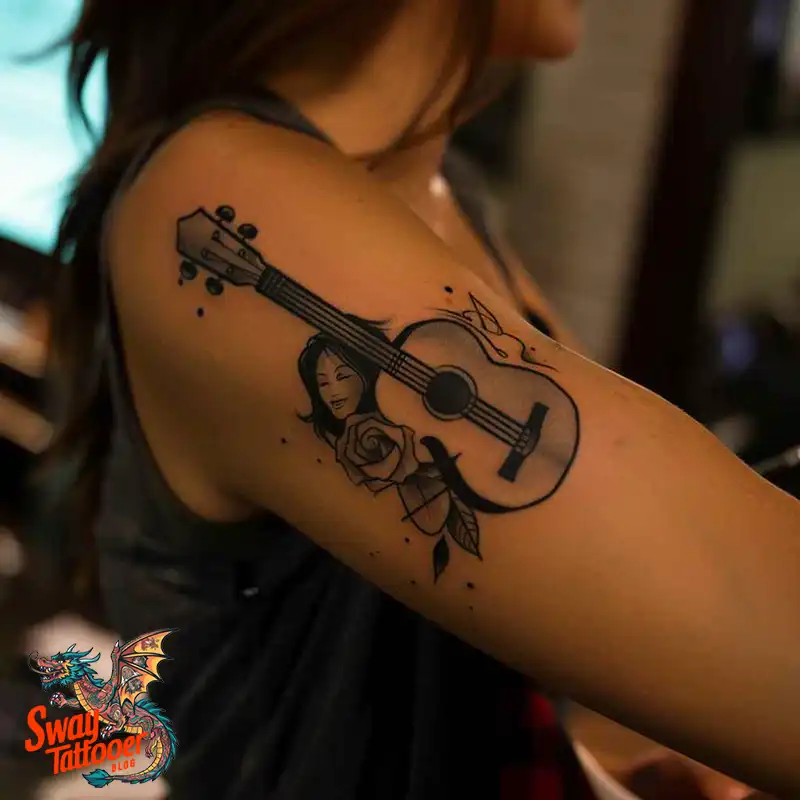
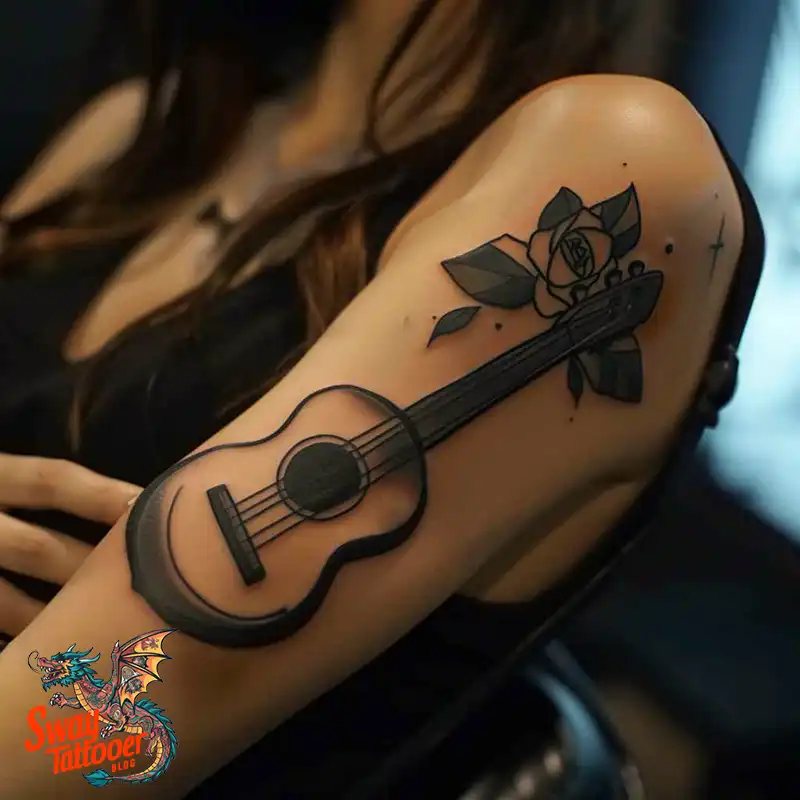
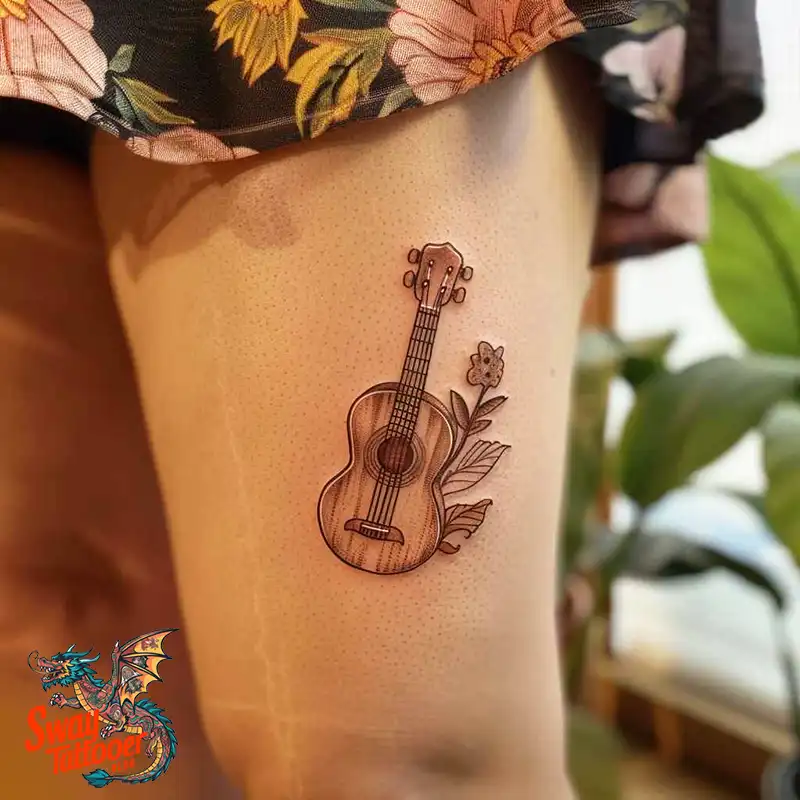

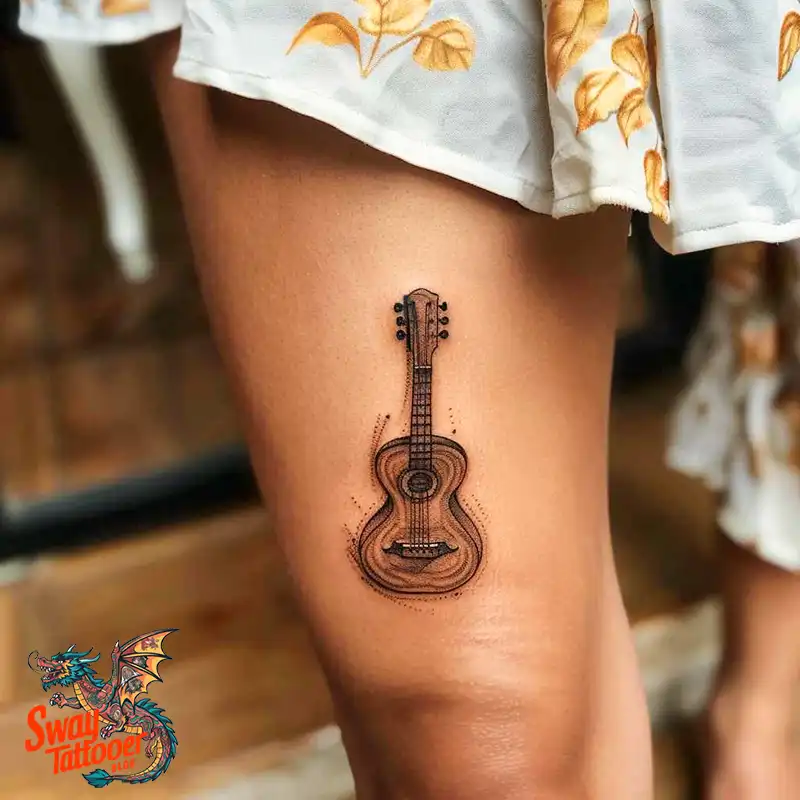
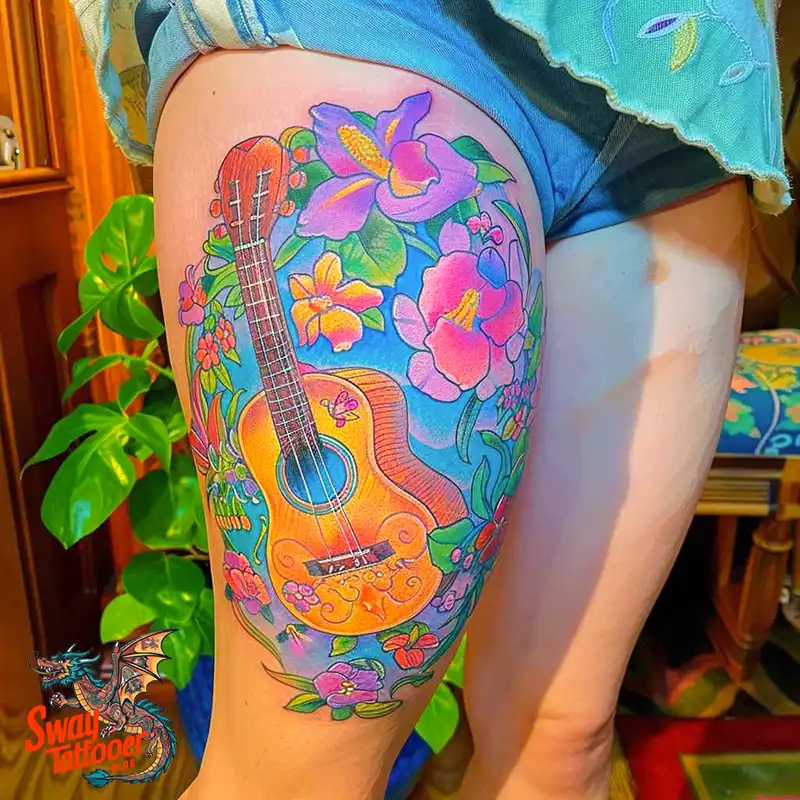
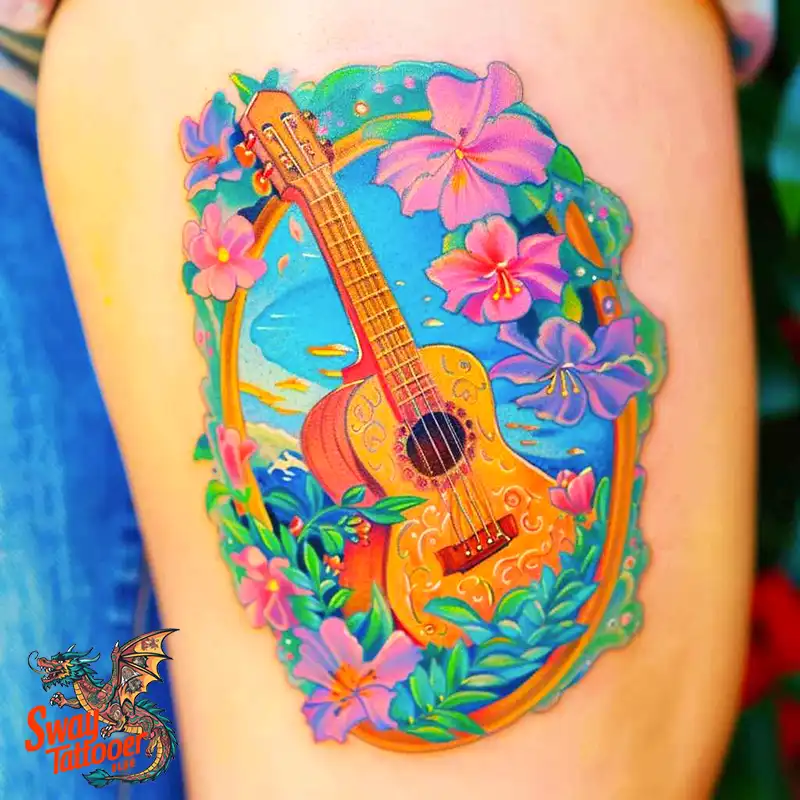
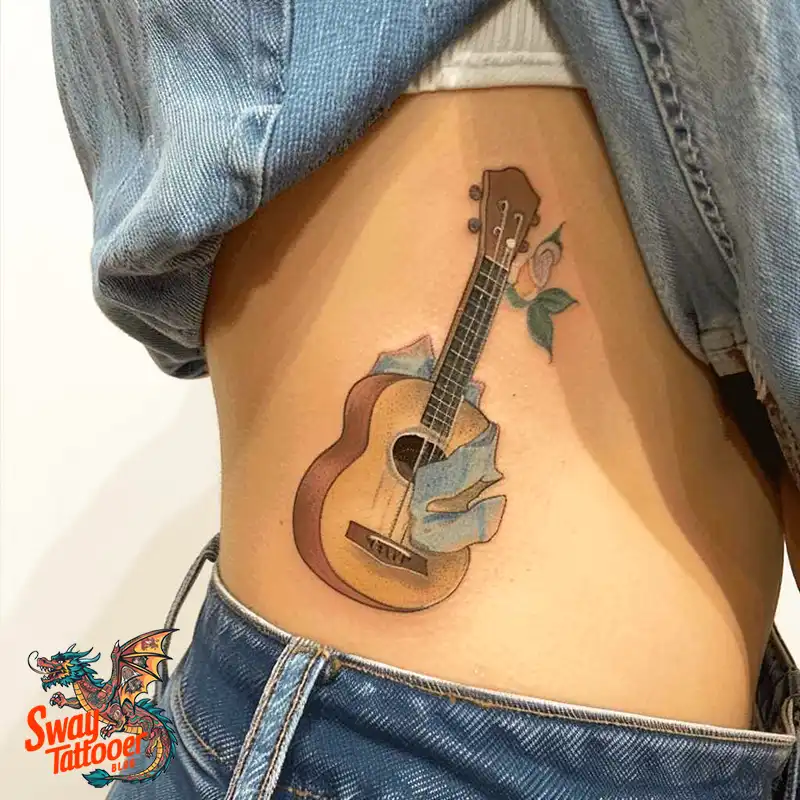
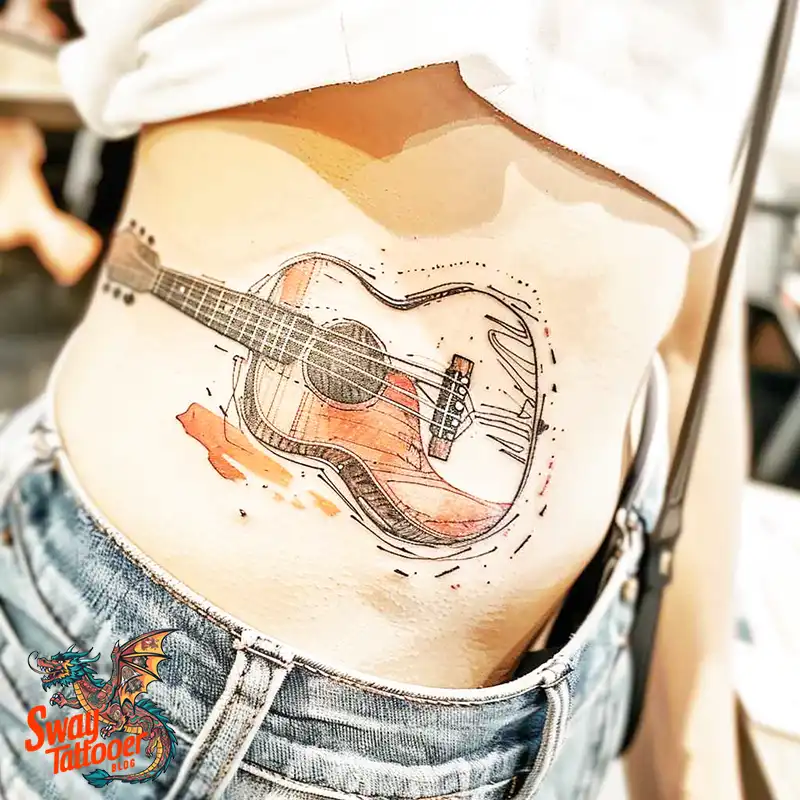
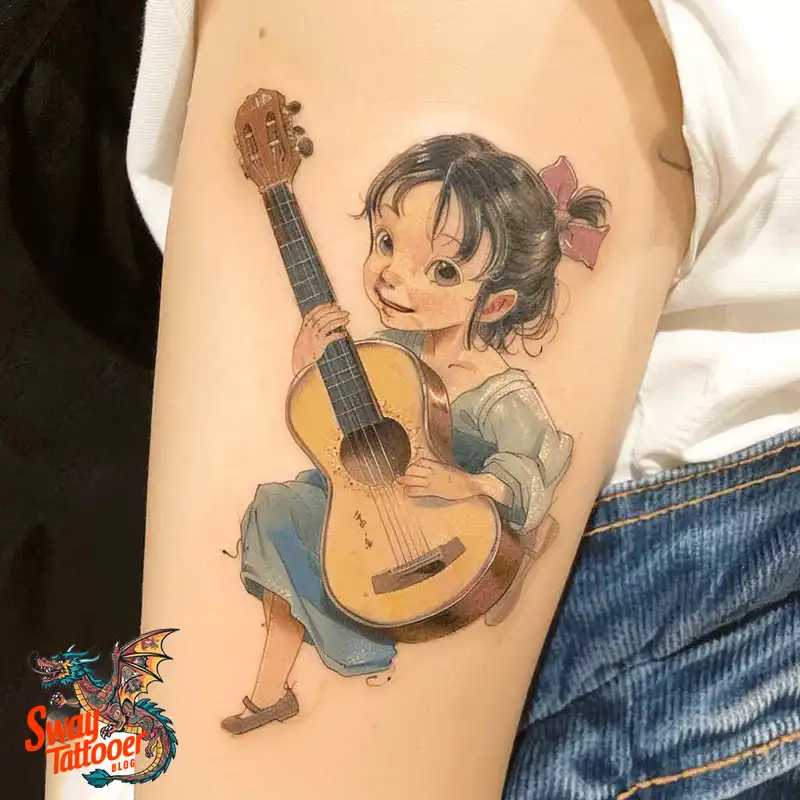
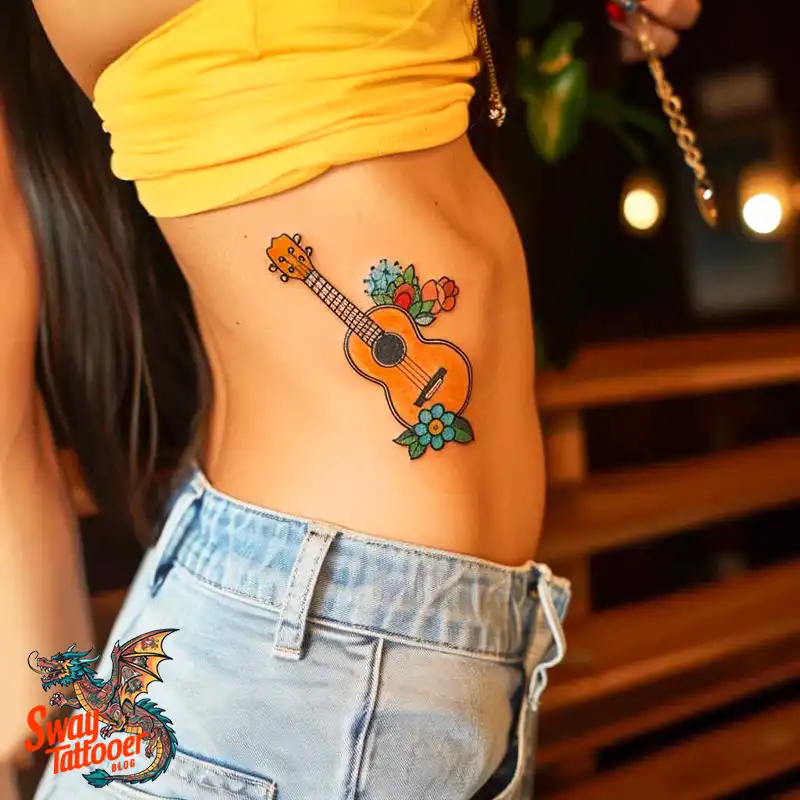
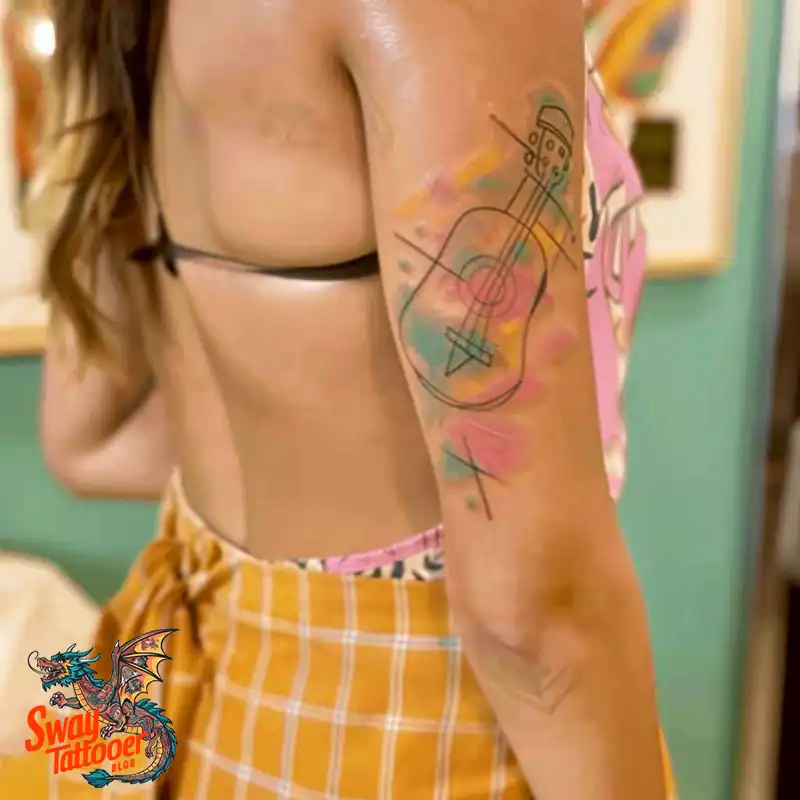
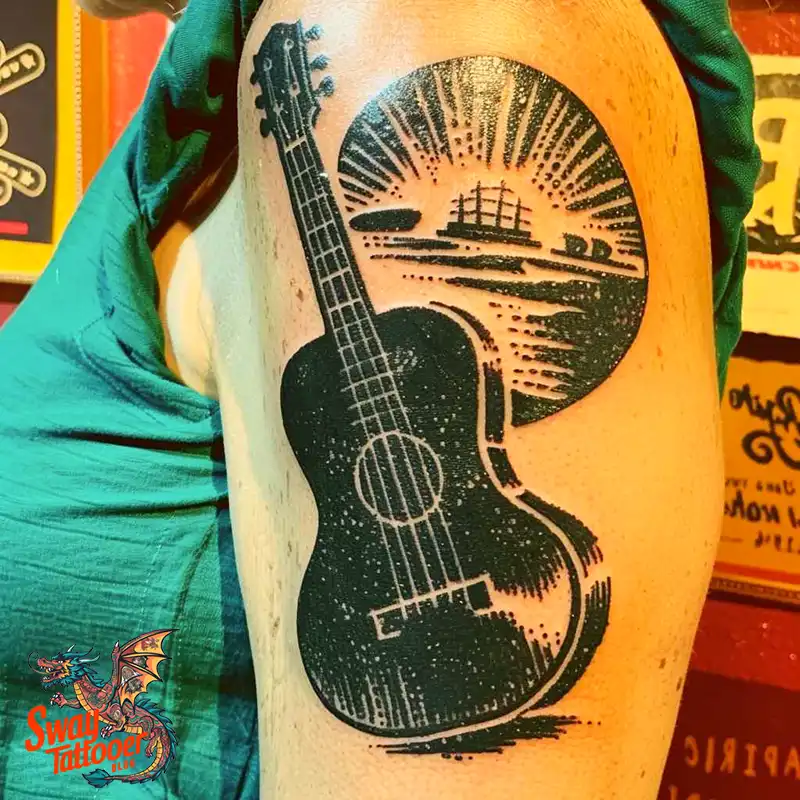
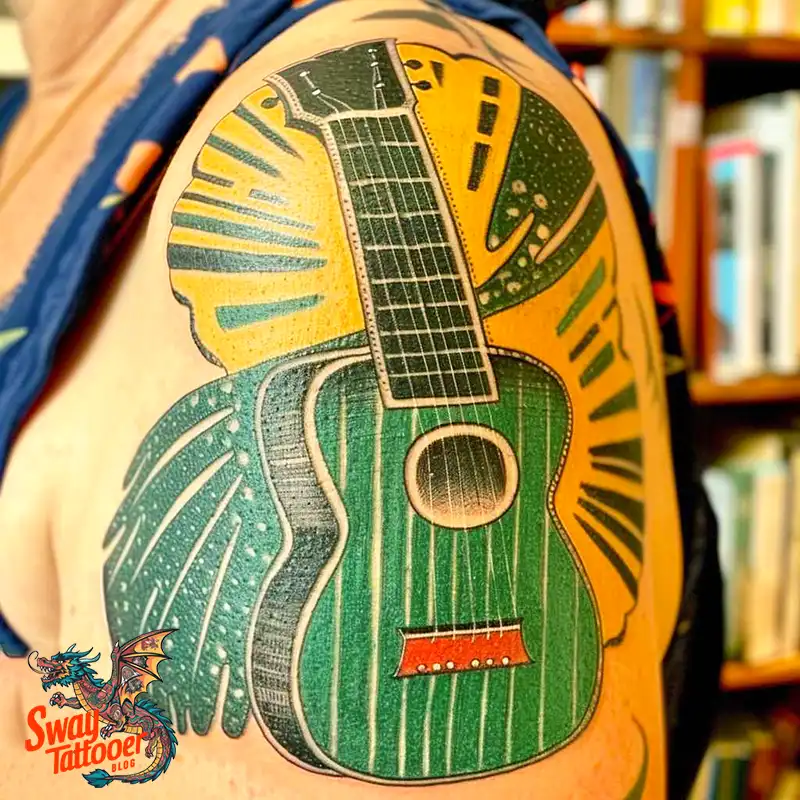
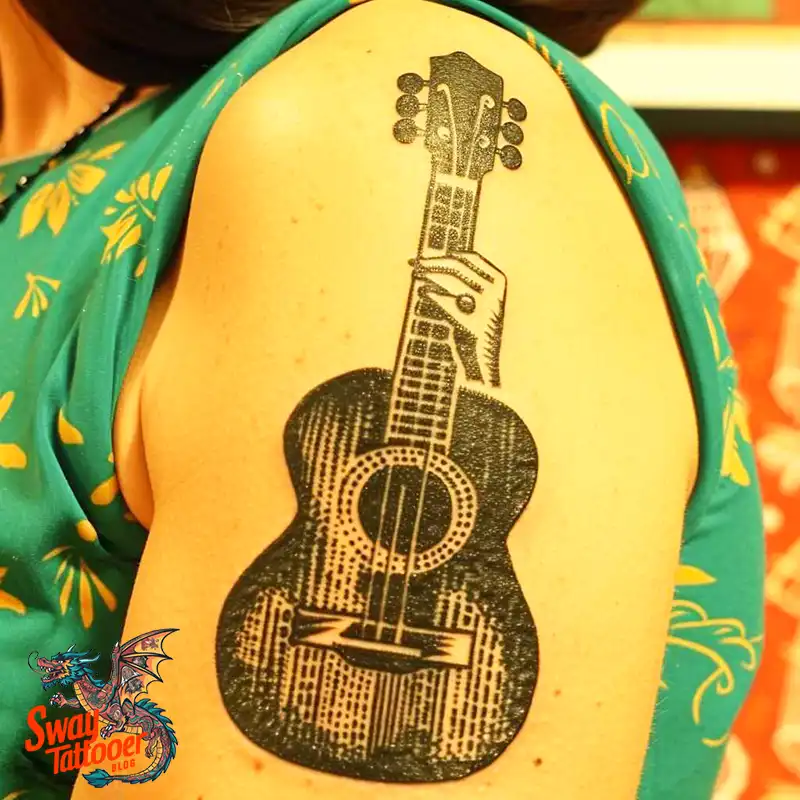
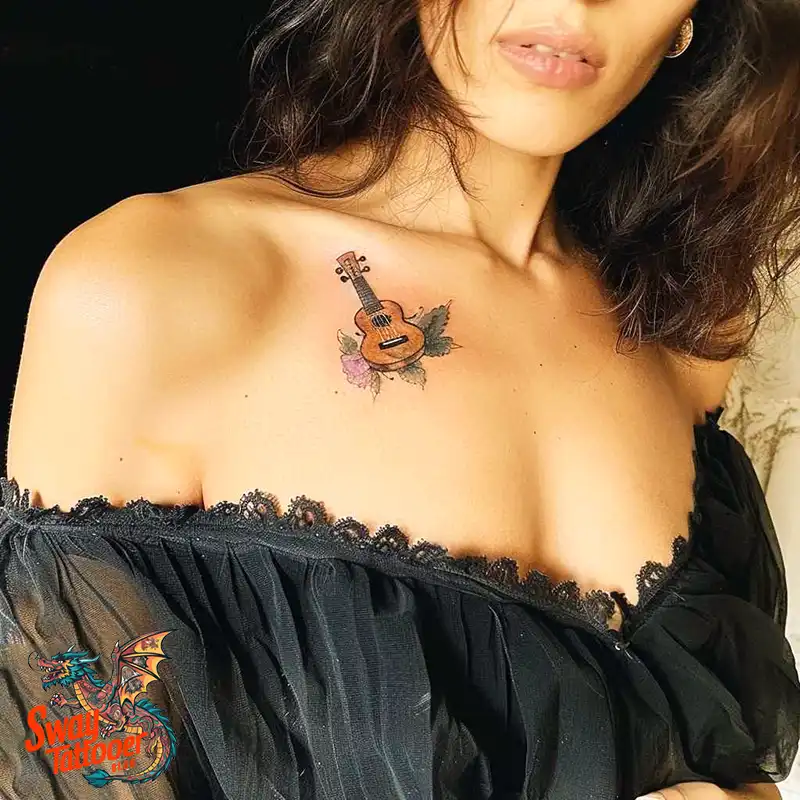
Ukulele Tattoo Style: Fine Line and Realism
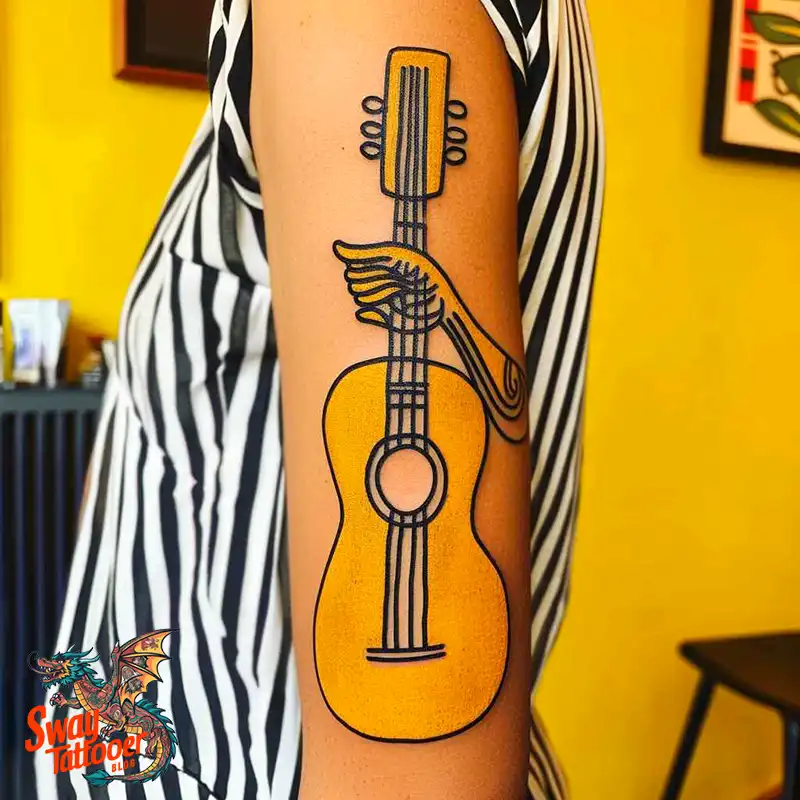
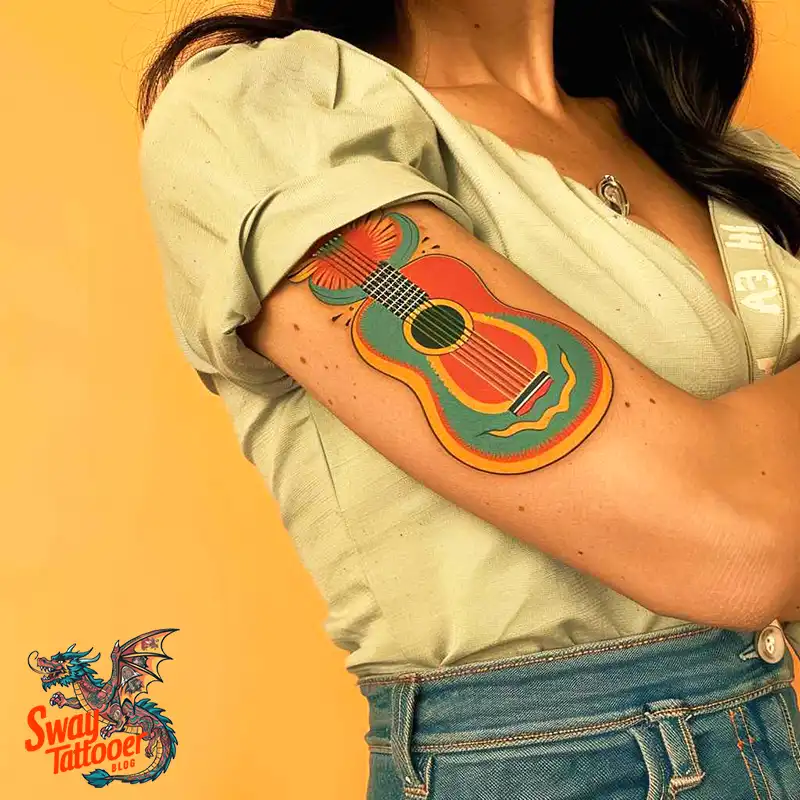
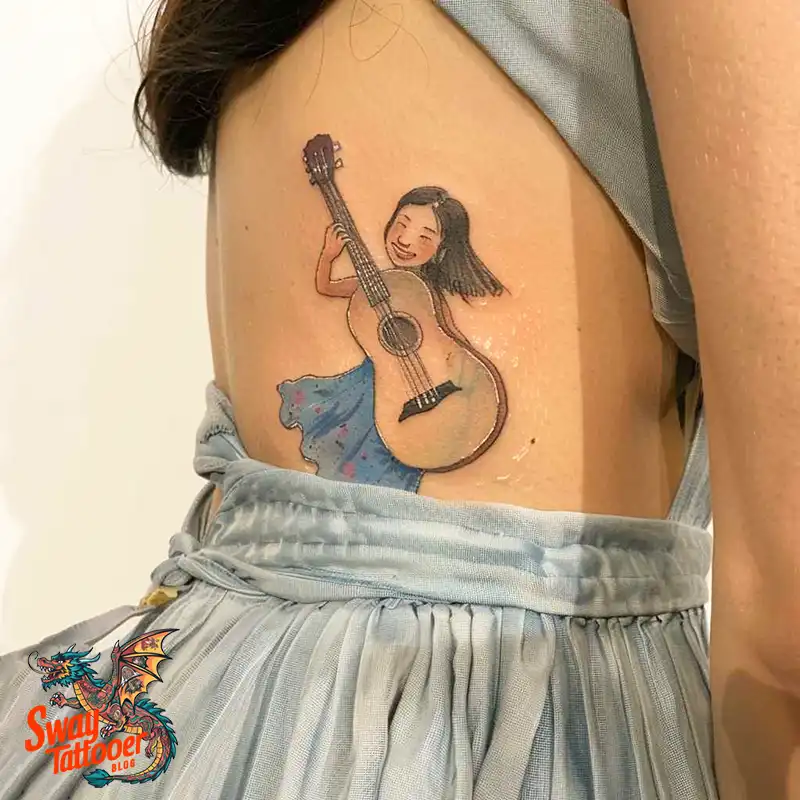
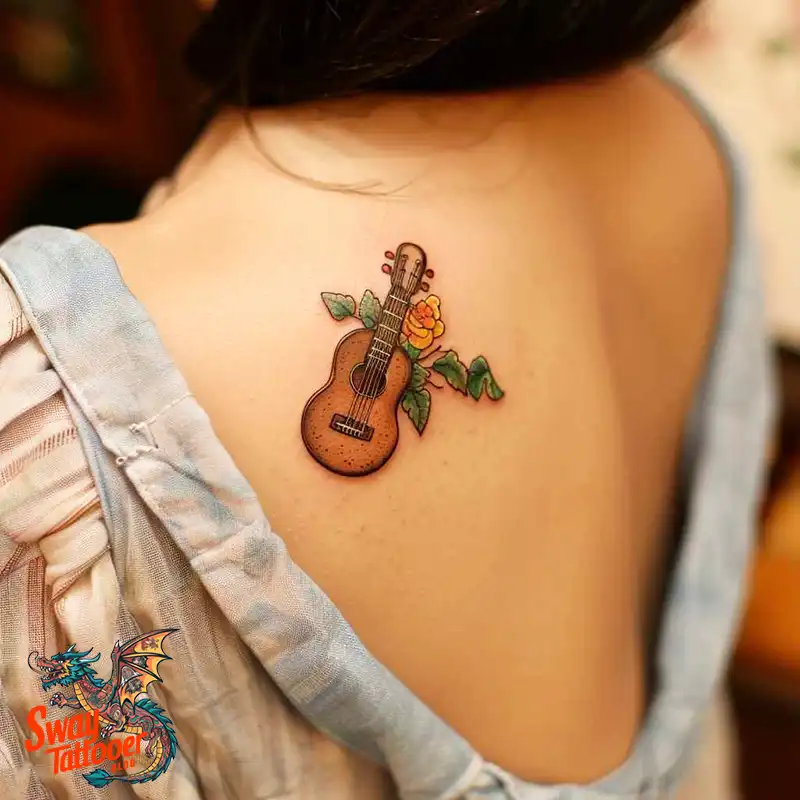
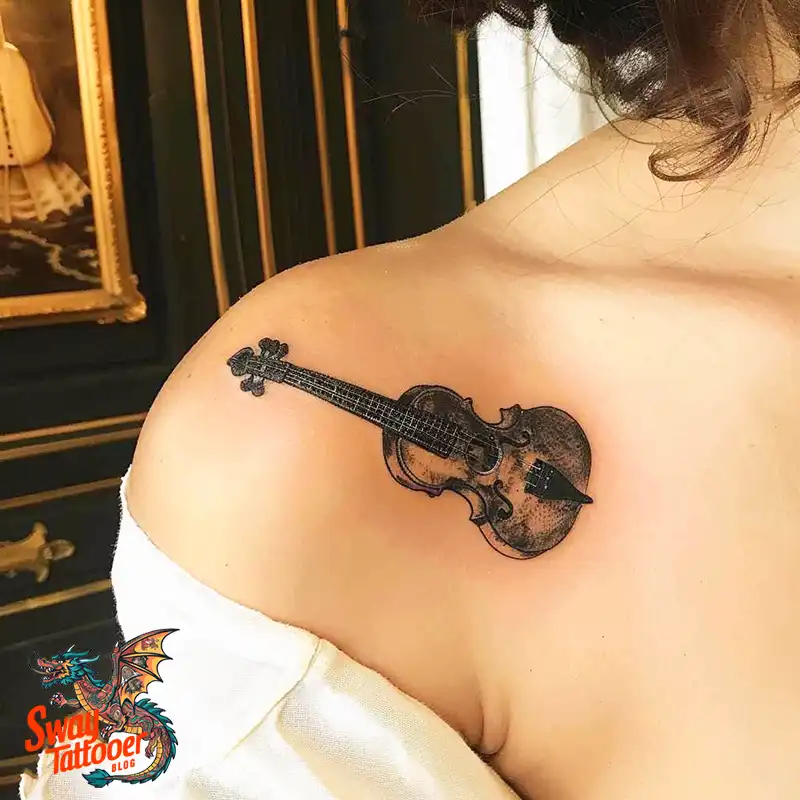
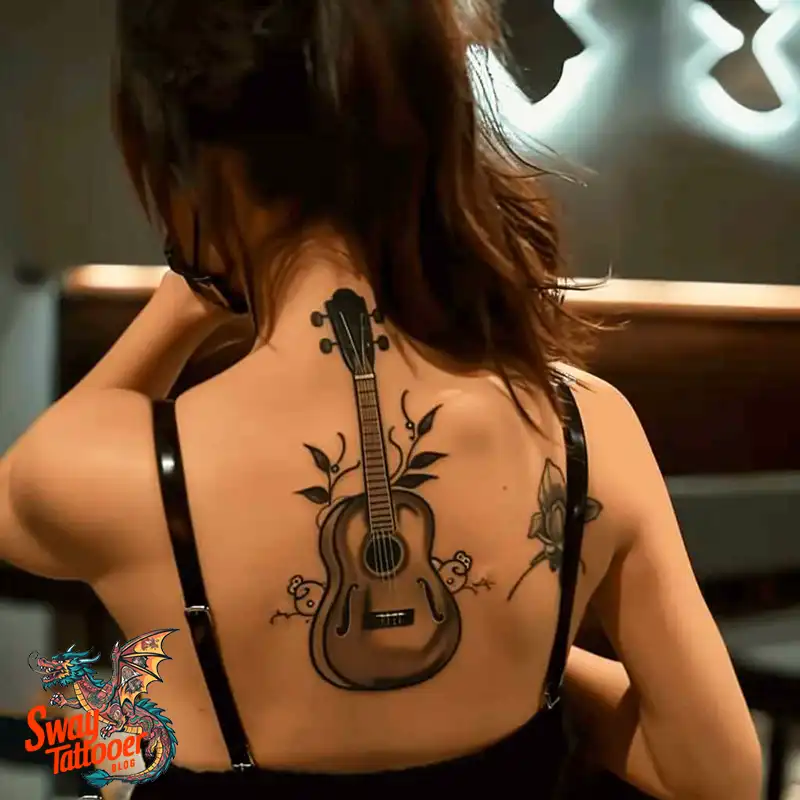
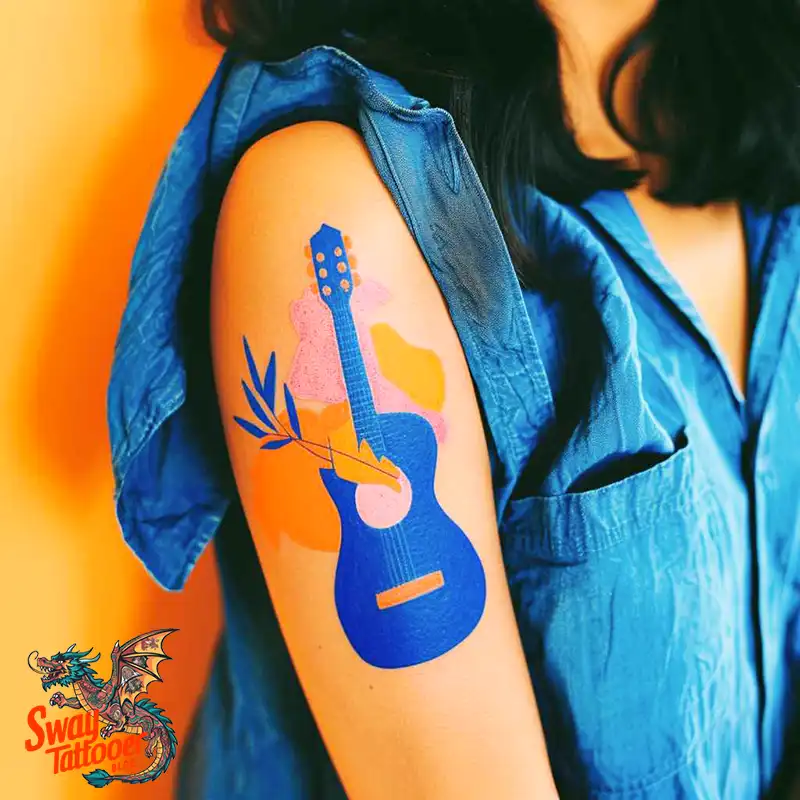
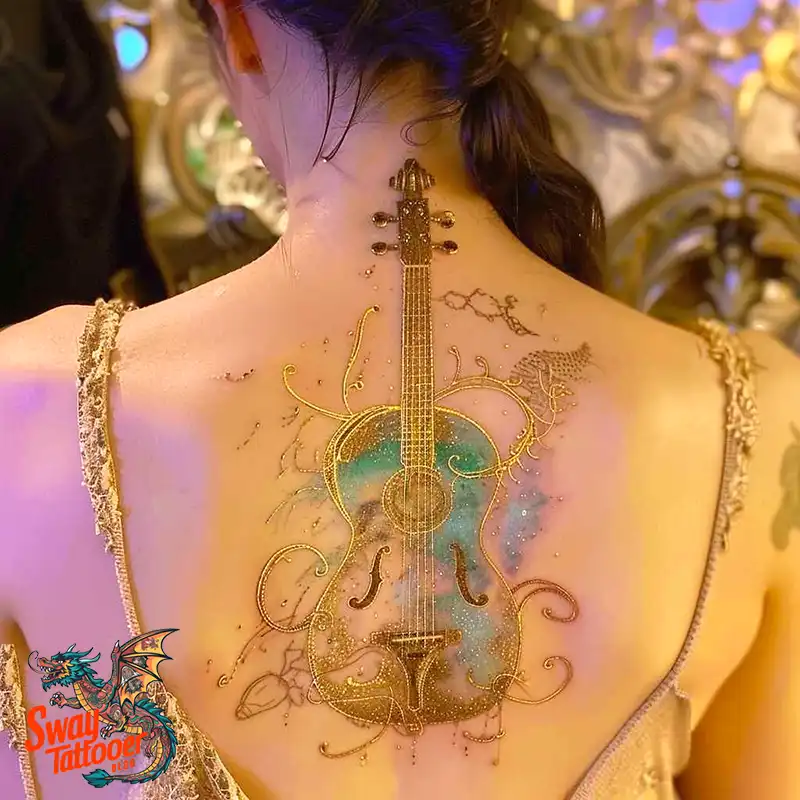
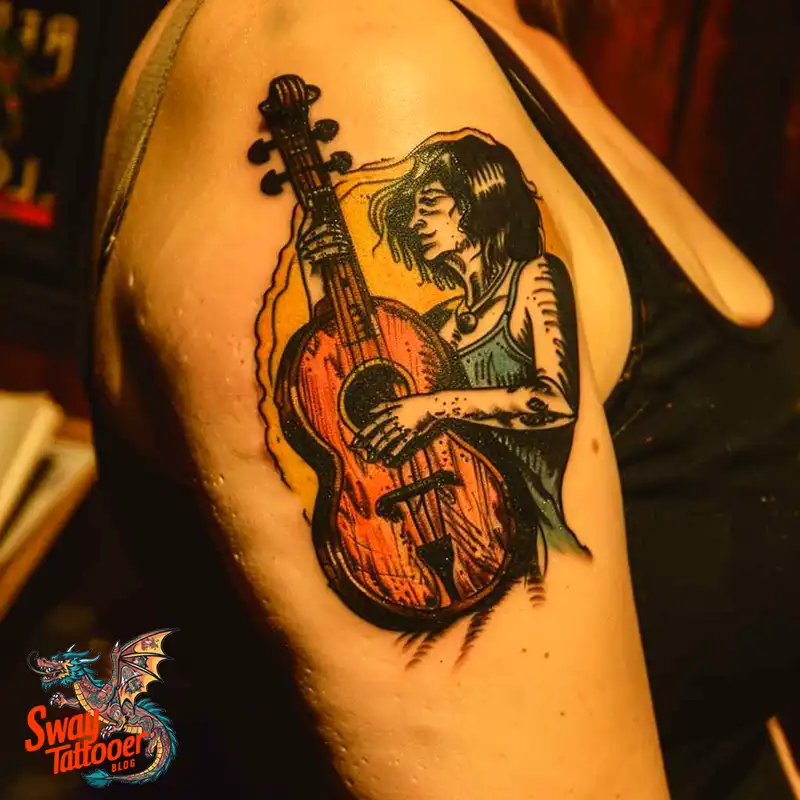
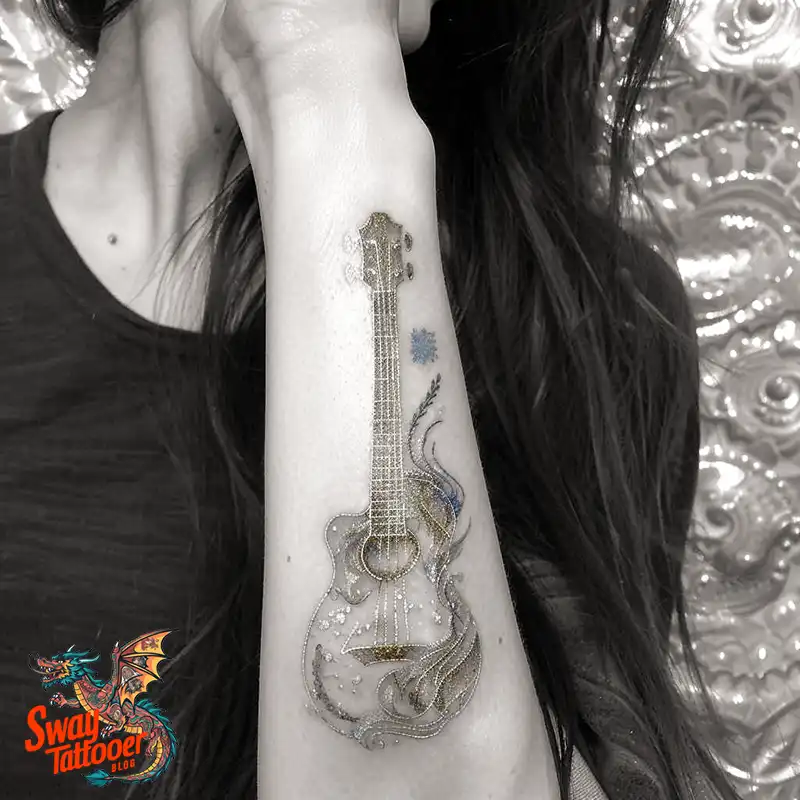
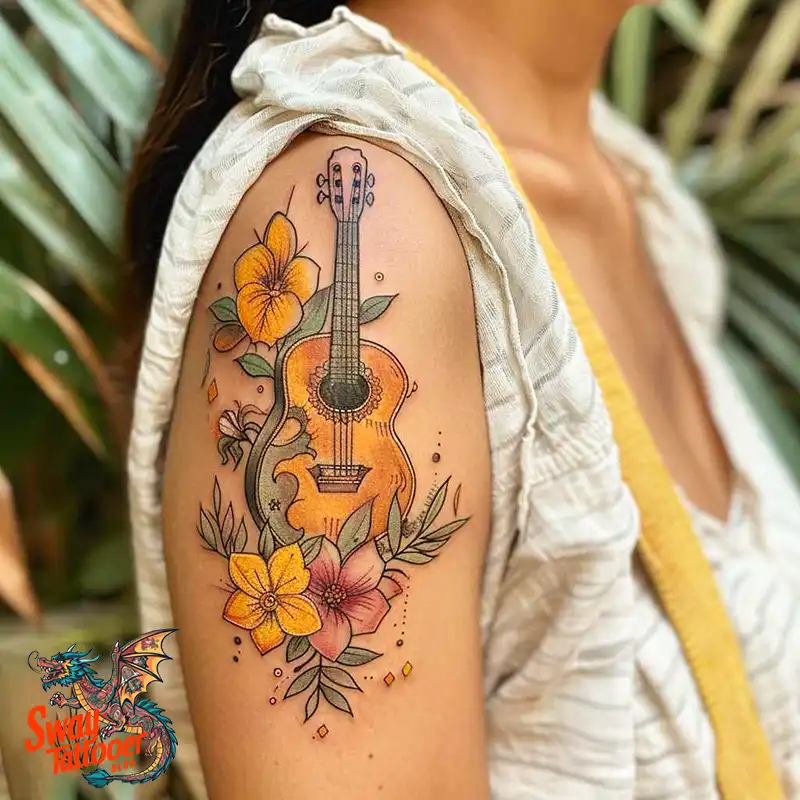
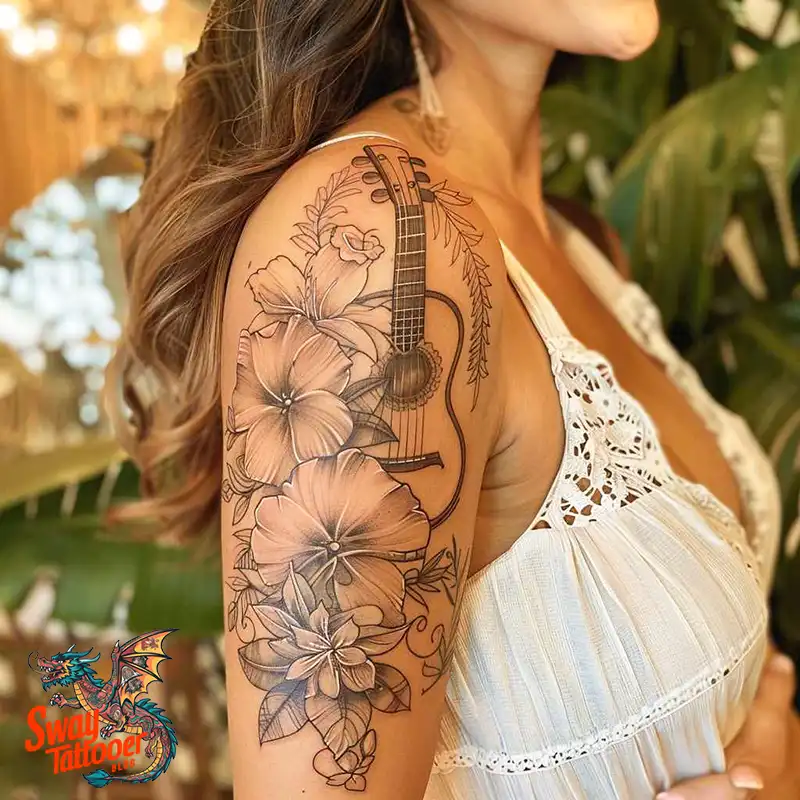
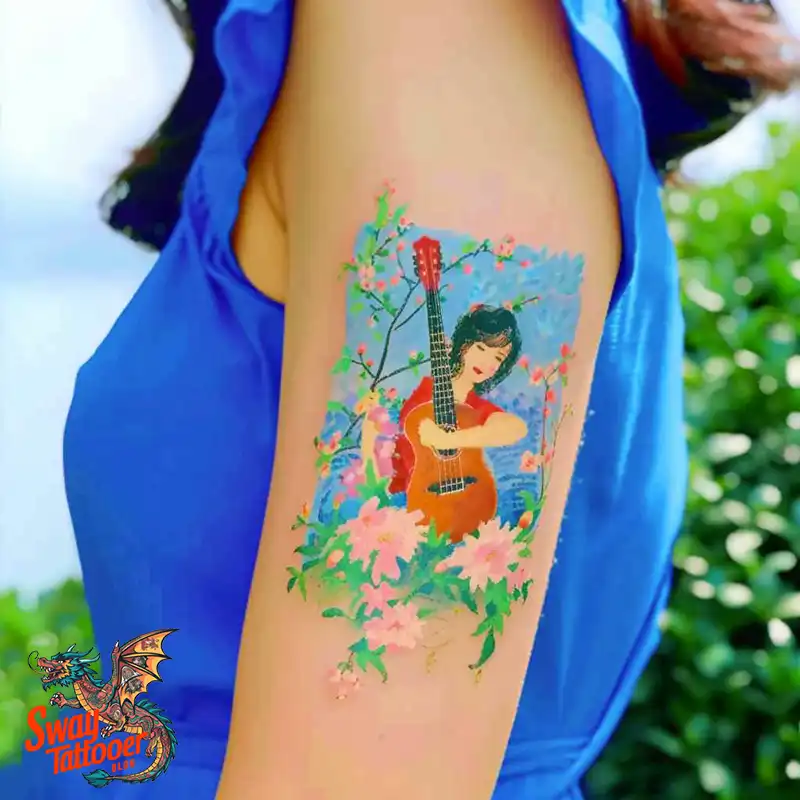
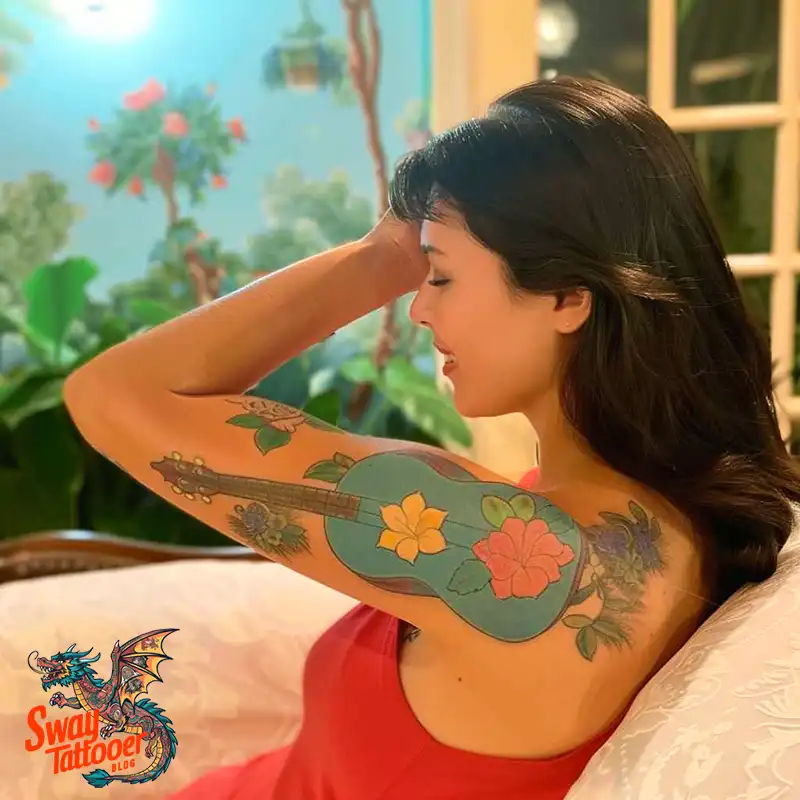
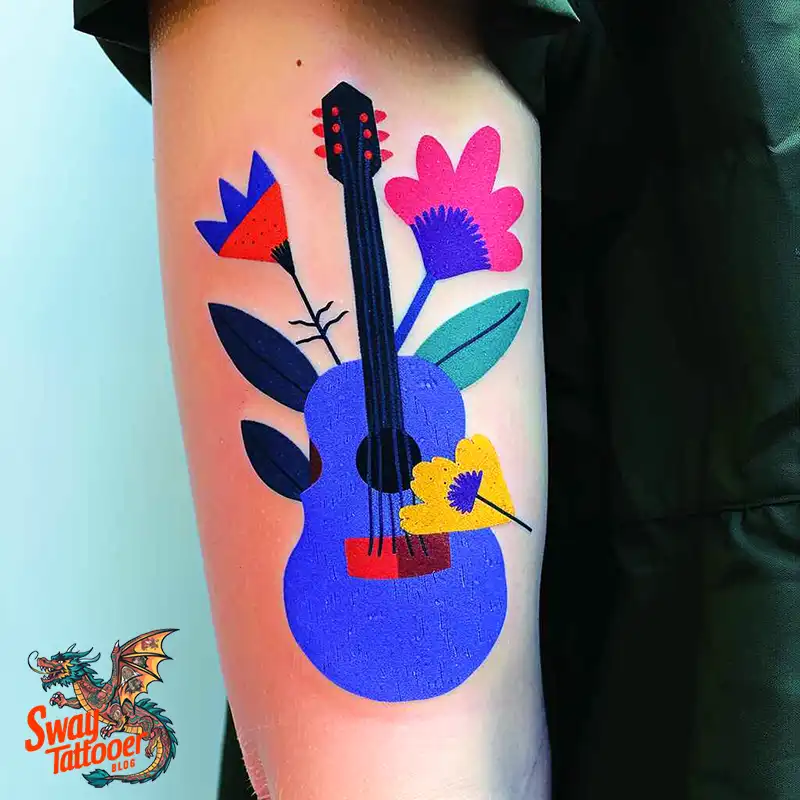
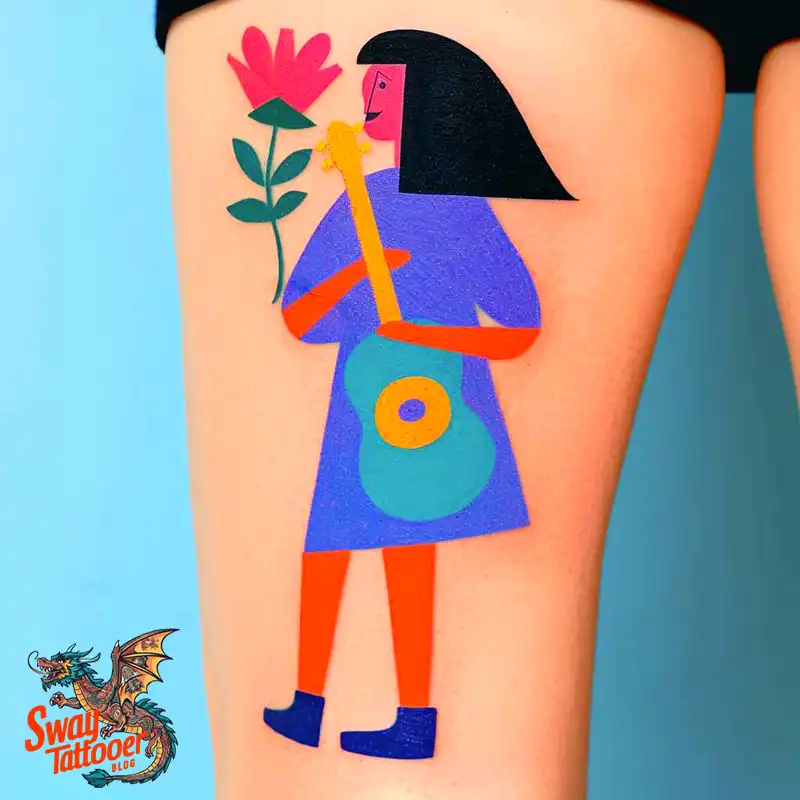
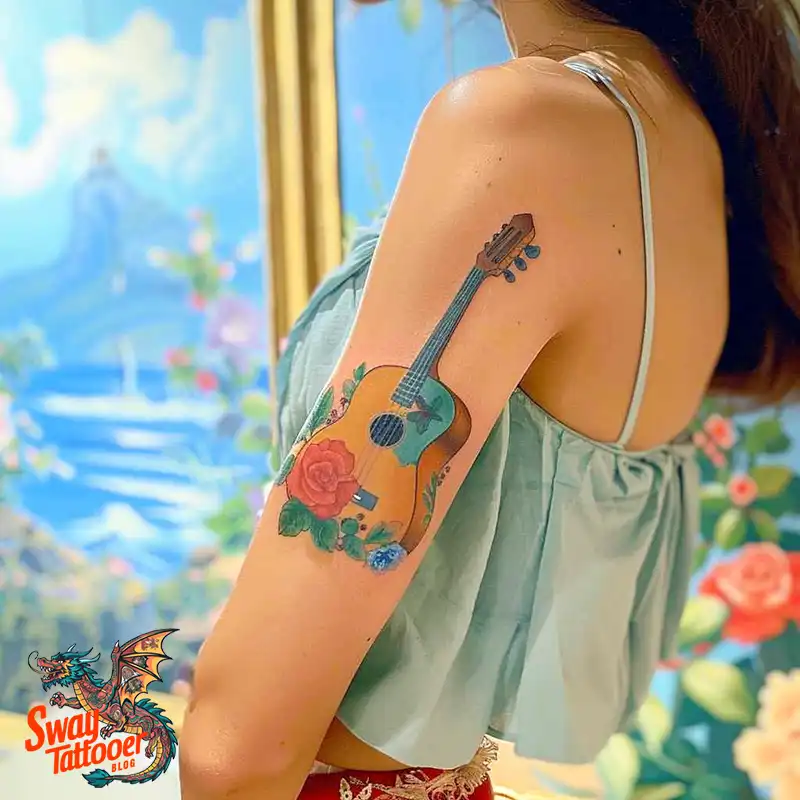
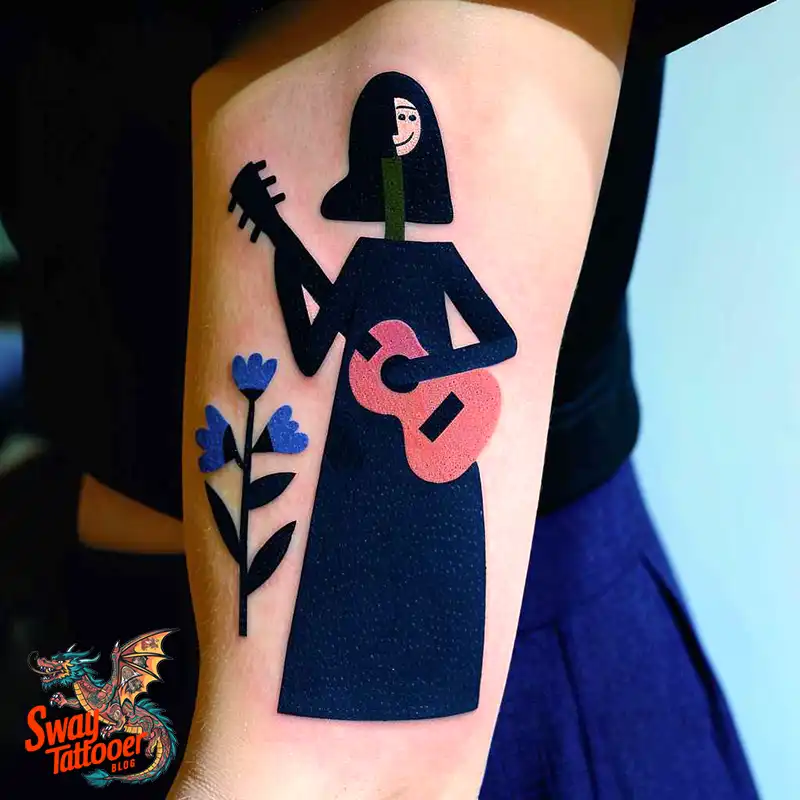
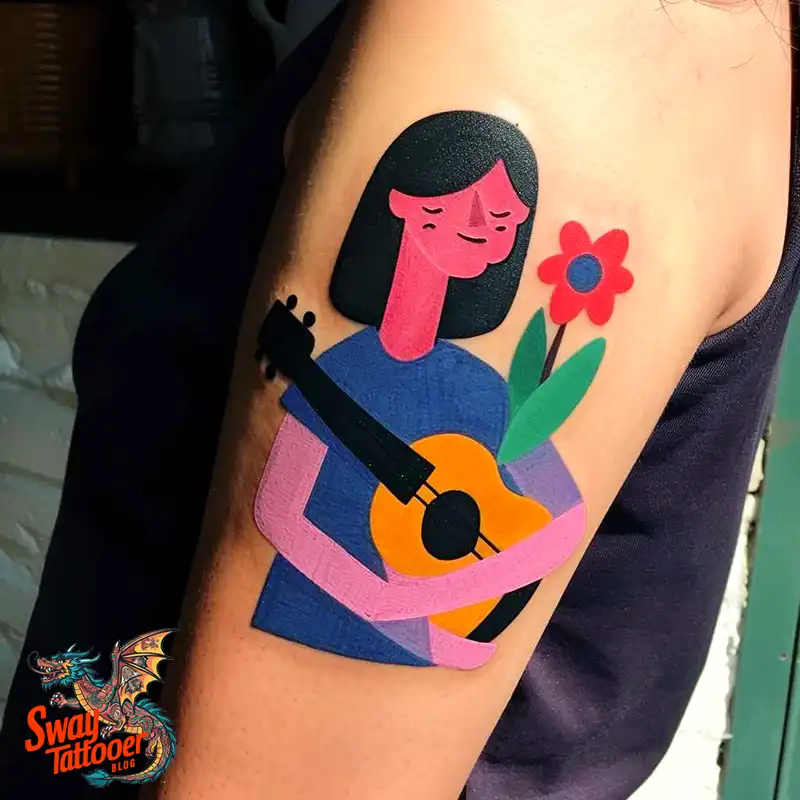
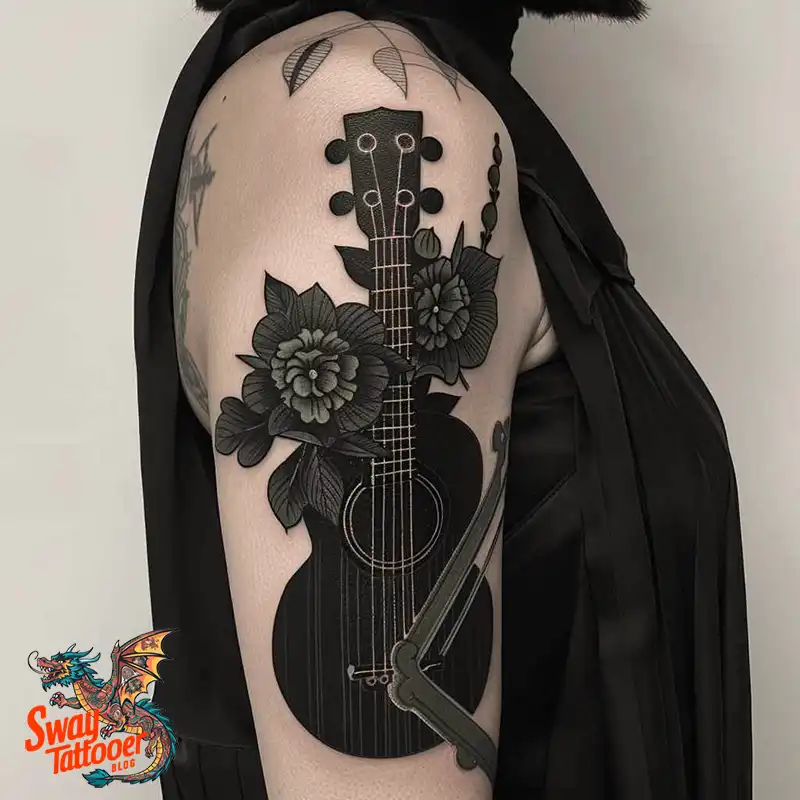
There are many ways to draw a ukulele tattoo on your skin. I spent months looking at different styles before I picked mine.
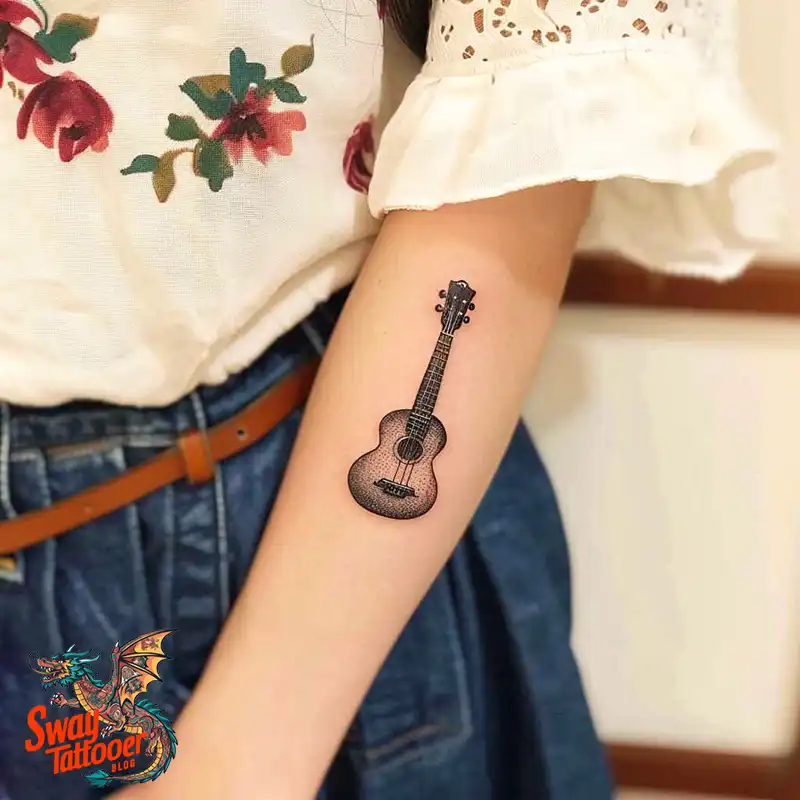
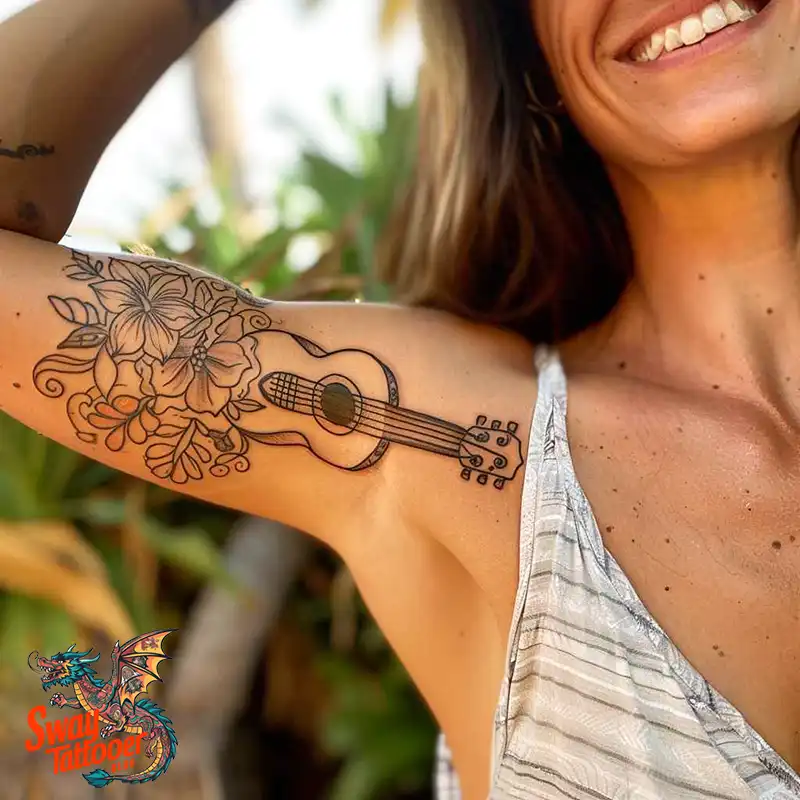
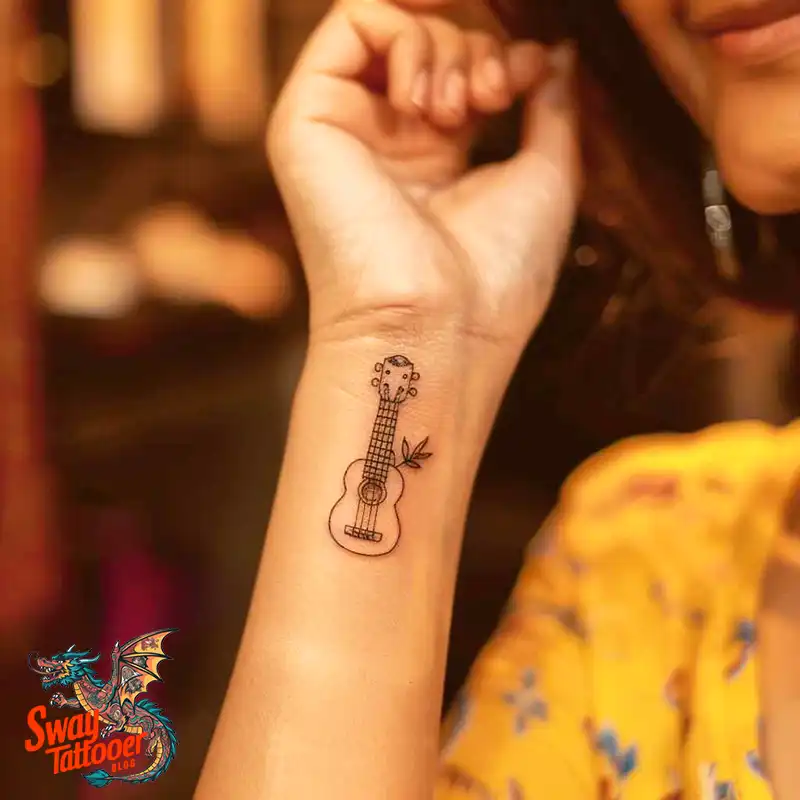
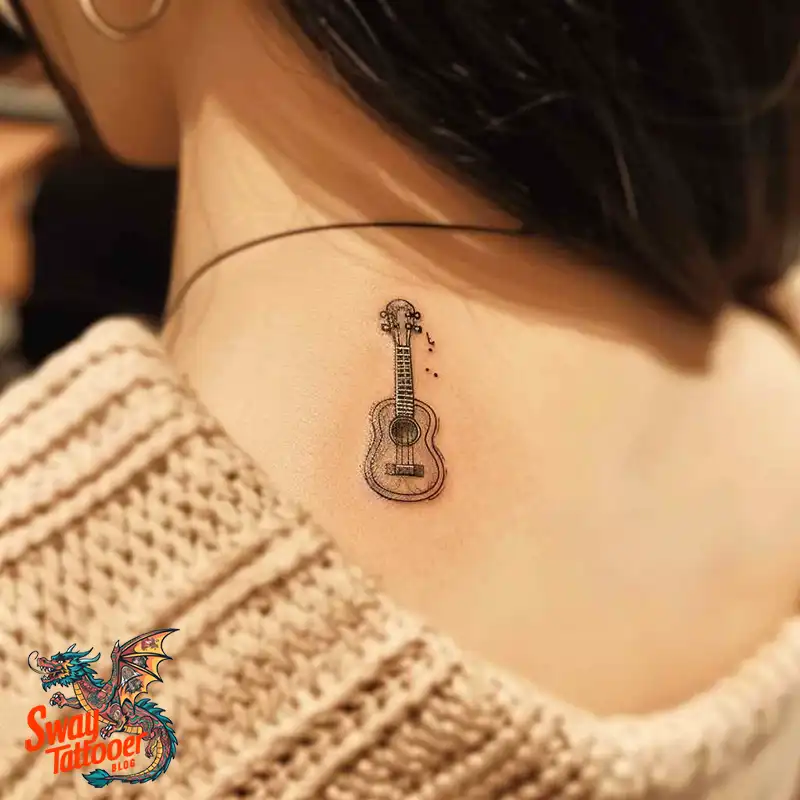
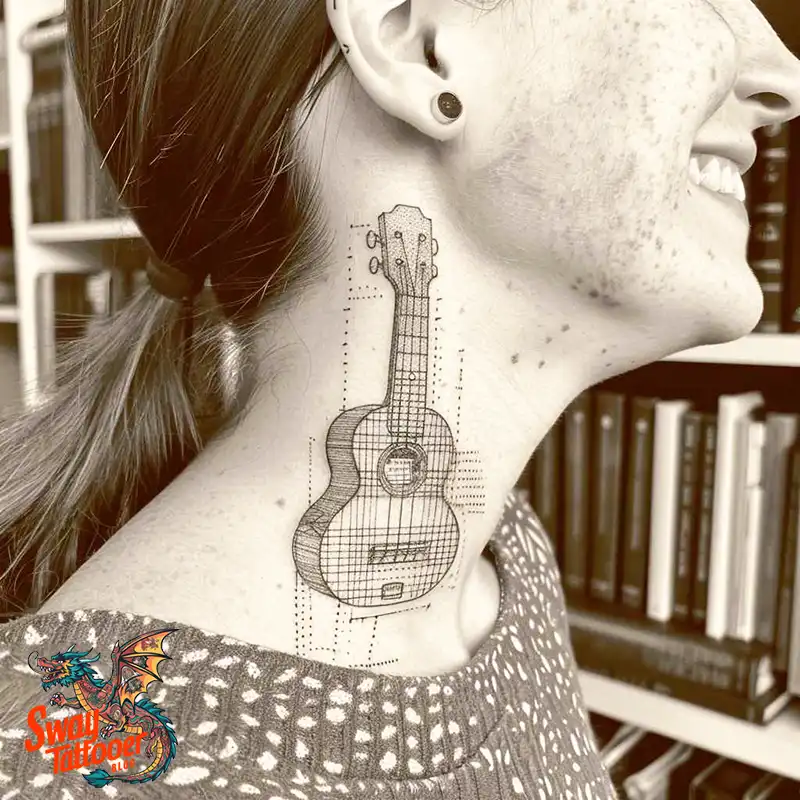
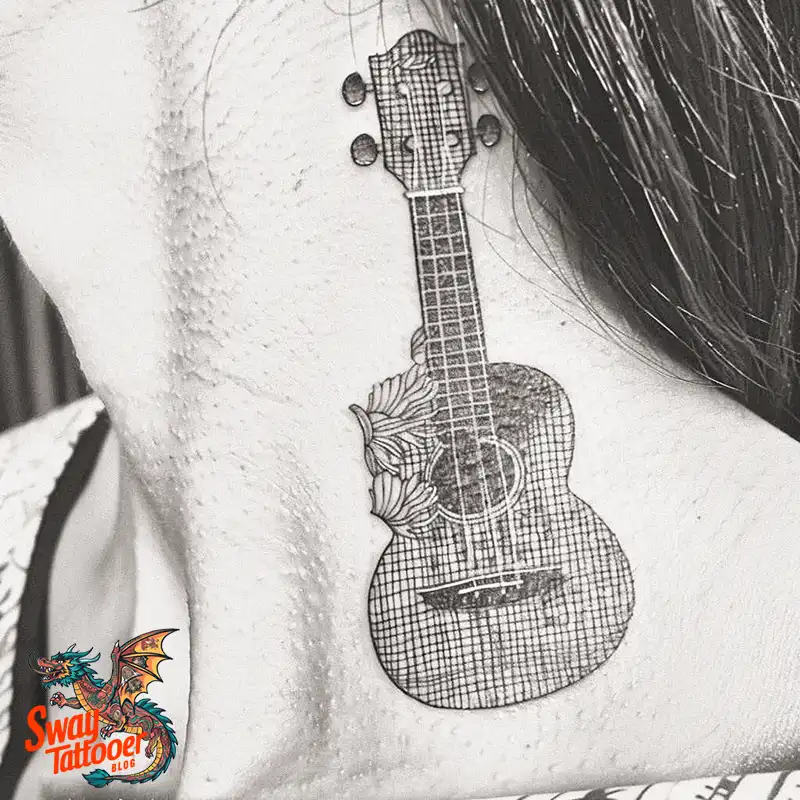
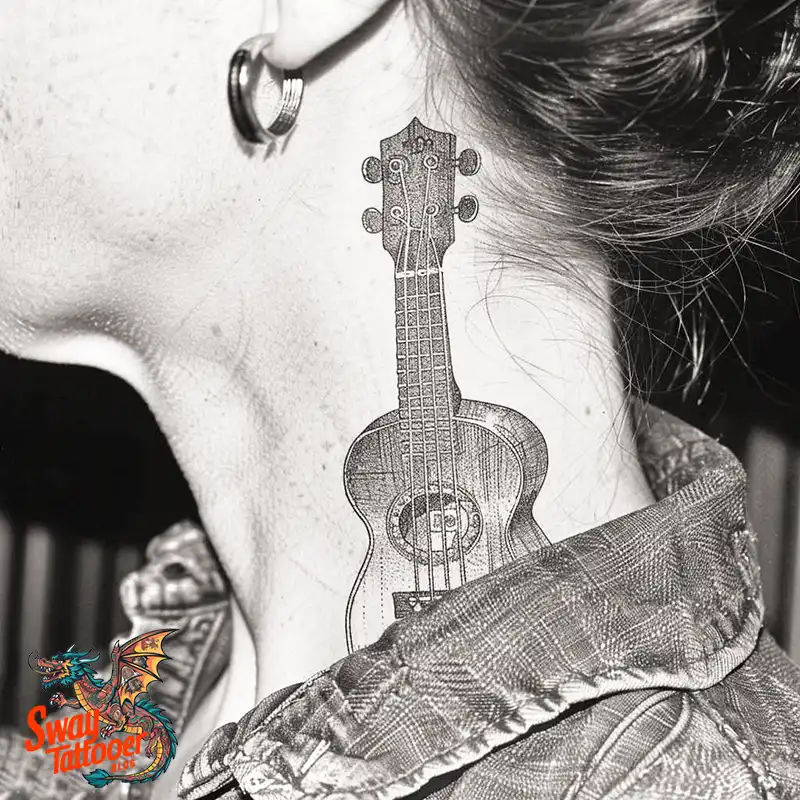
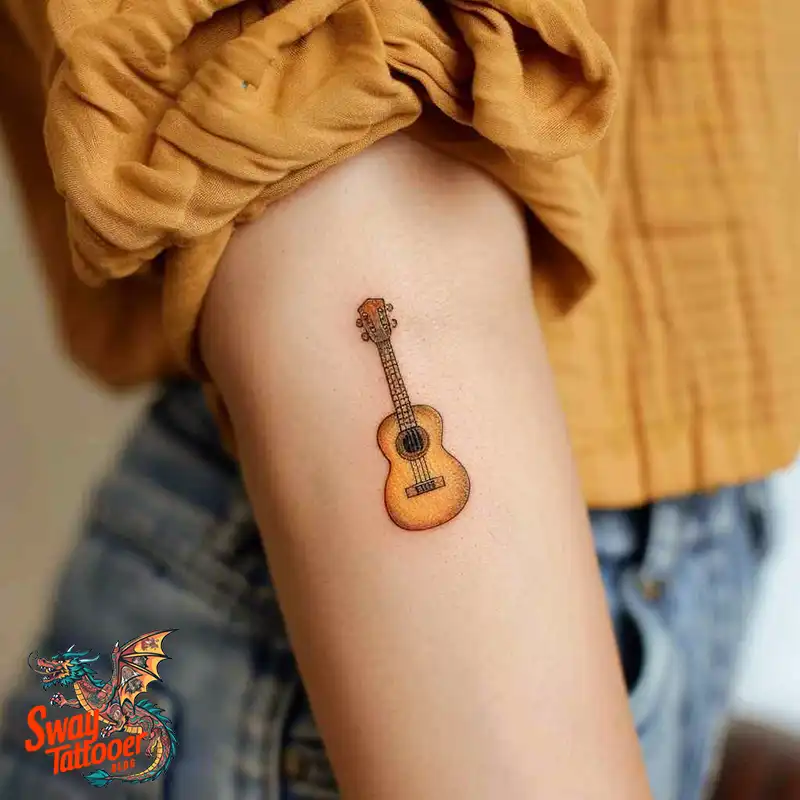
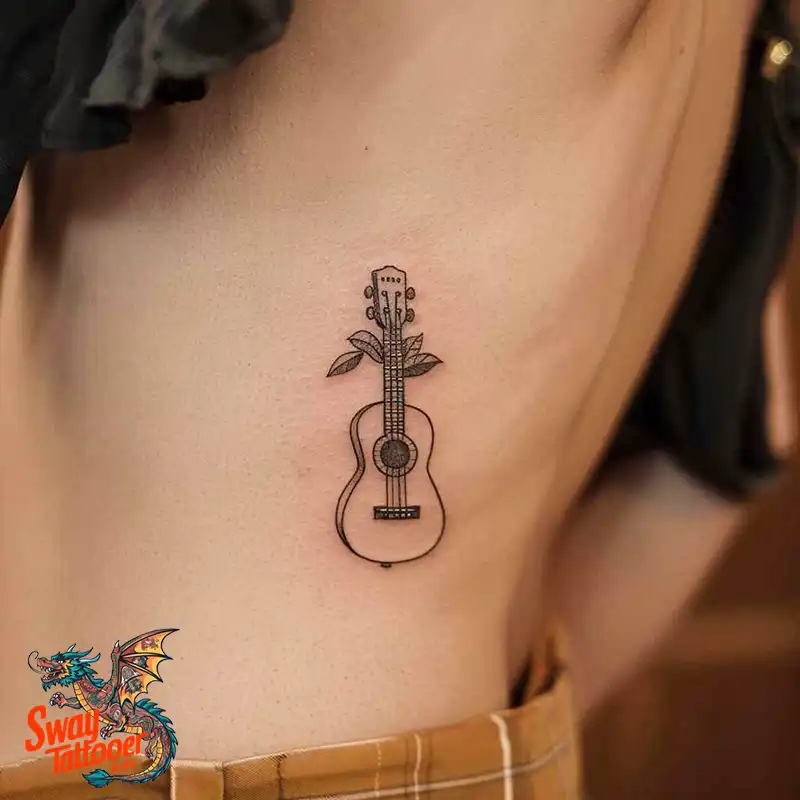
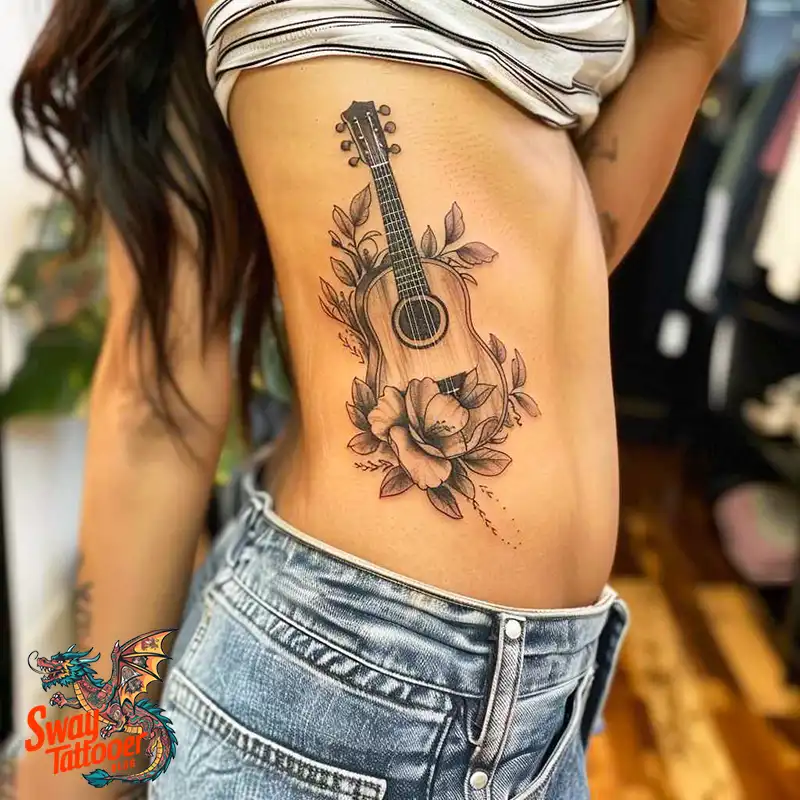
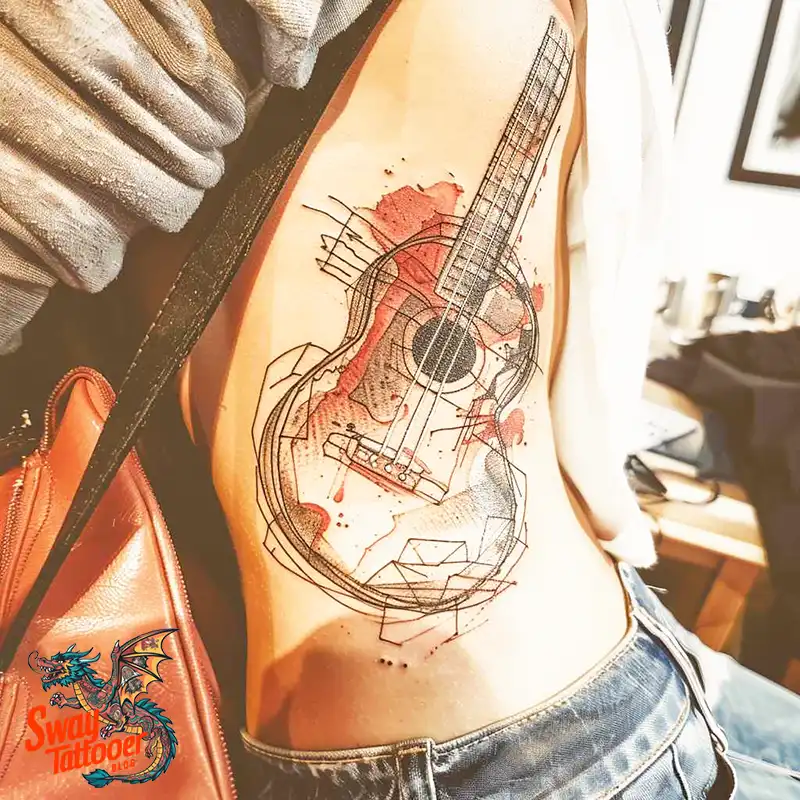
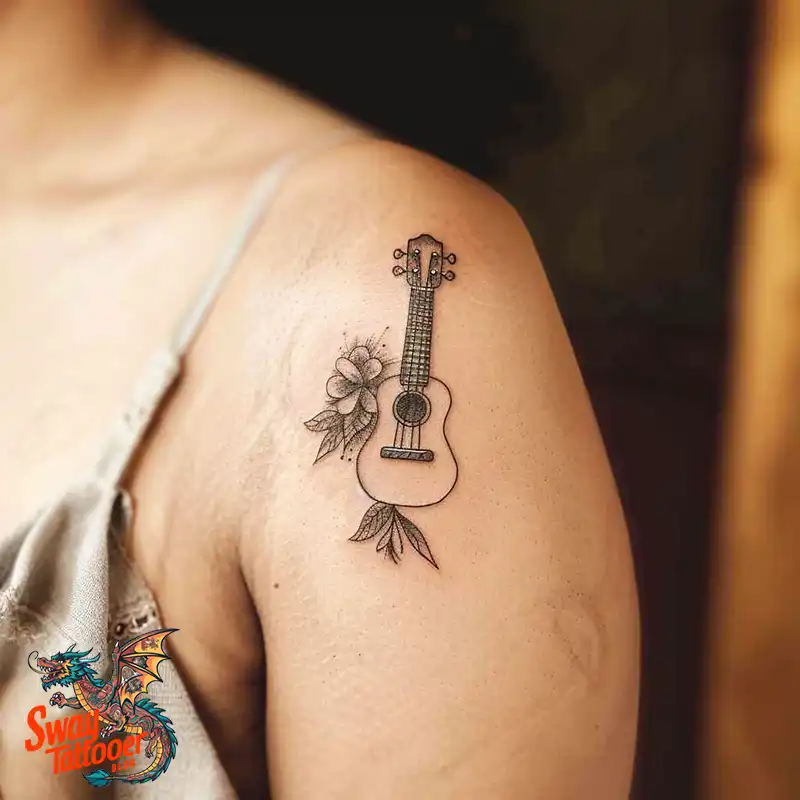
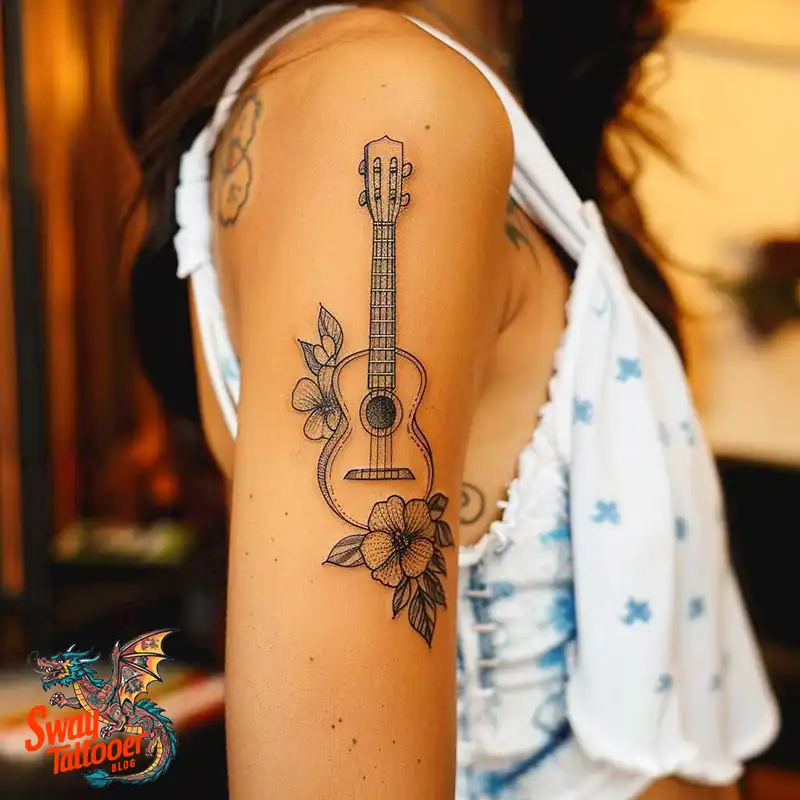
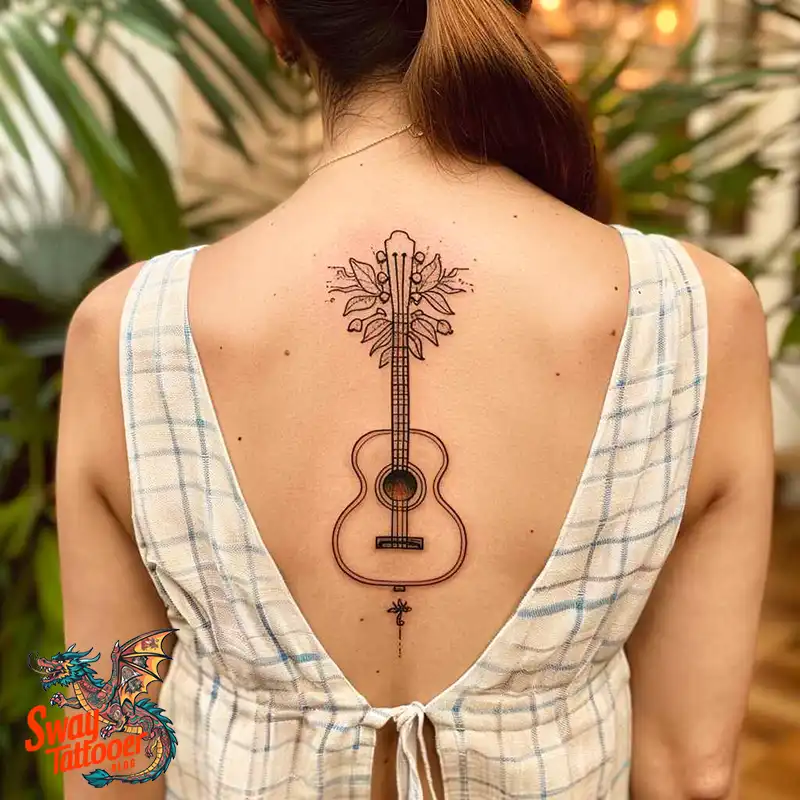
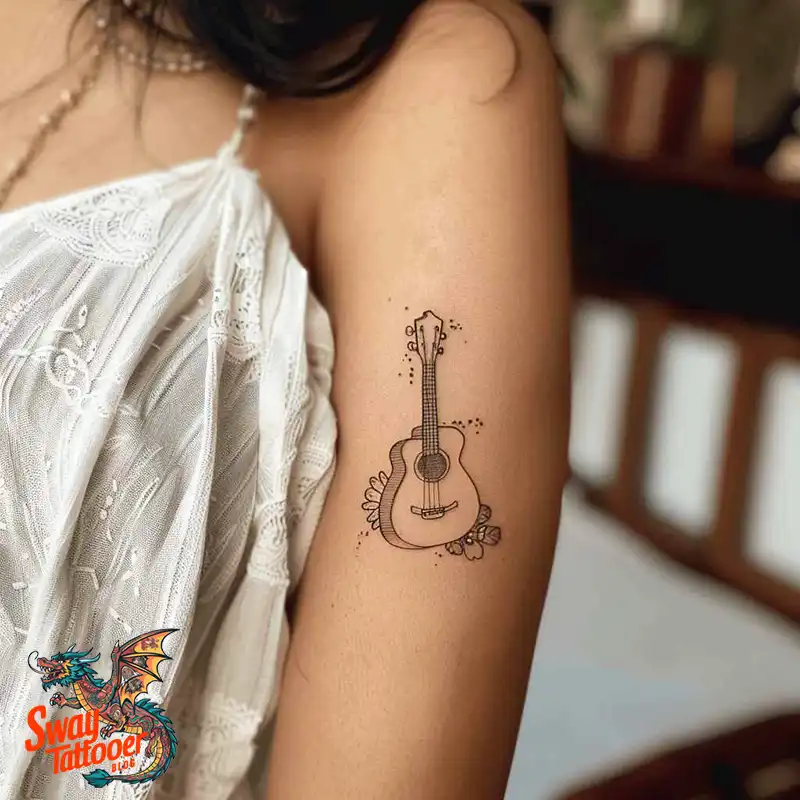
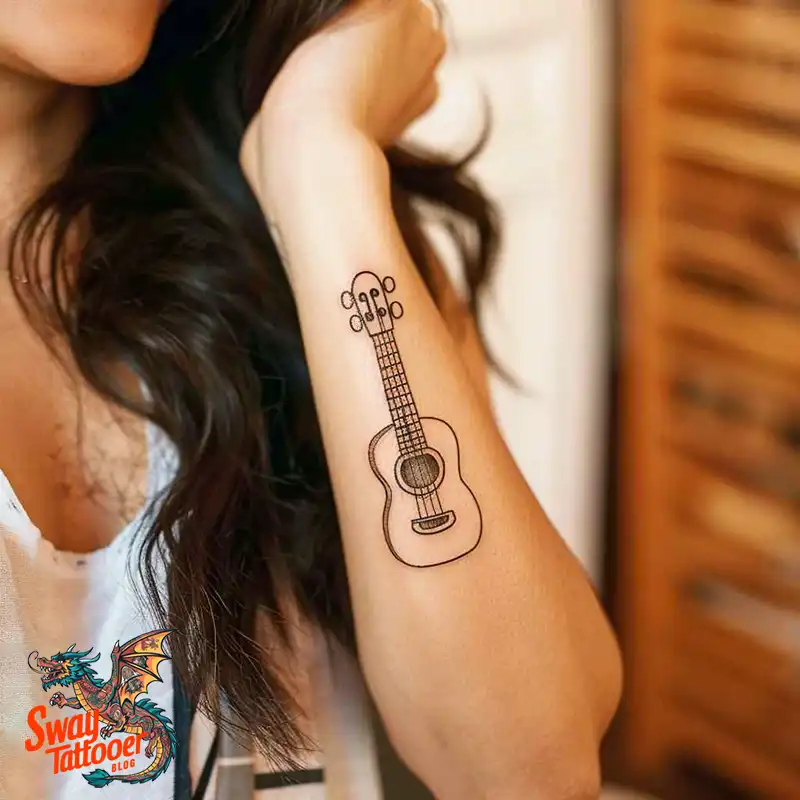
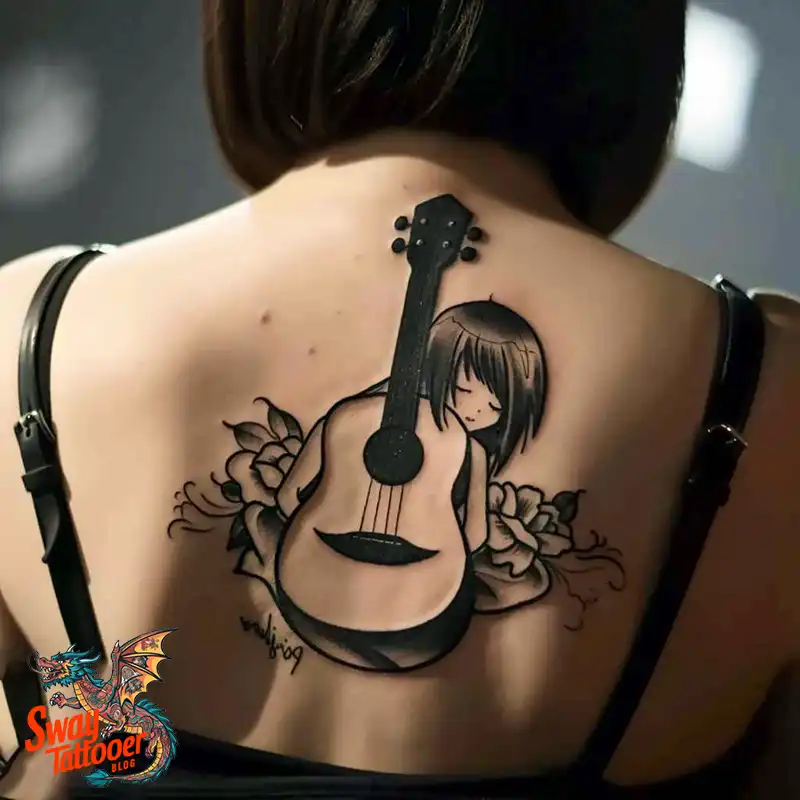
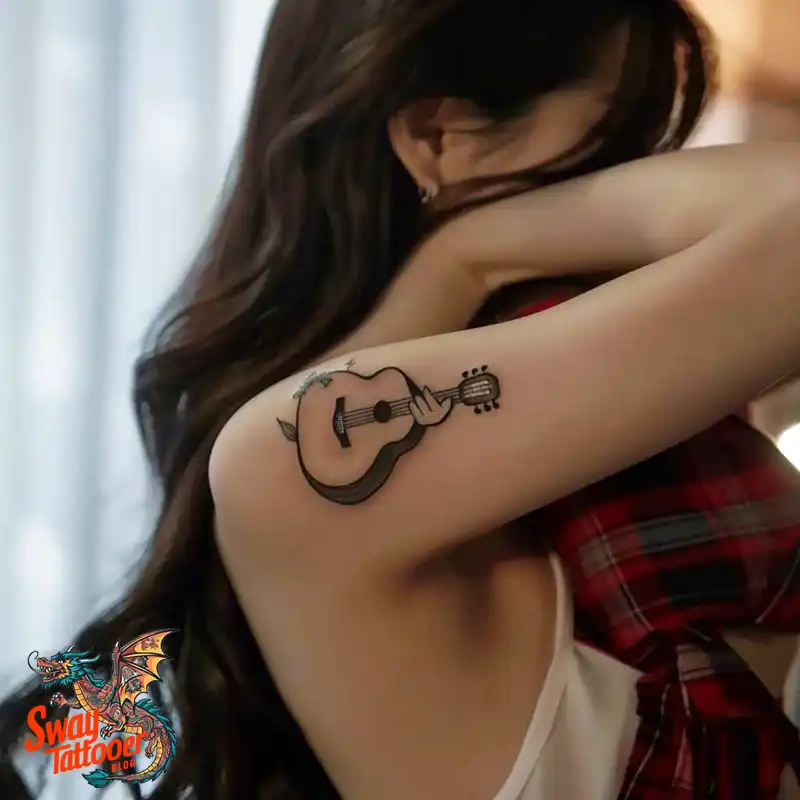
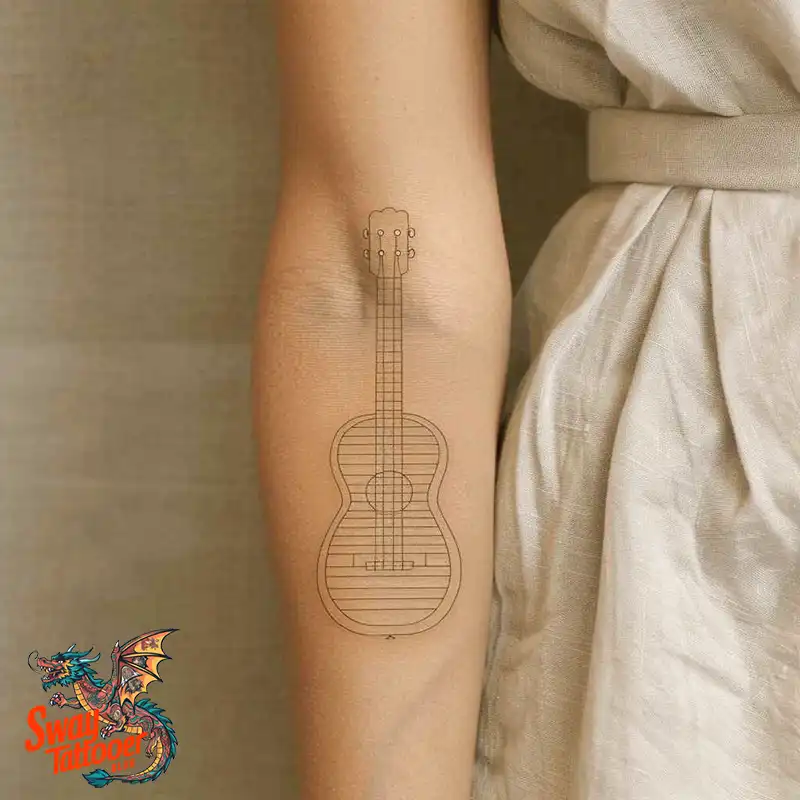
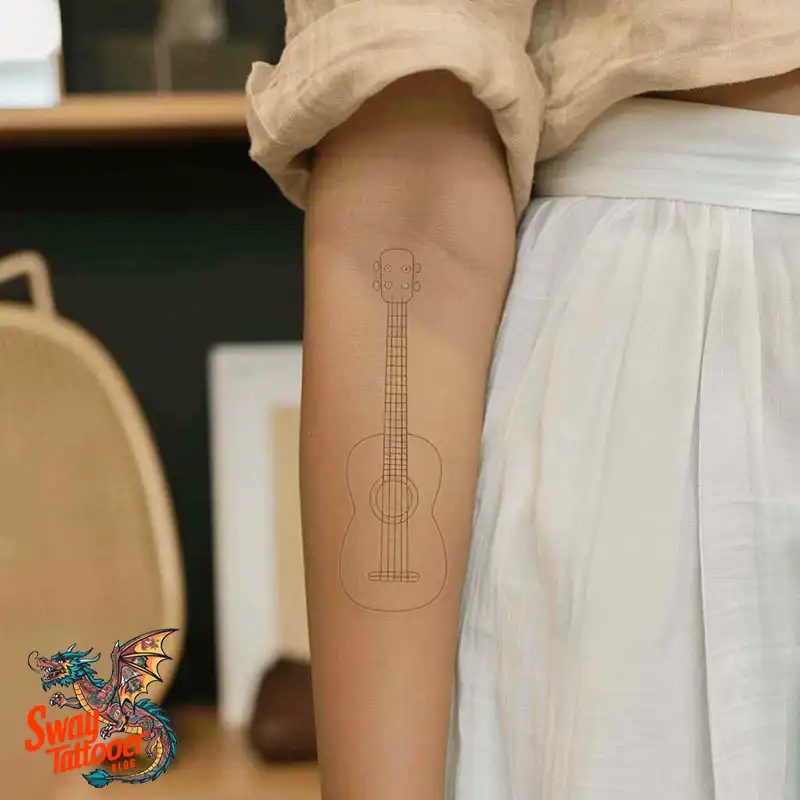
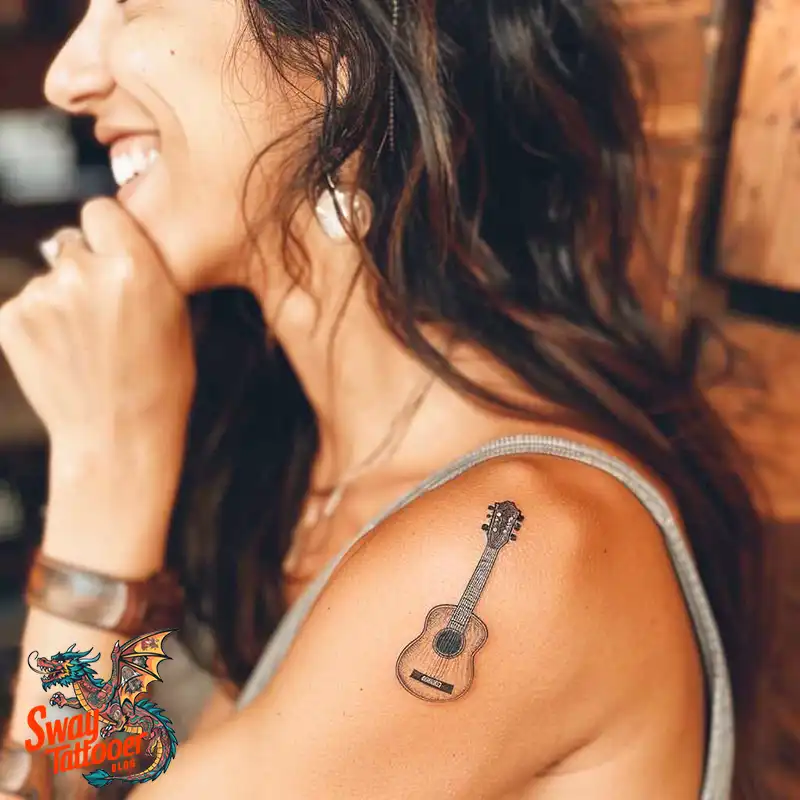
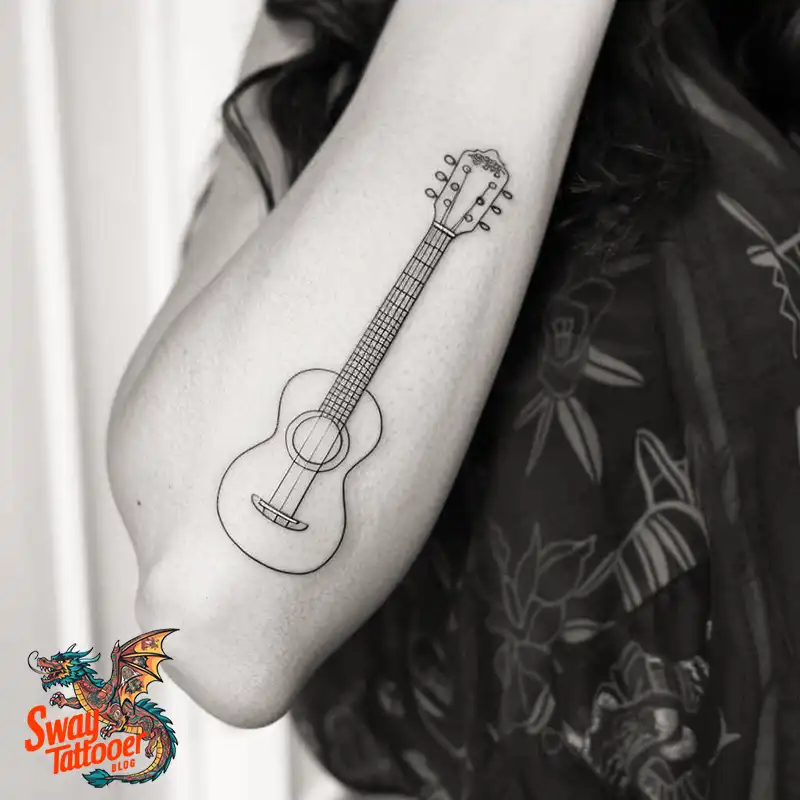
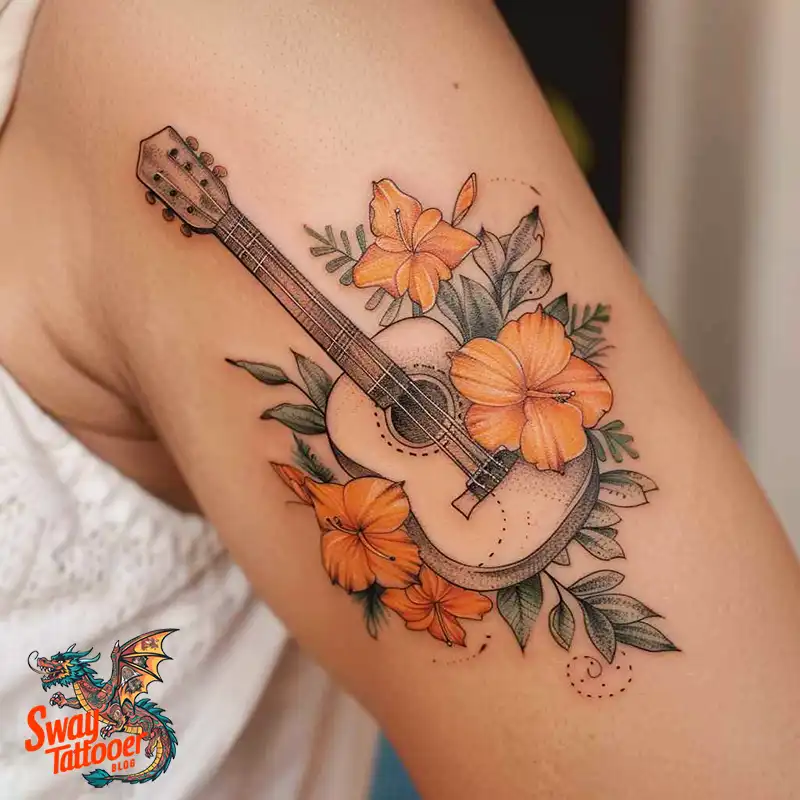
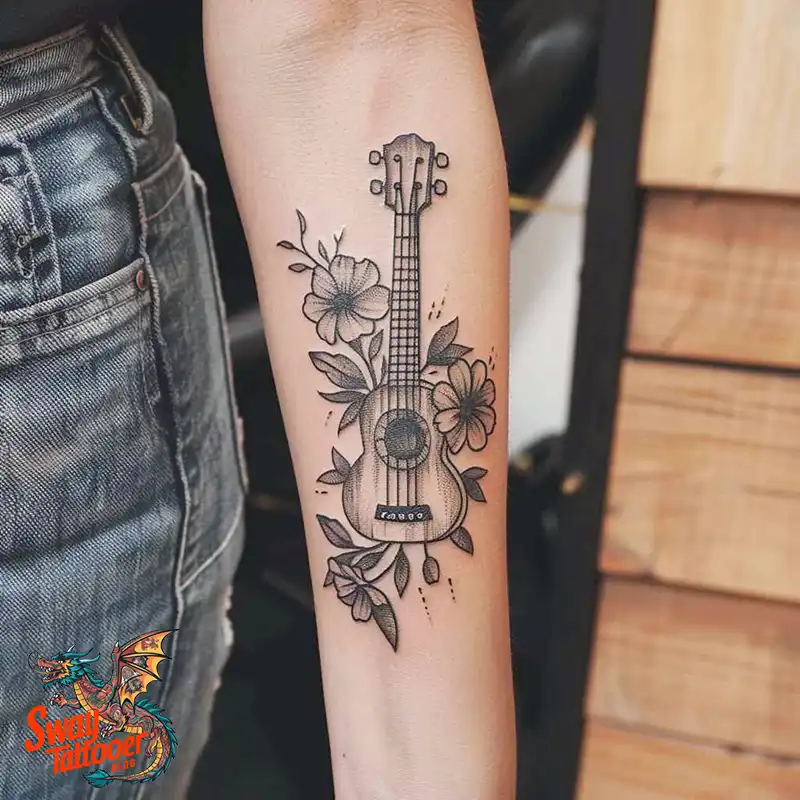
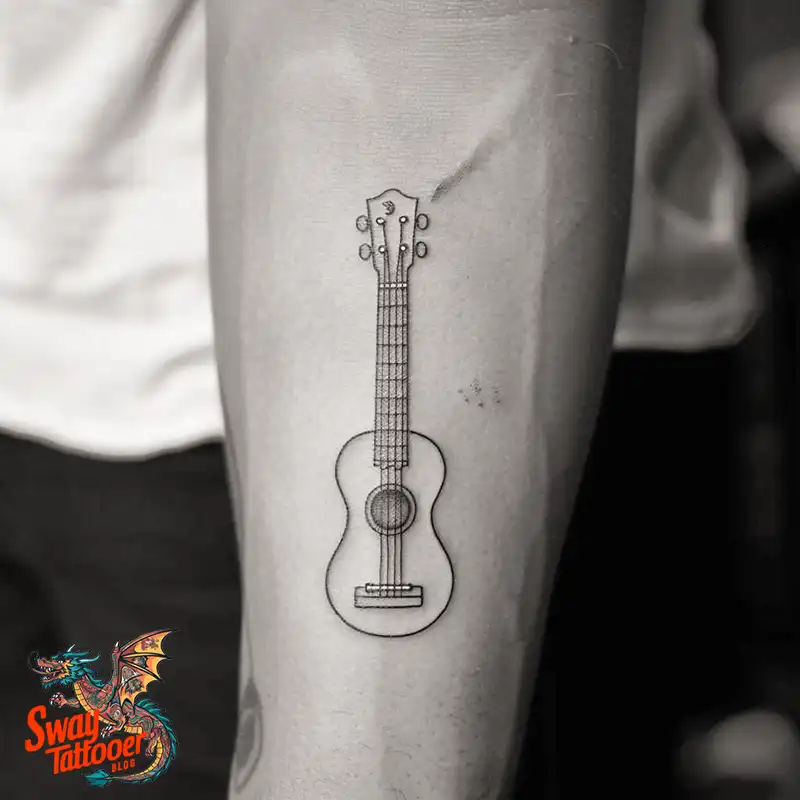
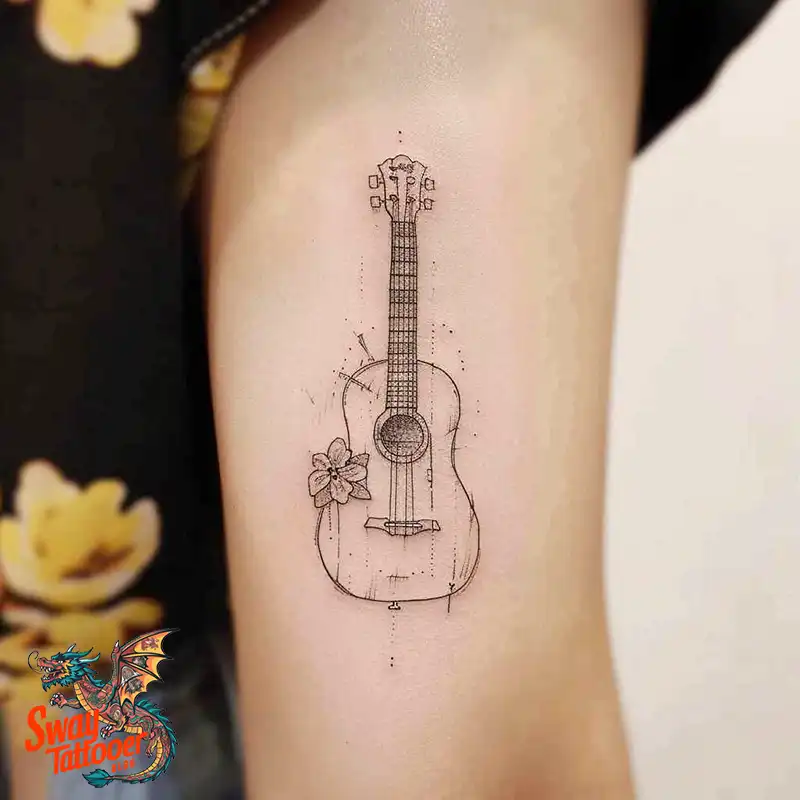
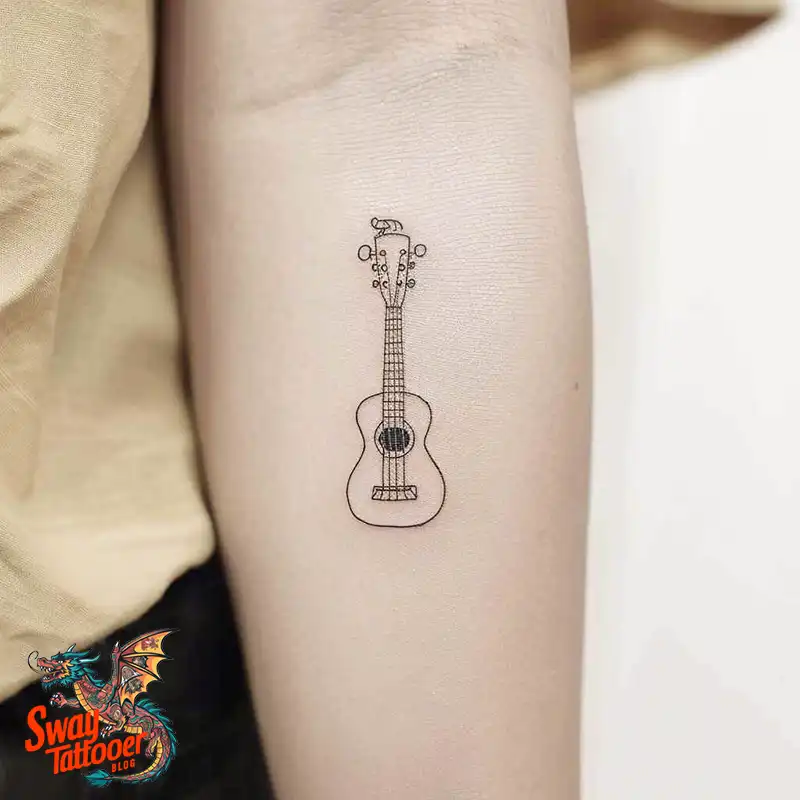
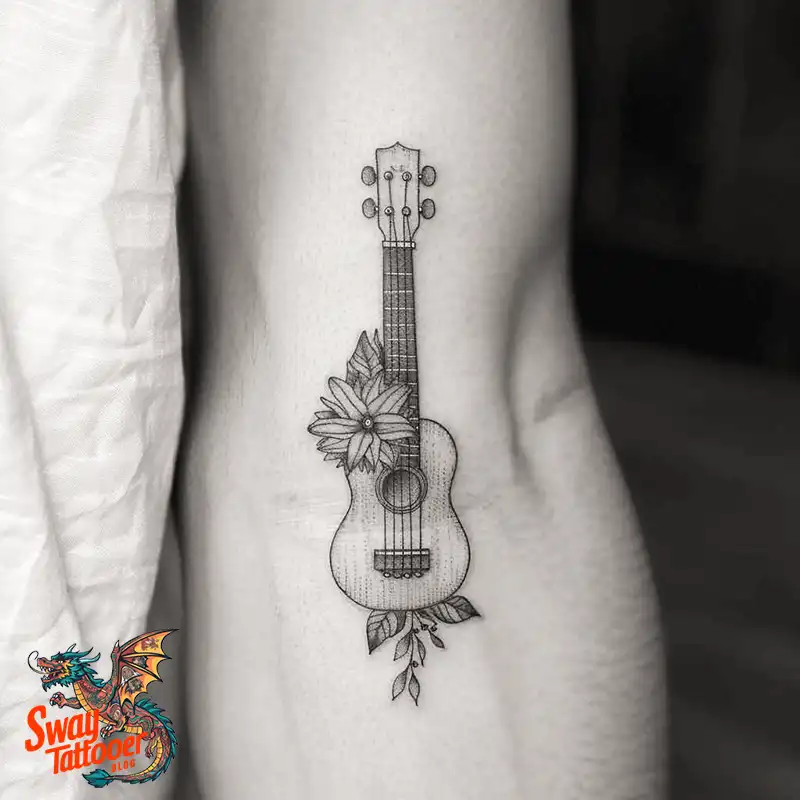
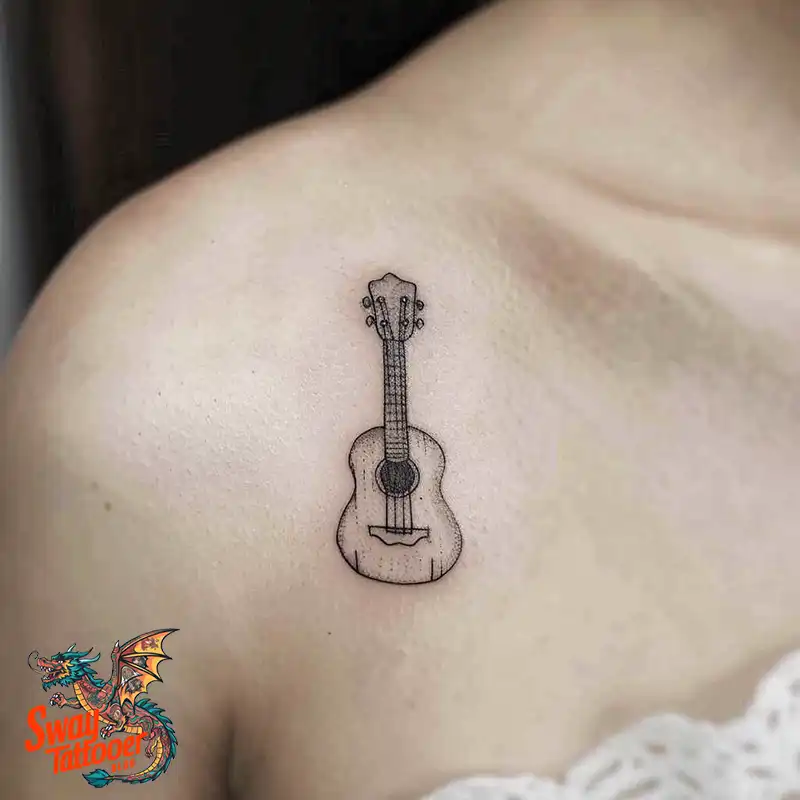
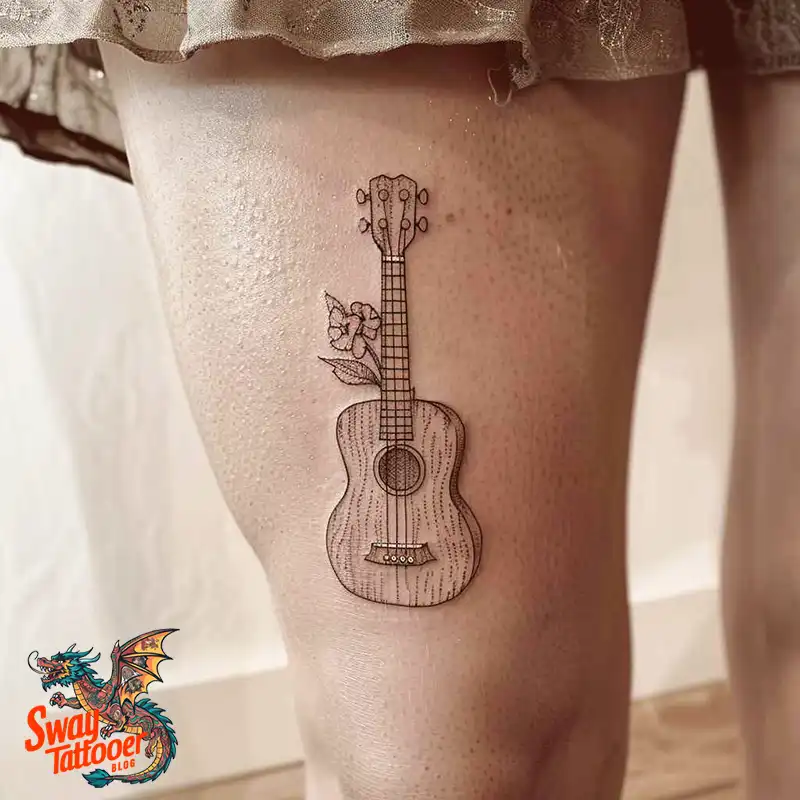
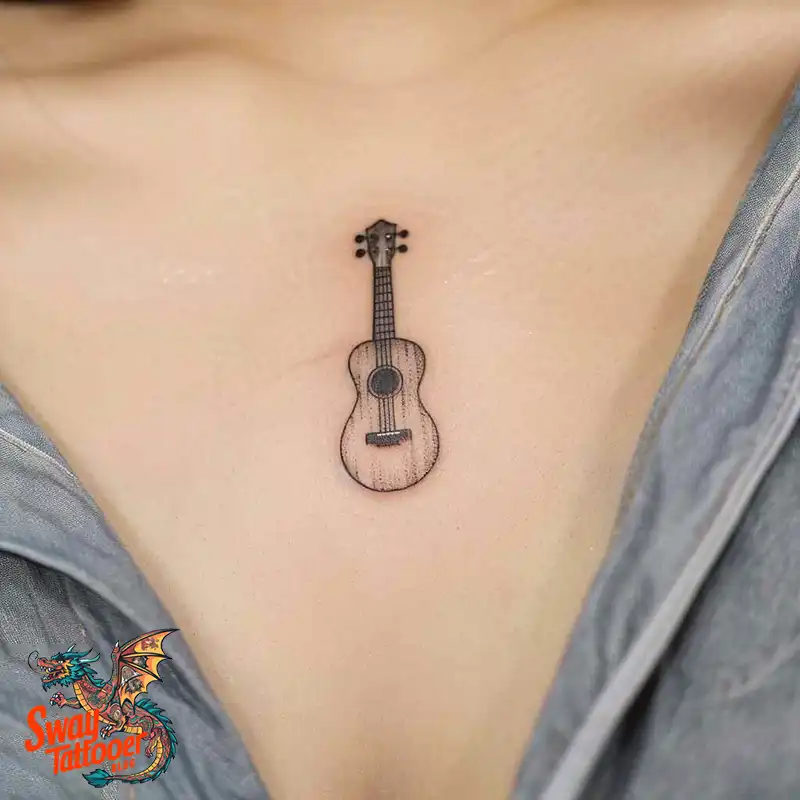
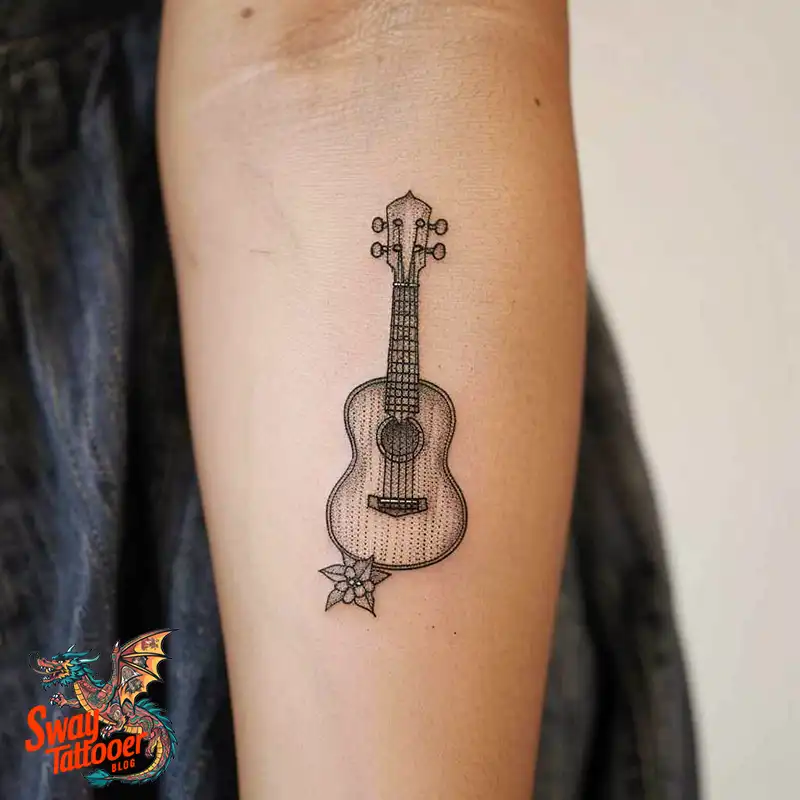
Fine Line Tattoos: If you want something small and elegant, this is for you. Artists use very thin needles to make delicate lines. It looks like a beautiful drawing on your skin. Many people put these on their wrist or behind their ear. Designs like the “Luna Tattoo Ukulele” often use these geometric patterns.
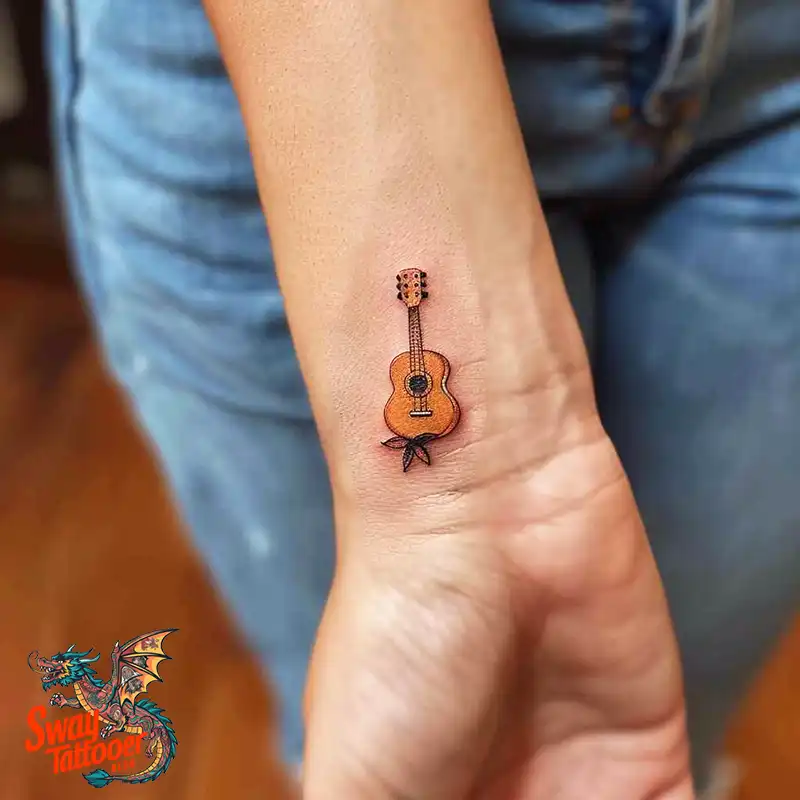
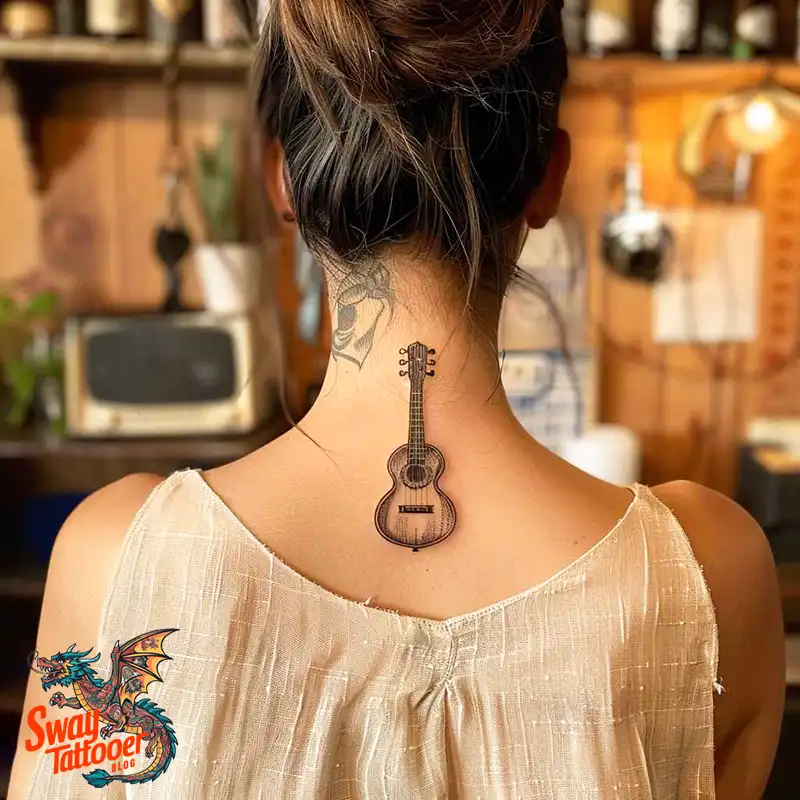
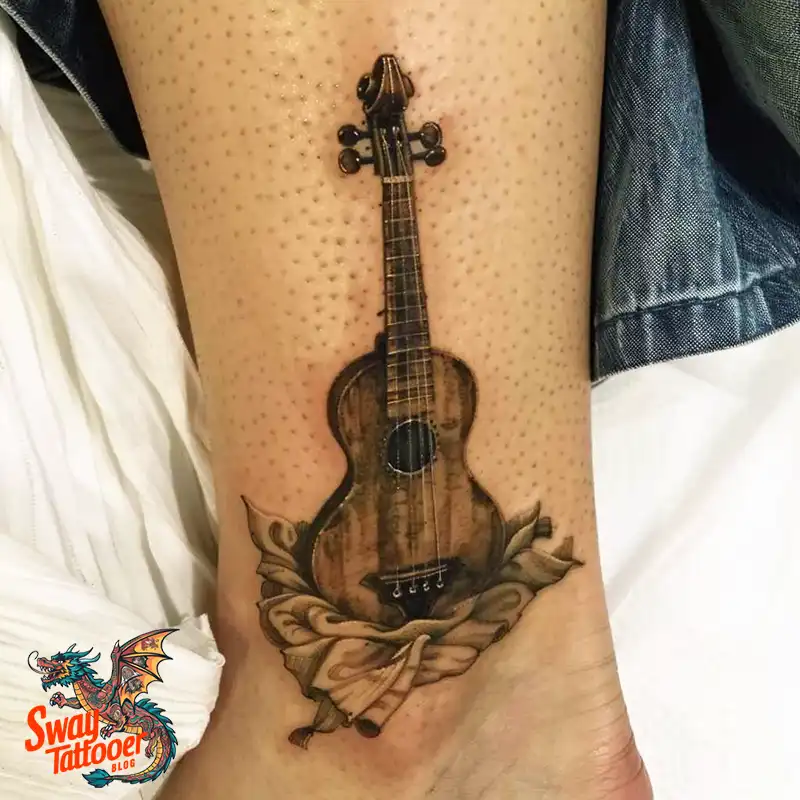
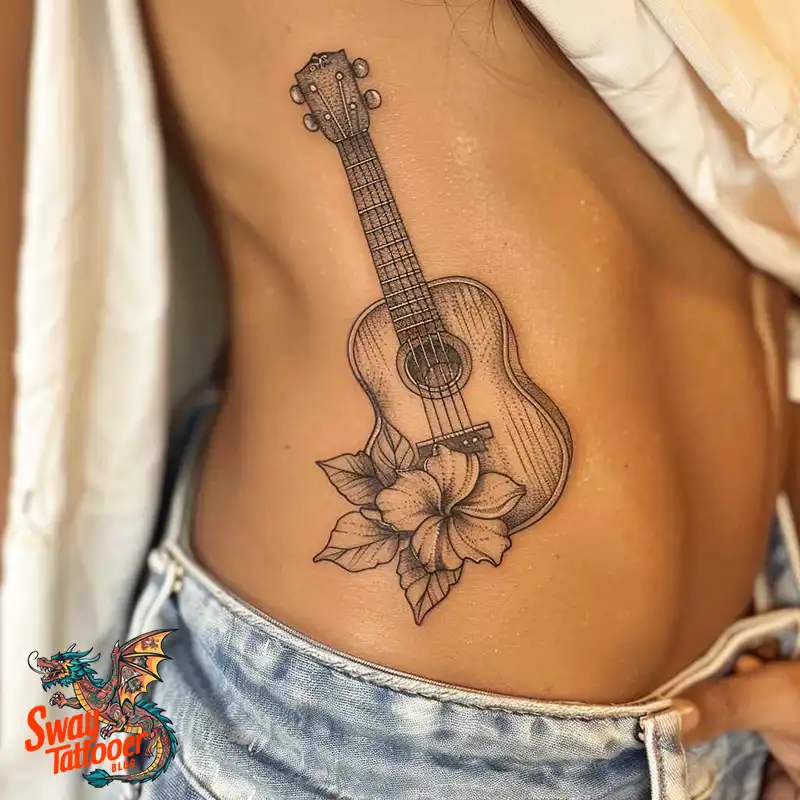
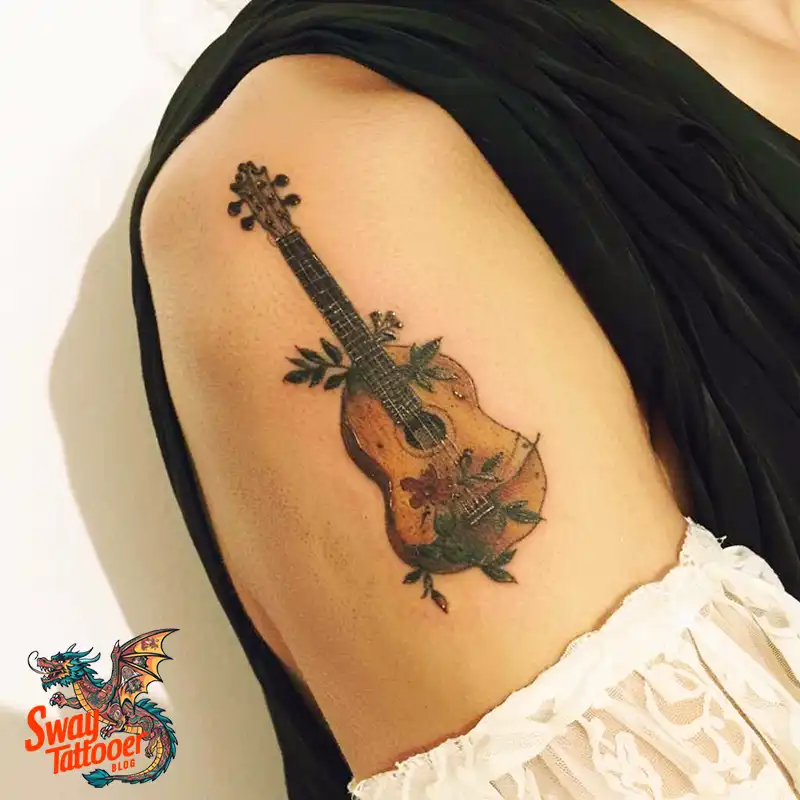
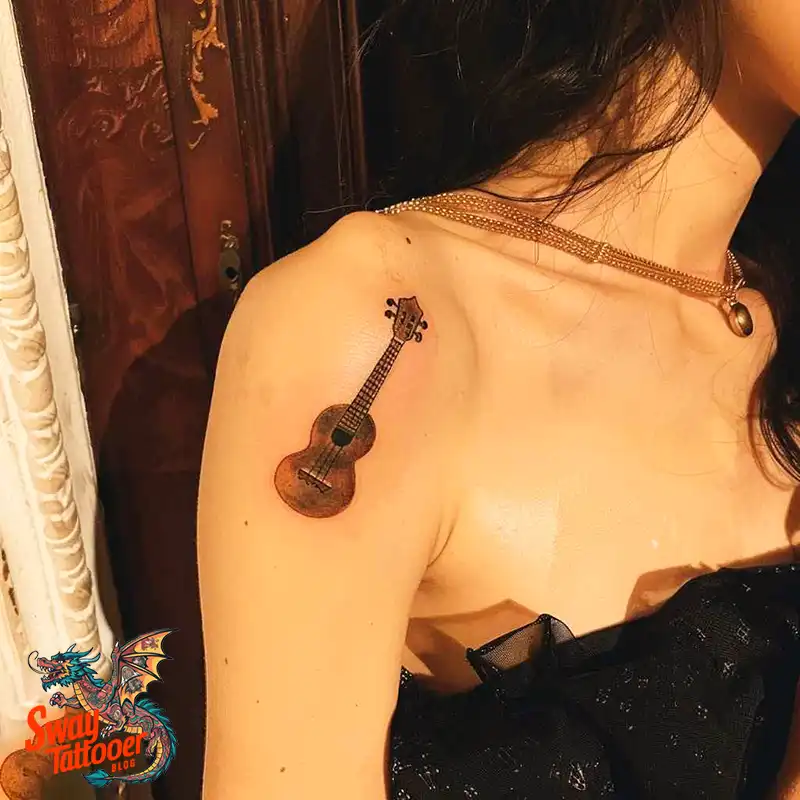
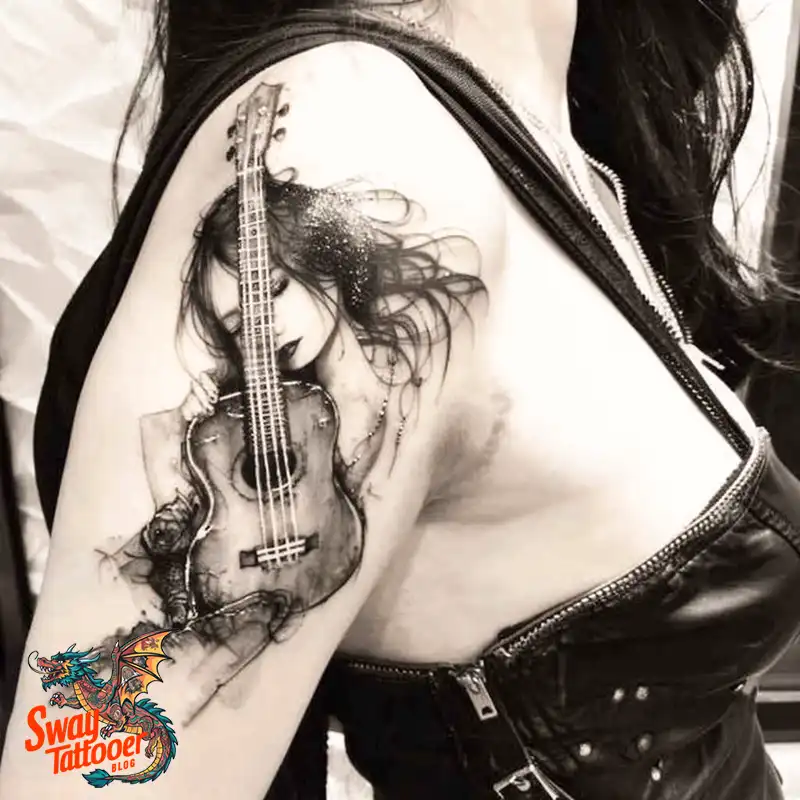
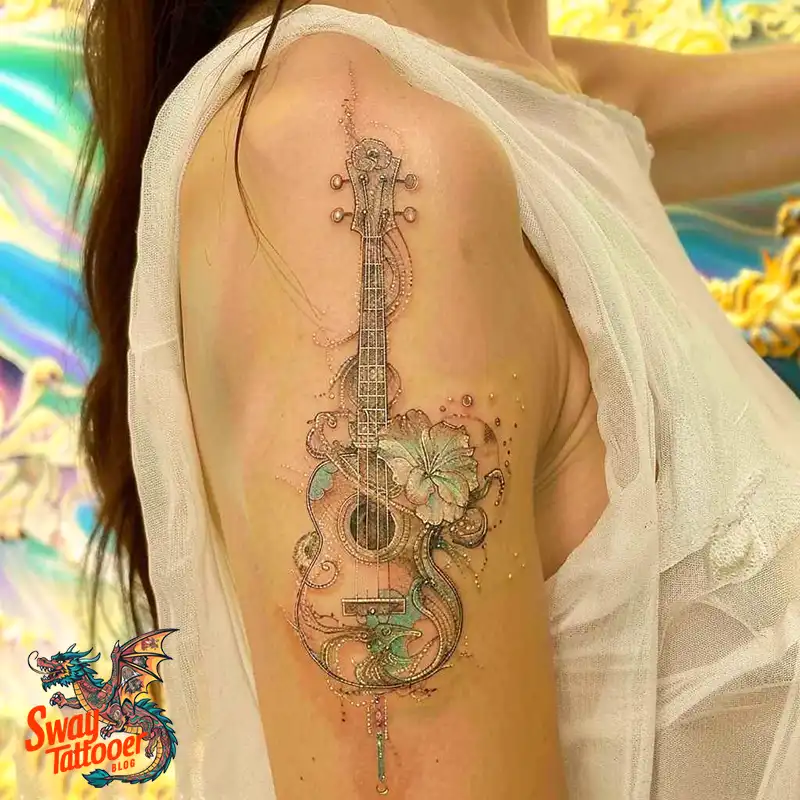
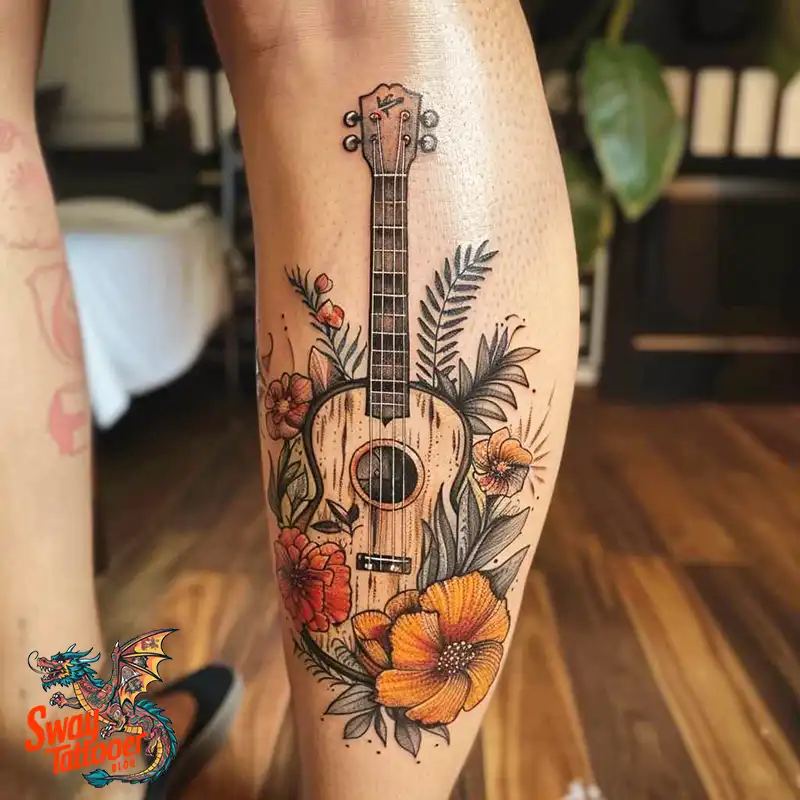
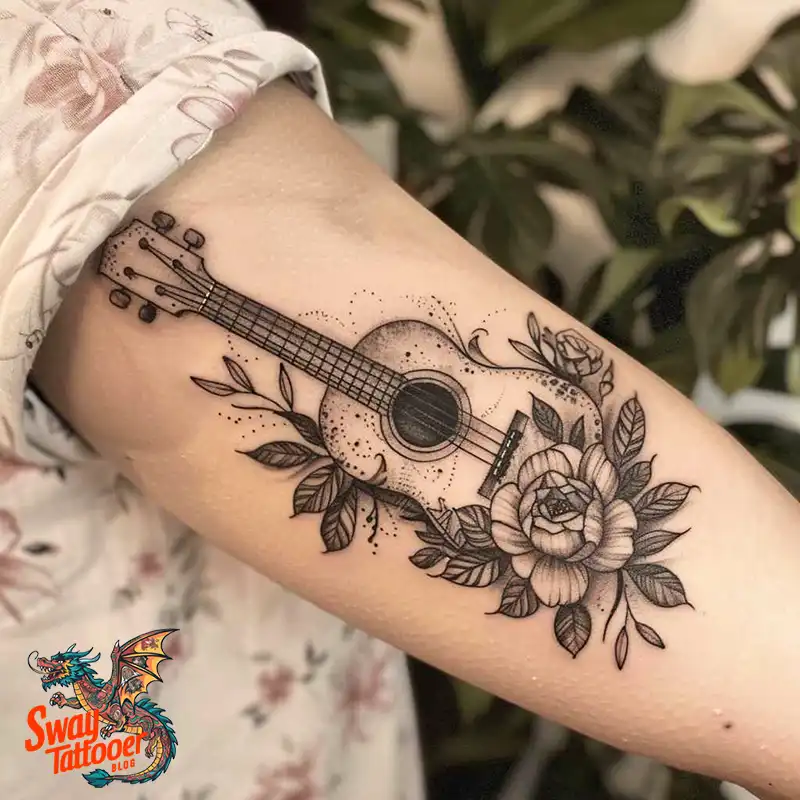
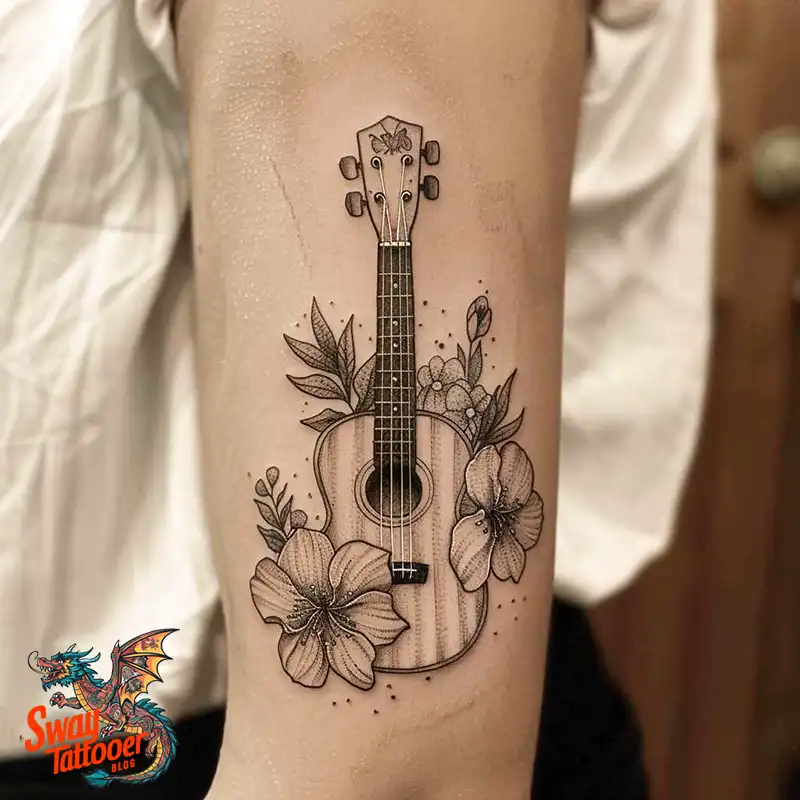
Realism and Wood Grain. If you are a musician, you might want your tattoo to look like a real instrument. Skilled artists can even make the skin look like Koa wood. Koa wood is very special in Hawaii. It was used for royal canoes and weapons. Its name even means “warrior”. To get this look, artists use layers of shading to show the “curly” or “flame” patterns in the wood.
Making Sure the Music is Right
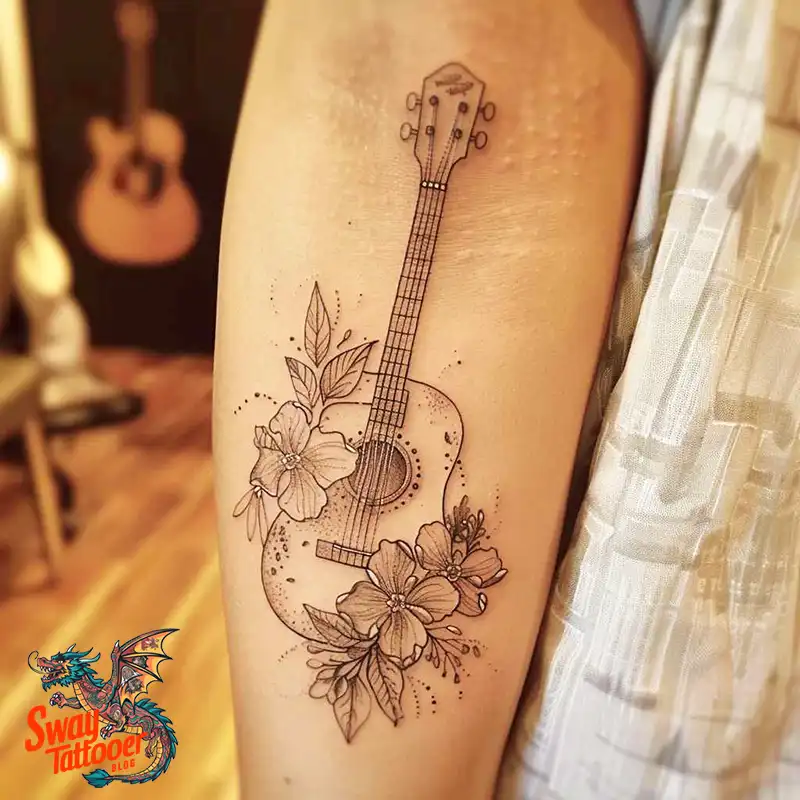
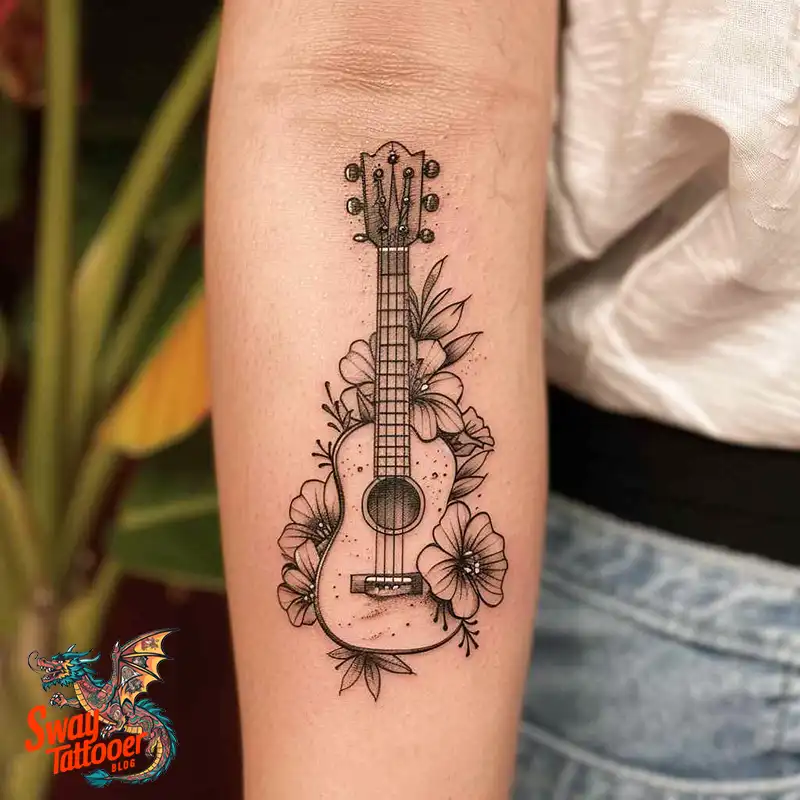
I want my tattoo to look like a real instrument. But many artists get the strings wrong. A standard ukulele has exactly four strings. Some people draw it like a small guitar with six strings. That is a big mistake. You should also check the tuning. Most ukuleles use G-C-E-A tuning. This gives it that happy, tropical sound.
If you want your ink to be perfect, look at the frets too. These are the metal lines on the neck. They usually sit at the 3rd, 5th, 7th, 10th, and 12th spots. I always suggest bringing a photo of your own instrument to the shop. This helps the artist get the bridge and the headstock just right.


Where Does It Hurt the Most?
I often get asked if getting a tattoo hurts. The truth is, it depends on where you put it. I chose my outer forearm because it is a “low pain” spot. On a scale of 1 to 10, it feels like a 3 or 4. Other good spots for beginners are the outer arm or the calf.
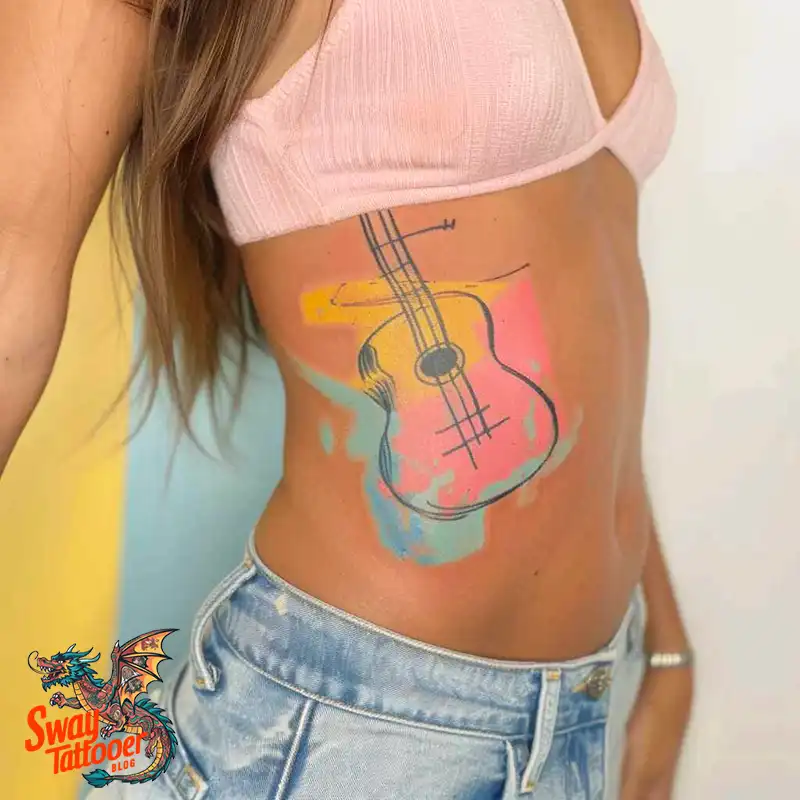
If you want to avoid a lot of pain, stay away from the ribs or the feet. Those spots can be a 10 out of 10 for pain. Also, think about the sun. Tattoos on your arms might fade faster if you don’t use sunscreen. Pick a spot that fits your body’s natural lines to make the art flow.
| Body Part | Pain Level (1-10) | Why it hurts |
| Outer Arm | 3-4 | Lots of muscle and fat |
| Forearm | 2-4 | Flat and easy to ink |
| Ribs | 9-10 | Thin skin over bone |
| Spine | 8-10 | Nerve endings and bone |




How to Care for Your New Ink
Once the tattoo is done, the real work starts. I learned that aftercare is the secret to a bright tattoo. For the first day or two, your artist might use a clear film like Saniderm. This keeps the germs out while the skin starts to heal.
When you take the film off, wash the area gently. Use lukewarm water and a soap that has no scent. After washing, pat it dry with a paper towel. Then, apply a thin layer of balm like Hustle Butter or a light lotion like Aveeno. Do not use too much! If you put on too much cream, it can blur your lines.
Long-term care is simple. Once the skin is fully healed, use sunscreen. An SPF of 30 or higher will keep your fine lines sharp for years.
What Will It Cost?
Tattoos are an investment in yourself. Prices can change based on where you live and how famous the artist is.15 Most shops have a “minimum” fee of $50 to $200 just to start.
- Beginner Artists: They might charge $50 to $120 per hour.
- Standard Artists: Expect to pay $120 to $180 per hour.
- Top Pros: They can charge over $300 an hour.
When you pick an artist, don’t just look for the lowest price. Look at their past work. I always check for photos of “healed” tattoos. Fresh ink always looks good, but you want to see how it looks after a year.







FAQs:
1. What does a ukulele tattoo mean?
A ukulele tattoo shows your love for the “Aloha Spirit.” In Hawaii, this means peace and respect for the land. It is a sign of joy. It is also a way to honor the history of the islands. To me, it is a daily reminder to be kind to everyone I meet.
2. Can I get one if I am not Hawaiian?
Yes, you can! But you must do it with respect. I always suggest looking for “noa” symbols. These are common signs that are safe for everyone to use. You should stay away from “tapu” symbols. Those are sacred and only for specific families. It is about sharing the love, not taking a story that is not yours.
3. Where is the best spot to put it?
I think the outer forearm is the best choice. It is a flat area that shows off the small details well. It also ranks very low on the pain scale. Most people say it feels like a 2 or 4 out of 10. The upper arm is another great, low-pain spot for your first one.
4. How do I make sure it looks like a real instrument?
If you are a musician, accuracy matters! First, make sure your design has exactly four strings. Also, check the fret lines. They should be at the 3rd, 5th, 7th, 10th, and 12th spots. I always bring a photo of a real instrument to the shop. This helps the artist get the strings and the bridge just right.
5. Do watercolor styles fade fast?
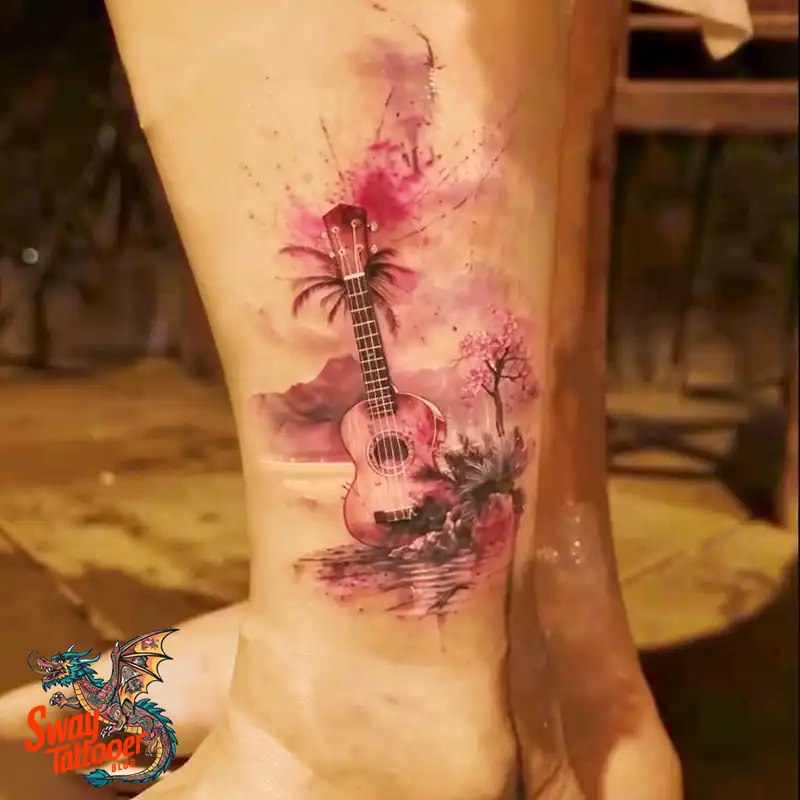
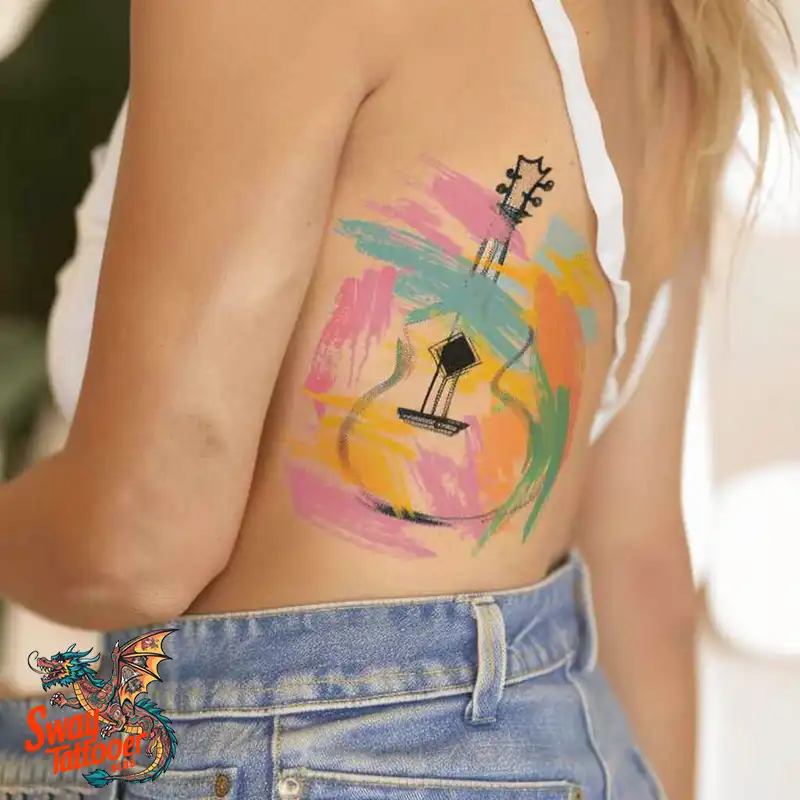
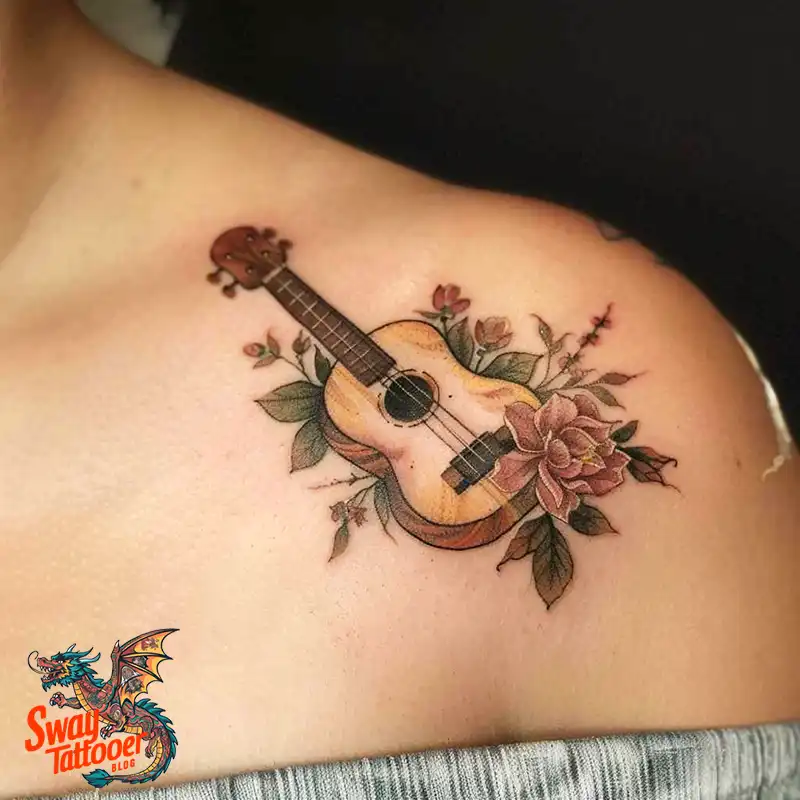
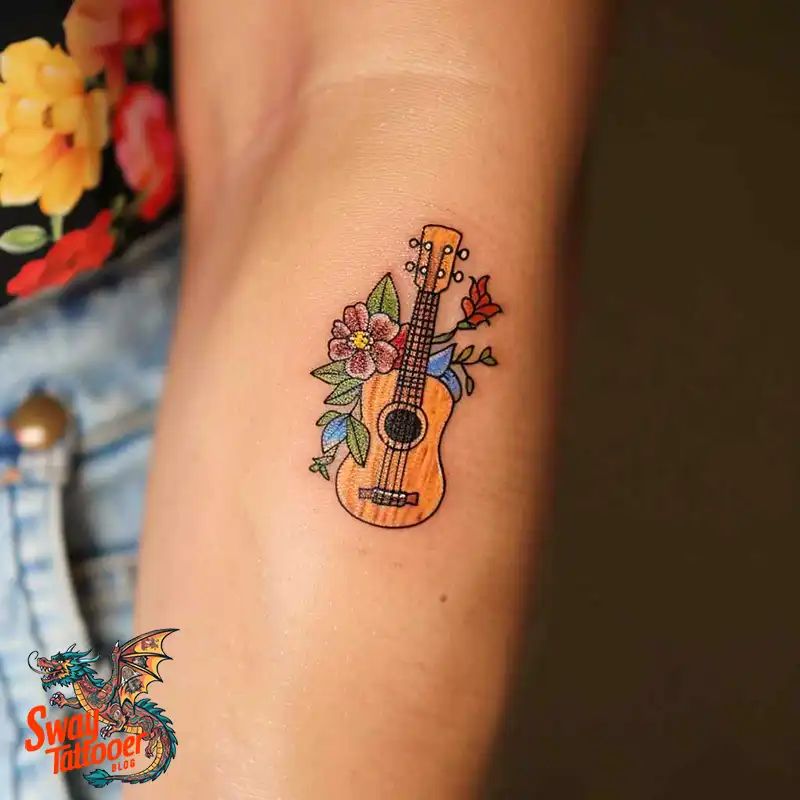
Watercolor looks like a beautiful painting. But it does fade faster than black and grey ink. This is because it lacks bold black outlines to act as anchors. The sun’s UV rays can also break down light colors more quickly. If you pick this style, you must be very good about using sunscreen every single day.
Wrapping up, a ukulele tattoo is a beautiful way to show who you are. Whether you choose a simple line or a realistic wood grain, it is a mark of joy. Take your time, do your research, and enjoy the process. Aloha!
Leave a Reply