
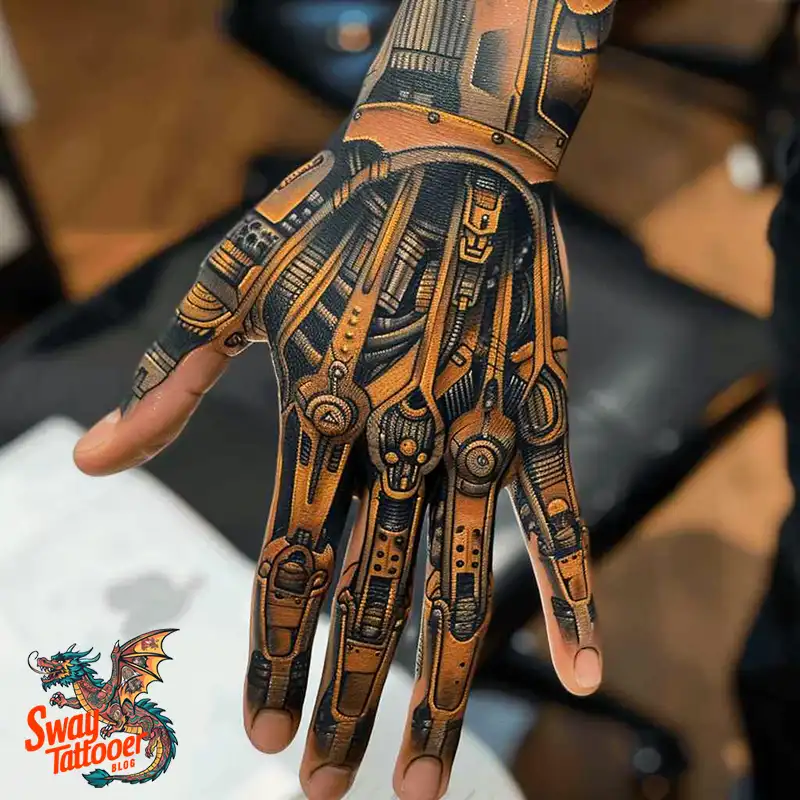
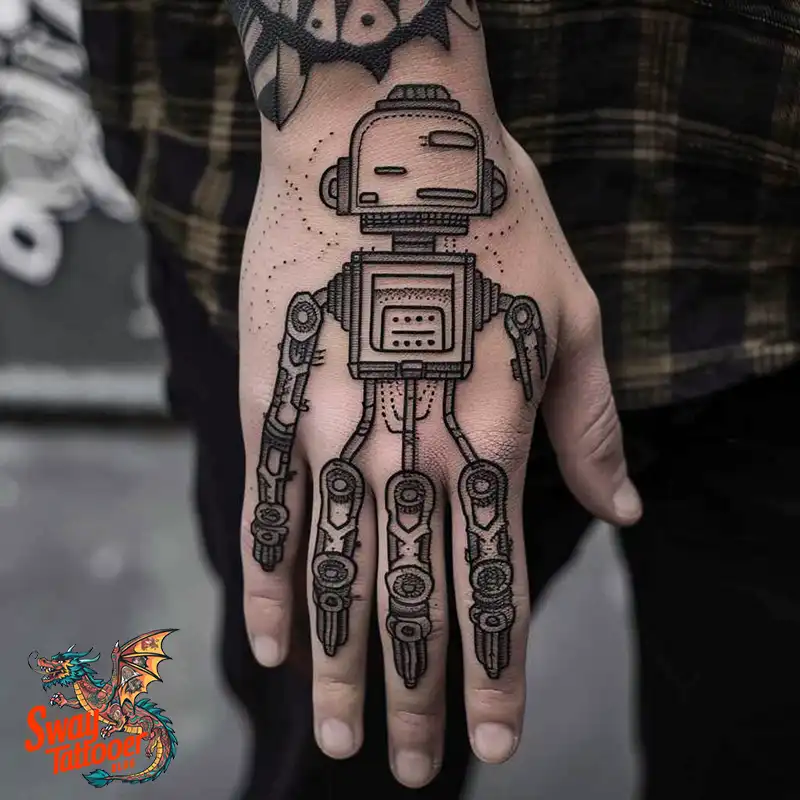
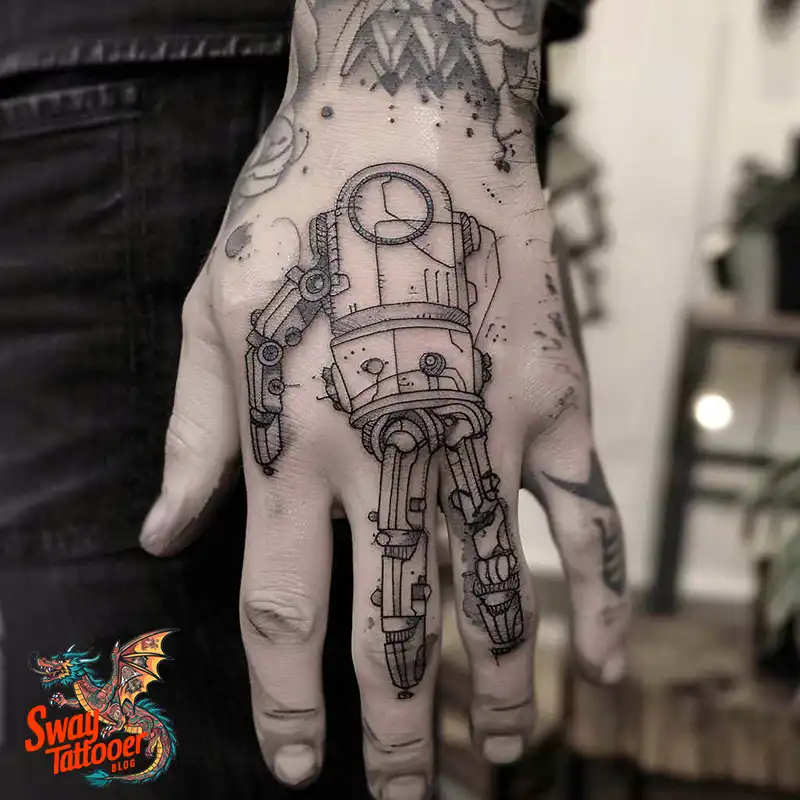
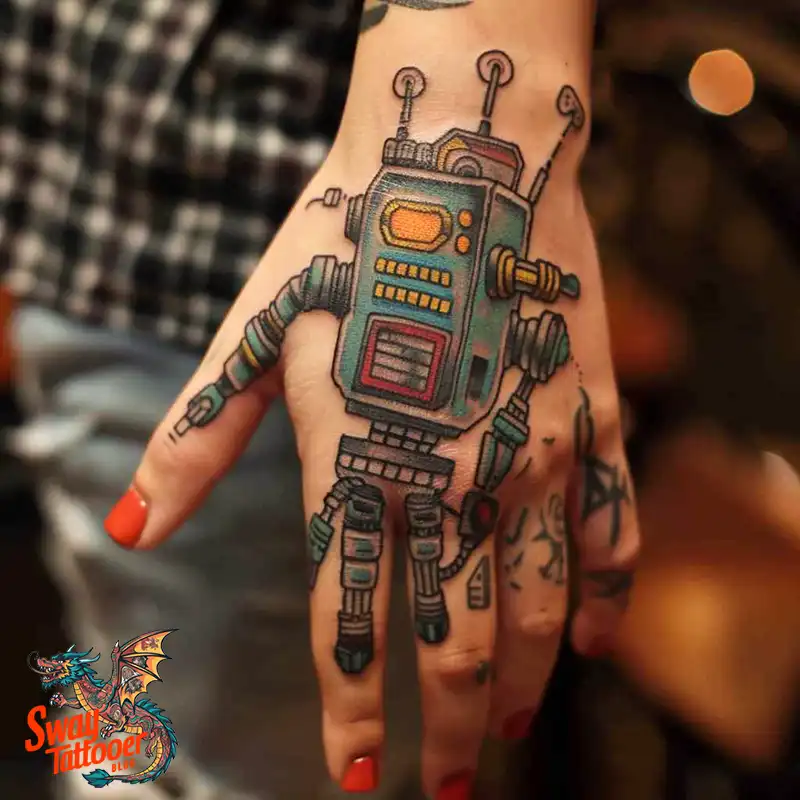
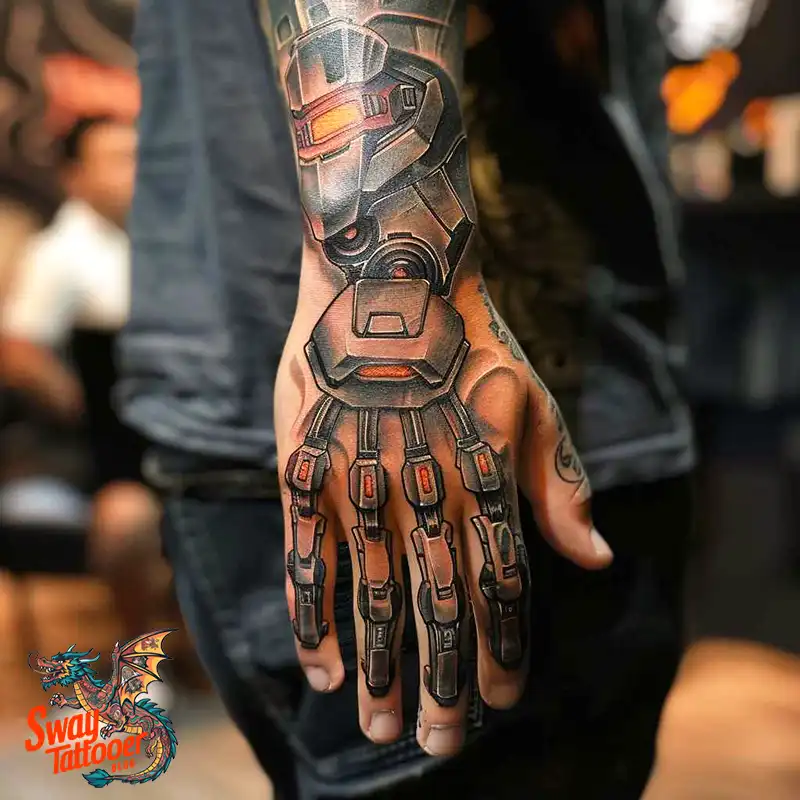
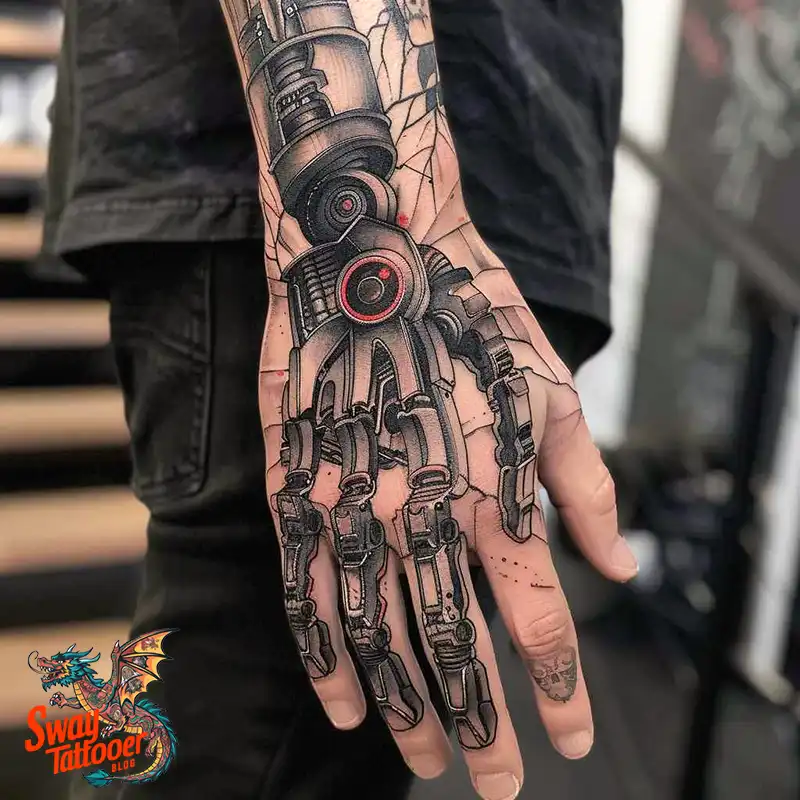
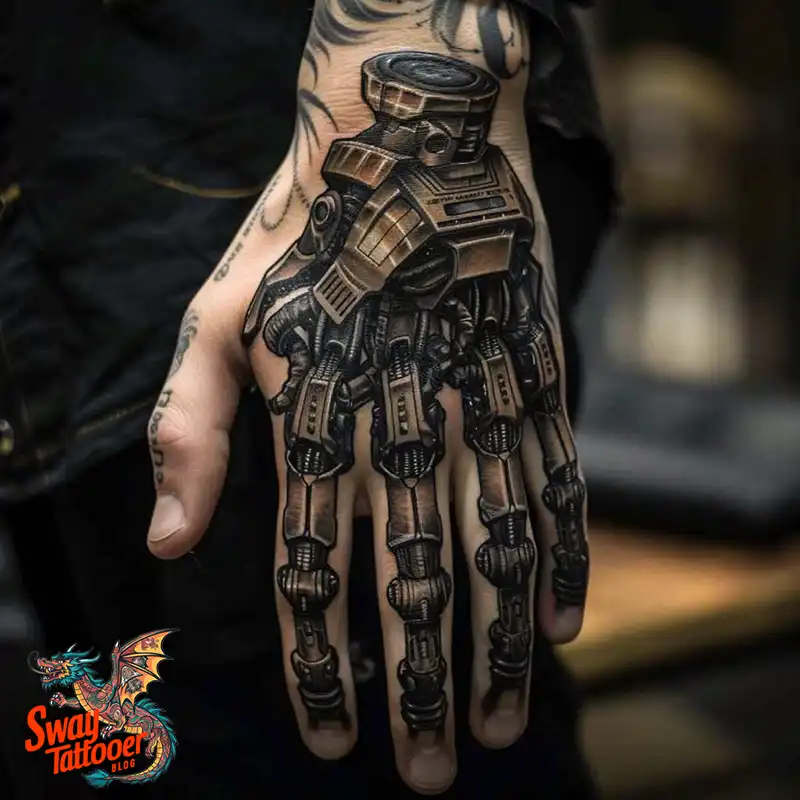
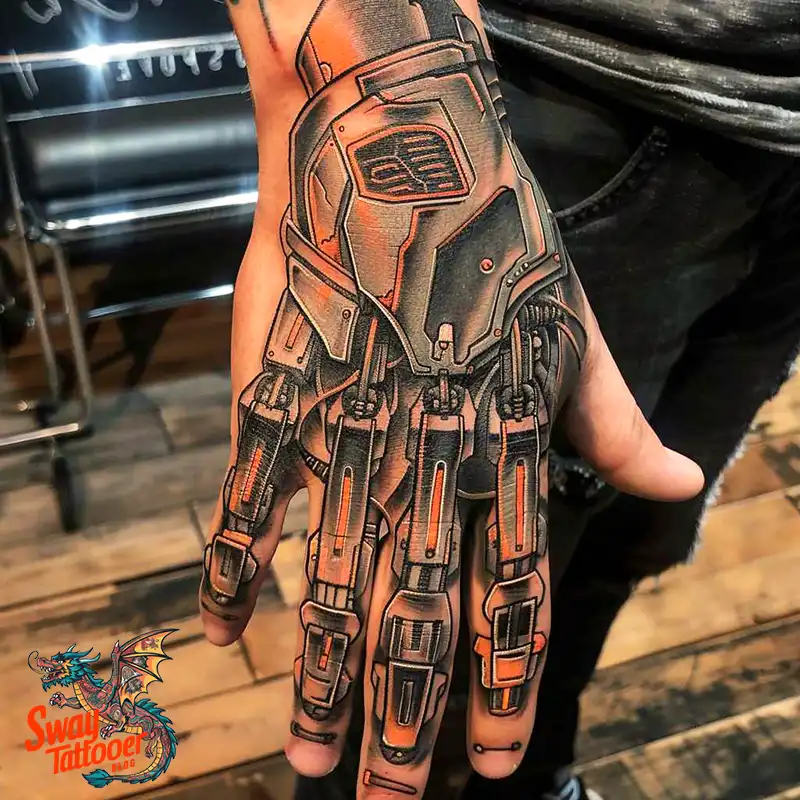
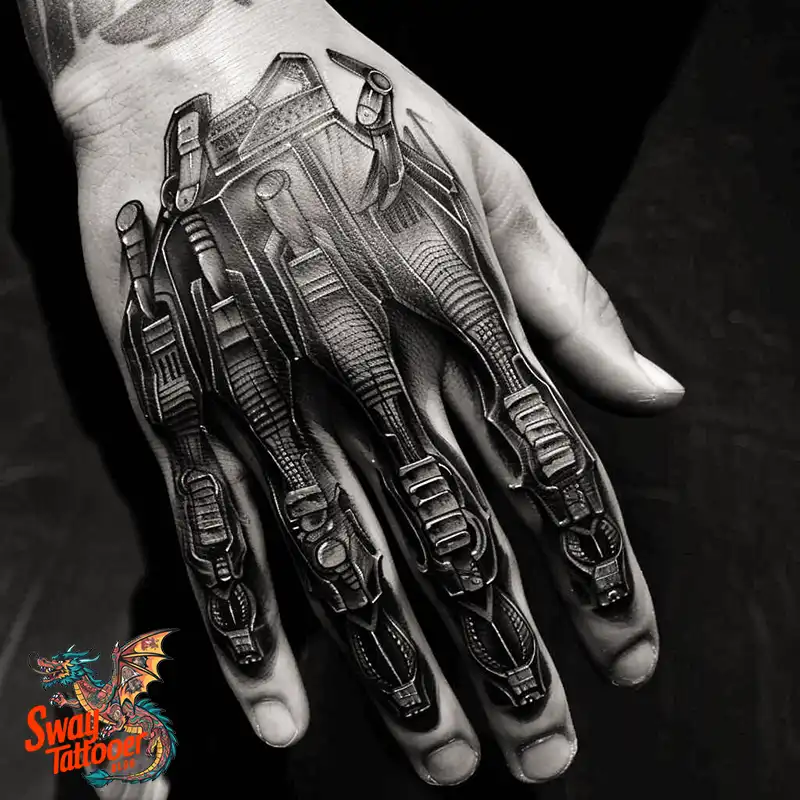
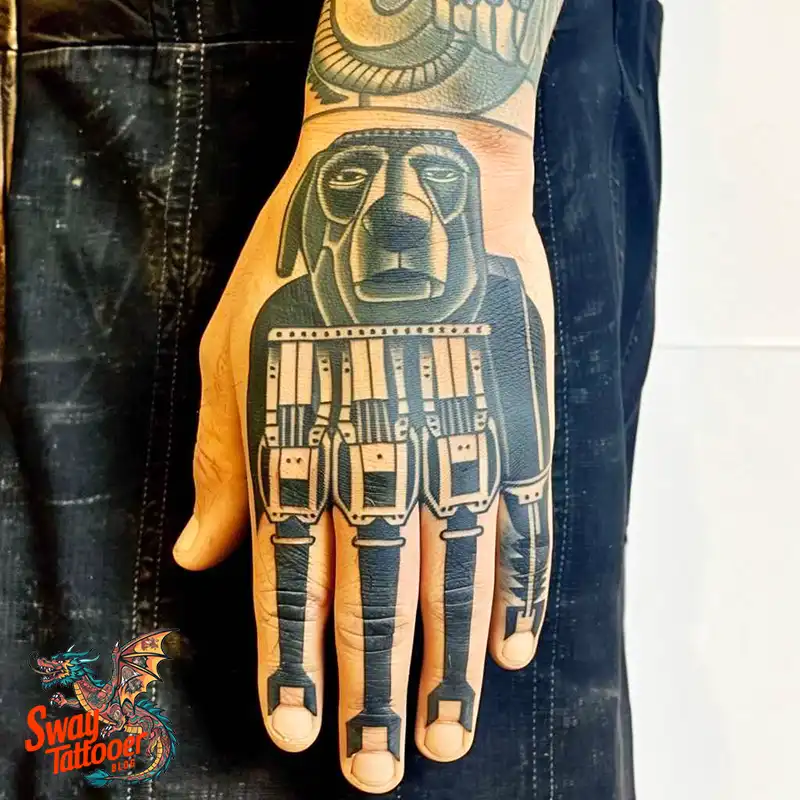
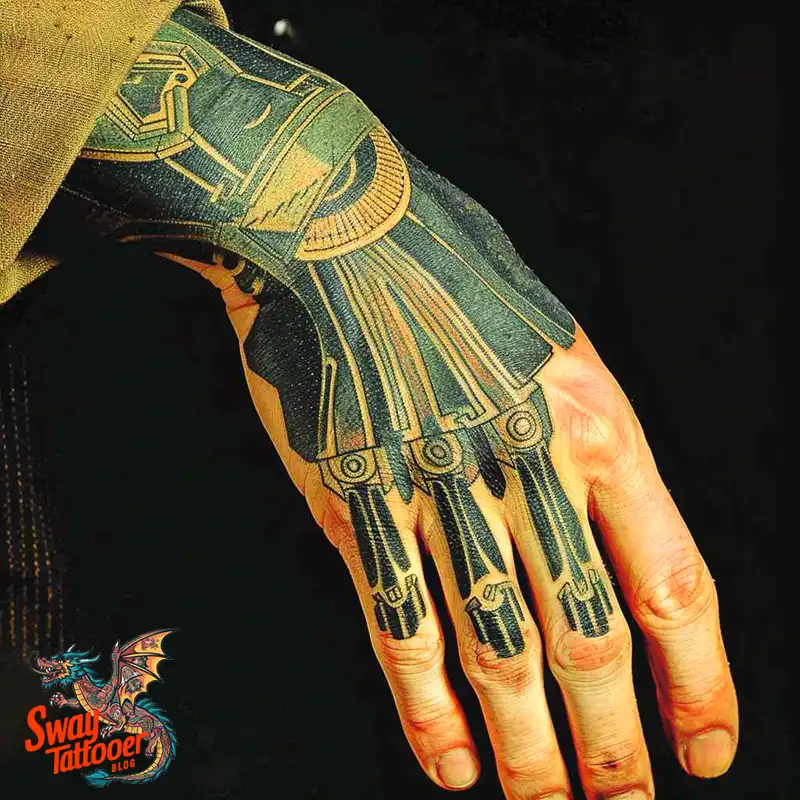
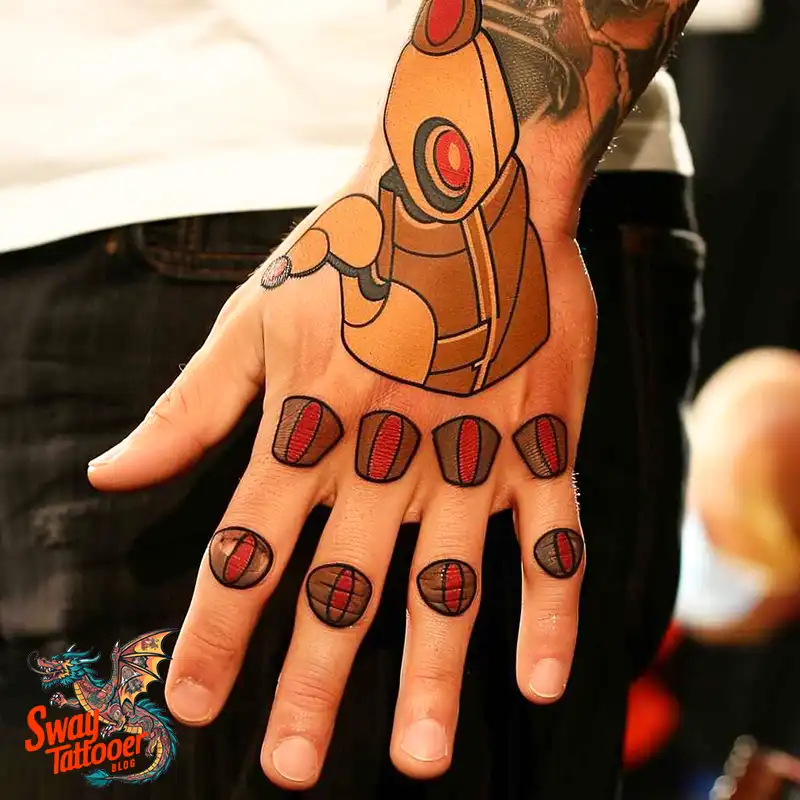
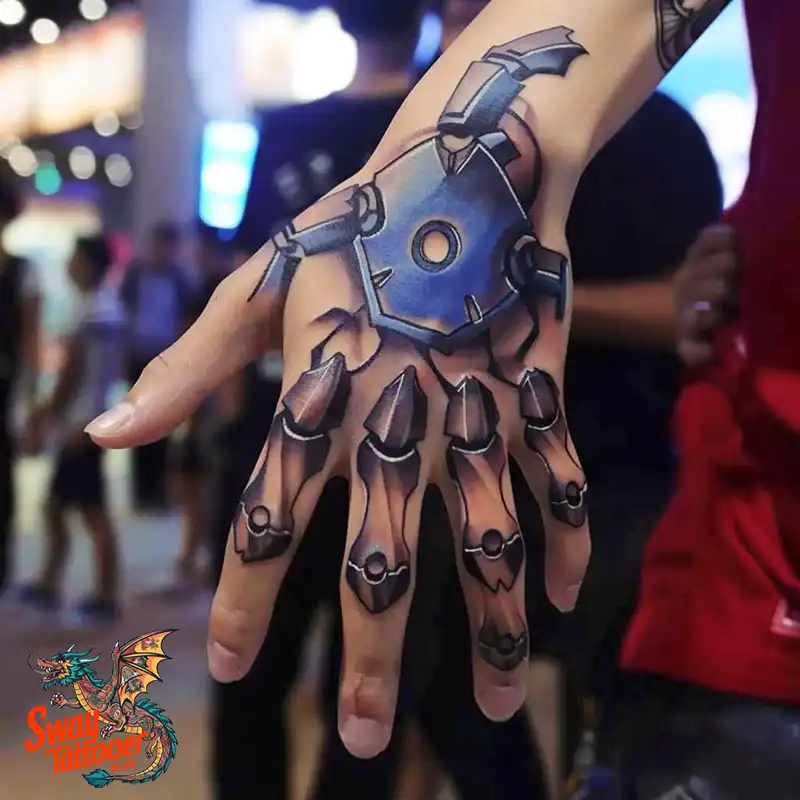
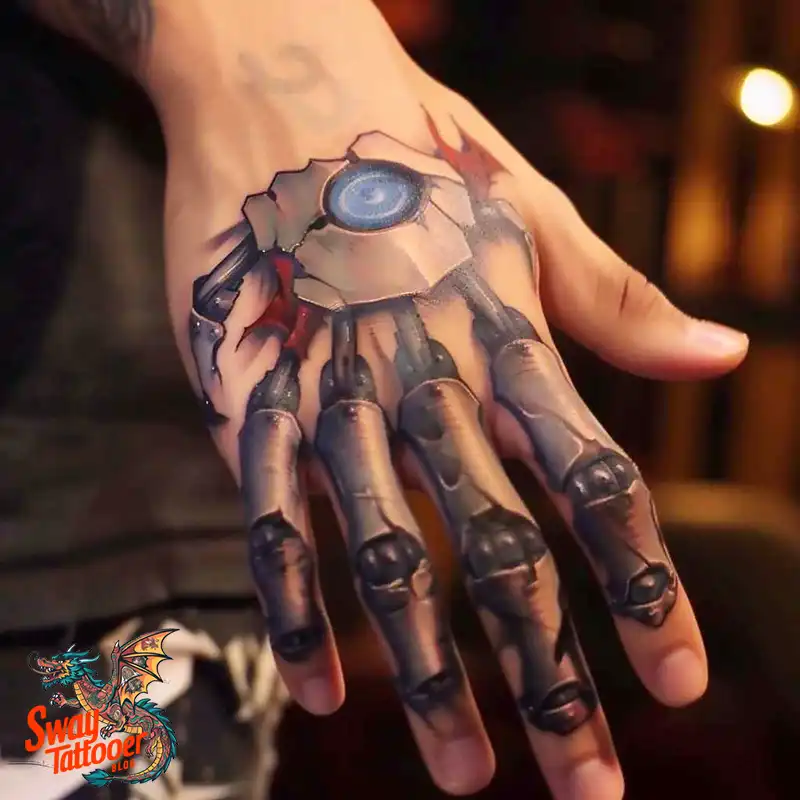
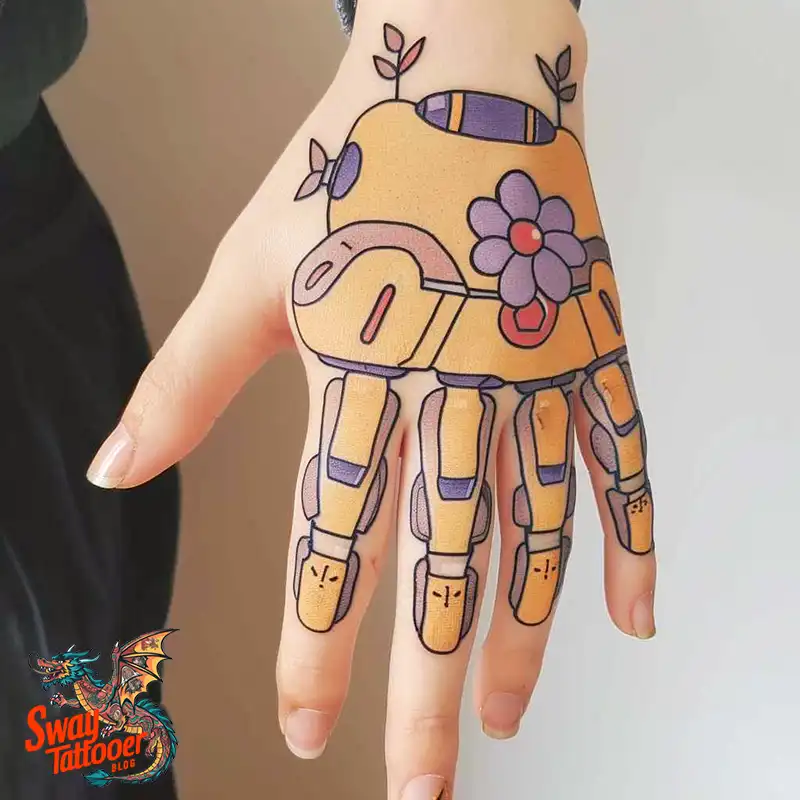
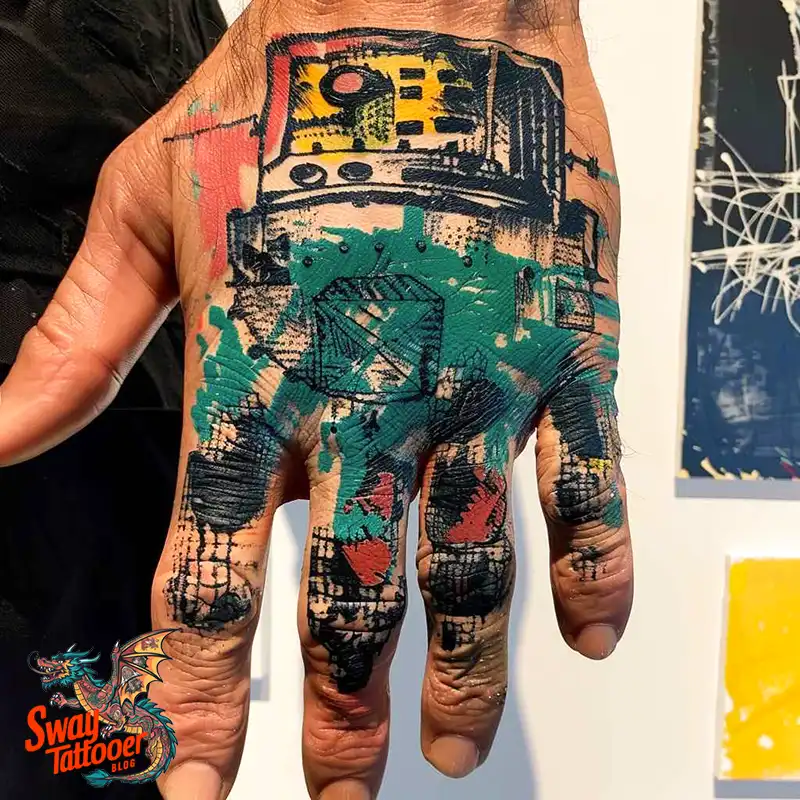
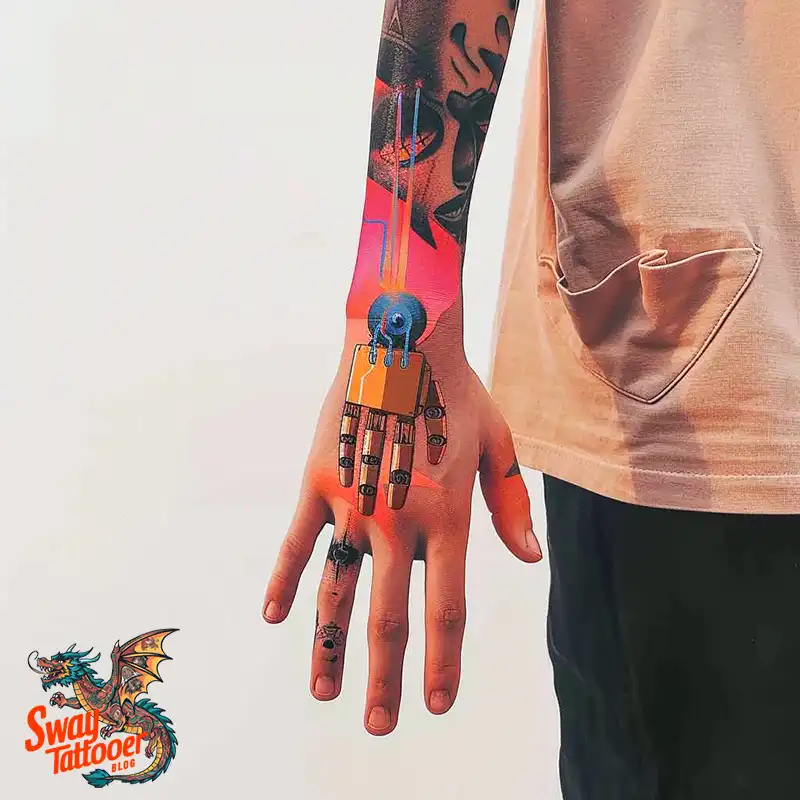
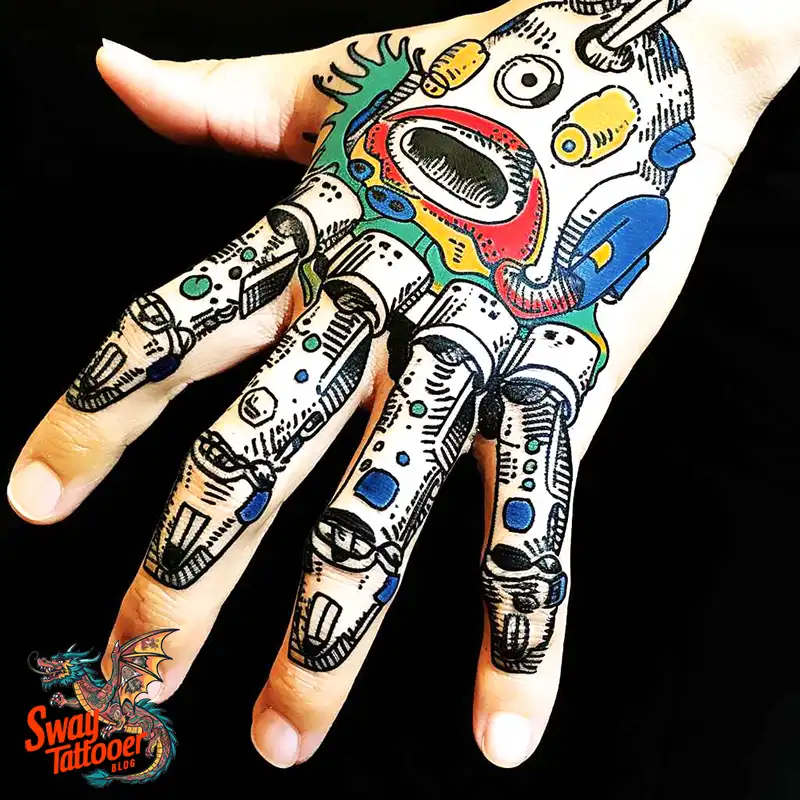
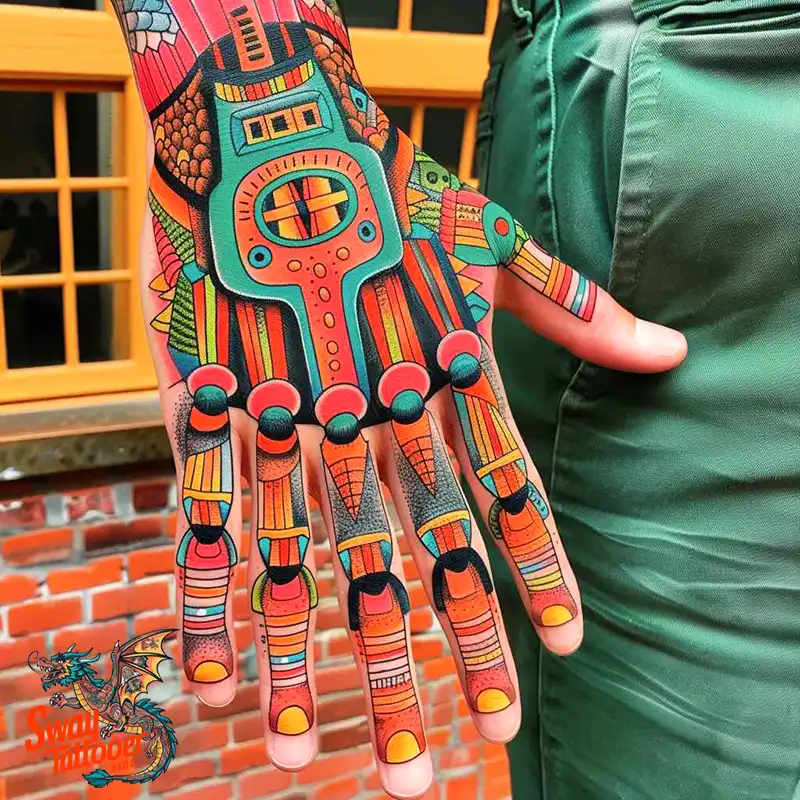
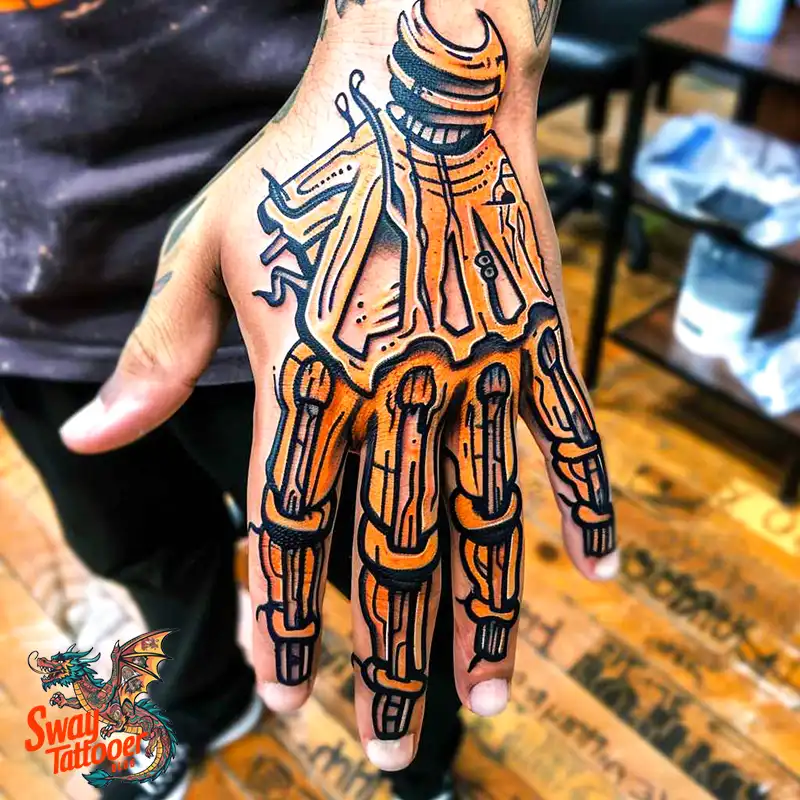
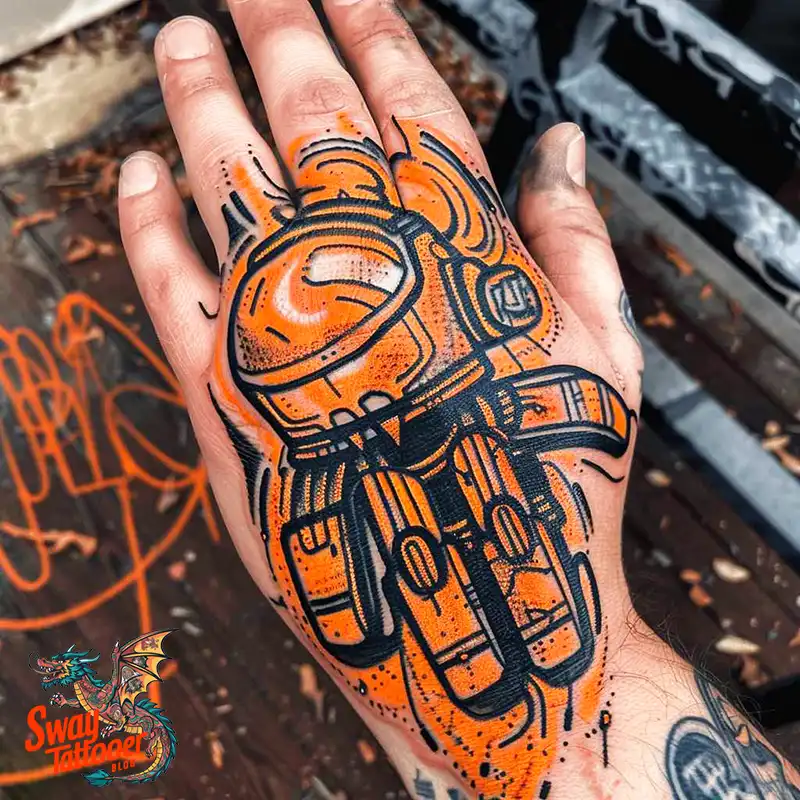
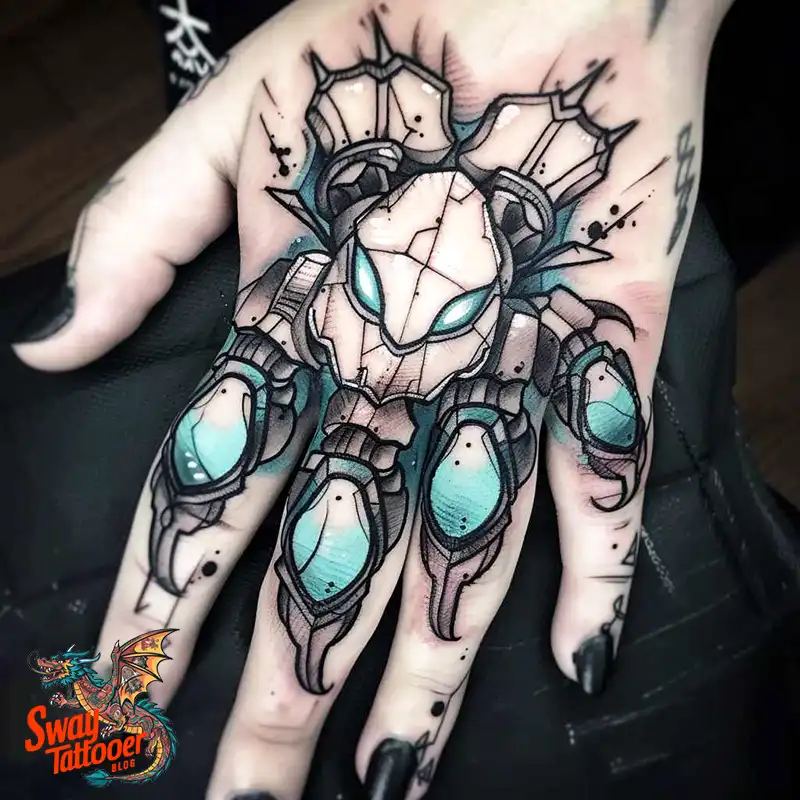
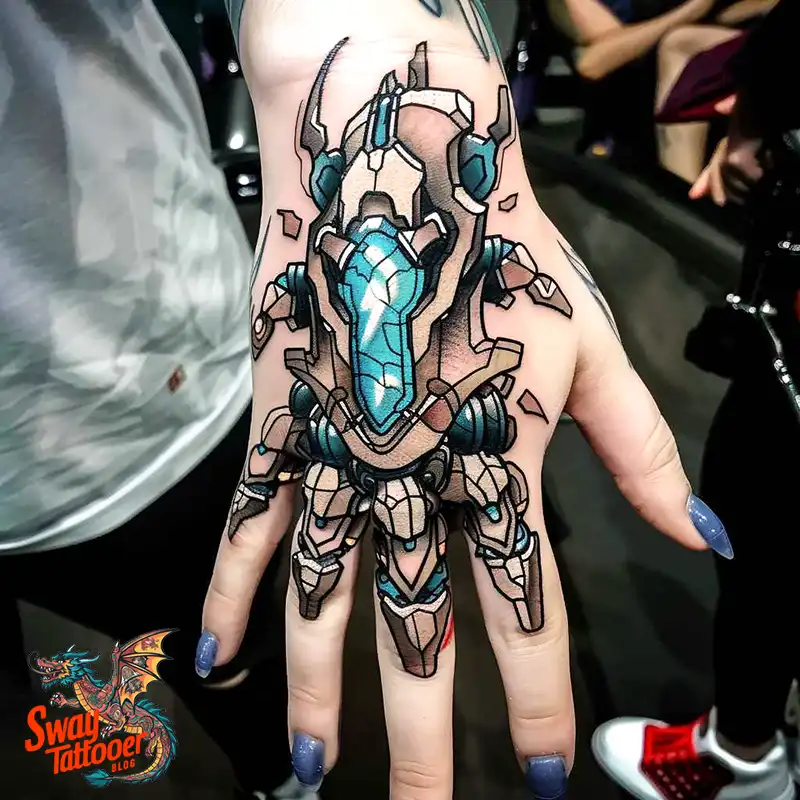
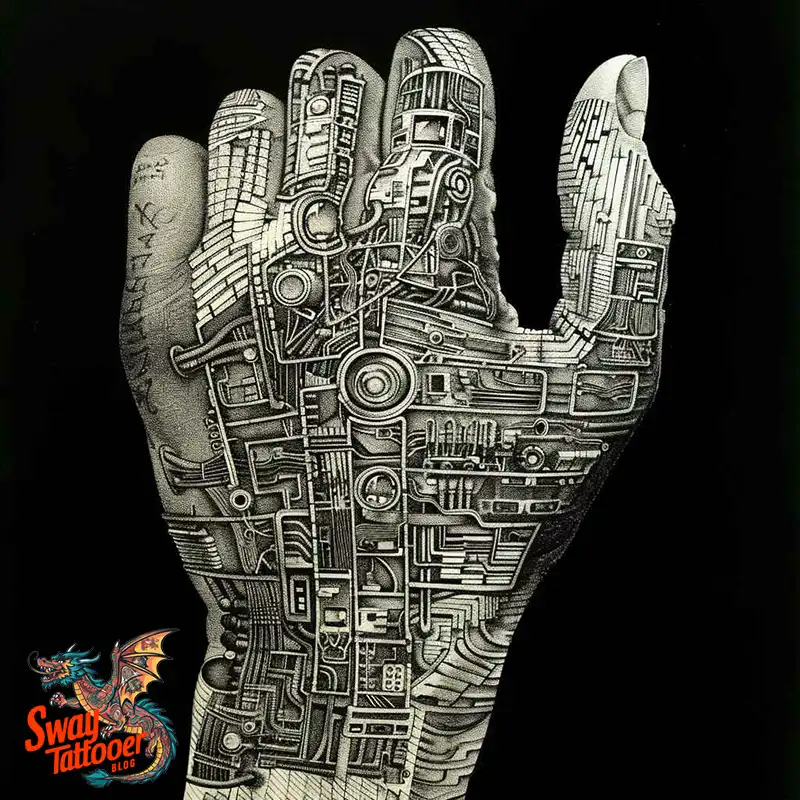
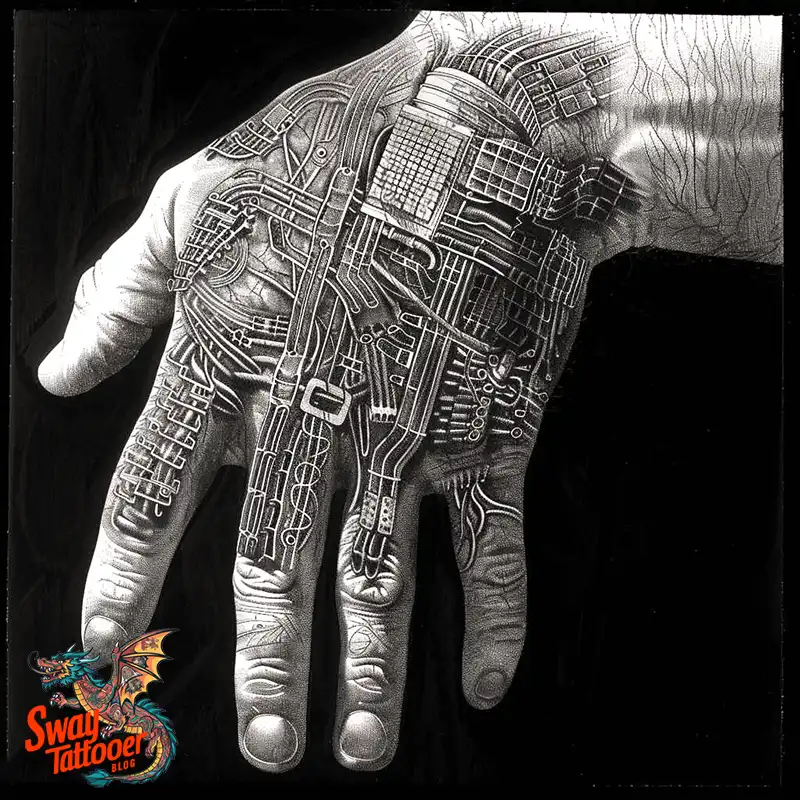
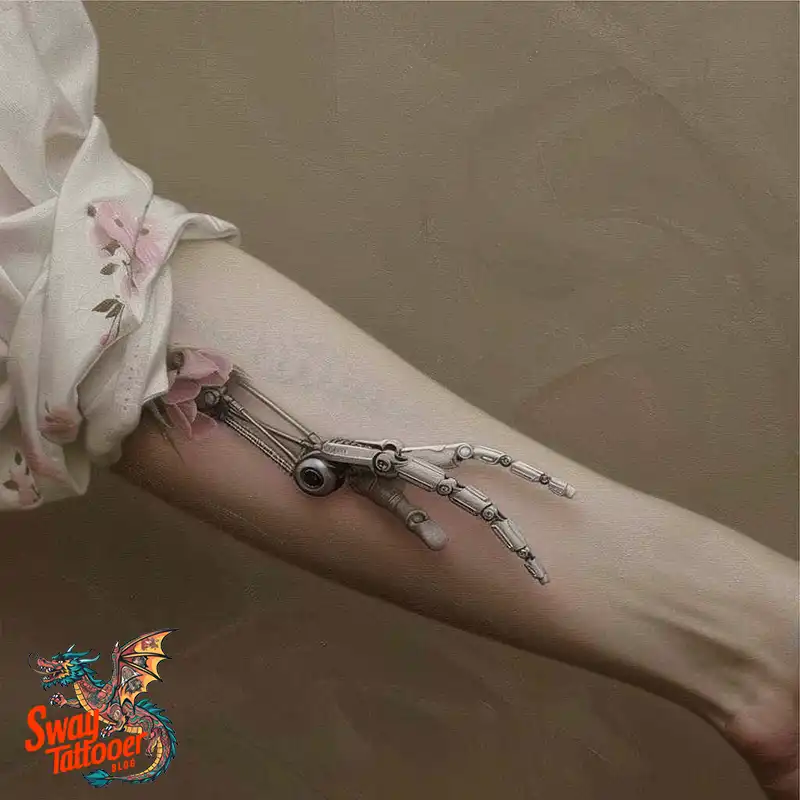
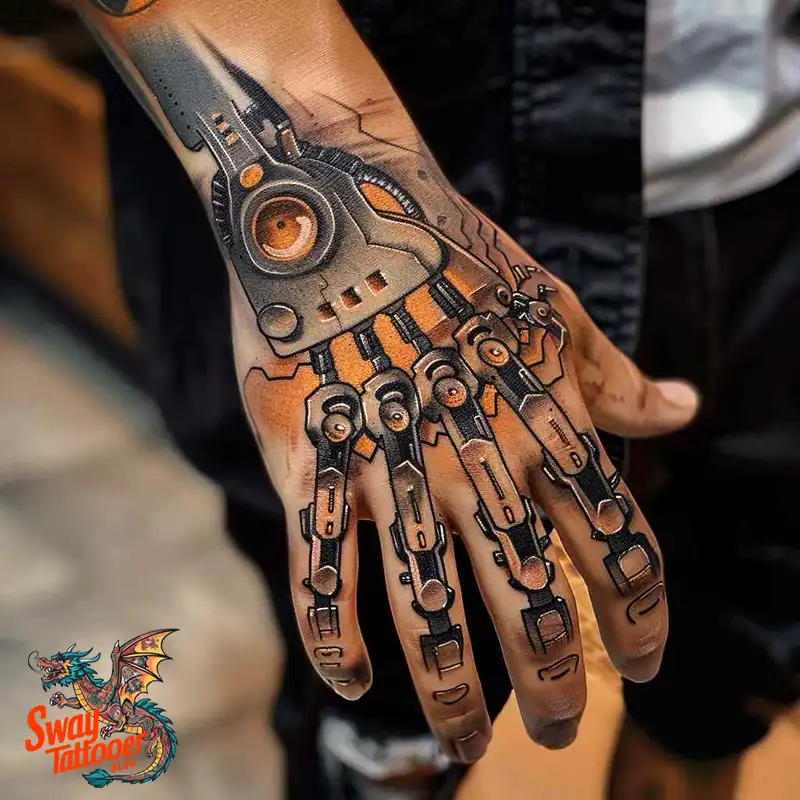
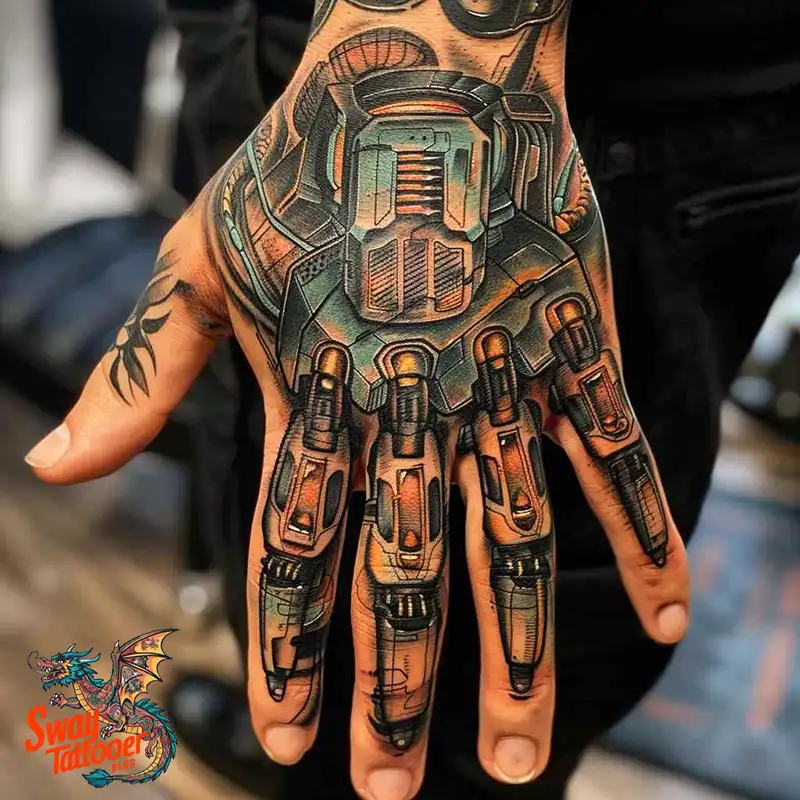
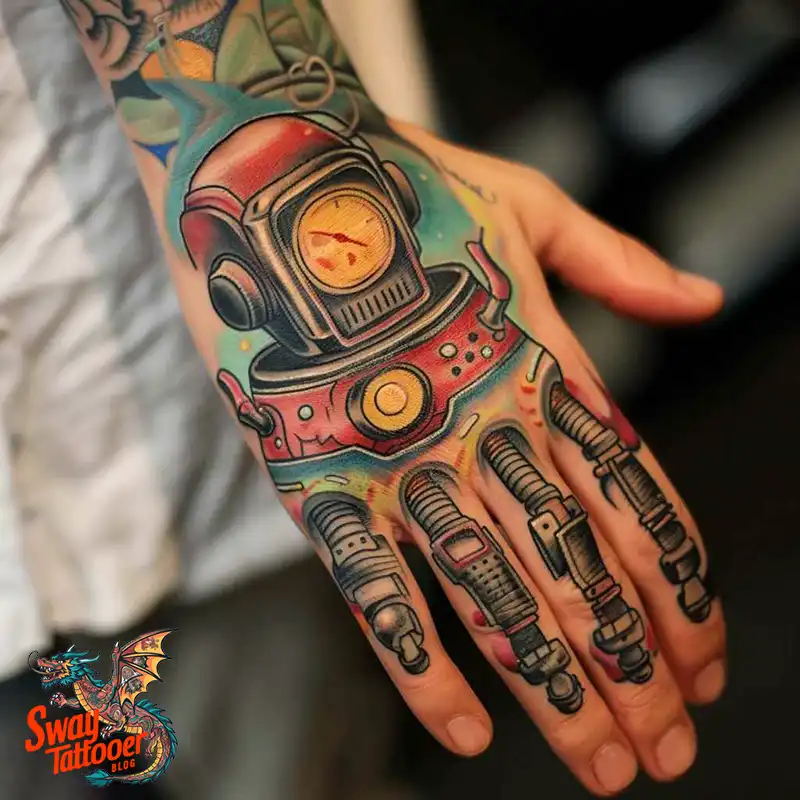
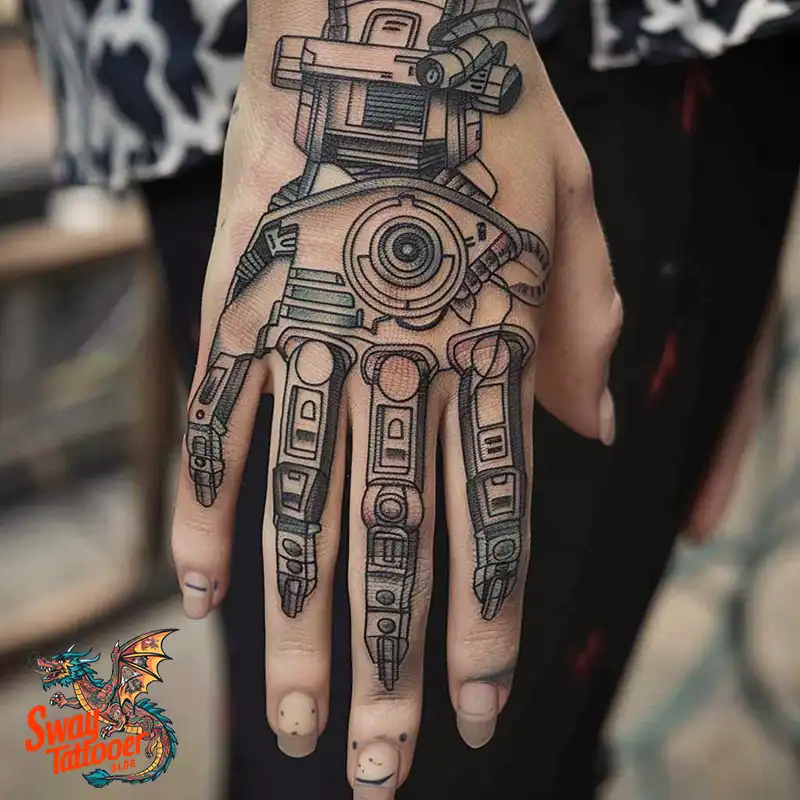
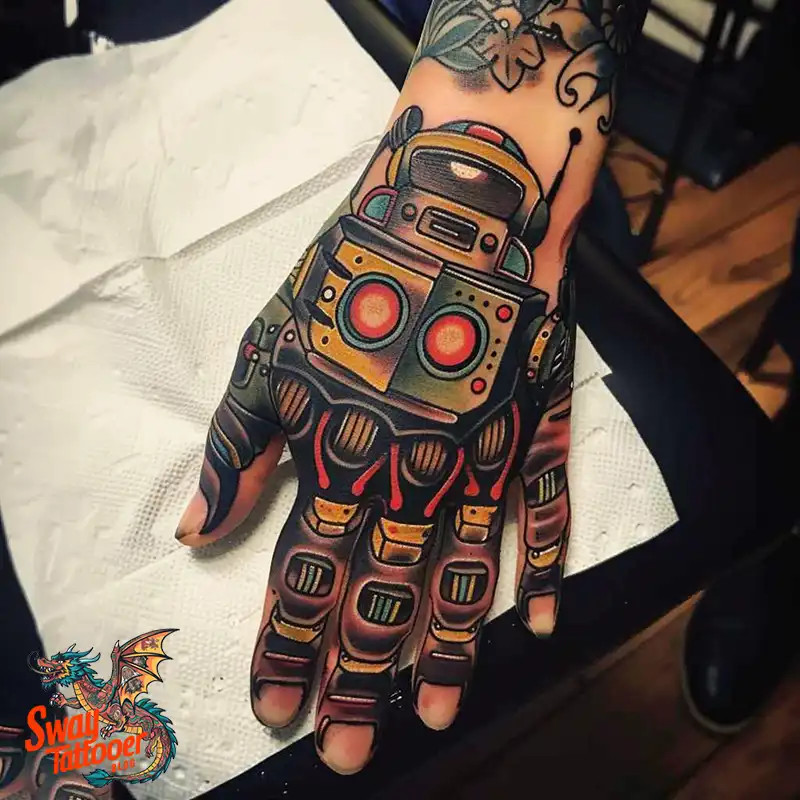
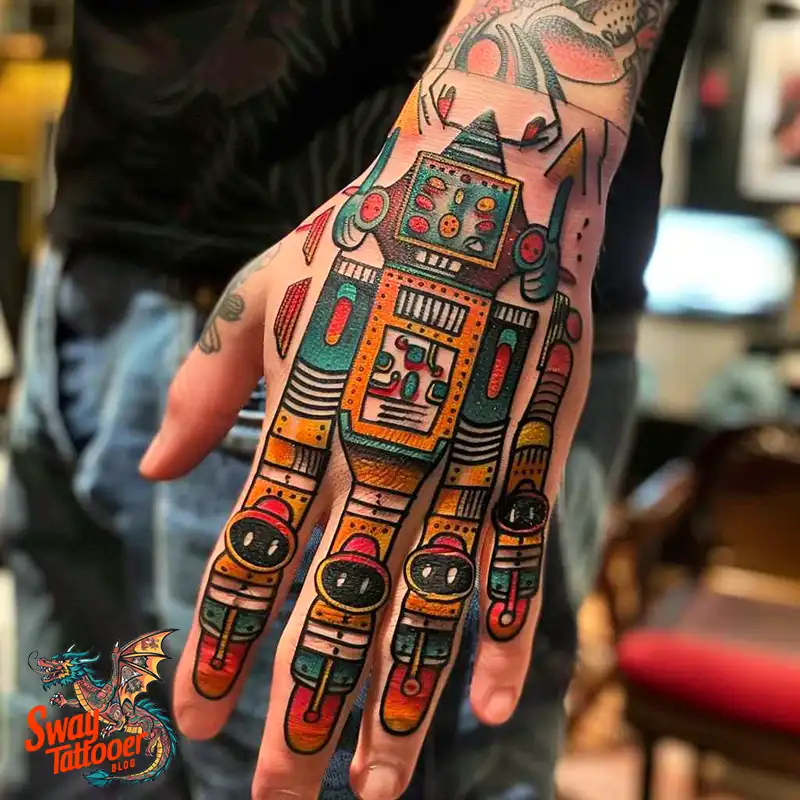
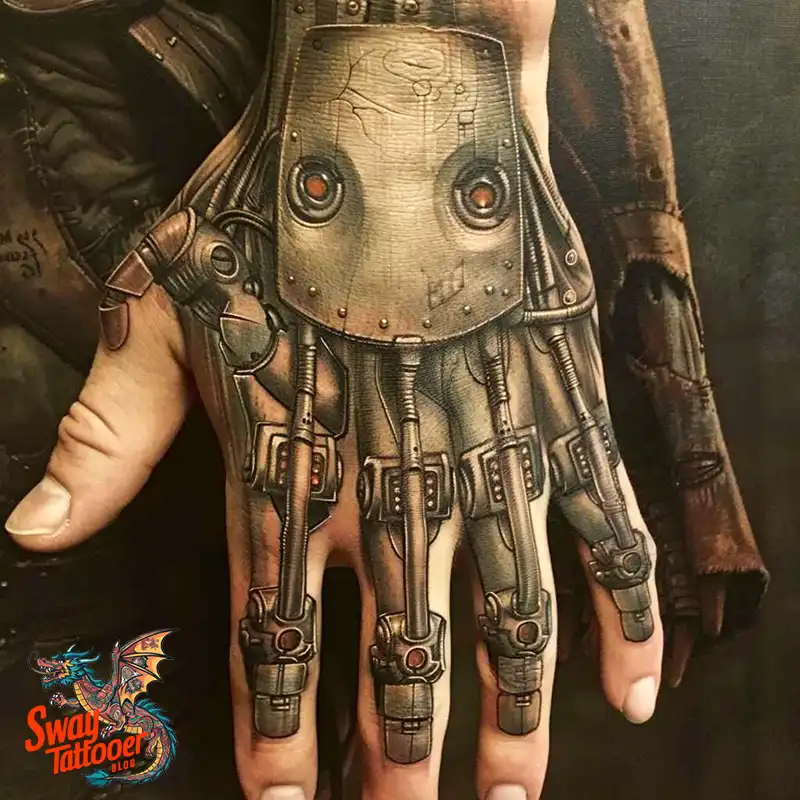
Do you want a tattoo that looks like something from the future? The robot hand tattoo is one of the most powerful designs you can get today. This style creates an amazing image. It looks like your skin is pulled back or torn away. It shows complex gears, pistons, circuits, and wires hidden underneath the skin. This look is profound and intense. This kind of robot arm tattoo is split into two main styles: the dark, gritty Biomechanical style and the clean, high-tech Cyberpunk style.
The popularity of the robotic design is growing fast. Technology is now a huge part of our lives. The border between human and machine is starting to disappear. These tattoos are a permanent sign that you are thinking about this future. Because this style is so complex, it takes great skill and time. Getting a robot tattoo shows you are making a serious investment with an expert artist.
Symbolism:
Choosing to put artificial parts on your skin is a powerful choice. It is rooted in ideas of change and identity.
The Duality of Human and Machine
The basic meaning of a robotic tattoo is the fusion of human and machine. It mixes the organic body (nature) with technology (the artificial parts). It celebrates the human body as a remarkably complex machine. This design shows that you have a strong connection to technology or a fascination with how biology and machinery meet.
Resilience, Survival, and Rebirth
This is the most powerful and personal meaning of the robot hand tattoo. The design means survival and resilience.
- Overcoming Trauma: This style holds deep meaning for those who have gone through trauma, accidents, or major surgeries.
- Reclaiming the Body: By adding mechanical parts, the tattoo symbolizes strength and the ability to adapt to a new life. It is a way to claim your body back. It becomes a badge of honor that shows you survived and rebuilt yourself even stronger. This act of creation is a symbol of rebirth.
Philosophical and Futuristic Commentary
These designs also comment on what it means to be human now. They show a belief in human enhancement and the future of technology. They reflect our vision of a world where the line between biology and technology is blurring.
Specific elements in the design have their own meanings:
- Gears and Pistons: These parts mean that life is always in motion and that everything is connected. They stand for power and adaptability.
- Circuitry and Wires: These parts symbolize digital connectivity and intelligence in the modern age.
- Torn Flesh: The visual of ruptured skin shows transformation and survival—the unveiling of a new, evolved self.
| Element | Primary Symbolism | Contextual Meaning |
| Exposed Gears/Pistons | Machinery of life, complexity | Resilience, power, constant motion and adaptation. |
| Circuit Boards/Wires | Connectivity, digital age, intelligence | Future-focus, technological connection. |
| Torn Flesh/Organic Edges | Transformation, survival, overcoming trauma | The reveal of a hidden, evolved self. |
History:
The robotic style has a clear history, starting with early science fiction and dark art.
Conceptual Birth and the Cyborg Definition
The concept of the cyborg came first. The word “cyborg” was created in 1960. A cyborg is a living thing that has its function restored or enhanced by artificial parts. This idea immediately raised the question of human potential.
The Giger Genesis: Biomechanics and Art
The intense, visual look of the Biomechanical tattoo style comes directly from Swiss artist H.R. Giger. He is the undisputed creator of this aesthetic.
- The Original Style: Giger is famous for designing the creatures in the movie Alien. He called his style “biomechanical.” It used intricate details and dark themes that mixed cold, sharp machine parts with organic human elements.
- Black and Grey: Giger’s art used a black and grey color palette to emphasize texture and contrast. This is why classic robot hand tattoos use only black ink. It achieves the specific dark, gritty realism of his original vision.
- Other Influences: Movies like Terminator and Ghost in the Shell helped popularize the cyborg figure in the 1980s and 90s, giving the style a strong intellectual and futuristic foundation.
Robot Hand Tattoo Design Ideas:
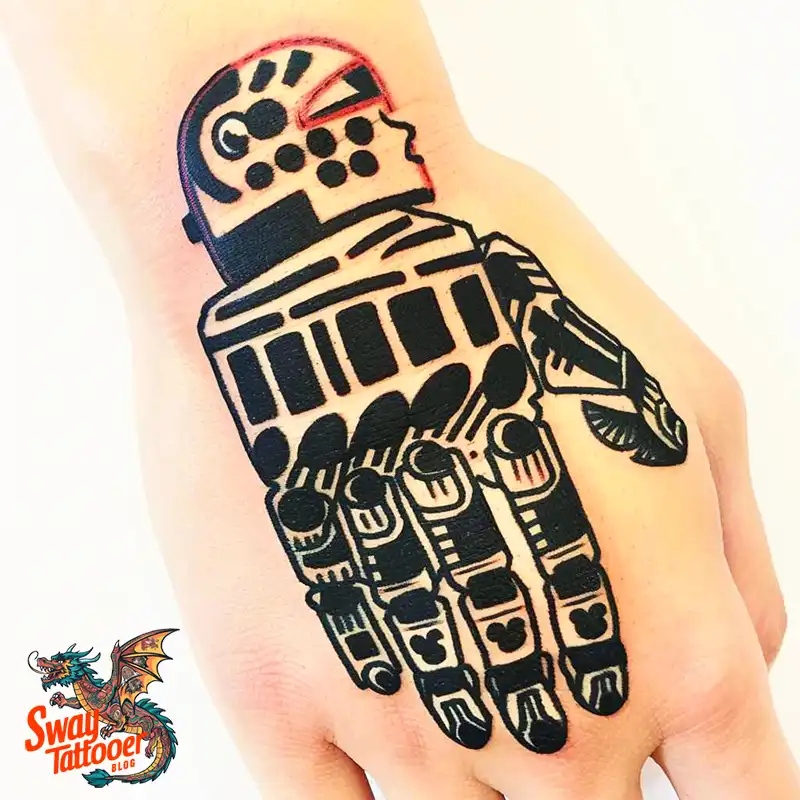
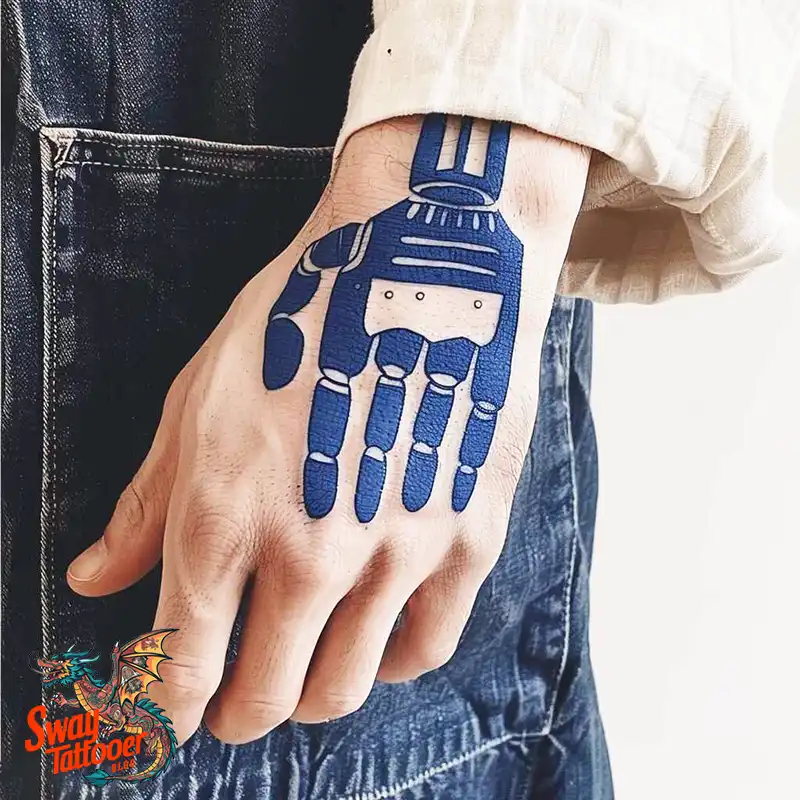
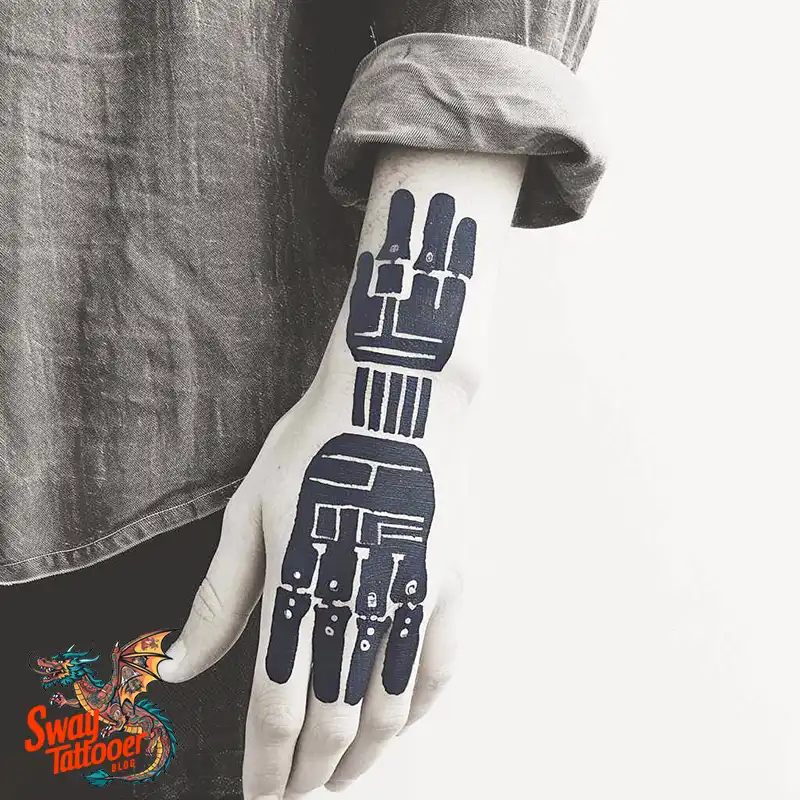
A successful robot arm tattoo must look three-dimensional. This requires a very high level of artistic skill. The style falls into two main groups:
Biomechanical (The Organic Machine)
This is the original style, inspired by H.R. Giger.
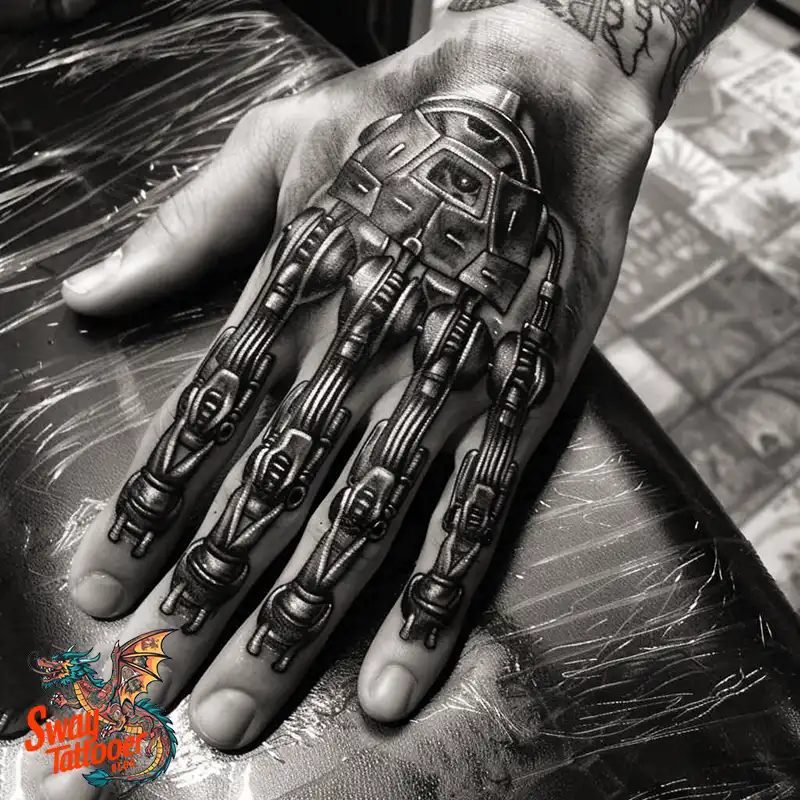
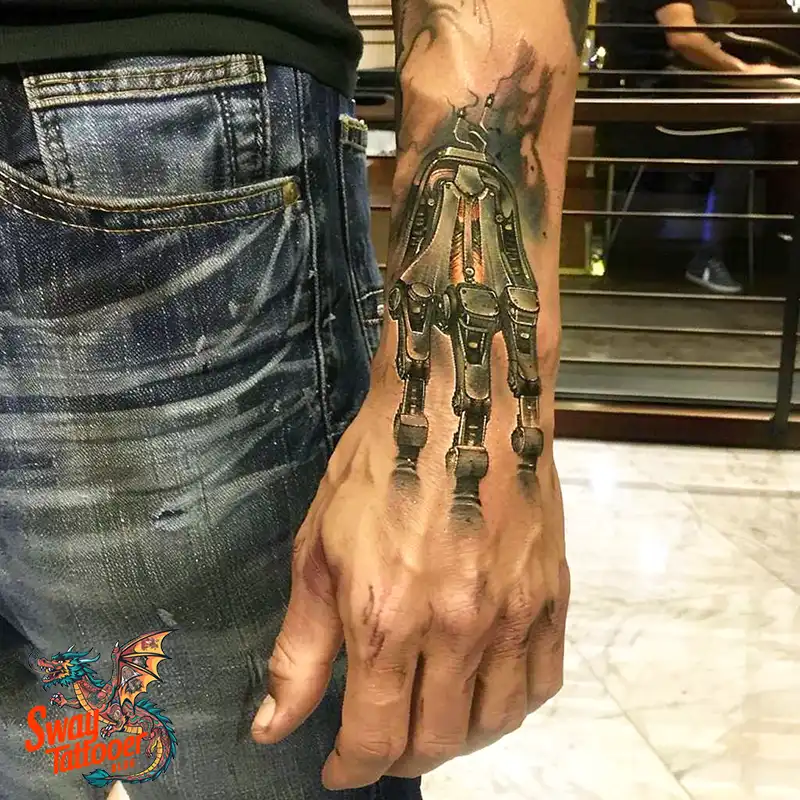
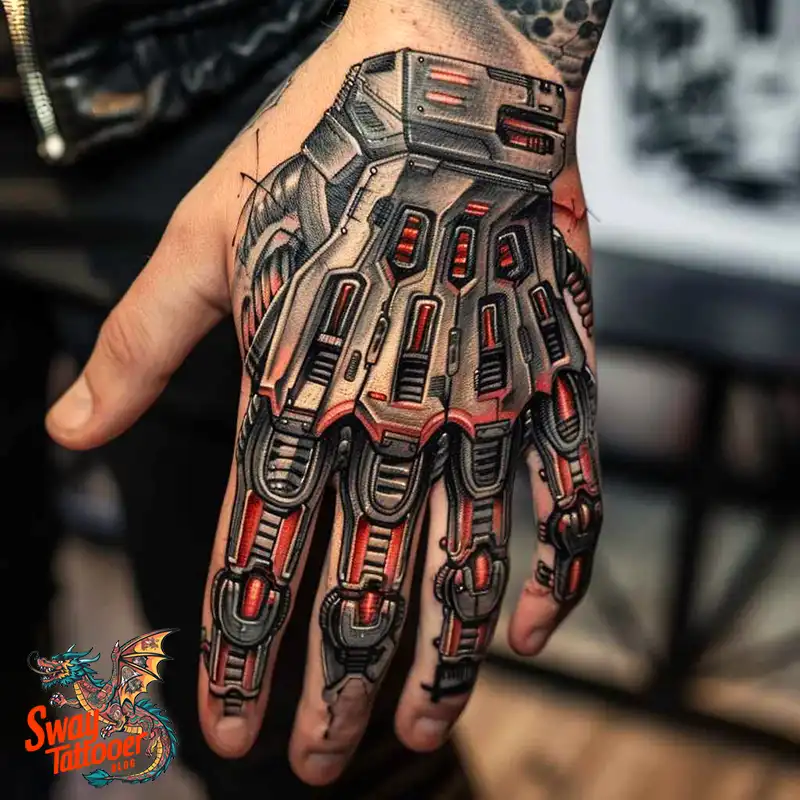
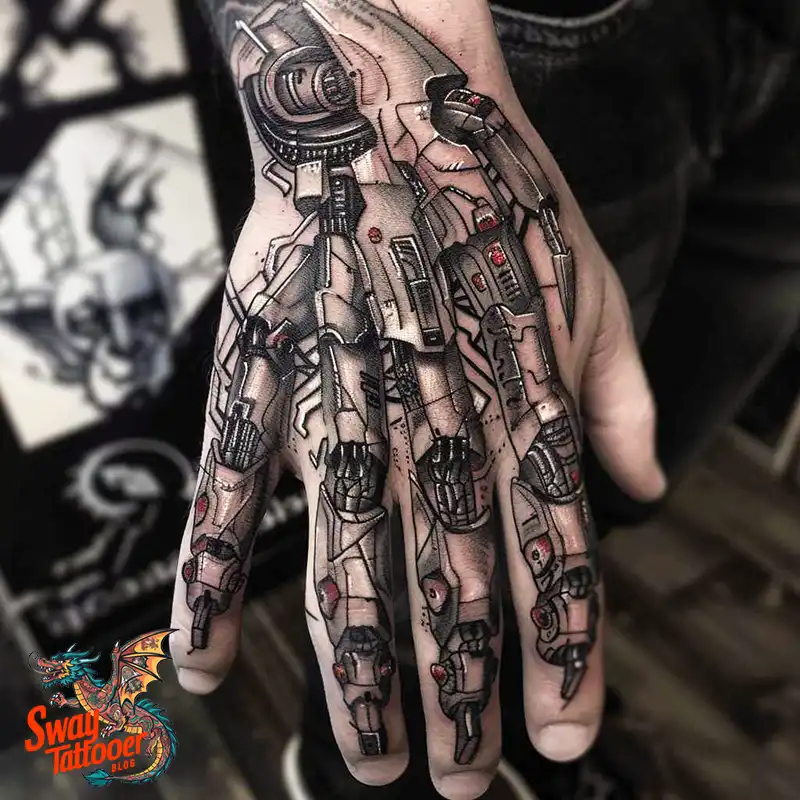
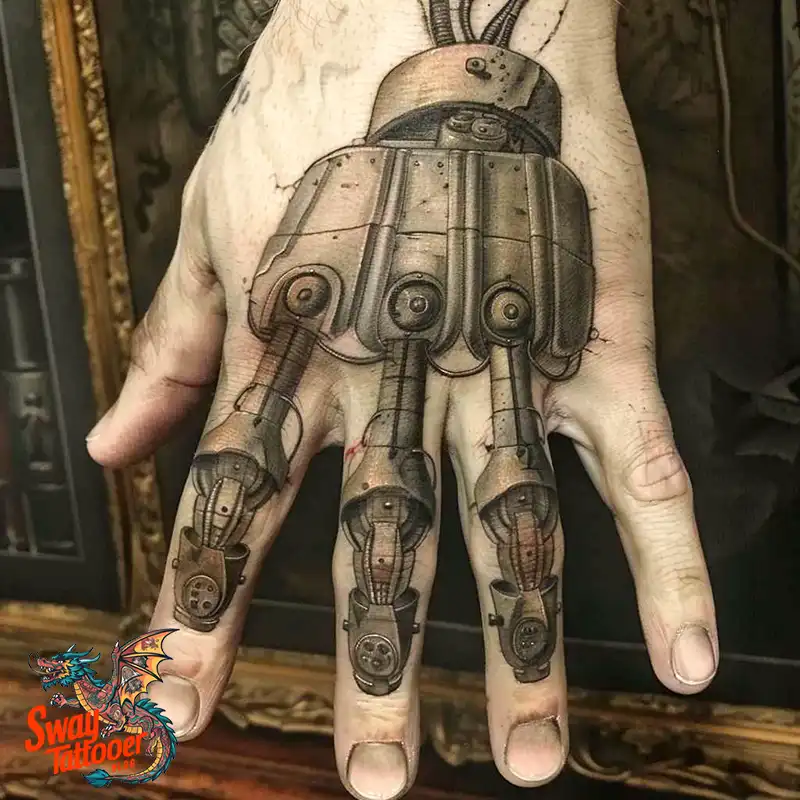
- Focus: It shows skin and muscle fused with heavy, industrial parts like pistons, gears, and cables. The metal often looks rusted or organically joined to the body.
- Aesthetic: The design is dark and surreal. It relies on showing realistic texture, making the metal and tissue look real with intense attention to detail.
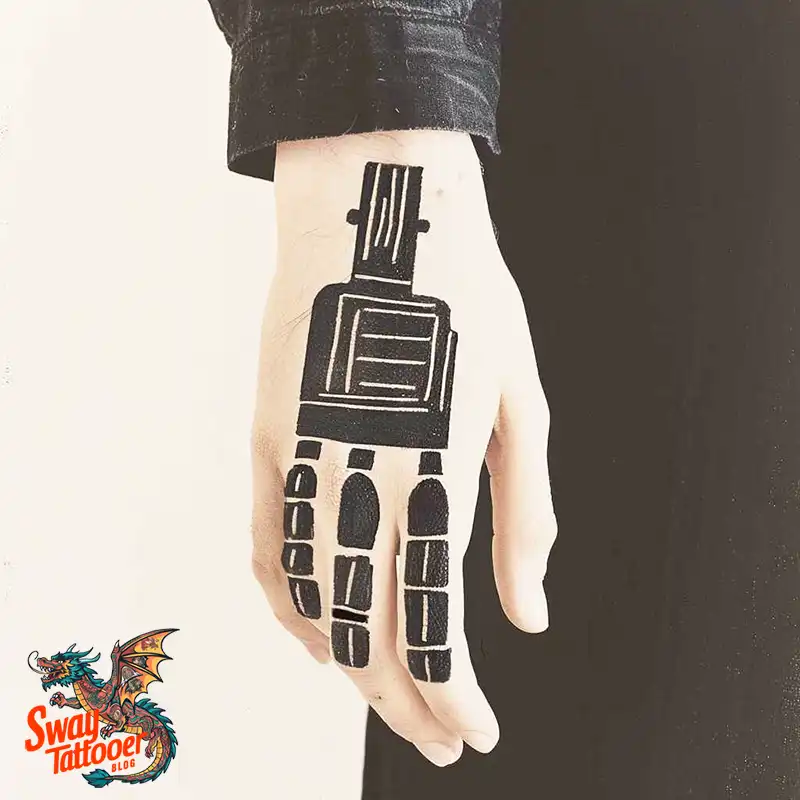
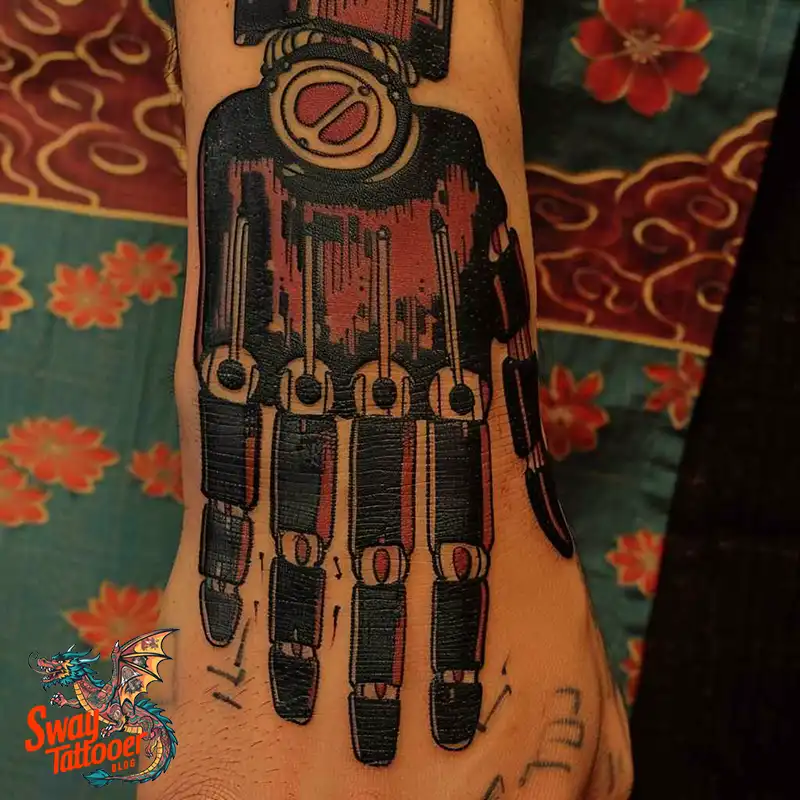
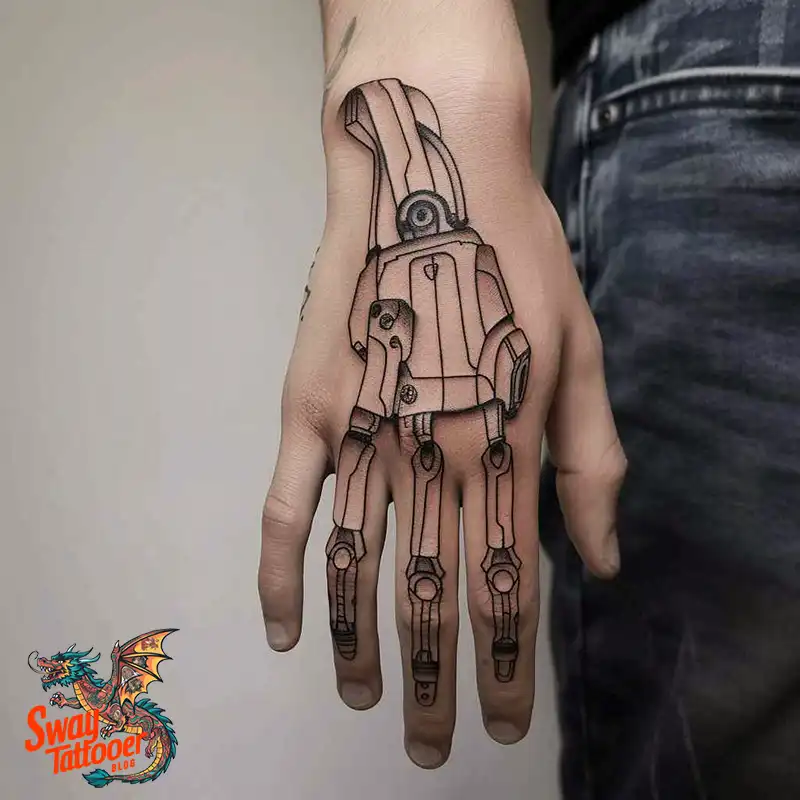
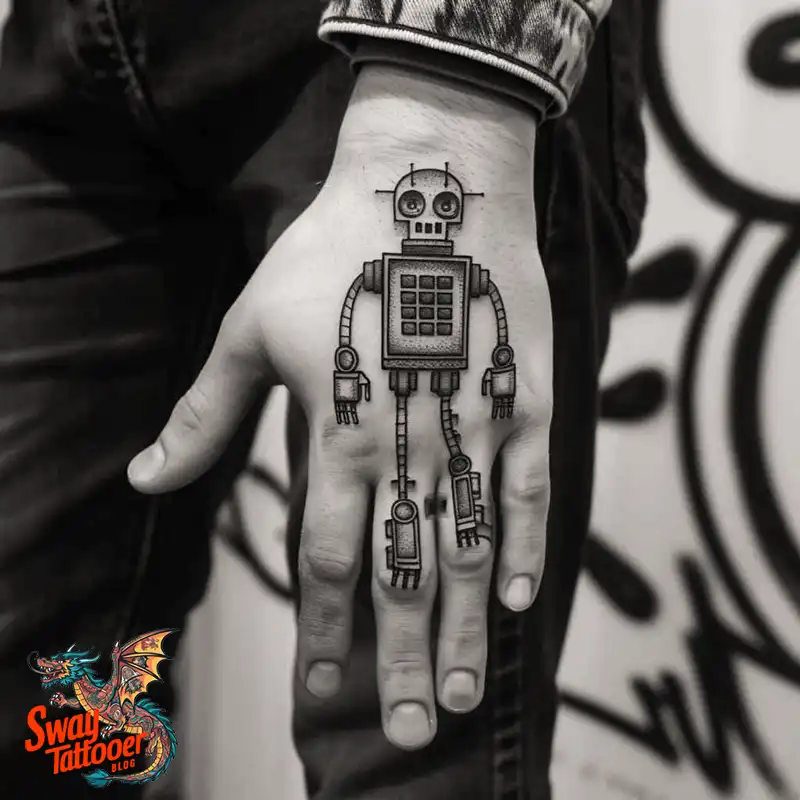
Cyberpunk and Techno-Organic
This is a cleaner, more modern look.
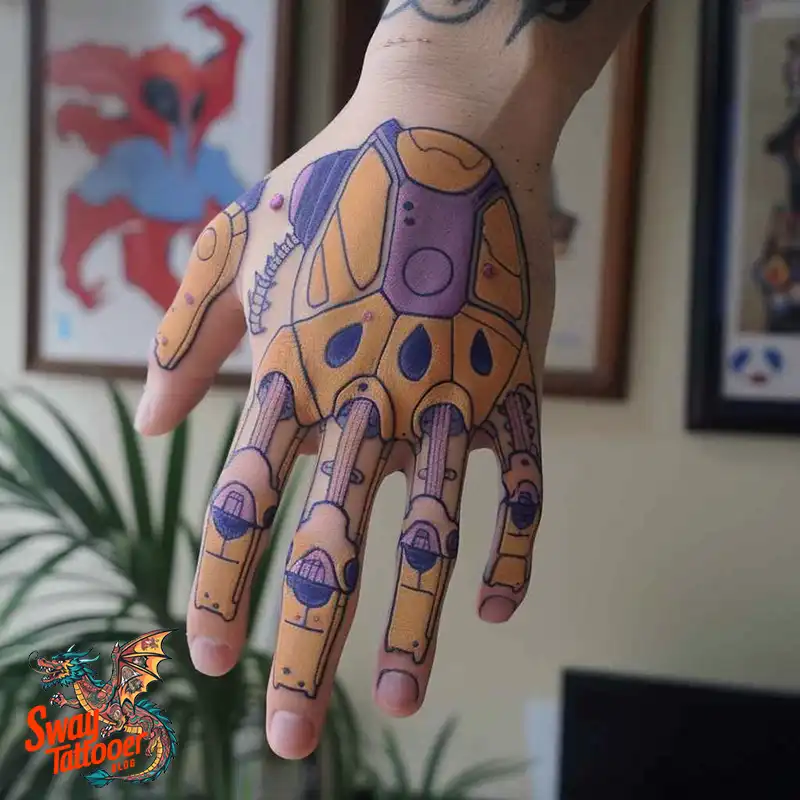
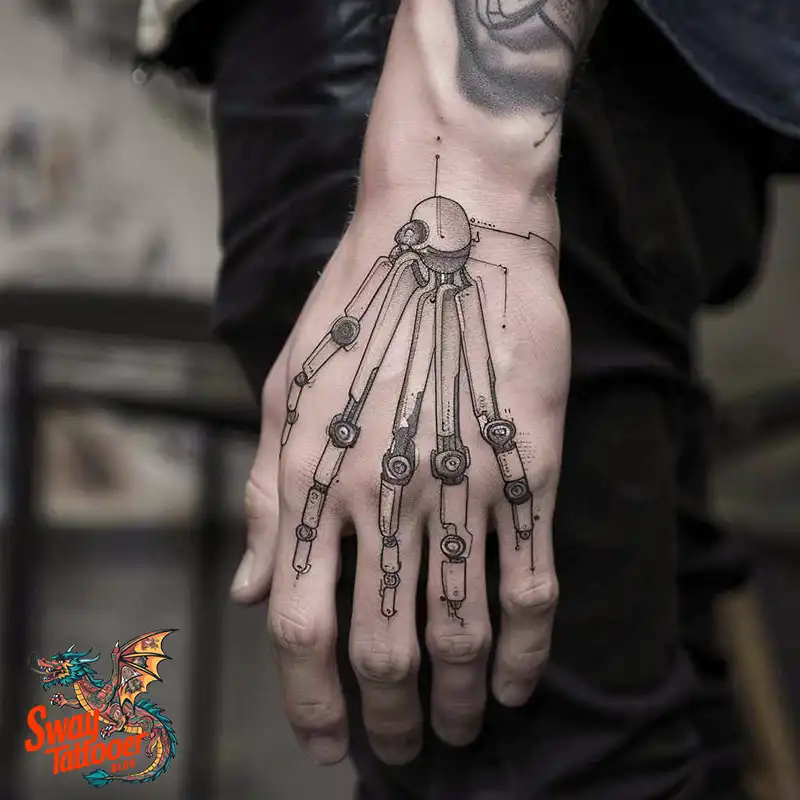
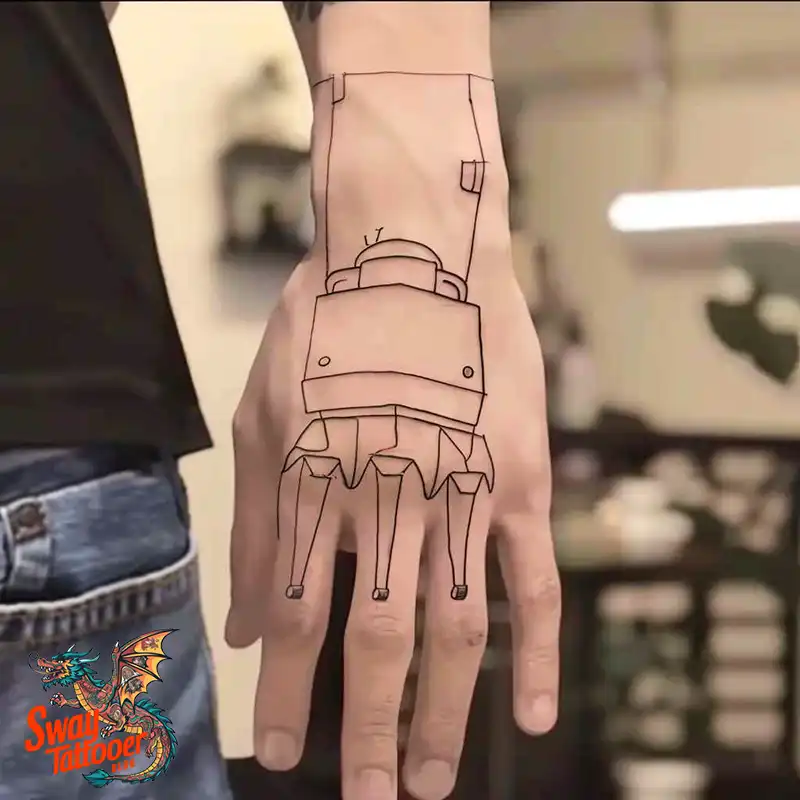
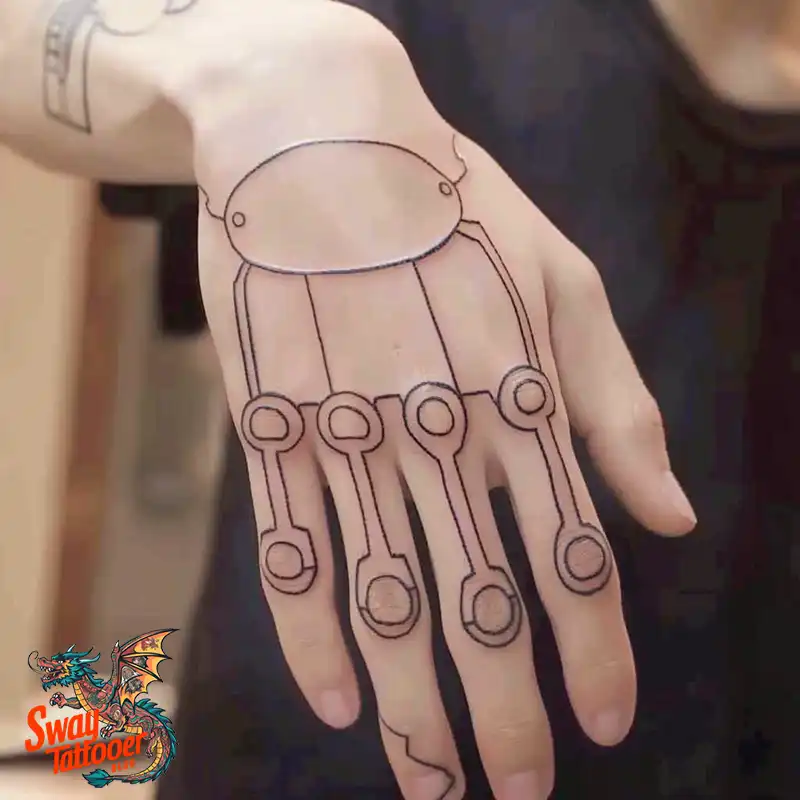
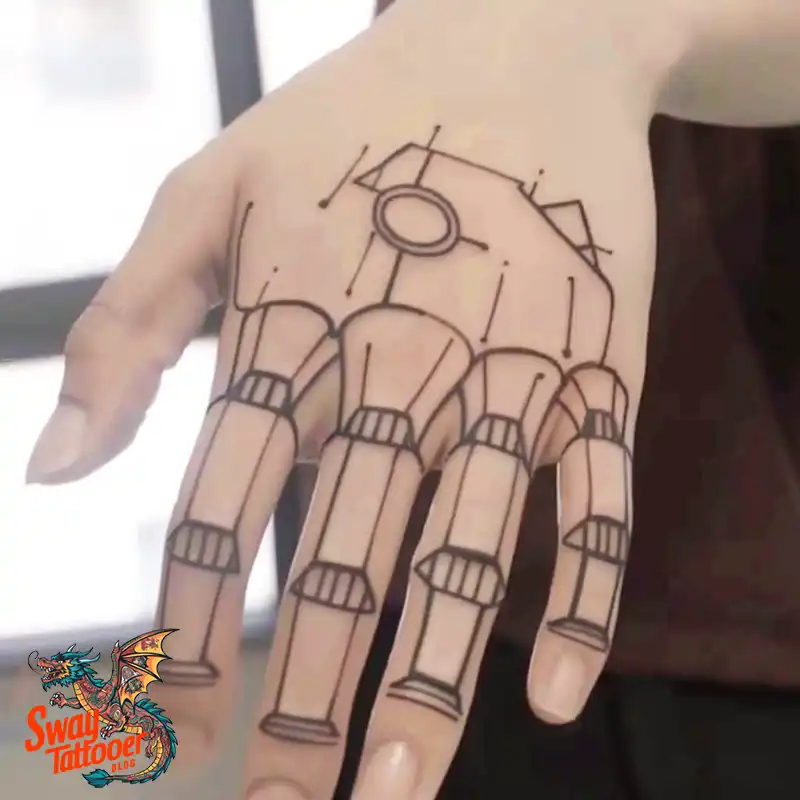
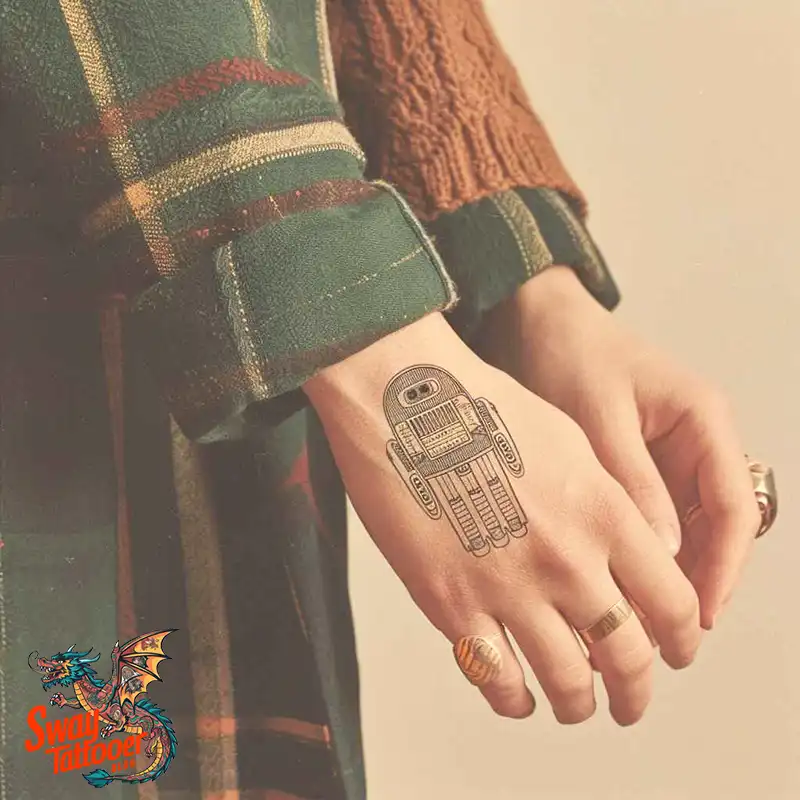
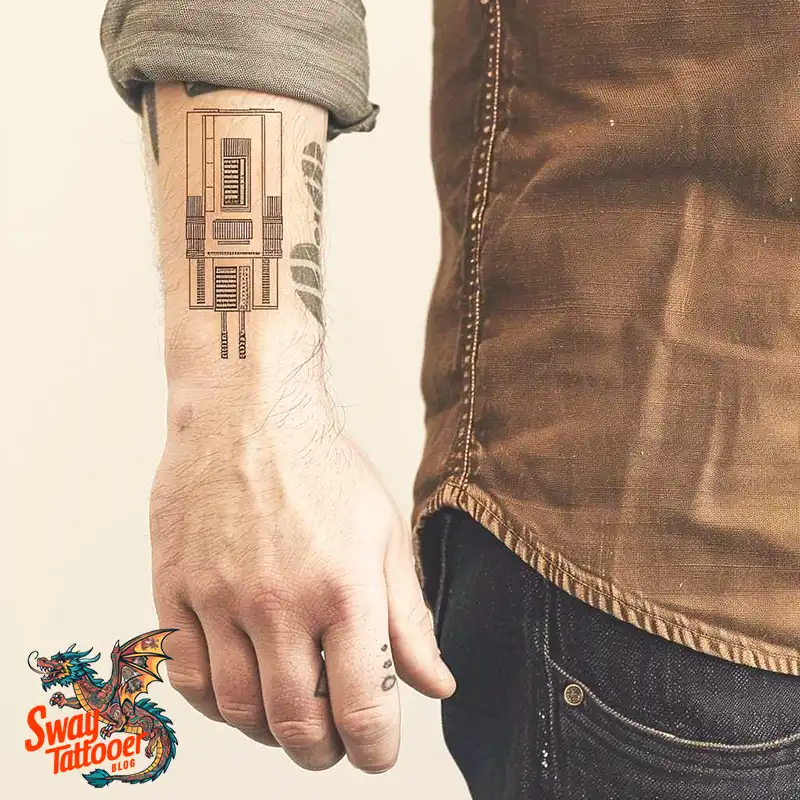
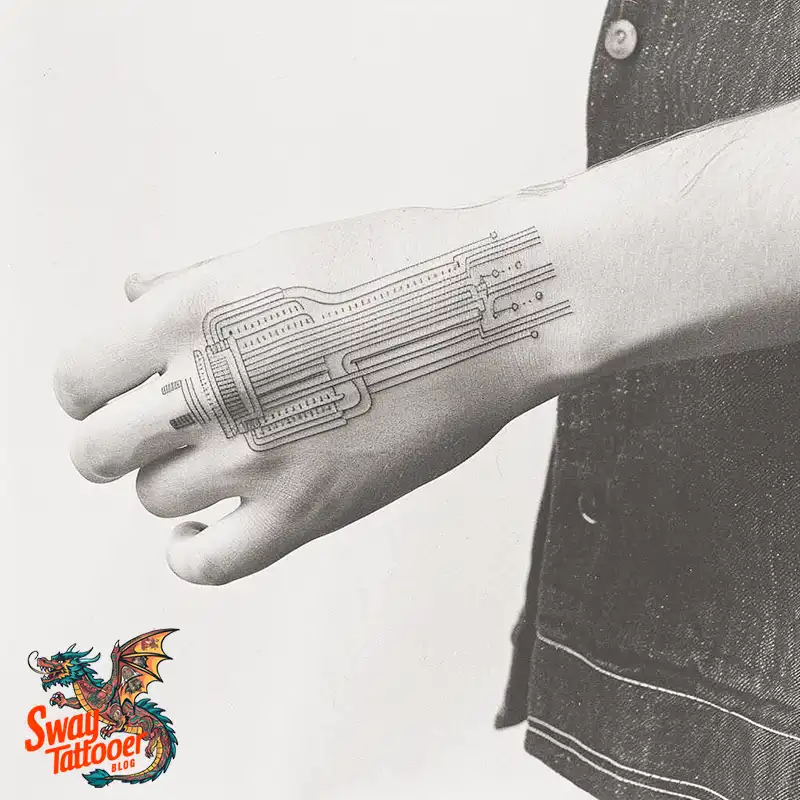
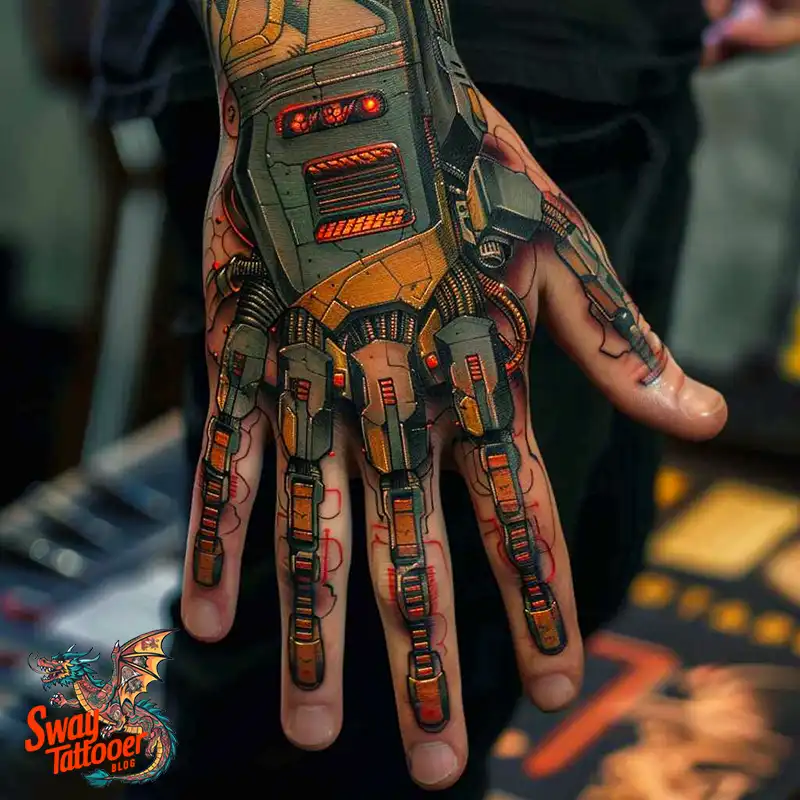
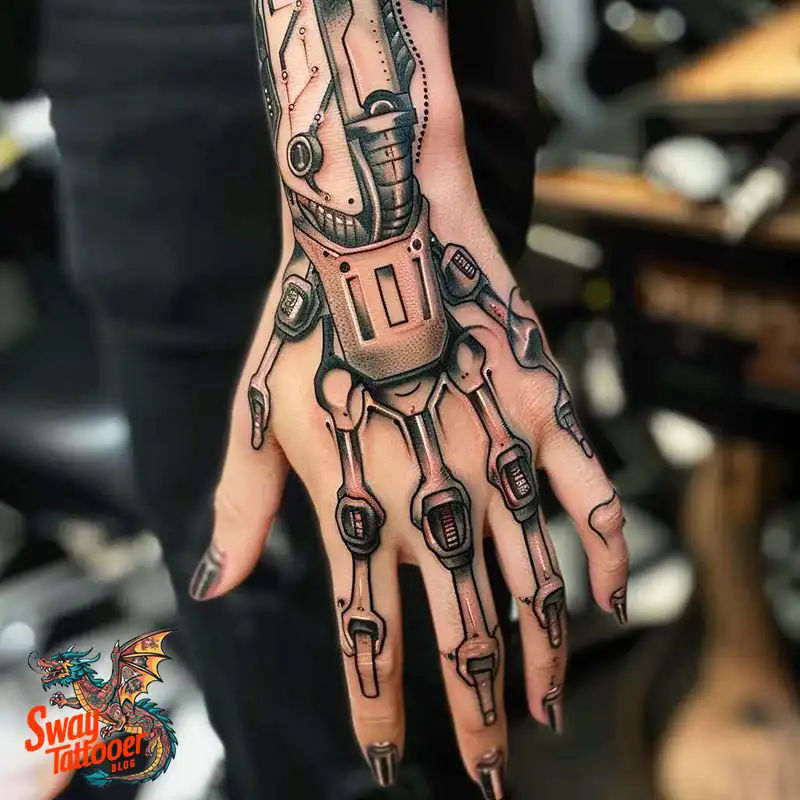
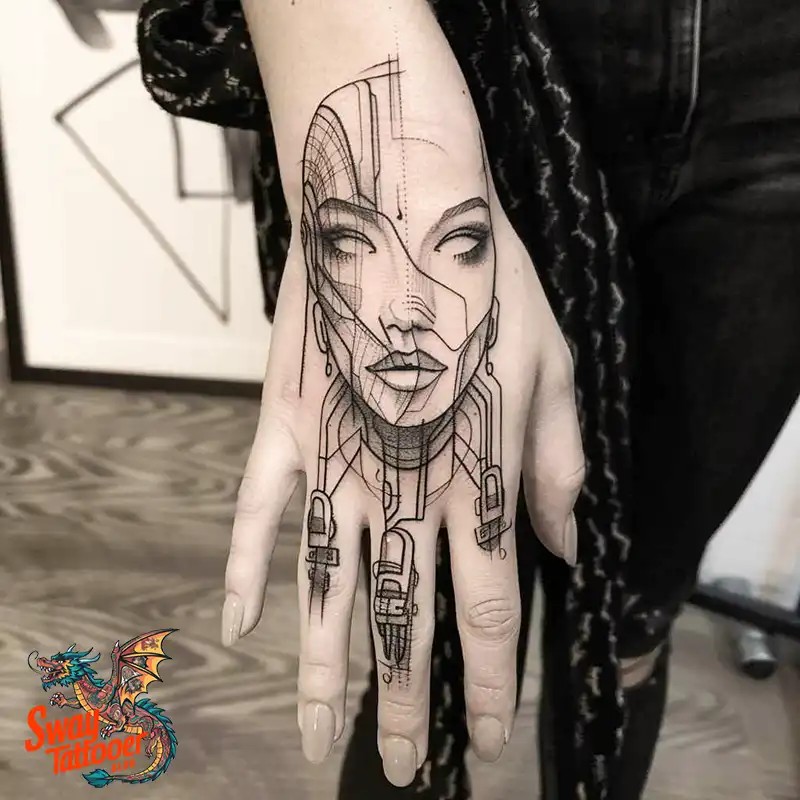
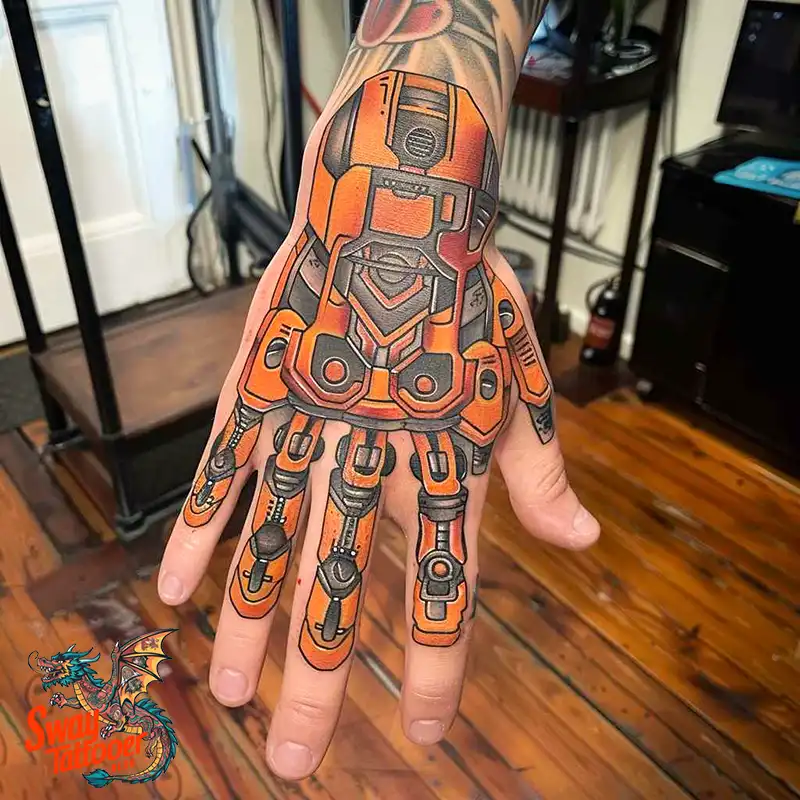
- Focus: It uses clean technology, like microchips, exposed fiber optic wires, and printed circuit boards.
- Aesthetic: These designs are futuristic. They rely on fine, intricate lines that mimic circuit tracks. They are mostly black and grey, but sometimes artists add small, contained color accents—like a glowing light—to show a high-tech feel.
Achieving the 3D Illusion: Technical Mastery
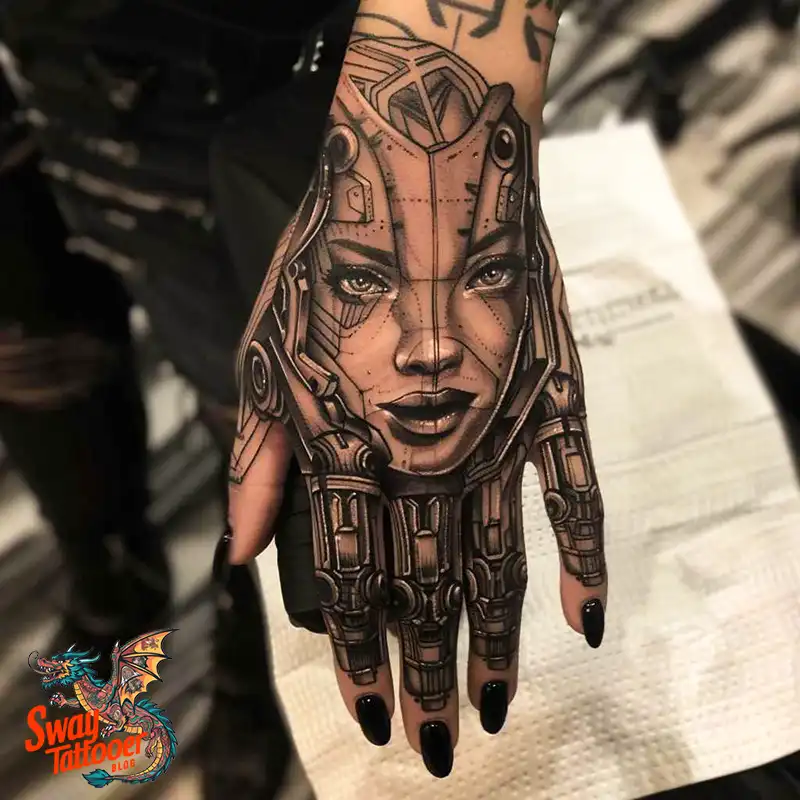
The magic of a robot arm tattoo is that it looks 3D. It appears as if the metal parts are under your skin, not just drawn on it. This is not easy! It requires intense skill in using light and shadow.
- High-Contrast Shading: The artist uses intense black ink right next to your bright skin color. This is called high contrast. It is essential for making metal look like metal. This trick makes the gears look truly raised or recessed beneath the skin.
- Smooth Blending: To make the metal look rounded and shiny, the artist uses gentle, careful strokes. They blend different shades of diluted black ink (called grey wash) together. This soft blending is key to making the metal look reflective and prevents the design from looking flat or streaky.
- Using Negative Space: The un-inked skin itself is a major tool for the artist. This is called negative space. The artist uses your skin to create the sharpest highlights and define the edges of the “torn flesh” illusion. The pale skin color against the deep black ink gives the piece a stunning, powerful sense of depth.
The hyper-realism of this style depends completely on this precision. If the artist makes a mistake in shading or line work, the 3D illusion is broken, and the image looks flat.
Placement, Flow, and Anatomy:
A great robot arm tattoo should not look like a sticker. It should look like it moves with your body.
Integration and Flow
The design must look like it is built into your body’s structure. A skilled artist will use the natural curves and muscles of your arm to shape the mechanical parts. This creates a smooth, unified flow from your shoulder to your hand.
Strategic Zoning
Different parts of the arm work best for different mechanical features:
- Full Sleeve: This is the most popular choice. It gives the artist the most room to connect all the gears and wires into one unified story from shoulder to hand.
- Bicep/Upper Arm: The muscles here are good for the main focal points, like a central engine or a power source. When you flex, the muscle moves, which makes the tattoo look more 3D and dynamic.
- Forearm: This long area is perfect for winding cables, pipes, and circuit tracks that lead down toward the hand.
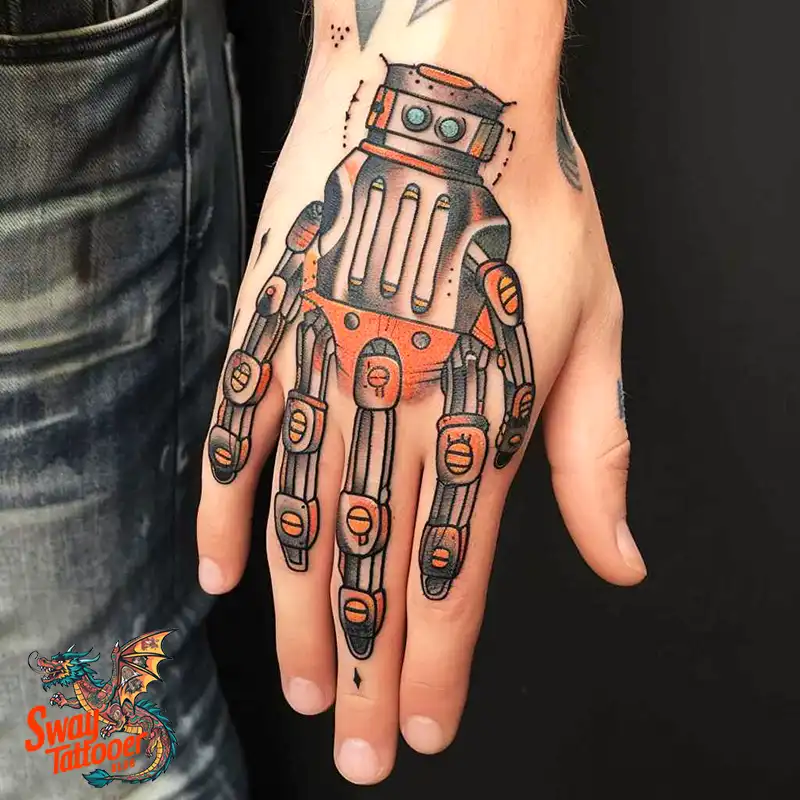
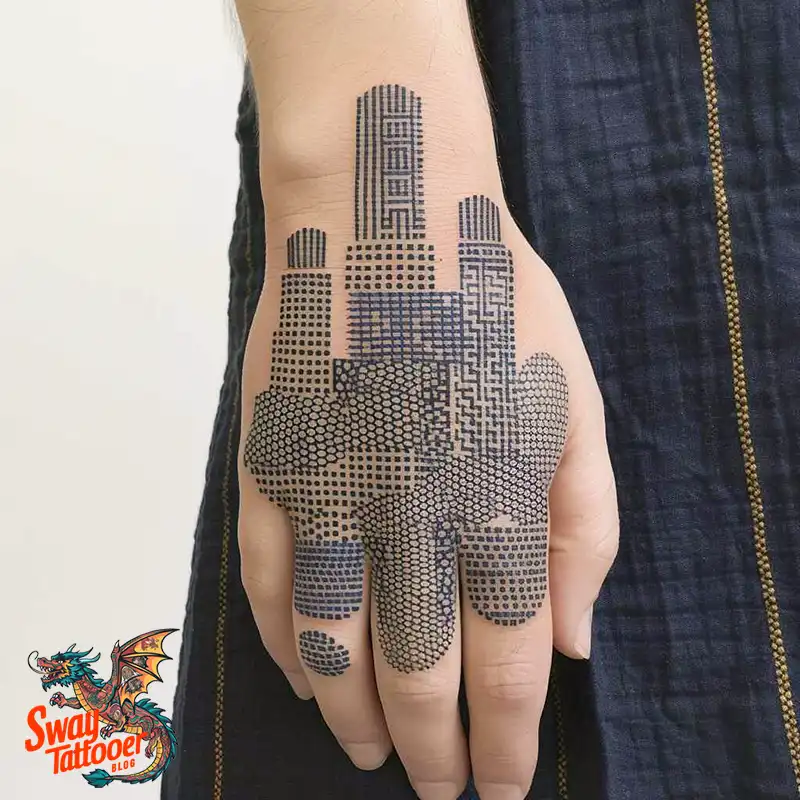
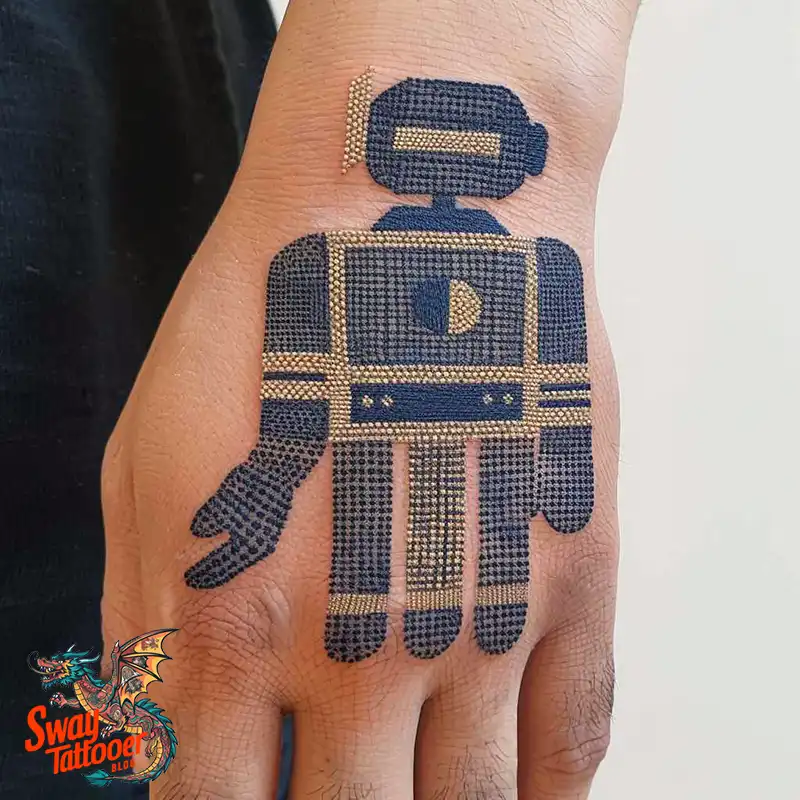
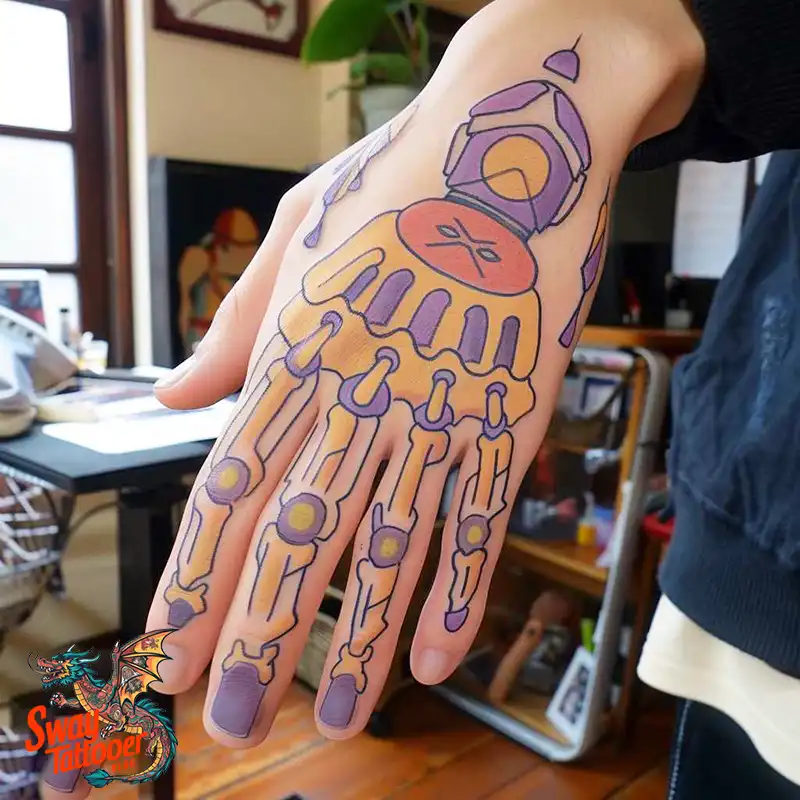
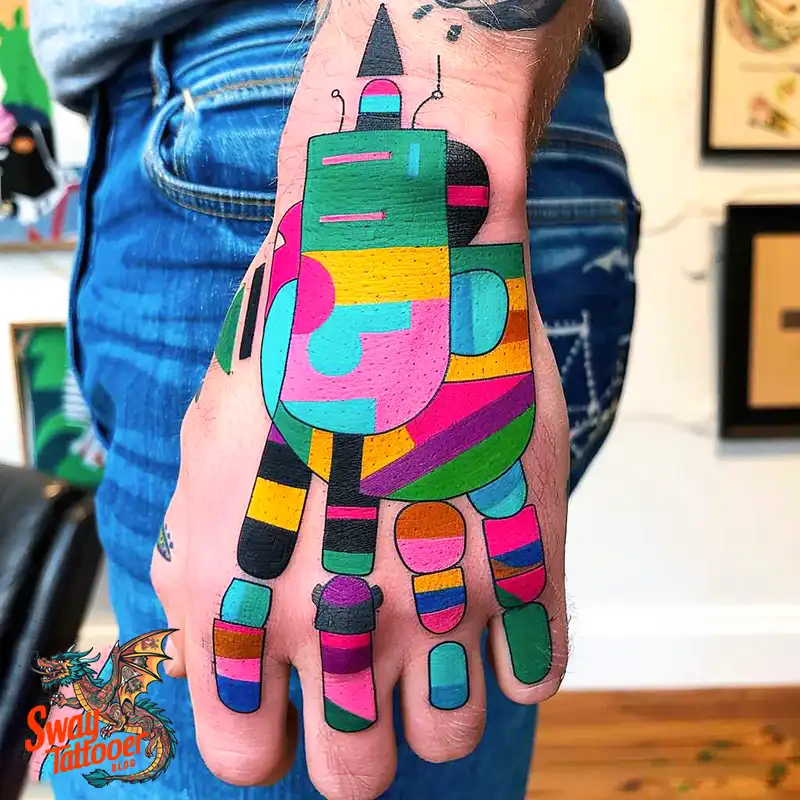
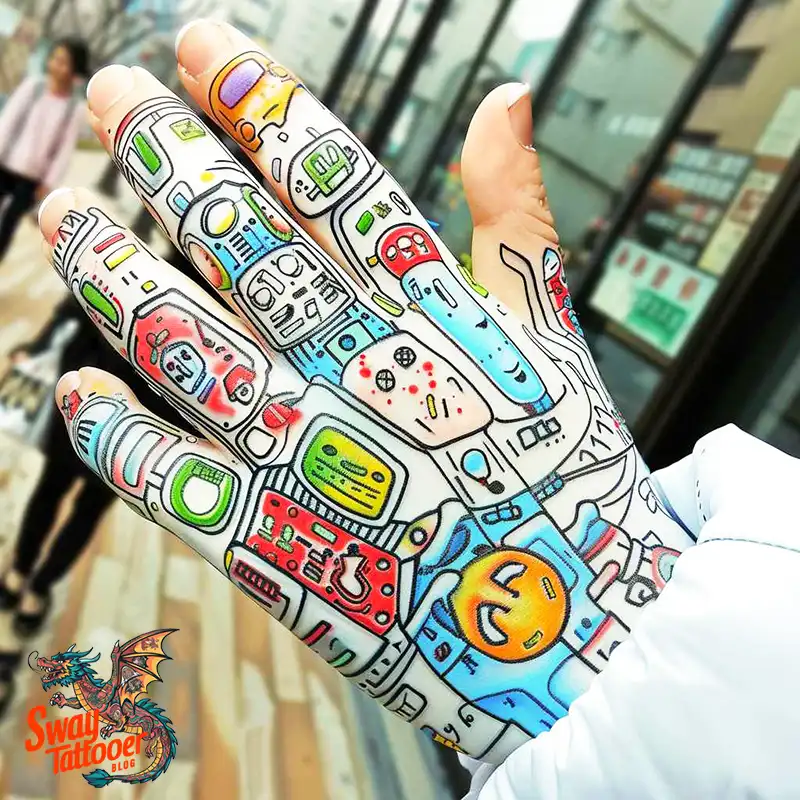
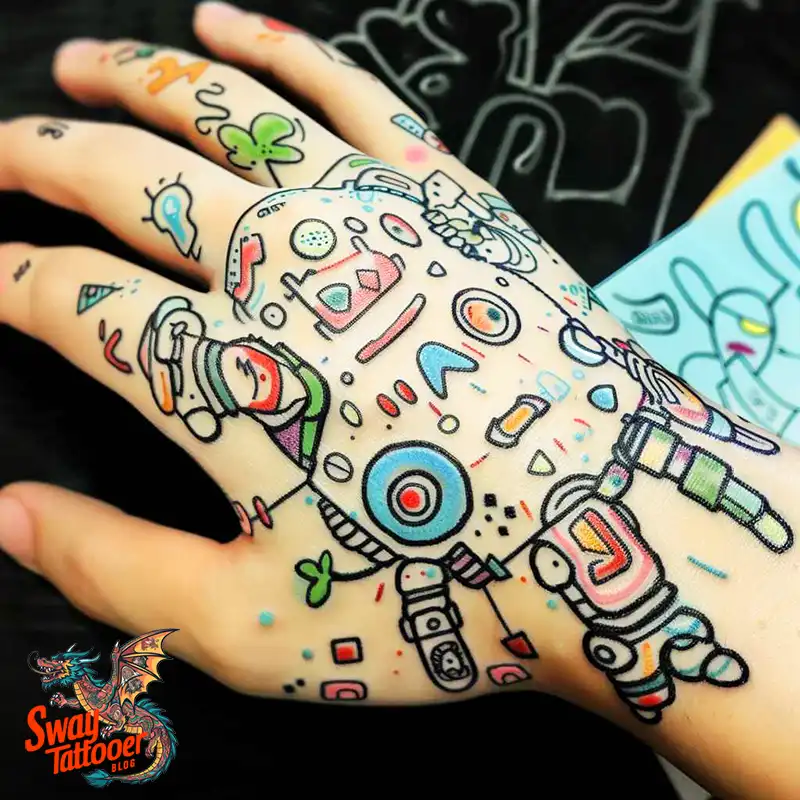
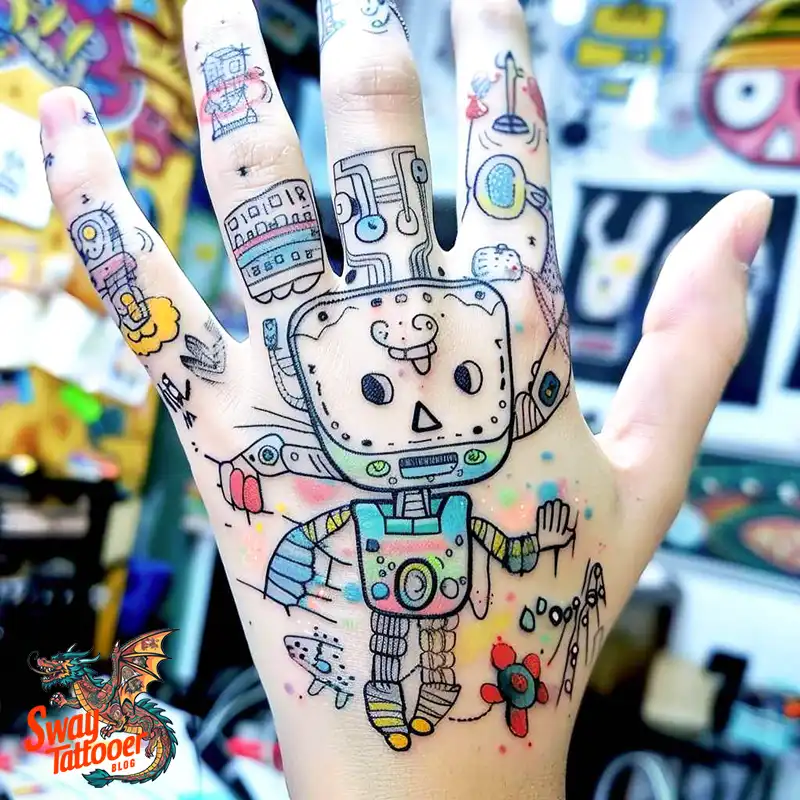
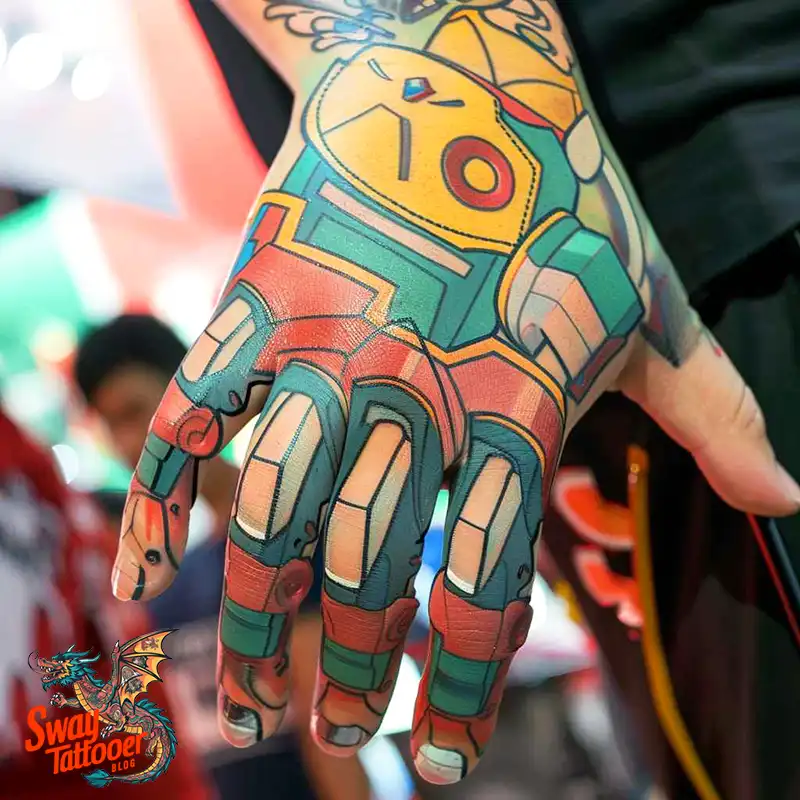
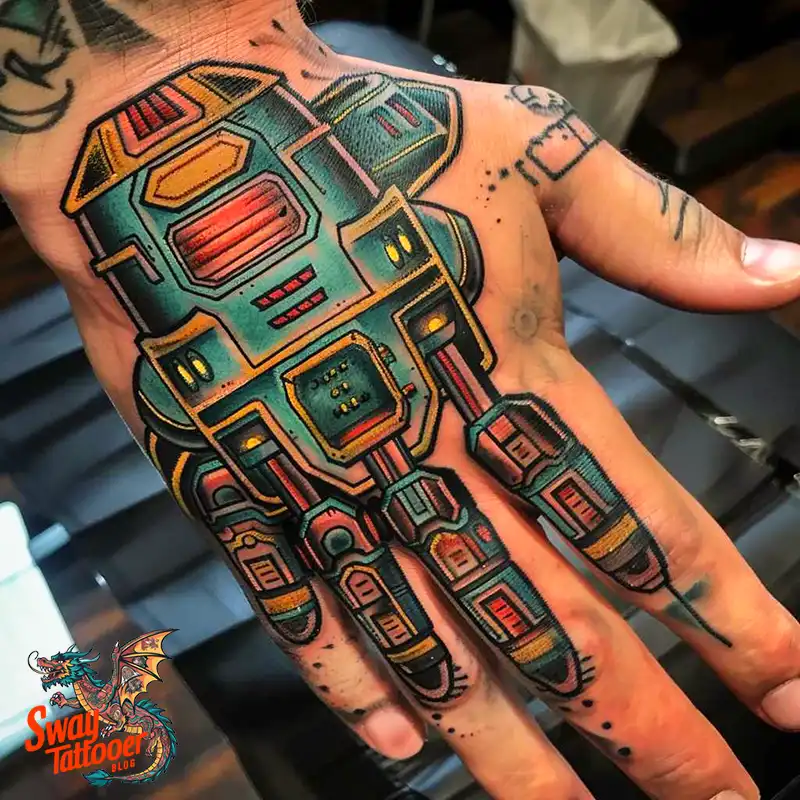
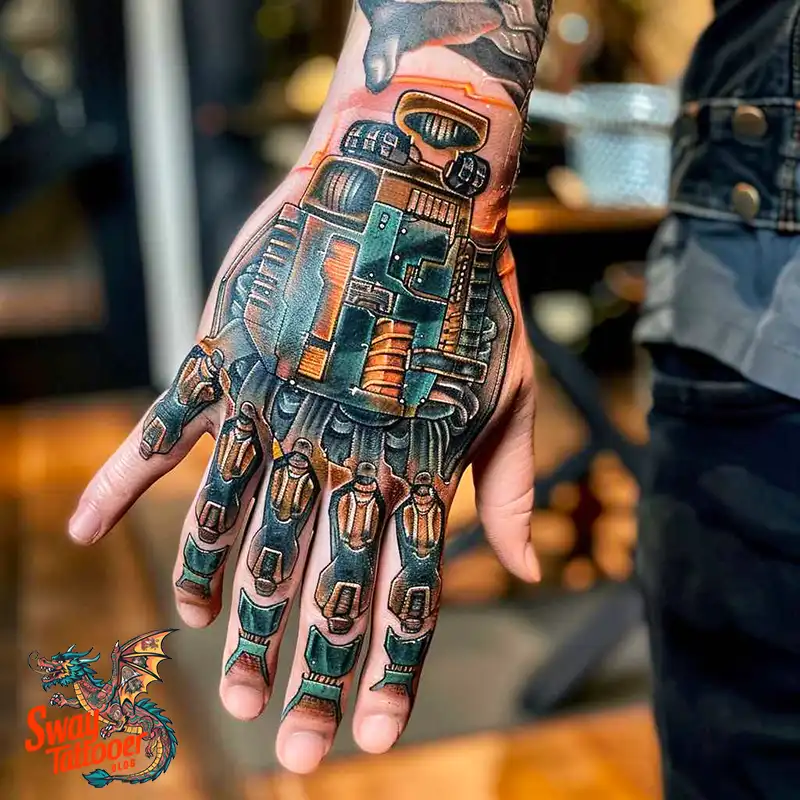
- Back of the Hand: The robot hand tattoo is very visible. It is great for showing complex joint details, knuckles, or small pistons.
The Pain Factor
To get a full robotic arm tattoo, you must sit for a long time. Some areas hurt more than others:
- High-Pain Spots: The most painful spots are those with thin skin or bone close to the surface. For the arm, this includes the inner and outer elbow, the wrist, and the inner bicep. These areas are often needed for structural realism, such as drawing the hinges at the elbow joint.
Aftercare for High-Contrast Tattoo:
Caring for a hyper-realistic robot tattoo is more important than caring for other tattoos. If the contrast fades even a little, the 3D illusion is ruined.
The Multi-Stage Healing Process
Healing a complex piece takes time. The outer skin heals in about 2 to 3 weeks. But the deep layers of skin can take up to six months to fully recover and hold the ink firmly. You must continue caring for the tattoo during this whole time.
Hygiene and Protection
- Cleaning: Wash the area gently 2–3 times a day with lukewarm water and a mild, unscented soap. Pat the area dry with a clean towel; never rub it.
- Moisturizing: You need to moisturize often to prevent scabbing. Use a recommended, thin layer of lotion 5 to 8 times a day. Never scratch or pick at peeling skin or scabs; this will pull the ink out and ruin the fine detail.
- Avoidance: Do not soak the tattoo in water (no swimming or baths) for at least 10 days. Also, wear loose clothing to prevent rubbing and irritation.
The Longevity Imperative (Lifelong Care)
The high-contrast style is vulnerable to sun damage. Any fading destroys the 3D look.
- UV Protection is Mandatory: Sunlight is the greatest enemy of dark tattoos. You must use a high-factor SPF sunscreen consistently whenever the tattoo is in the sun, for the life of the tattoo.
- Touch-Ups: Because the small circuit details are done with fine lines, they are prone to softening over many years. Occasional touch-up sessions are a normal part of the life cycle for this kind of intricate art.
FAQs:
Q: What is the typical cost for a detailed robot arm sleeve?
A: This style is a little expensive and commands a premium price. The highly detailed shading and texture required often means a full sleeve can take 40 to 100 or more hours of work, depending on the artist and the complexity of the design.
Q: How long does a complex full-arm tattoo take to complete (sessions/hours)?
A: The process is very long. A complex full robot arm tattoo will usually take between 8 and 15 full-day sessions, or more. The entire process, including healing time between sessions, often takes six months to a year to complete.
Q: Can a robot hand tattoo be done in color, or is black and grey mandatory?
A: The most authentic and classic metallic look is achieved using black and grey ink, which is rooted in H.R. Giger’s original art. Color is best used only for small accents, such as glowing plasma or internal lights, to give a high-tech feel, but the main mechanical structure should be monochromatic.
Q: How can I ensure my fine-line circuit board details don’t blur over time?
Q: Which parts of the arm hurt the most when getting a robot tattoo?
A: The most painful spots are those where the skin is thin and close to the bone. For an arm design, the high-pain zones are the elbow area (inner and outer), the wrist, the inner bicep, and the hand.
Conclusion:
The robot hand tattoo is not just a trend; it is a permanent piece of philosophical art executed with incredible technical skill. It symbolizes resilience, survival, and the profound transformation that occurs when the human spirit adapts to new realities. Rooted in the dark, surrealist vision of H.R. Giger, this style requires hyper-realism through high-contrast shading and meticulous detail.
Because the 3D effect is so fragile, choosing an artist who specializes in biomechanical or cyberpunk realism is the most important step for success. The time, cost, and lifelong commitment to aftercare—especially mandatory sun protection—make this tattoo an ambitious declaration of strength and adaptability in a world where technology and humanity are constantly merging.
Leave a Reply