
Did you know the classic sailor symbol, the Swallow, was earned by mariners after they sailed 5,000 nautical miles? The nautical tattoo is one of the most historically rich, meaningful tattoos. It stands as a timeless code of resilience, guidance, and hope for a safe return home.
We will explore the deep meanings of the Anchor and Compass Rose, look at the historical rules for earning the Swallow, and check the best bold color tattoos designs (like American Traditional). This guide offers the expertise you need to ensure your permanent connection to the sea remains sharp and vibrant for decades.
The Deep History of Sailor Tattoos
Sailors brought tattooing back to the West. They learned it from the islands of Polynesia. The tattoos became a record of their life and rank. They had to earn their ink.
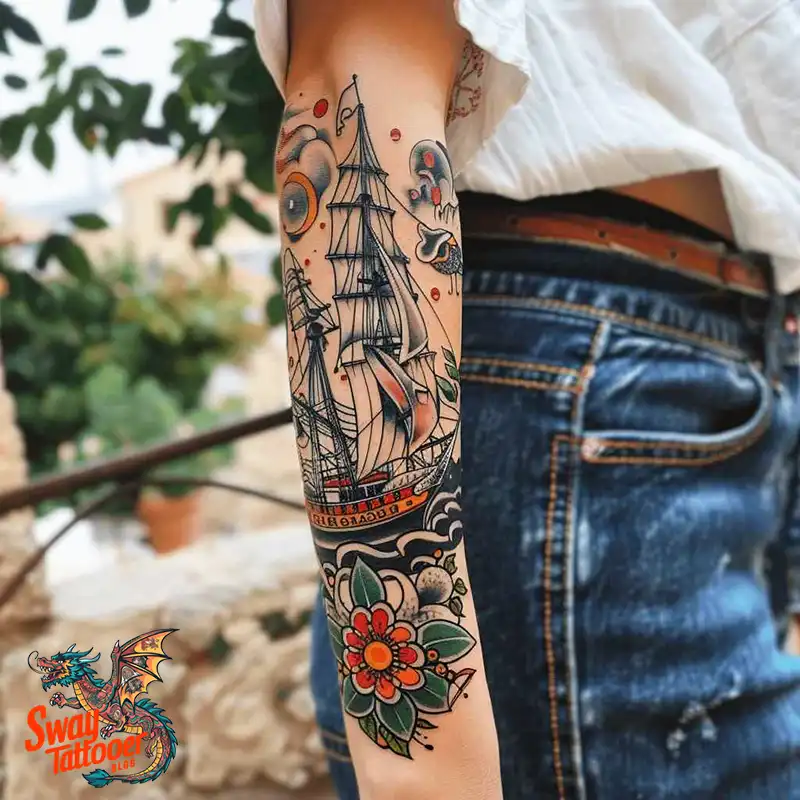
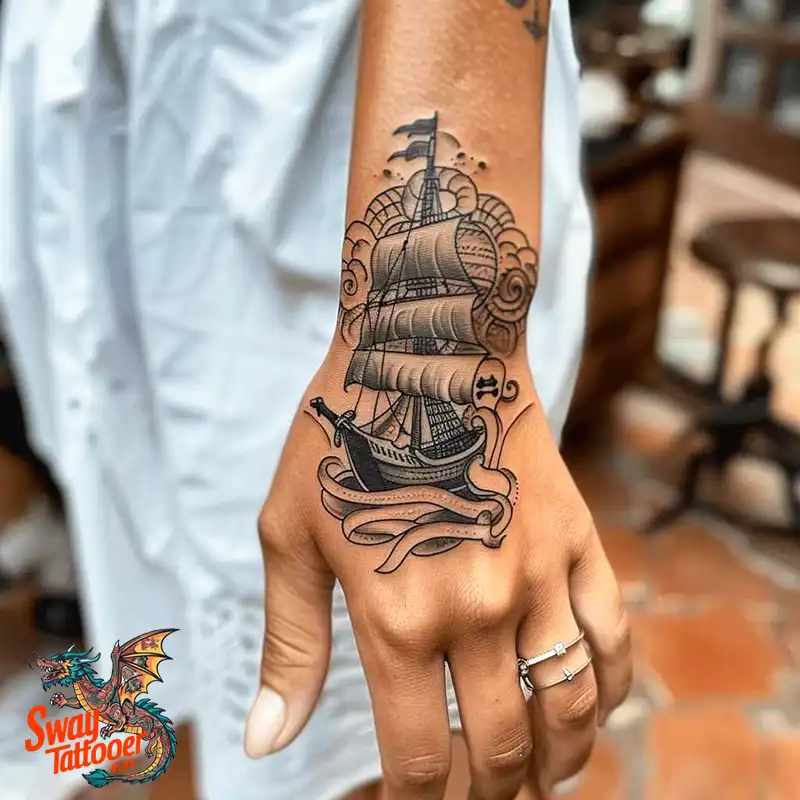
- Earning the Symbol: You got an anchor after crossing the Atlantic Ocean. You earned a tattoo of a ship for sailing around Cape Horn. These achievements were hard and dangerous. The tattoos show real endurance.
- The Look: This history created the American Traditional style. It uses bold, black lines. Colors are bright and very limited. This style honors the original maritime culture.
Guidance, Protection, and Homecoming
All nautical tattoos share three main ideas. They mean Guidance, Protection, and Homecoming. This shows the sailor’s fight against the powerful ocean.
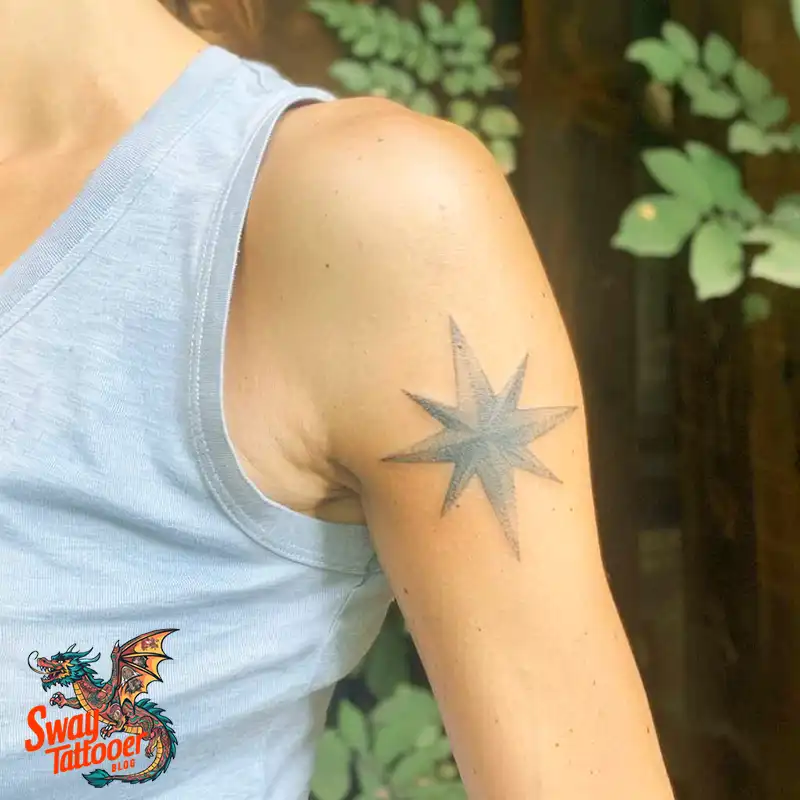
- The Nautical Star means guidance.
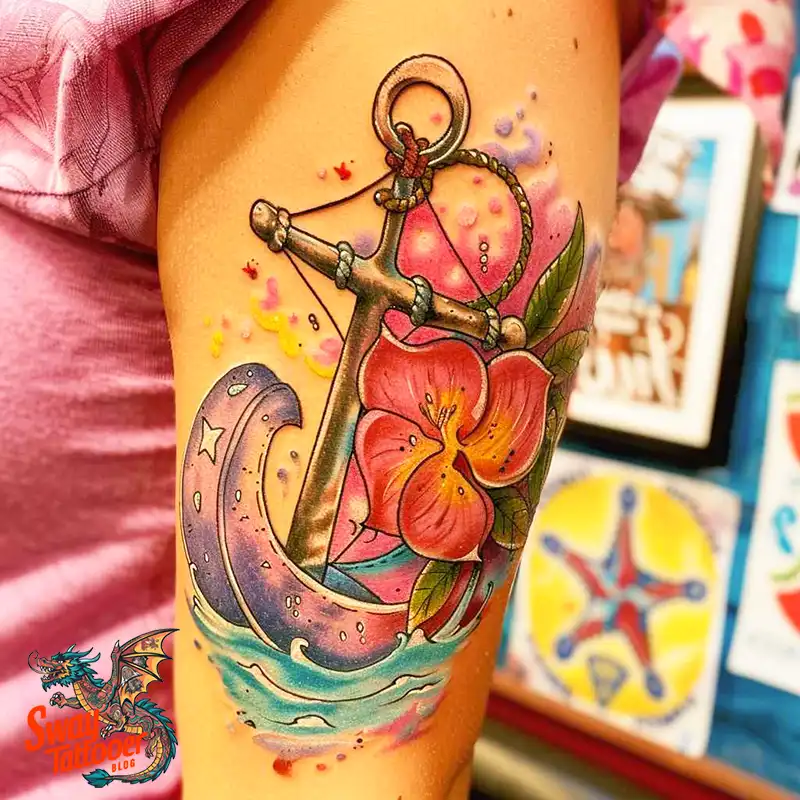
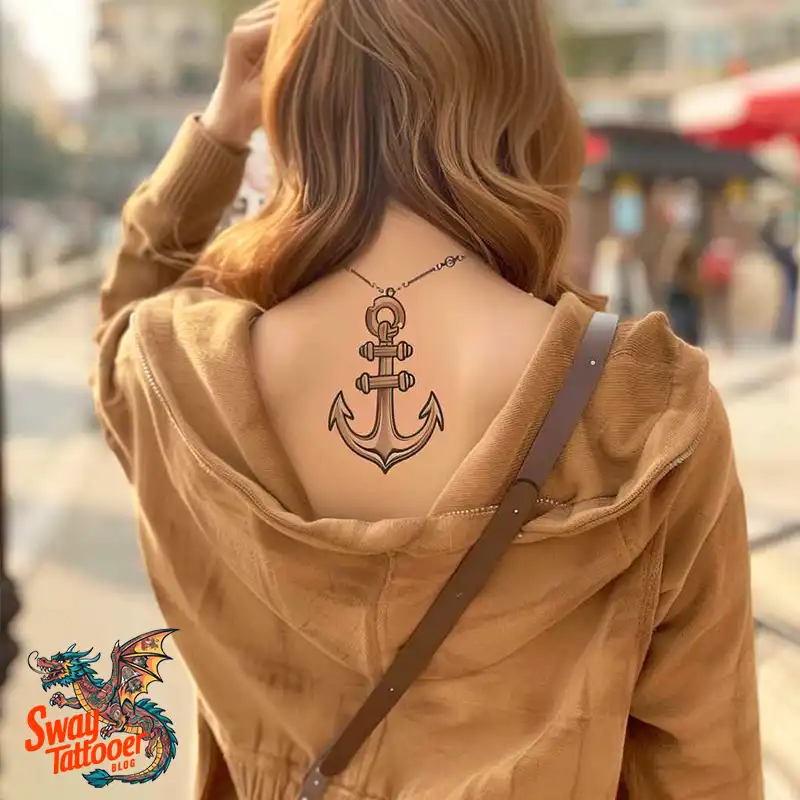
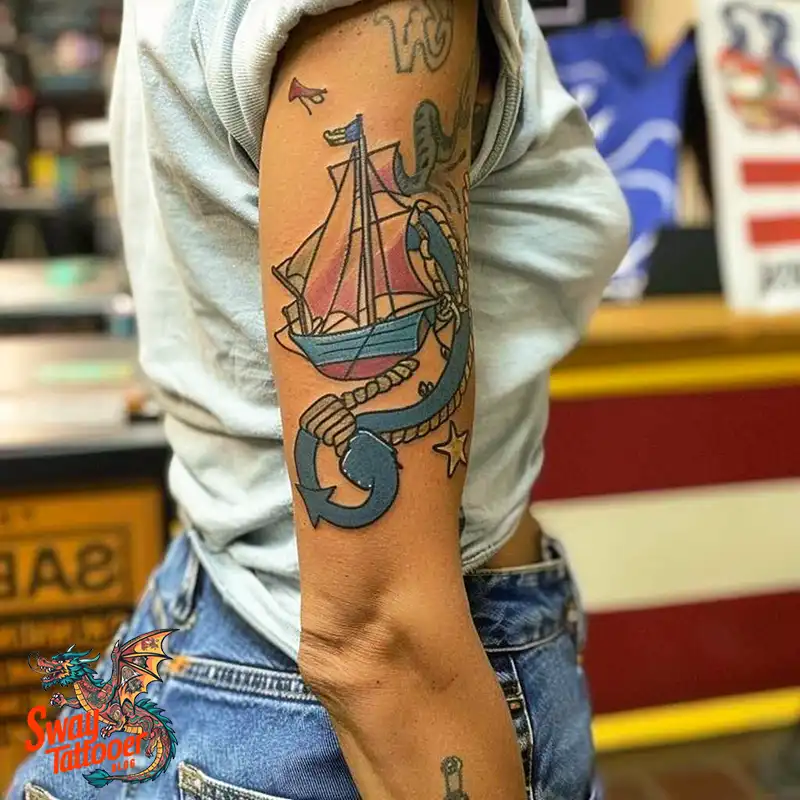
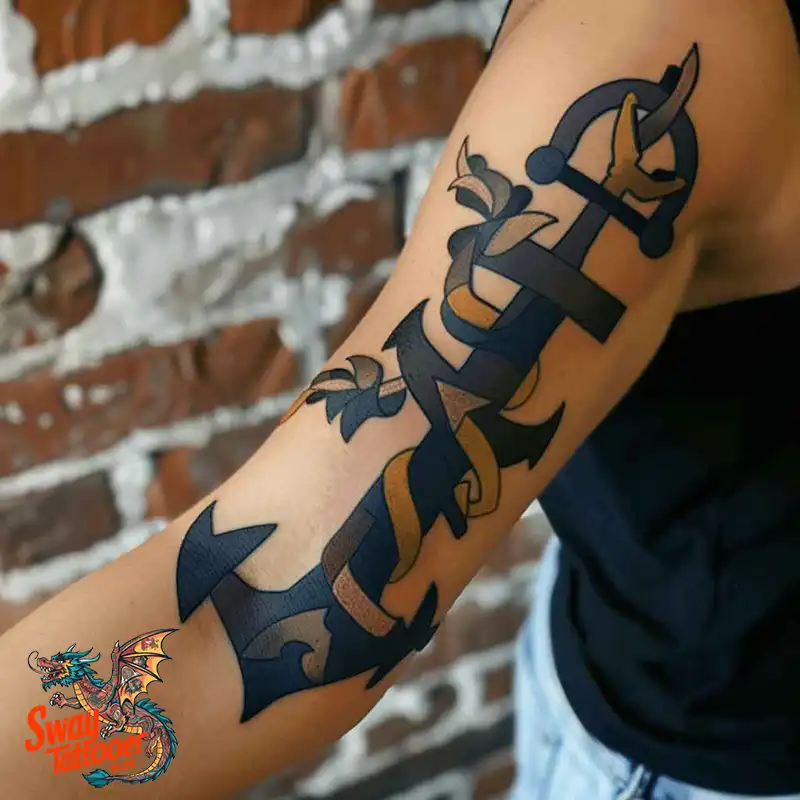
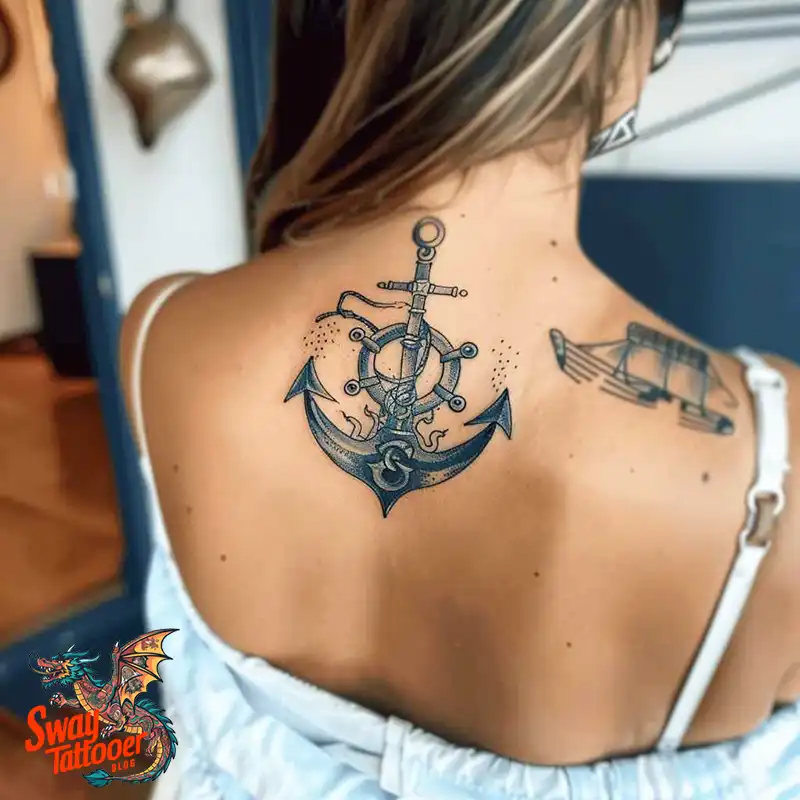
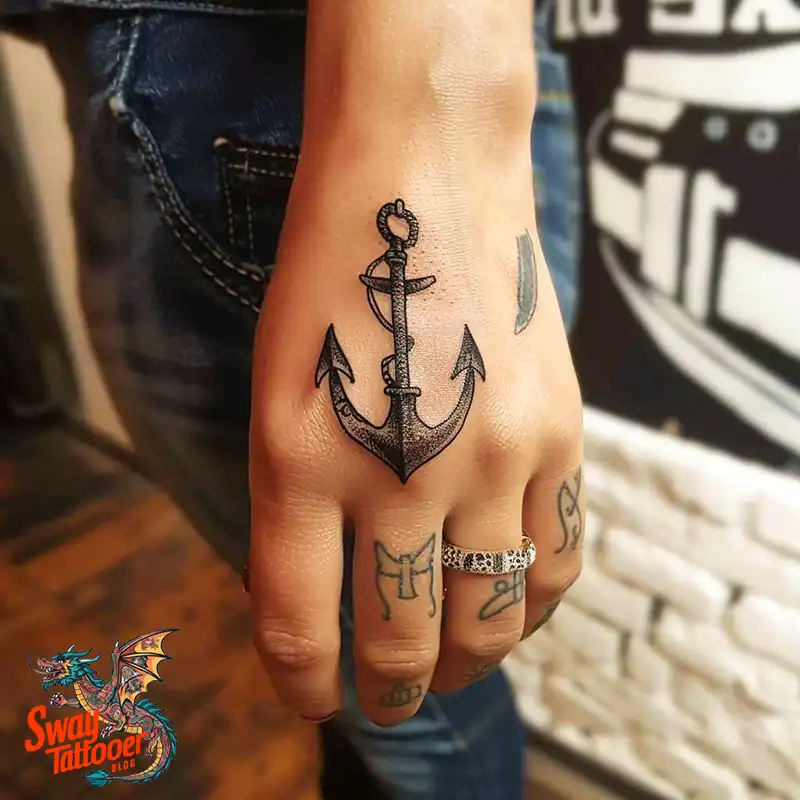
- The Anchor means protection and faith.
- The Swallow means you will return home safely.






Decoding Core Meanings:
Nautical tattoos are rich with meaning. The symbolism comes from centuries of life at sea.
The Anchor:
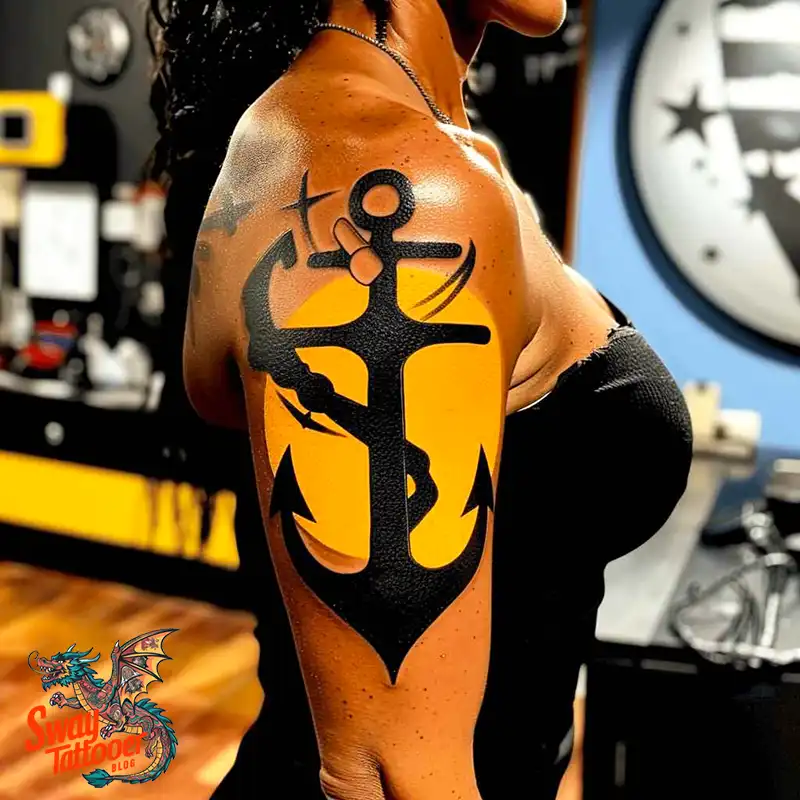
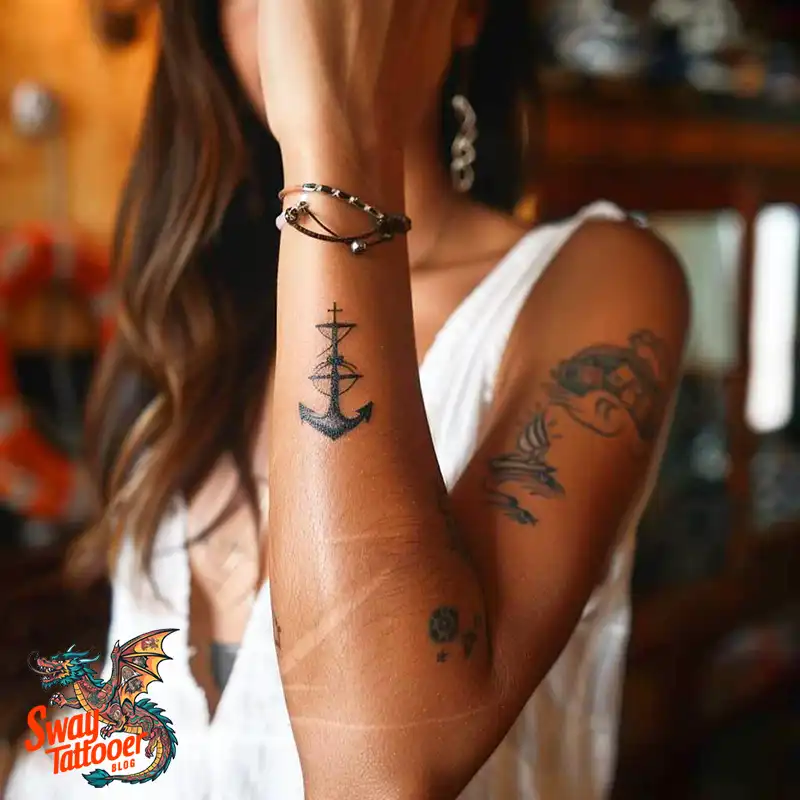
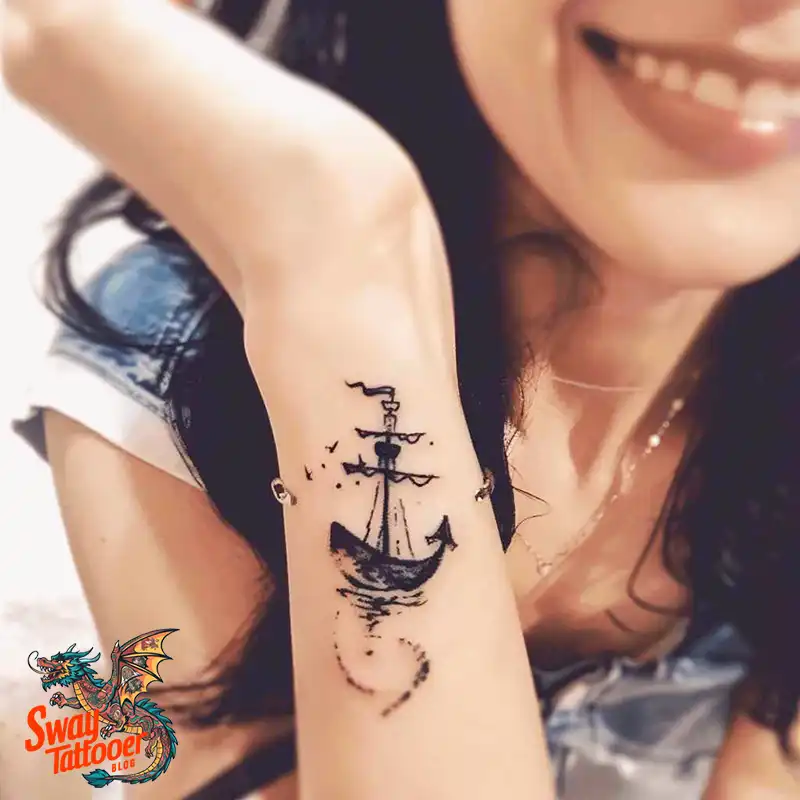
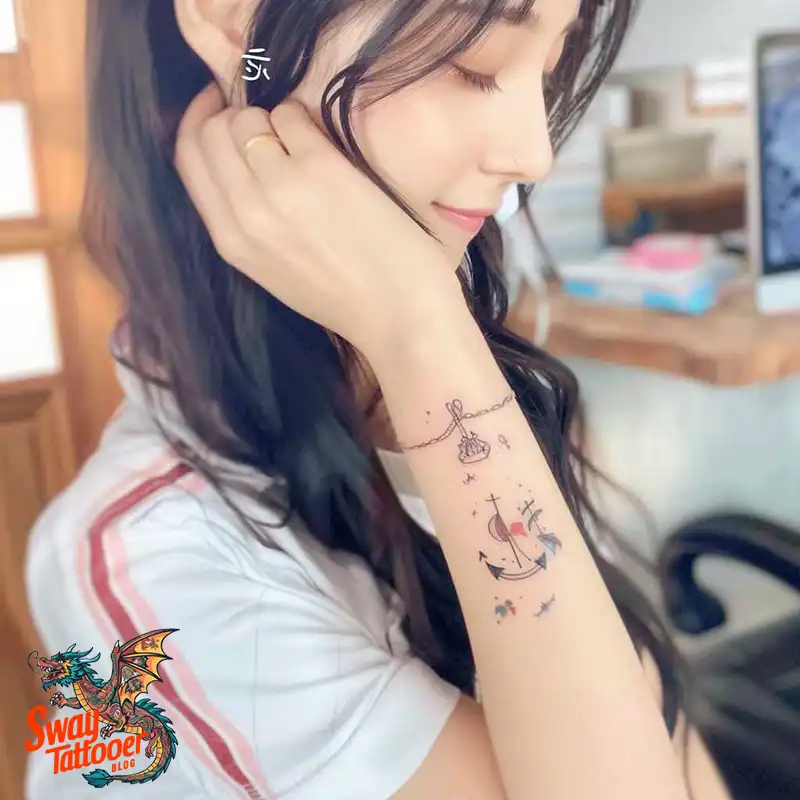
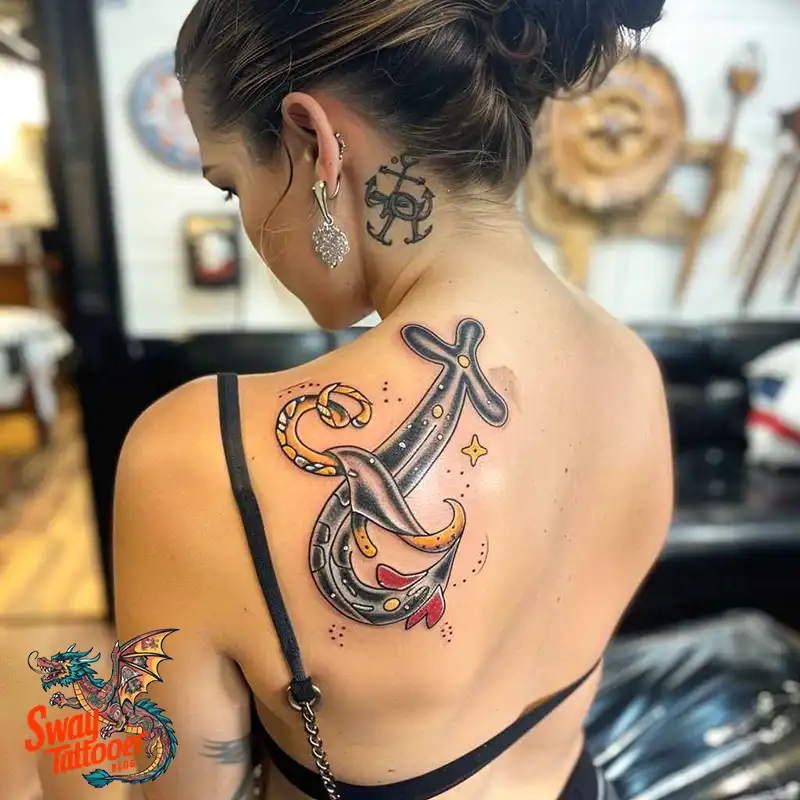
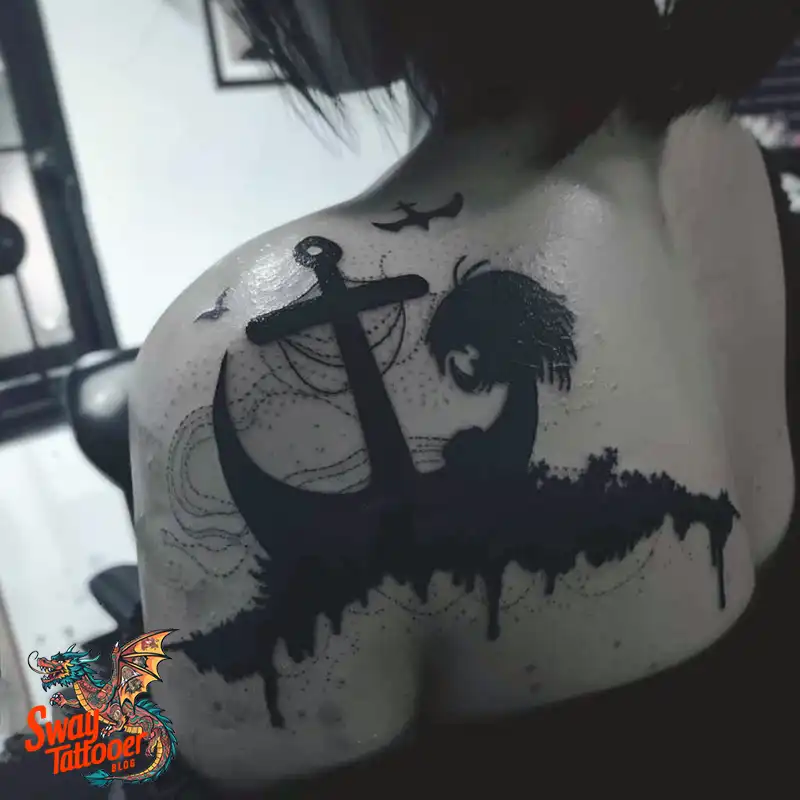
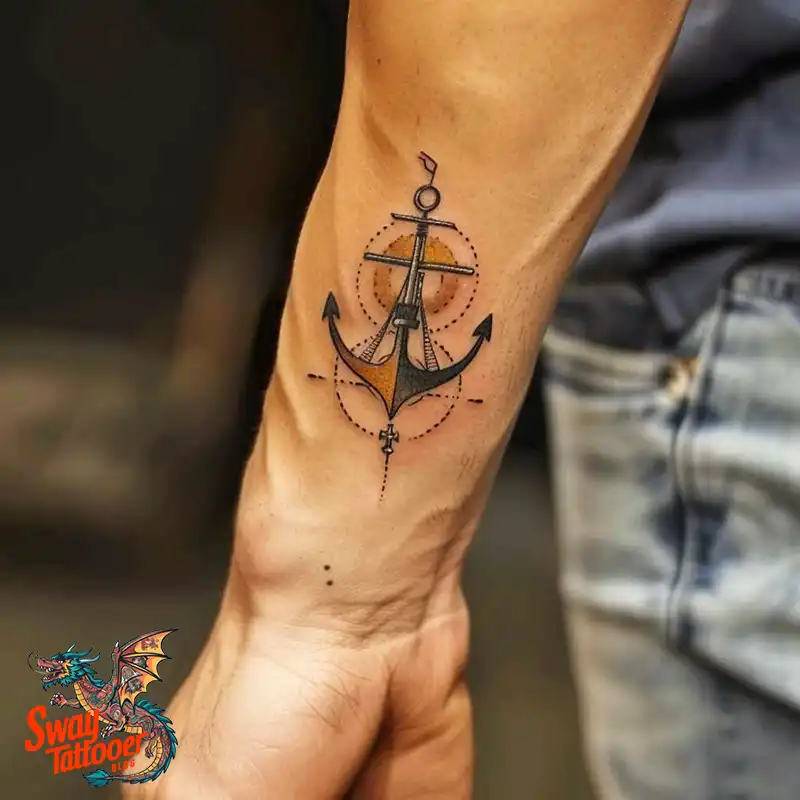
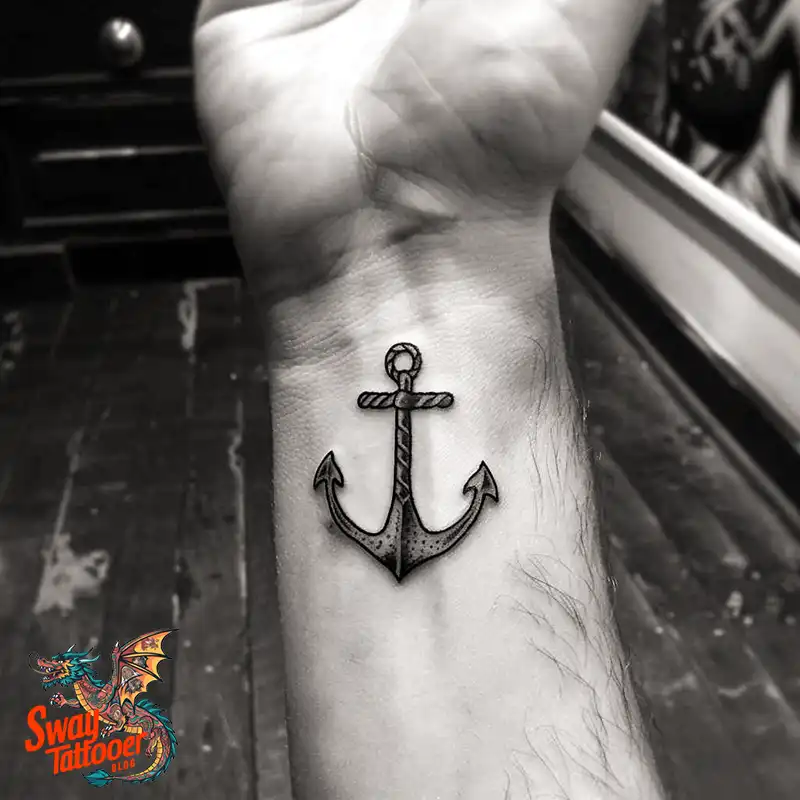
The anchor is the most famous sailor tattoo. It means stability, reliability, and hope. Sailors got this after a big trip, like crossing the Atlantic. It reminds you to stay grounded during life’s rough seas. You can add a name to the anchor. This shows the person who gives you a reason to stay grounded.
The Nautical Star and Compass Rose:
The star is a vital sign of direction.
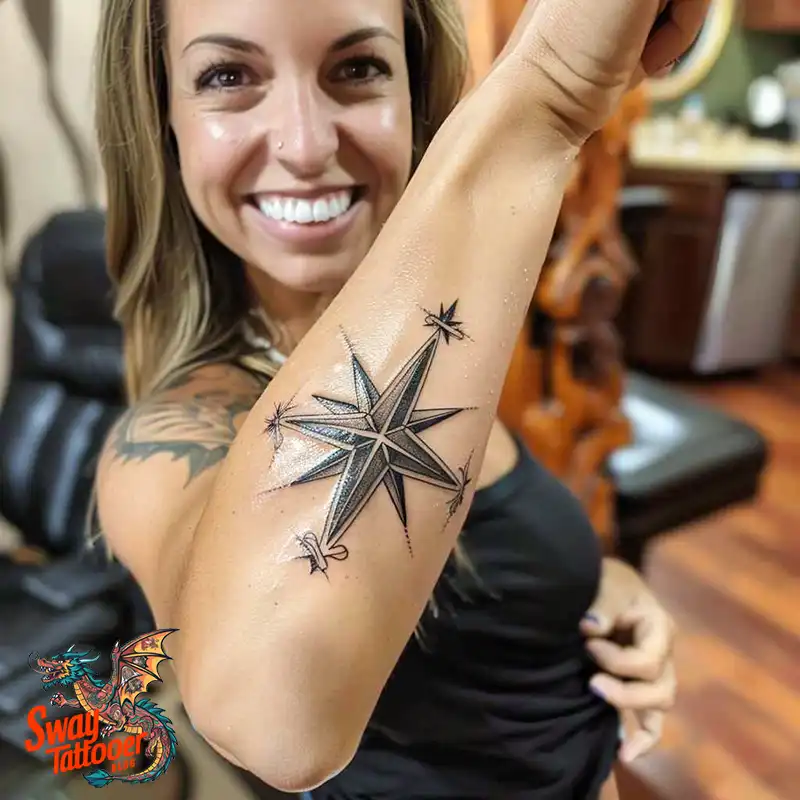
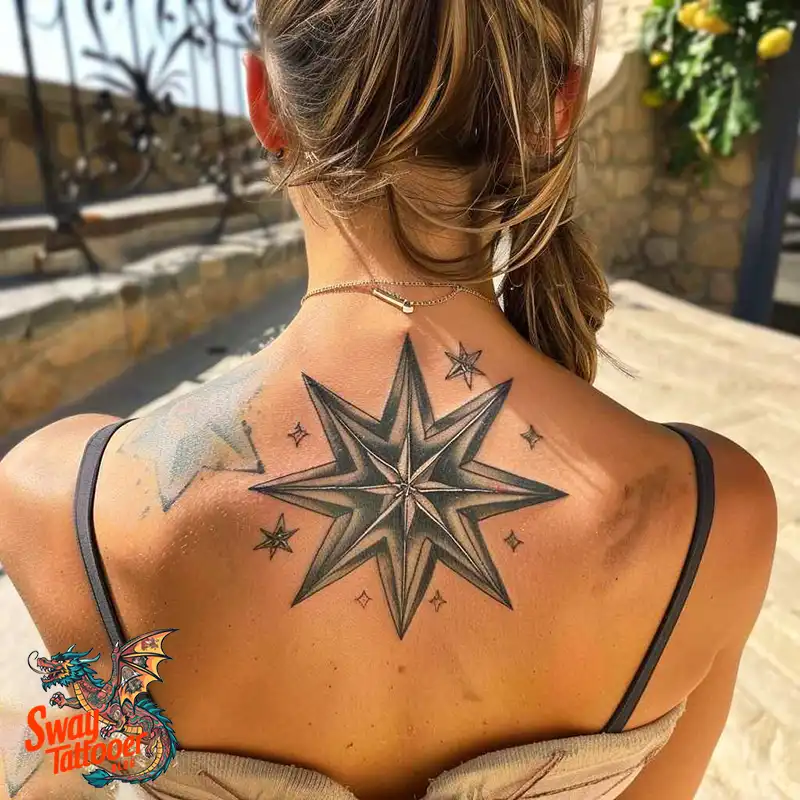
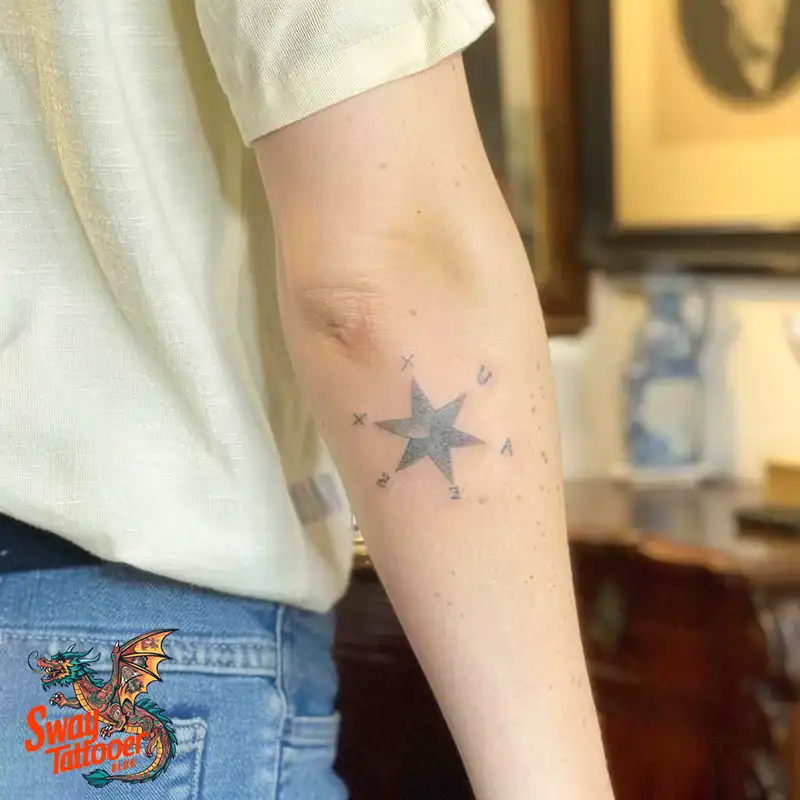
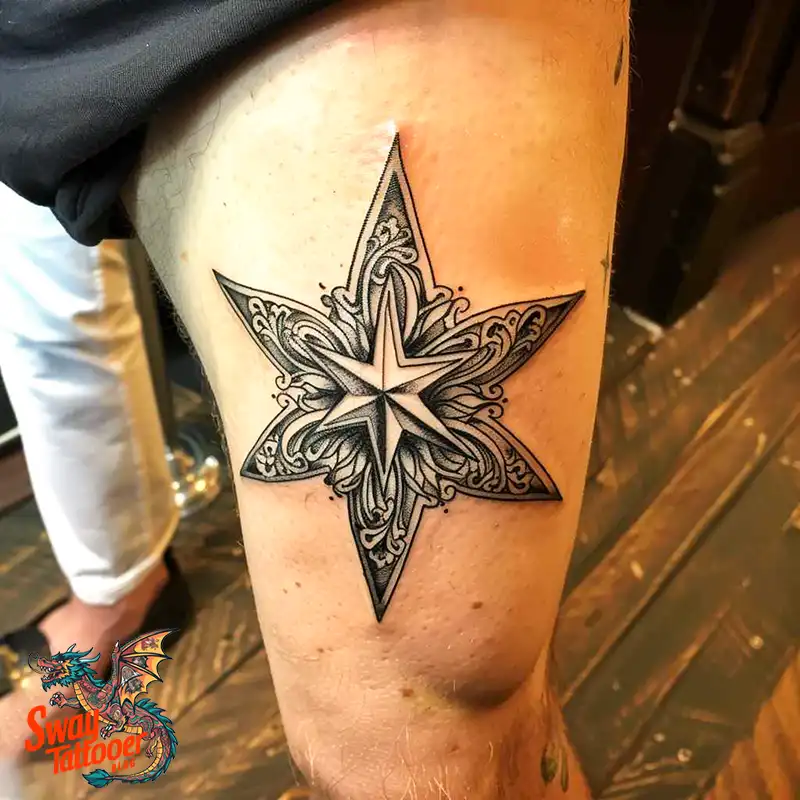
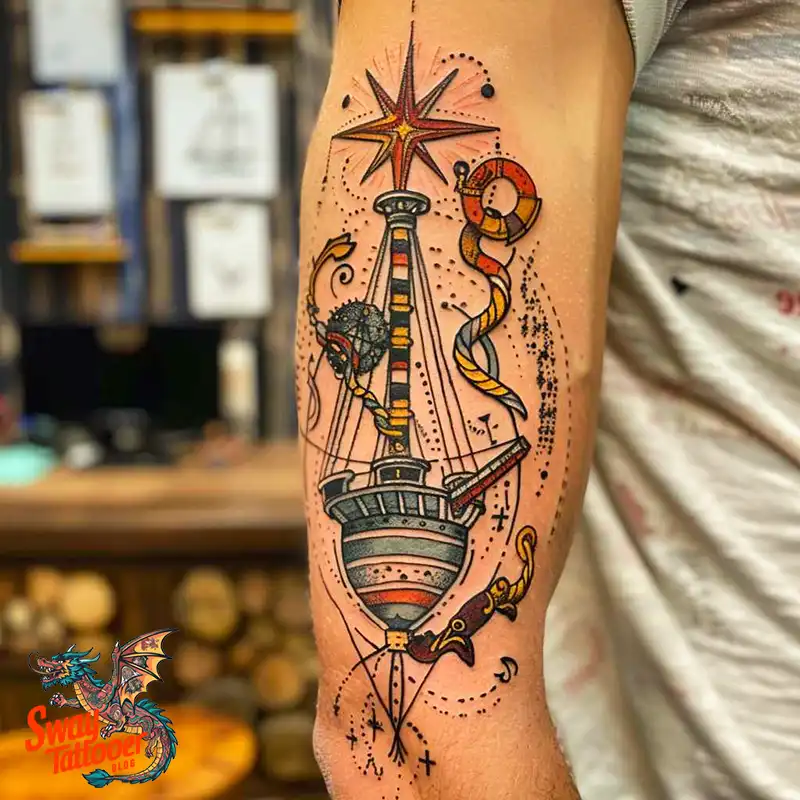
- The Nautical Star: This symbol has five points. It looks like a compass. It reminds sailors of the North Star. It means you will always find your way home.
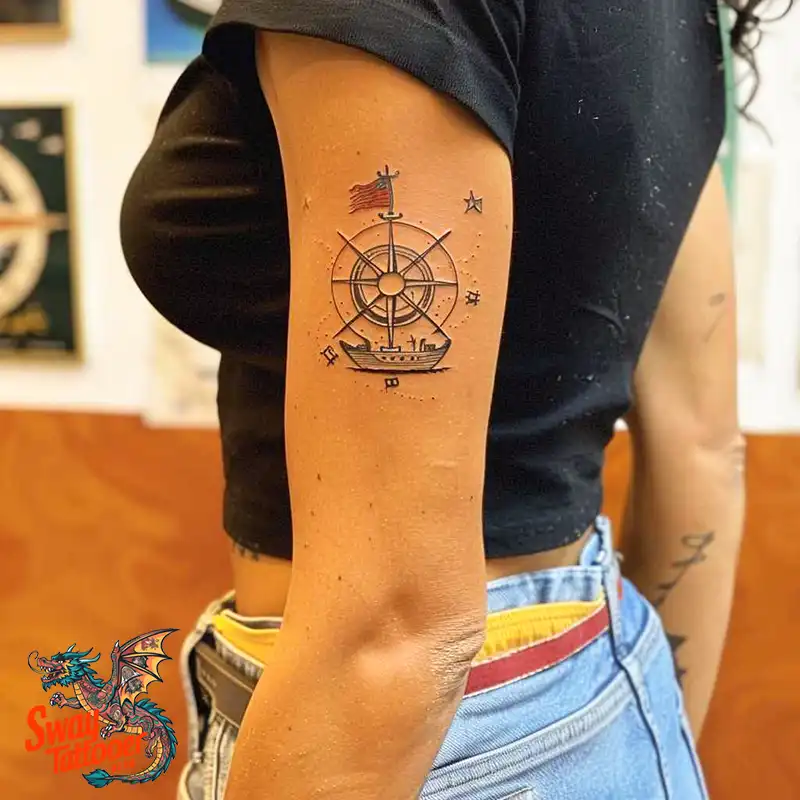
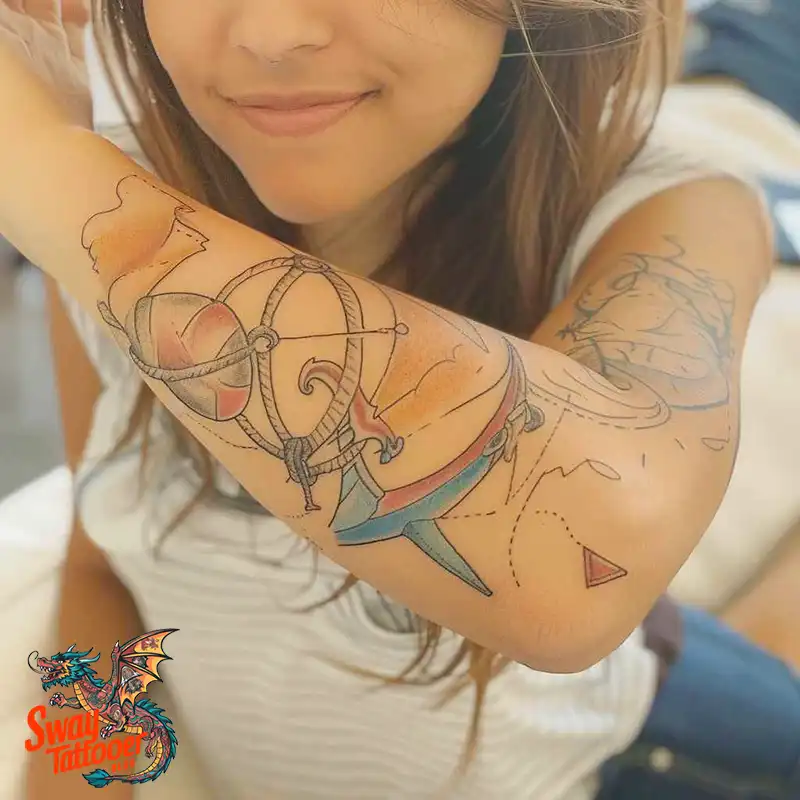
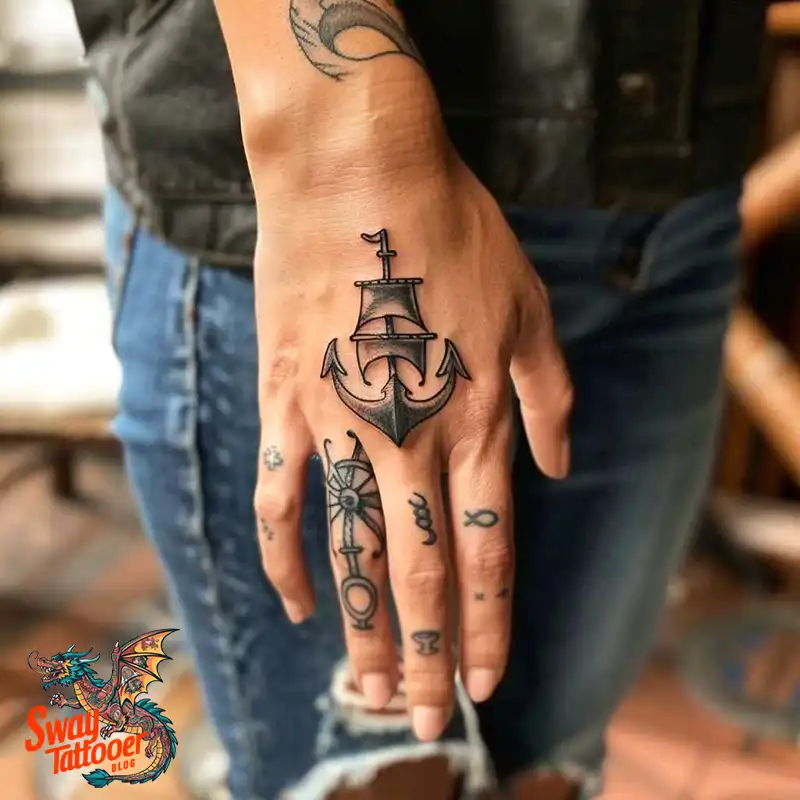
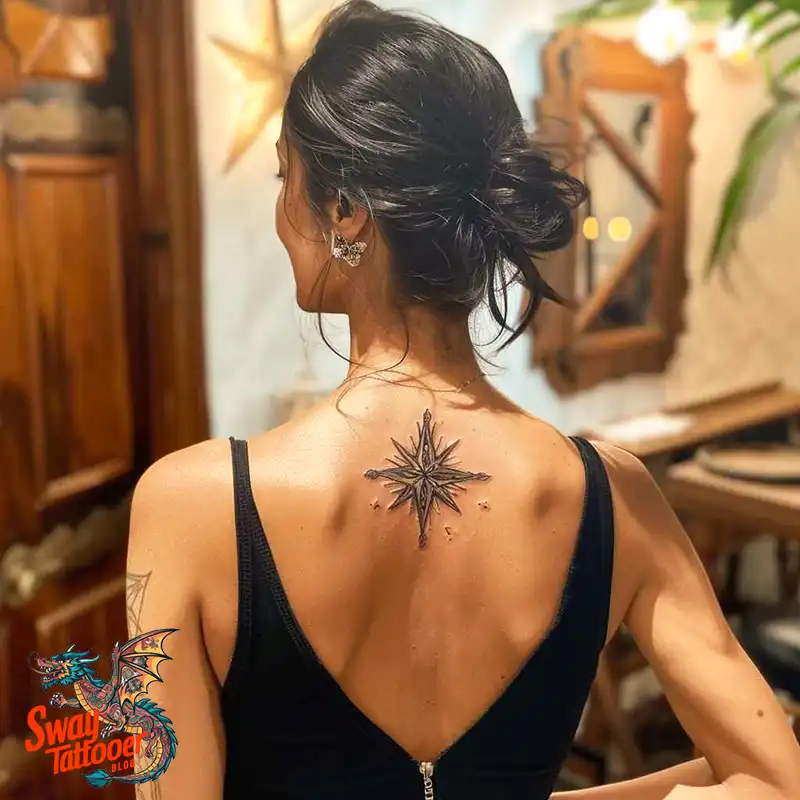
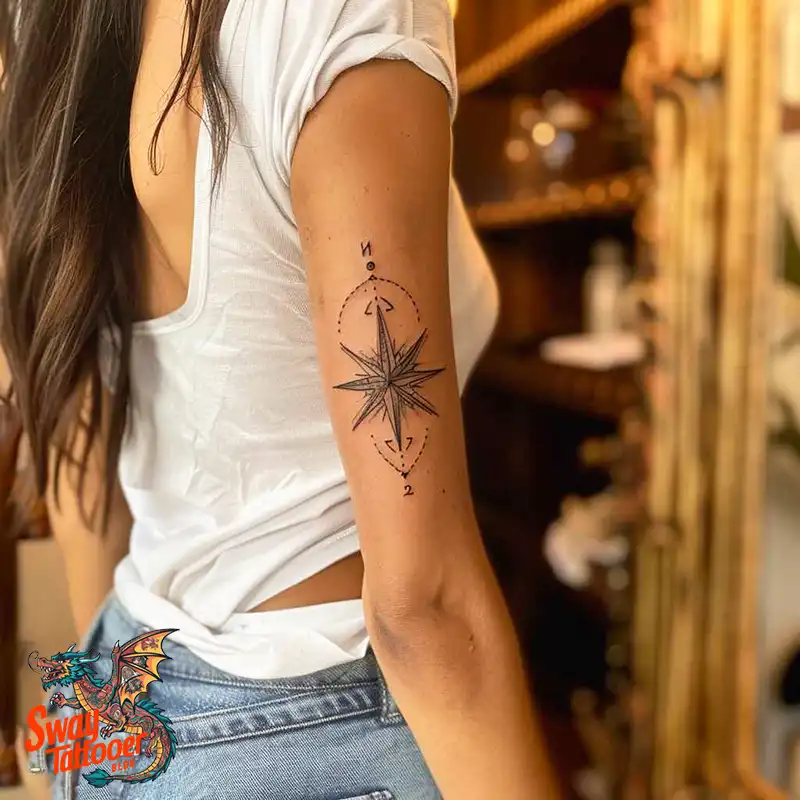
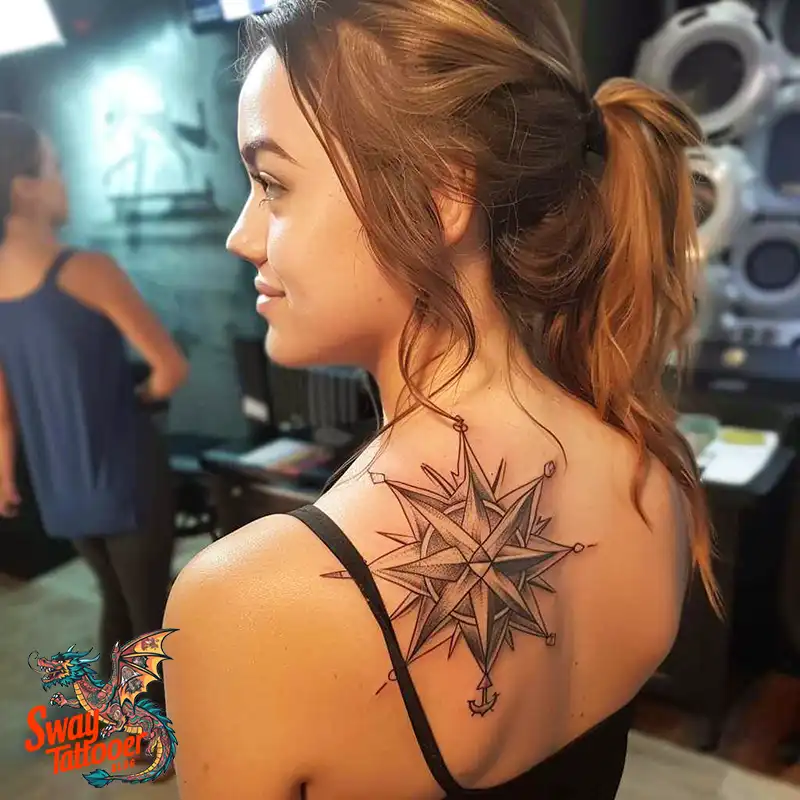
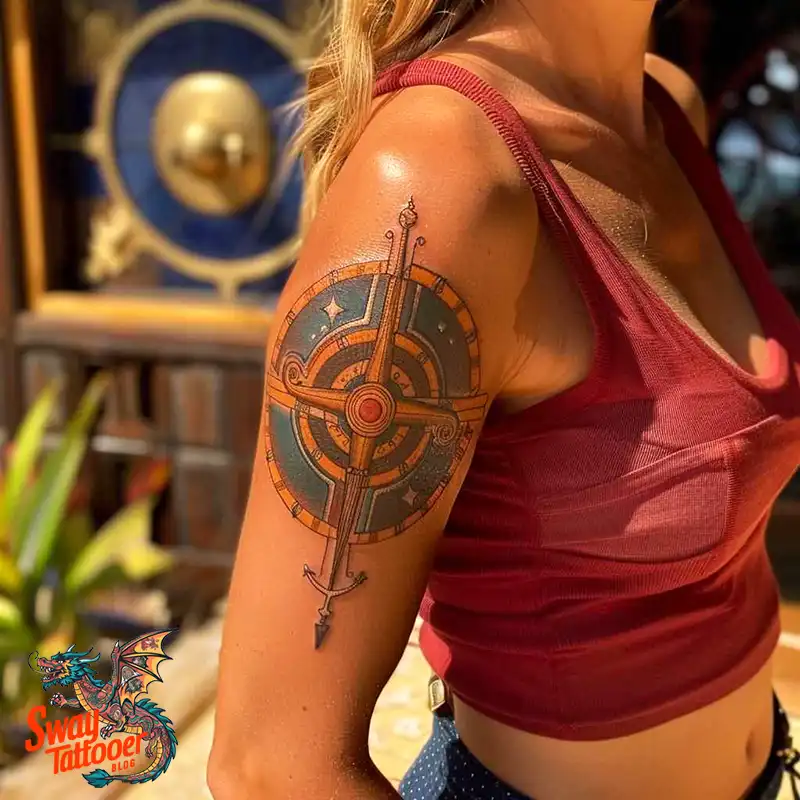
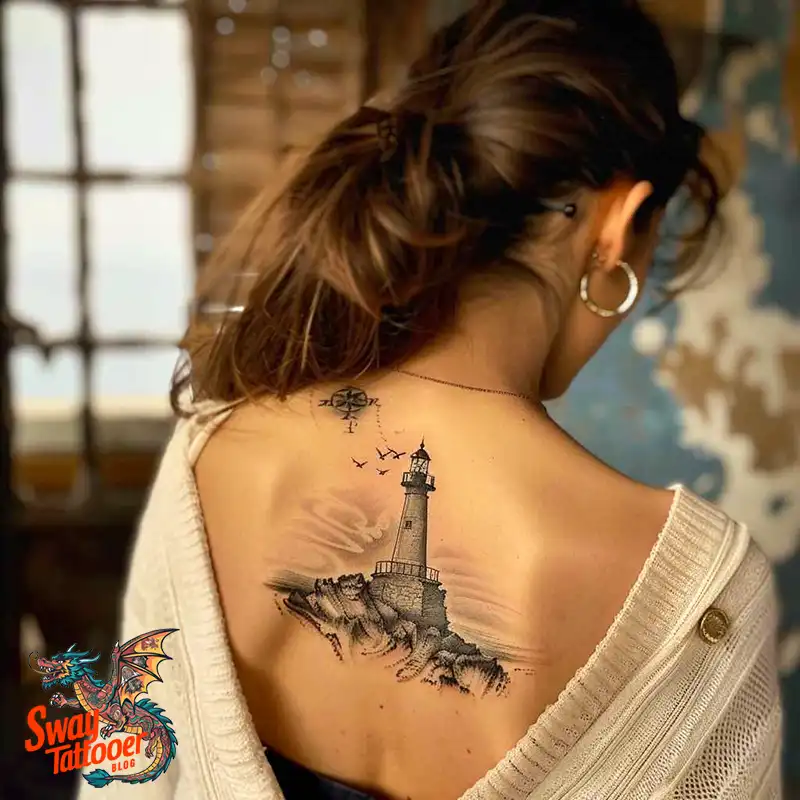
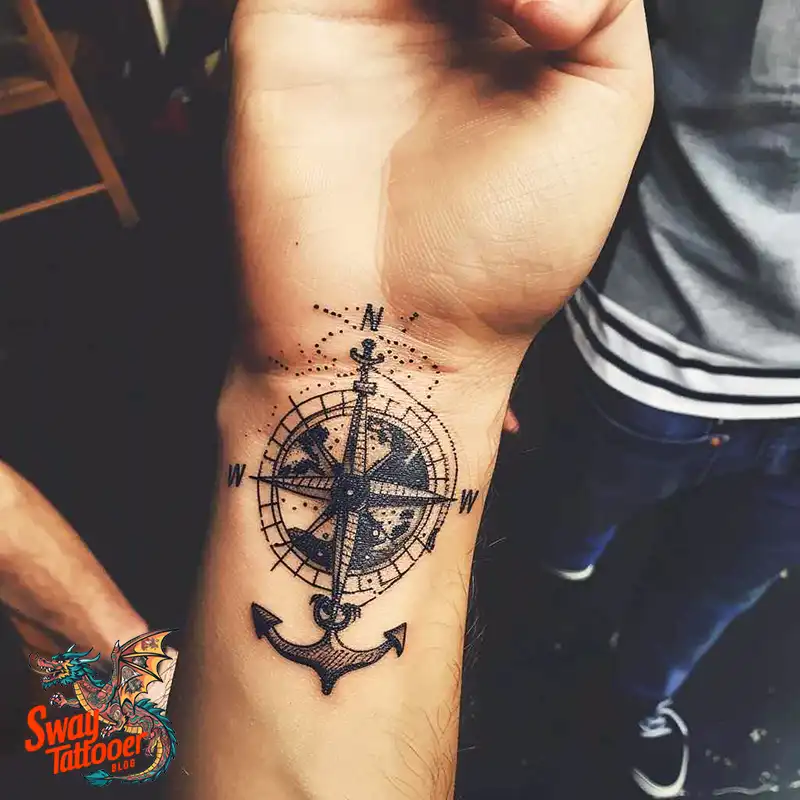
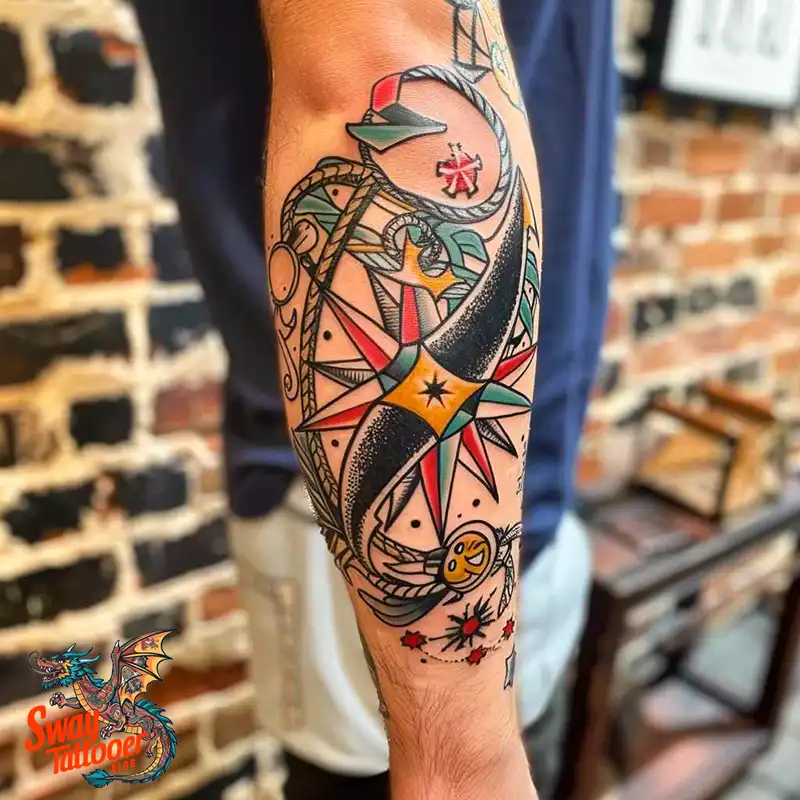
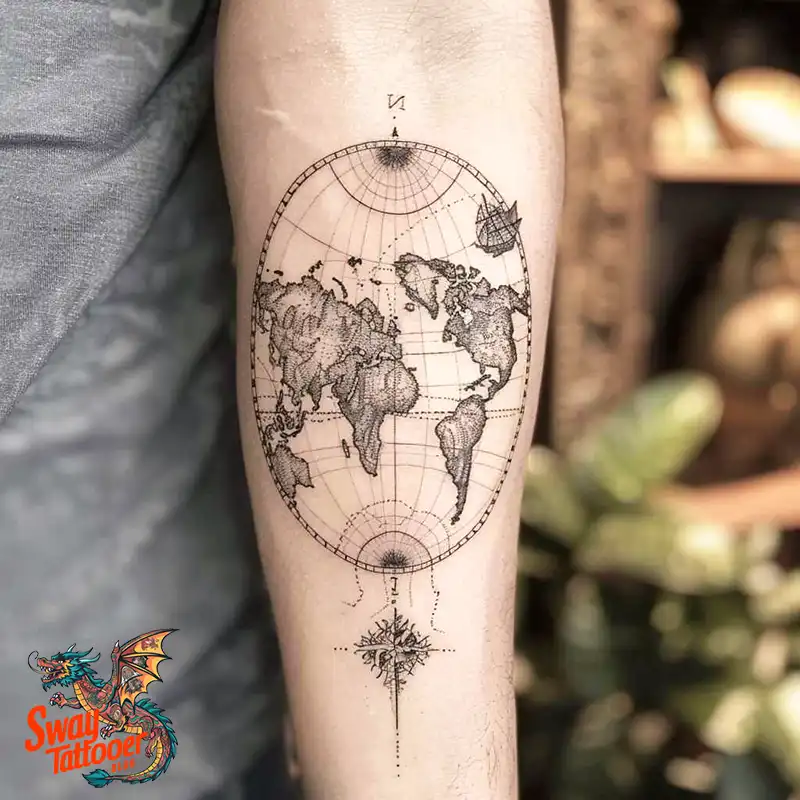
- The Compass Rose: This is a complex symbol of protection and guidance. It means you must find your personal truth. It reminds you to stay centered no matter the chaos around you. The Lighthouse and Compass Rose often blend. This combines sanctuary and guidance. It is a powerful symbol of resilience.




The Swallow:
Swallow tattoos are classic sailor tattoos. They are rich with historical code.
- The Code: A sailor earned one swallow for every 5,000 nautical miles traveled. This showed their experience.
- The Meaning: The bird always returns home. This means homecoming, safe return, and loyalty. Sailors believed swallows carried a drowned sailor’s soul to heaven.
Wards and Charms:
Not all tattoos mark achievement. Many were for superstitious luck. They aimed to fight the dangers of the sea.
- Pig and Rooster: This pairing is a famous lucky charm. Their light crates would often float during a shipwreck. Sailors got them to ward off drowning. Placing them on the feet was intentional. It meant the sailor would always return safely to shore.
- “Hold Fast”: This phrase means perseverance. It was tattooed across the knuckles. This reminded sailors to grip the ropes tightly in a storm.
Symbols of the Journey and Challenge
Other symbols capture the voyage and its challenges.
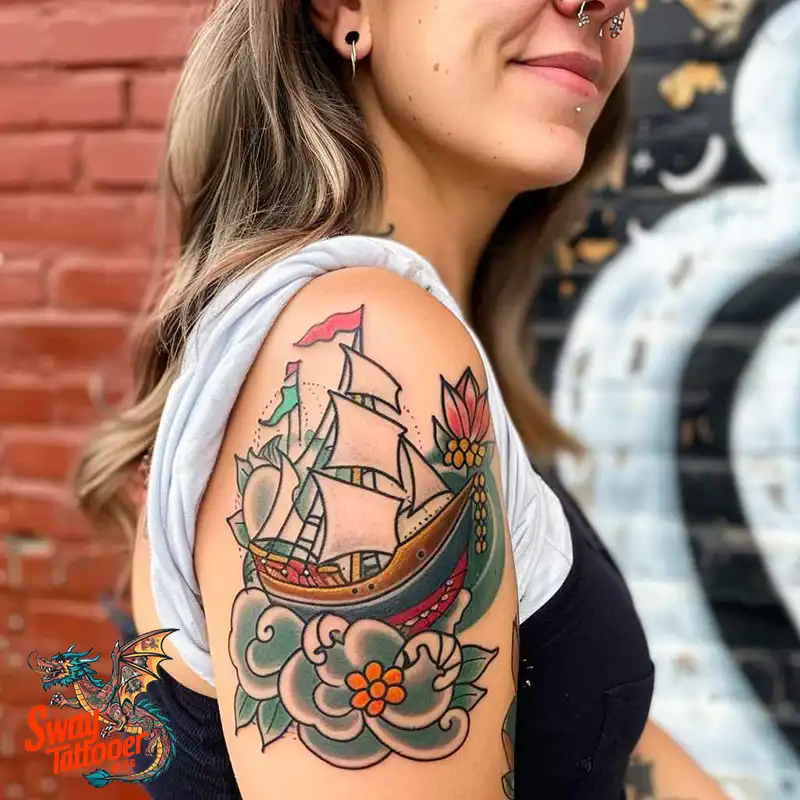
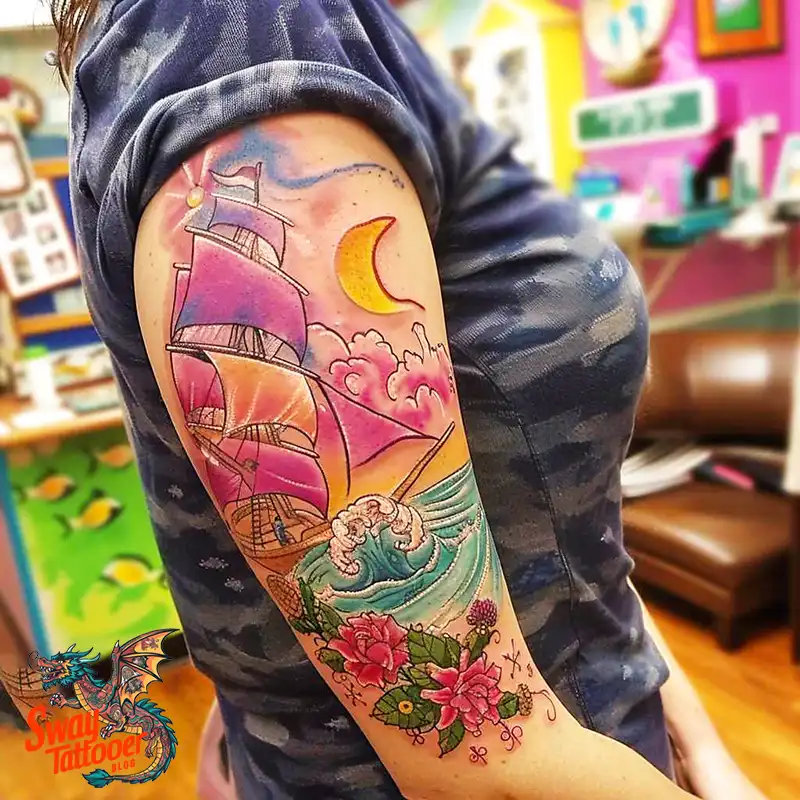
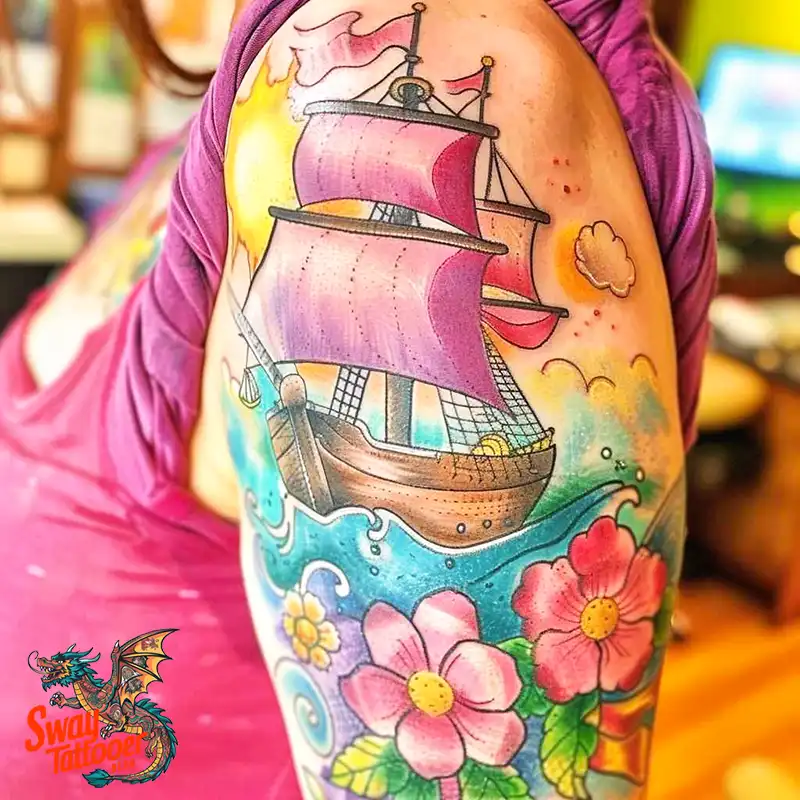
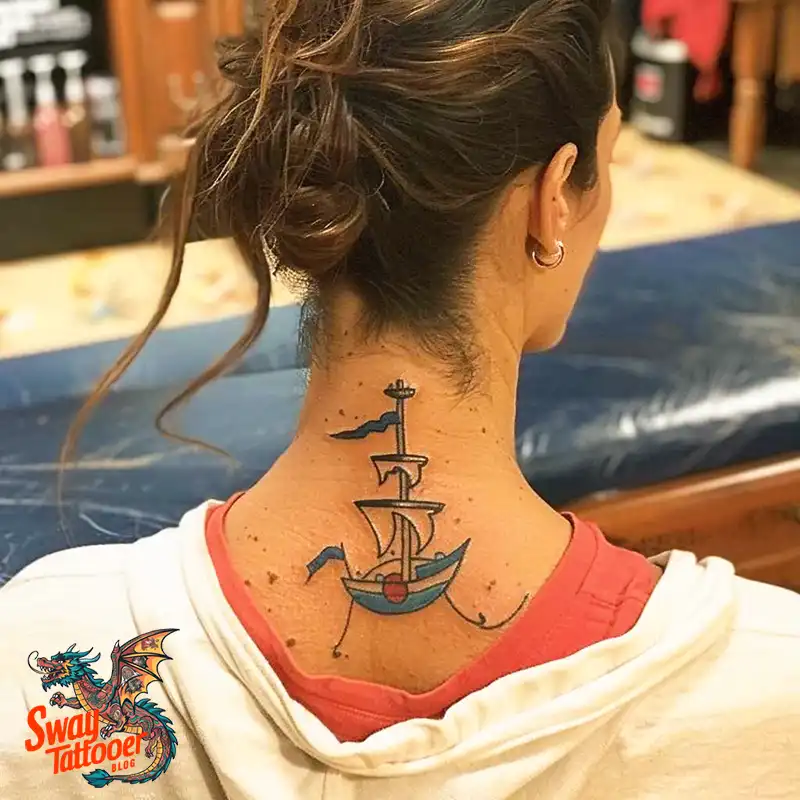
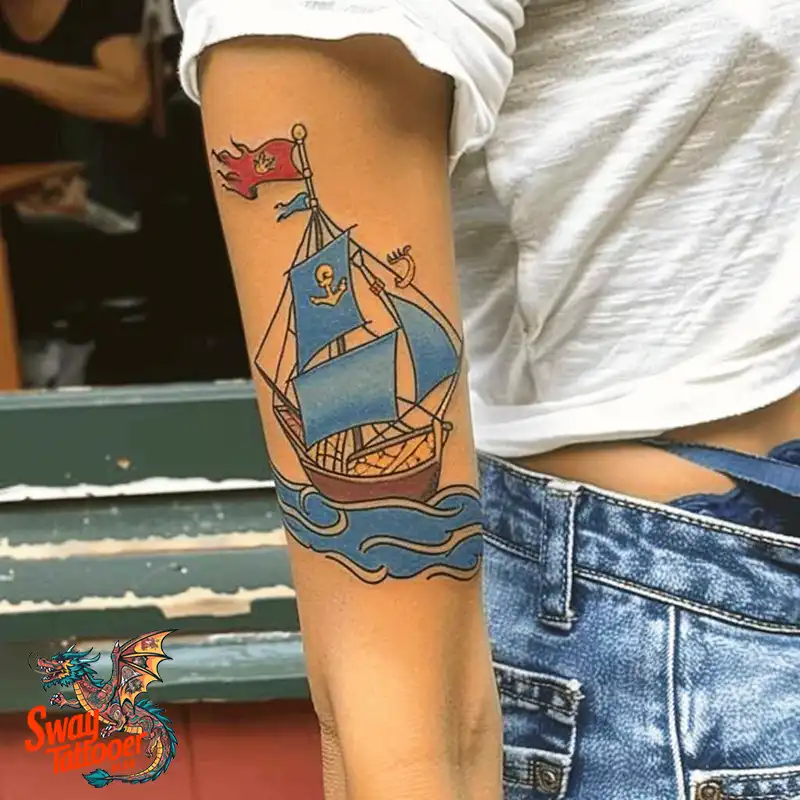
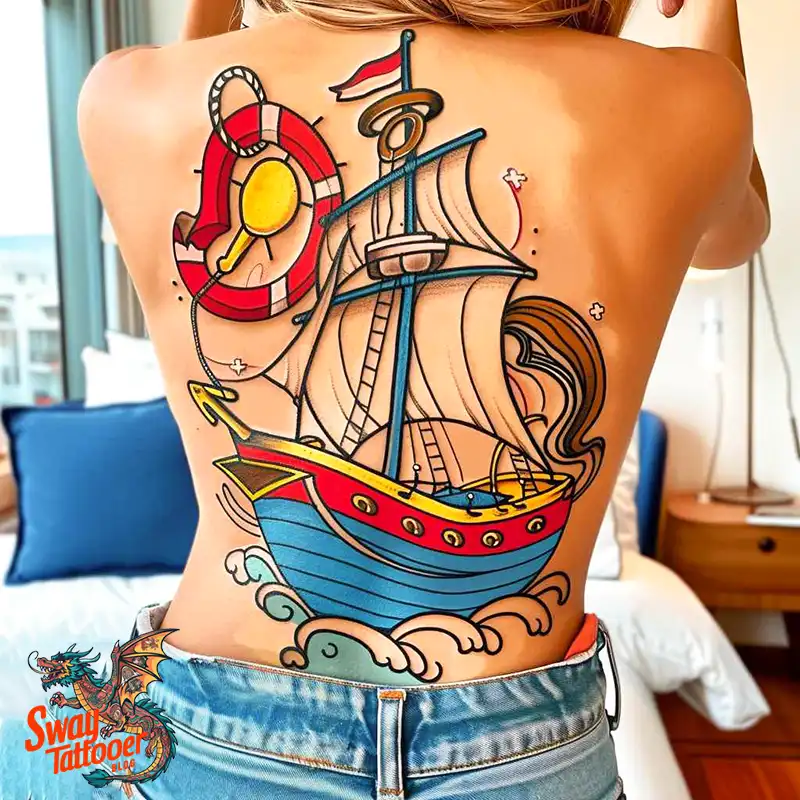
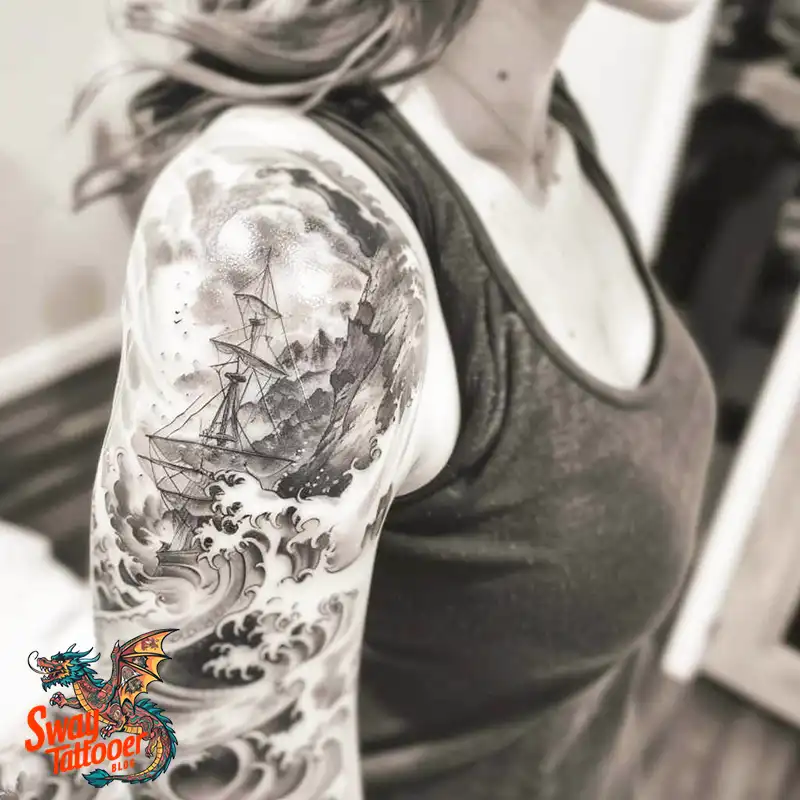
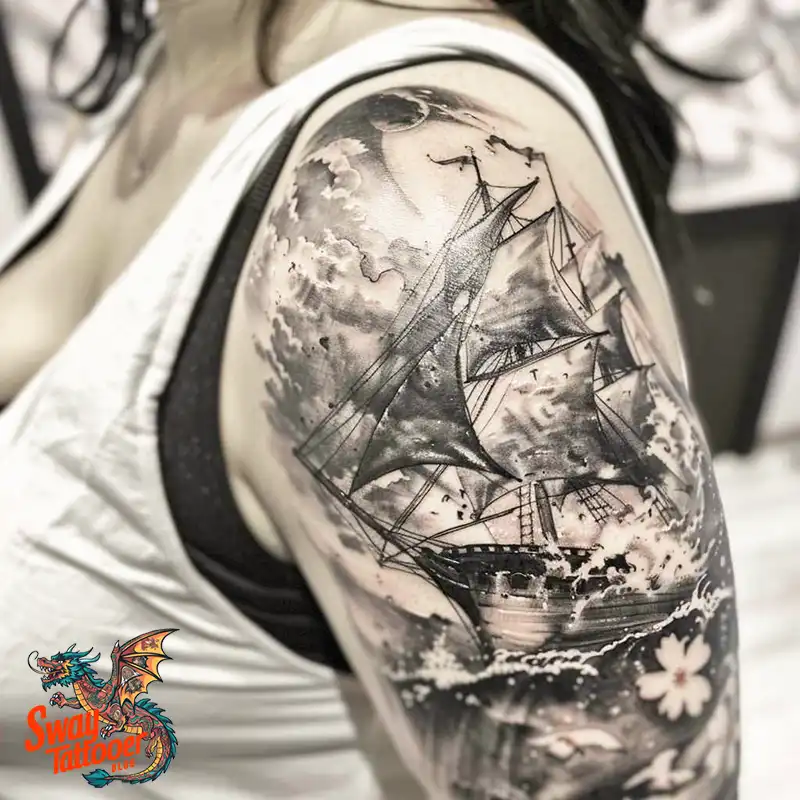
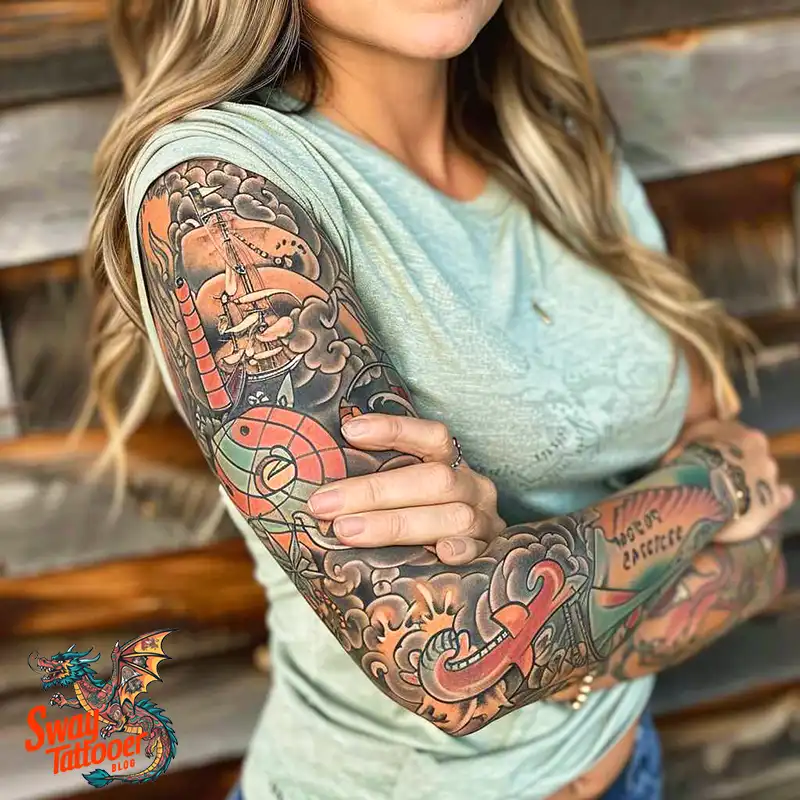
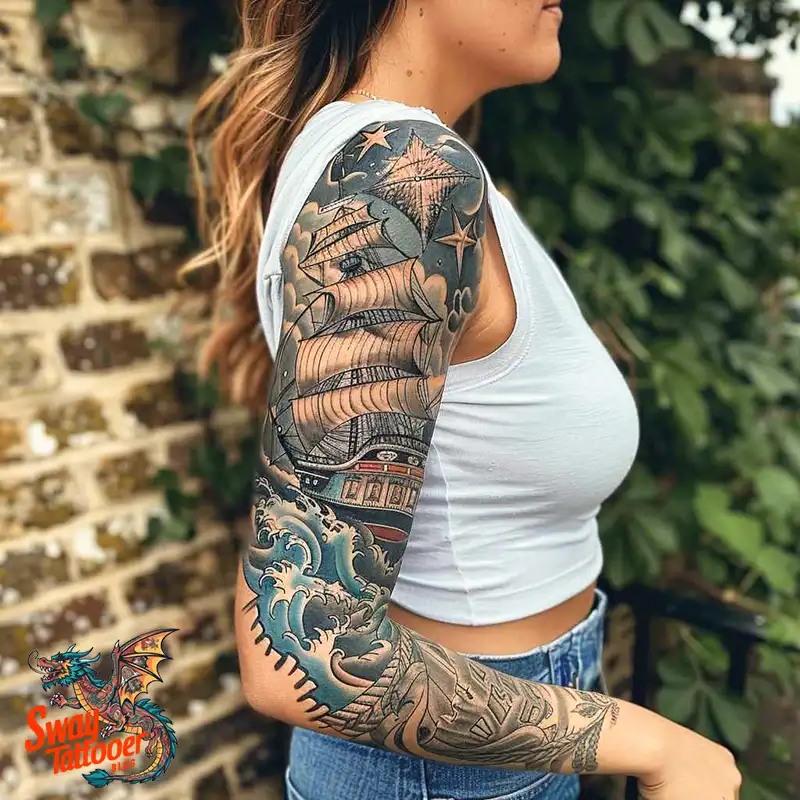
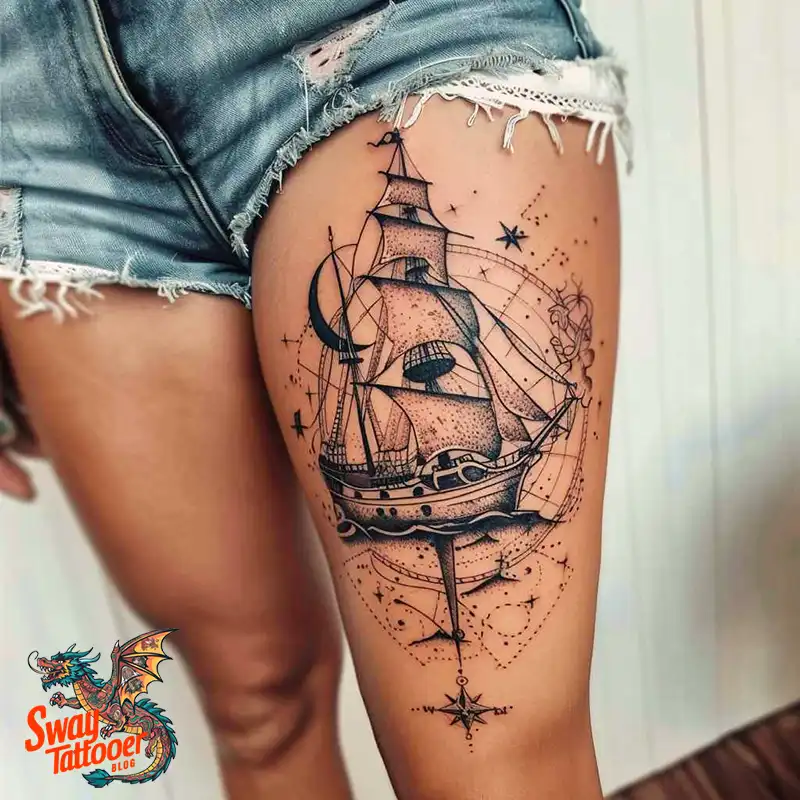
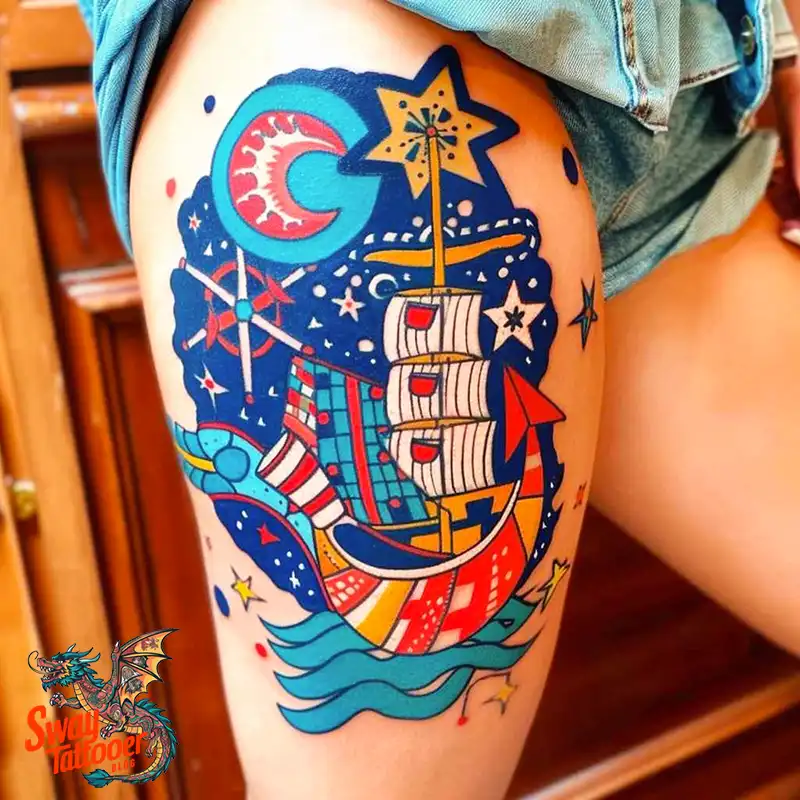
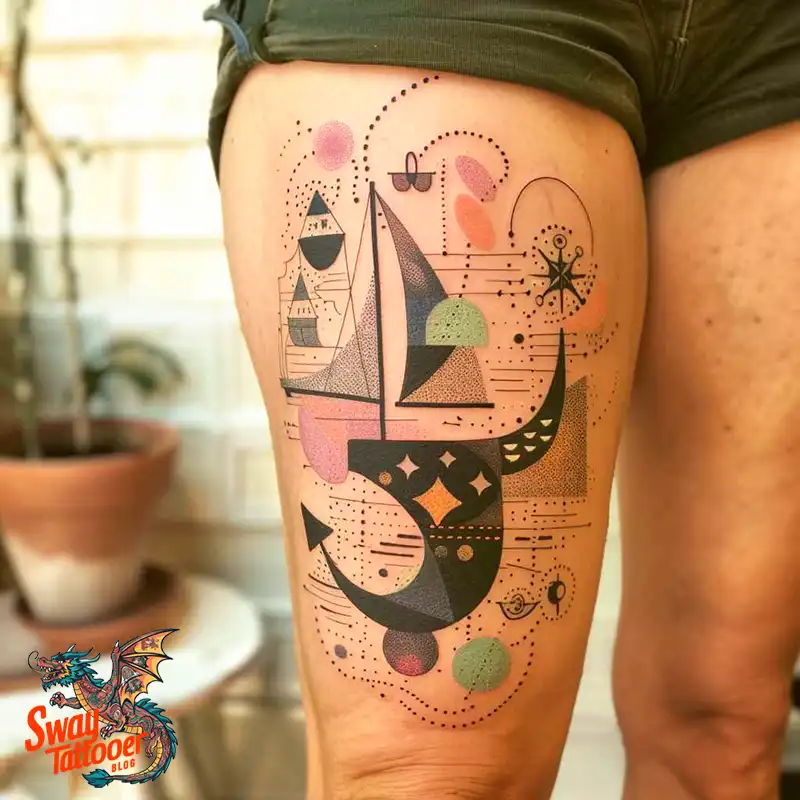
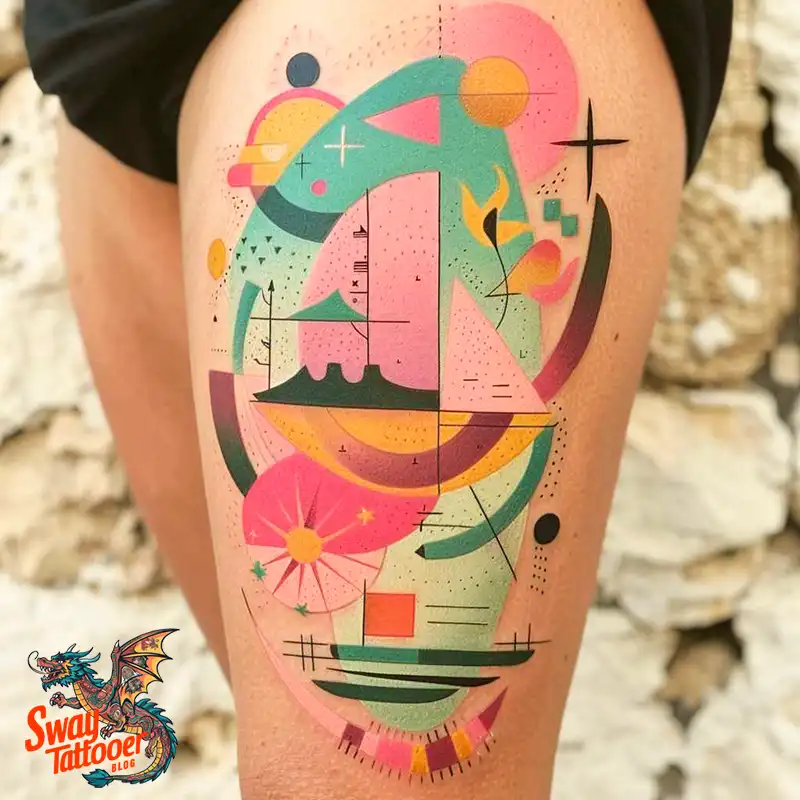
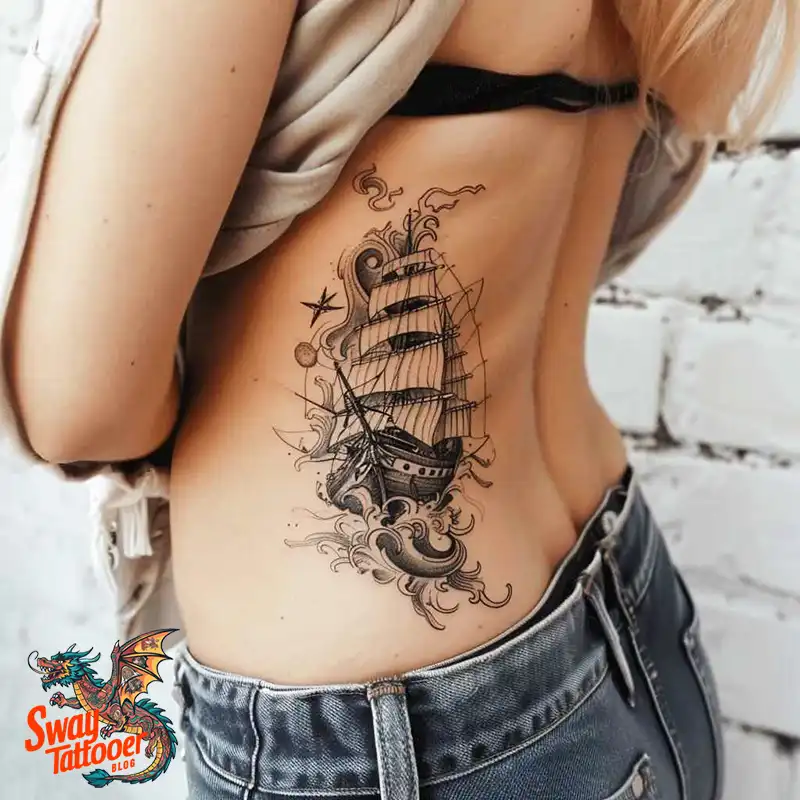
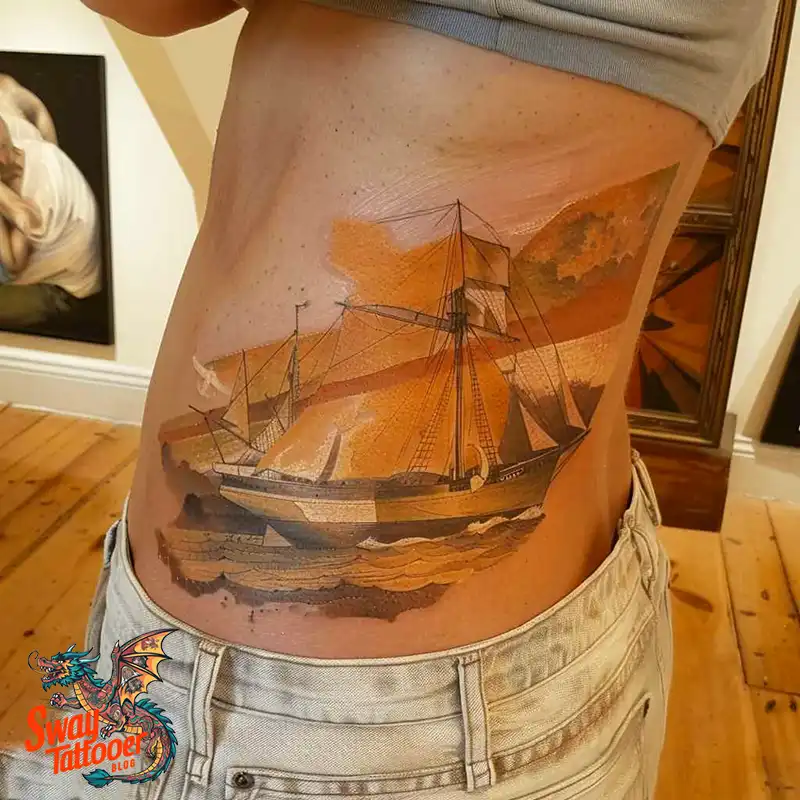
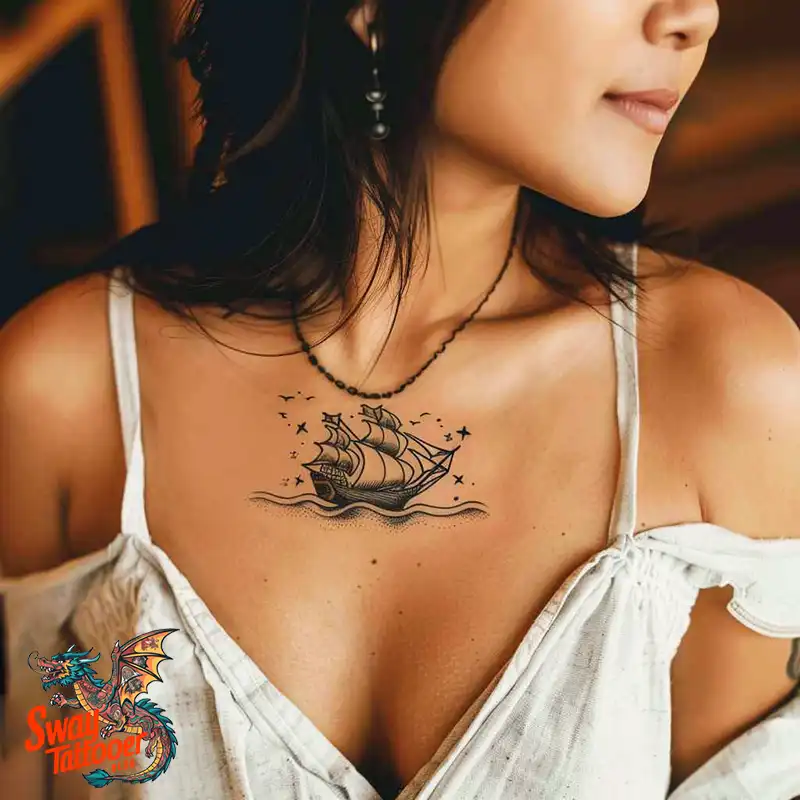
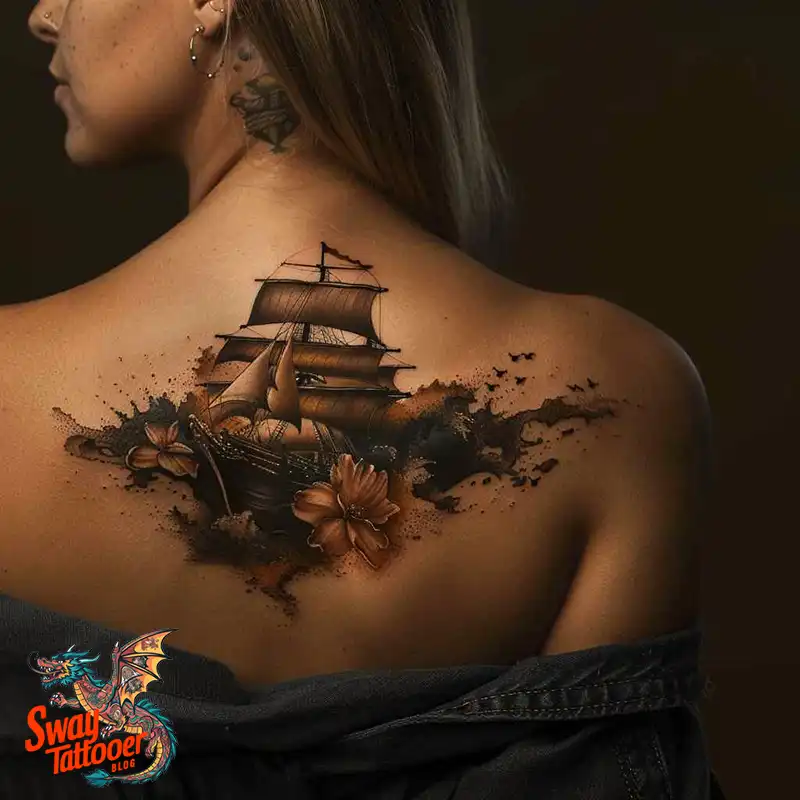
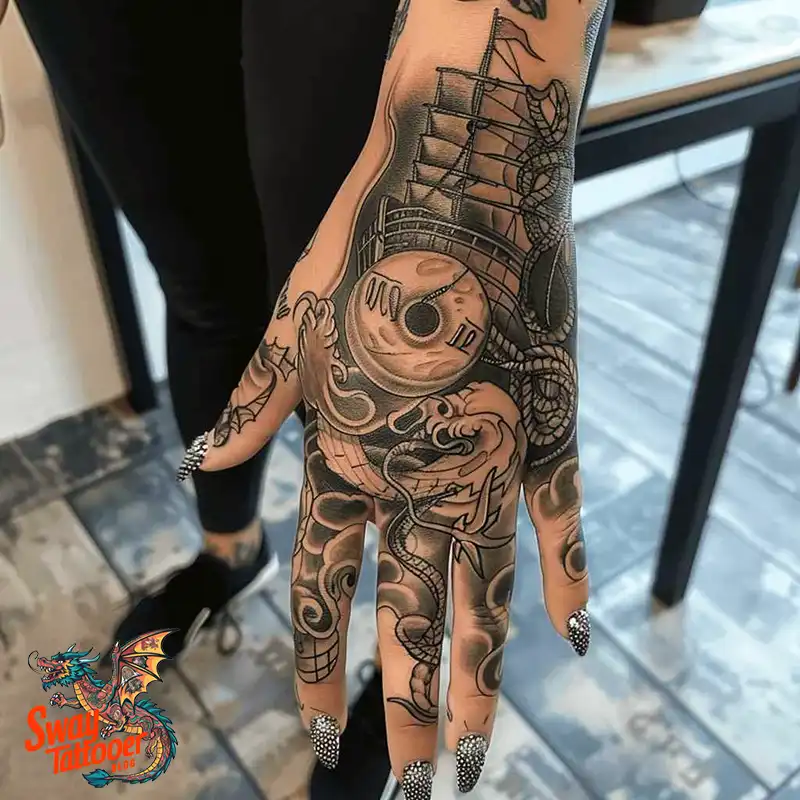
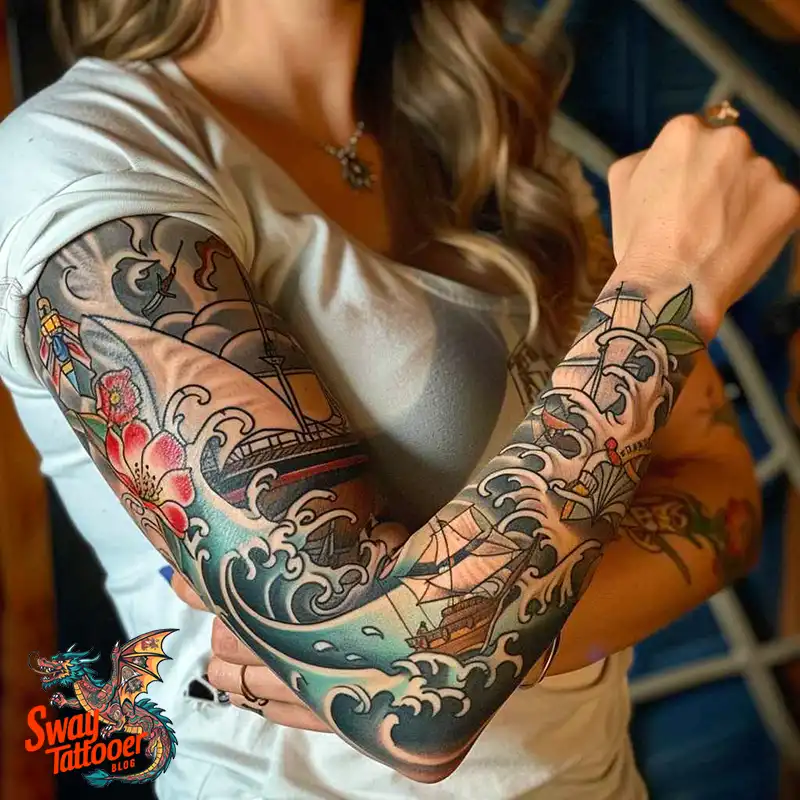
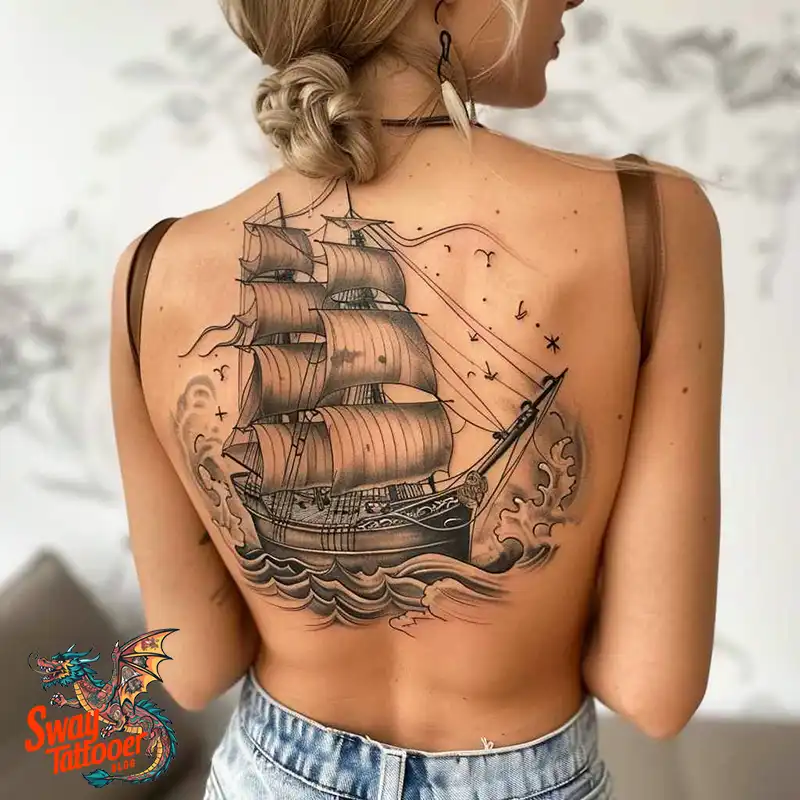
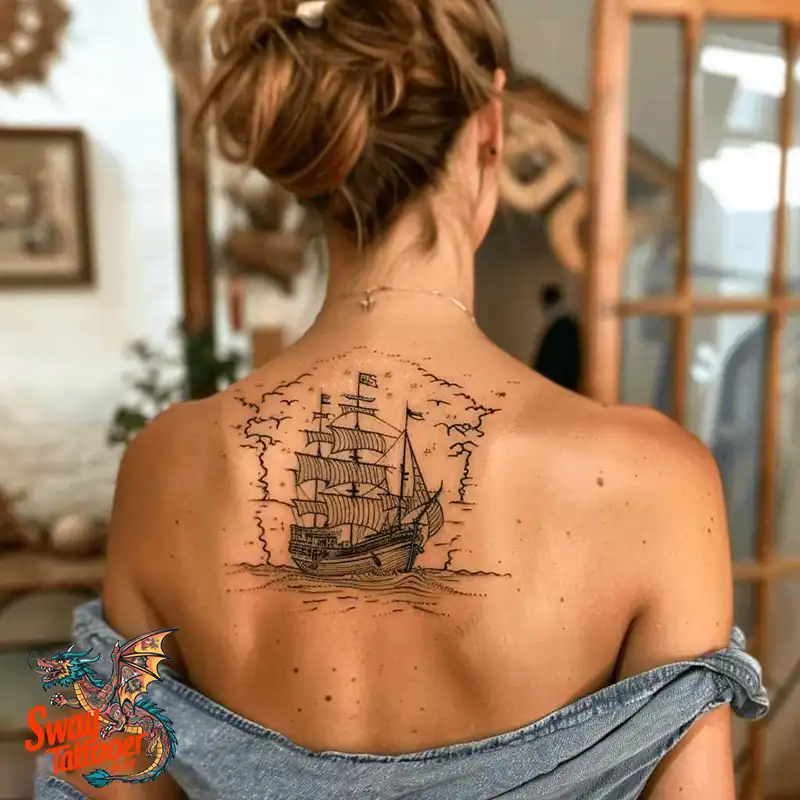
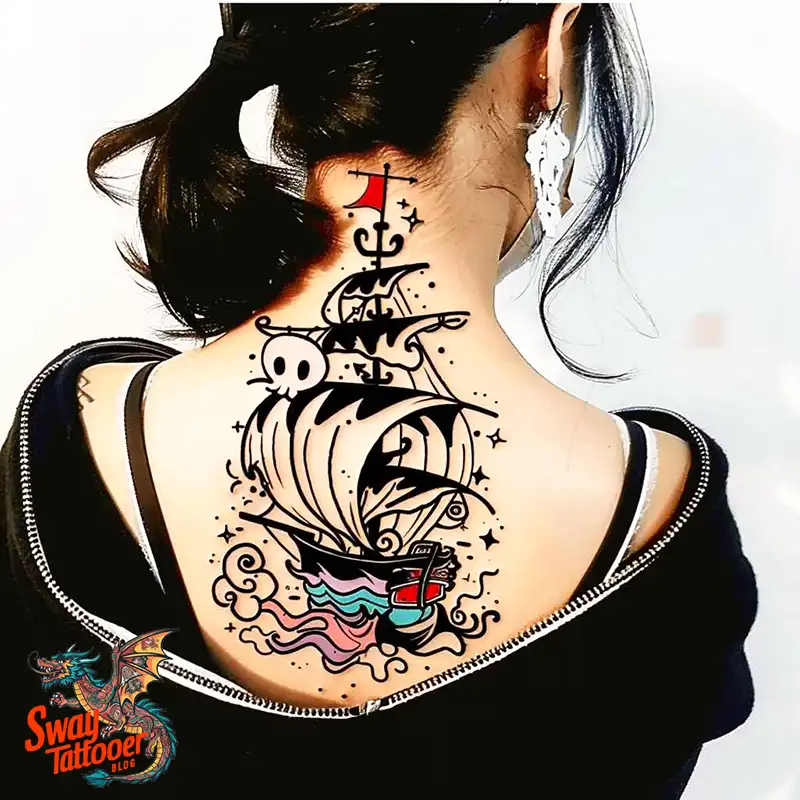
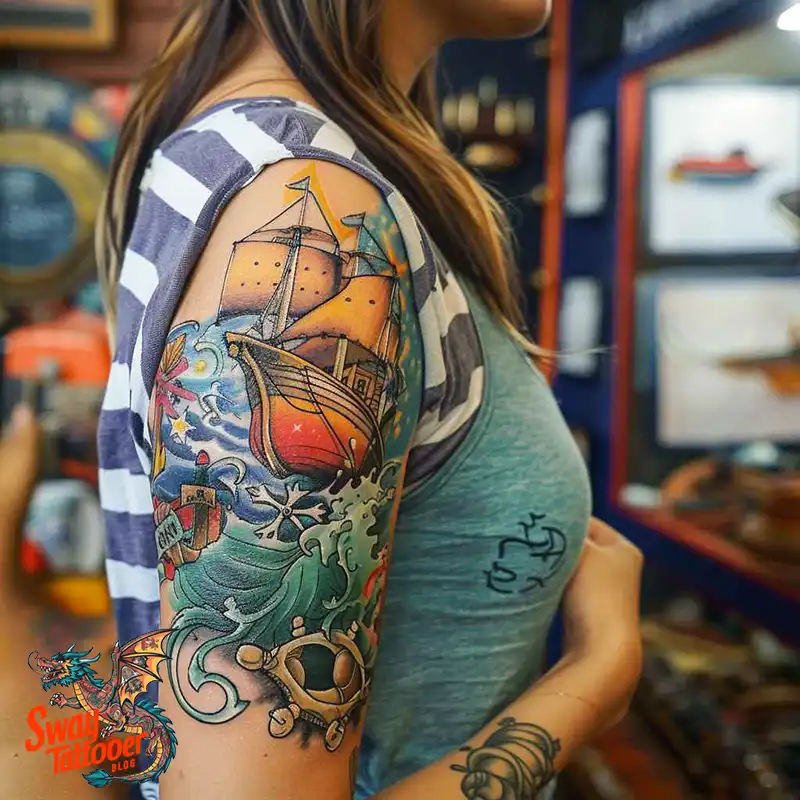
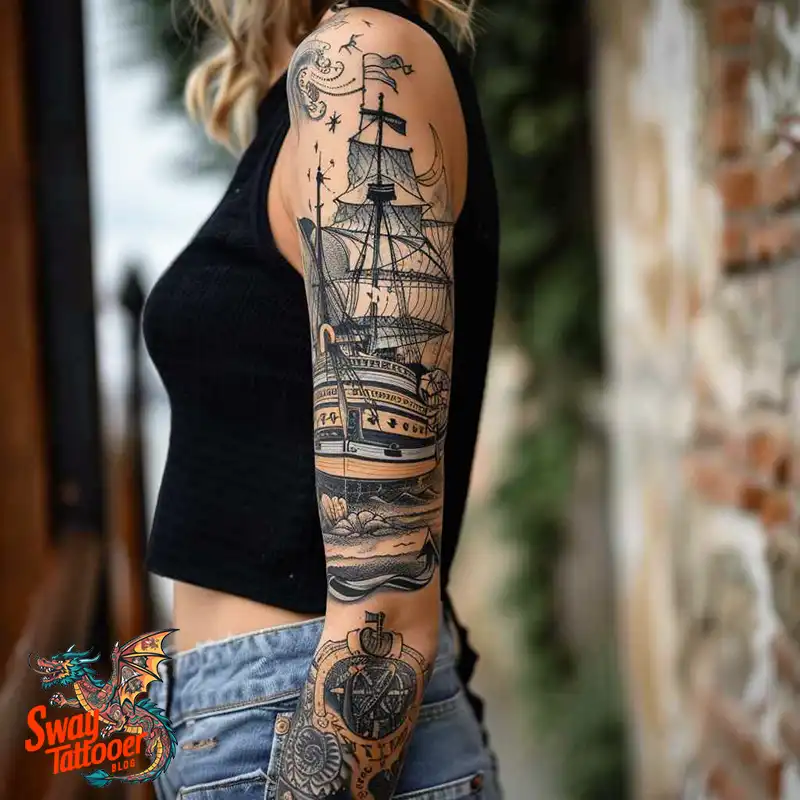
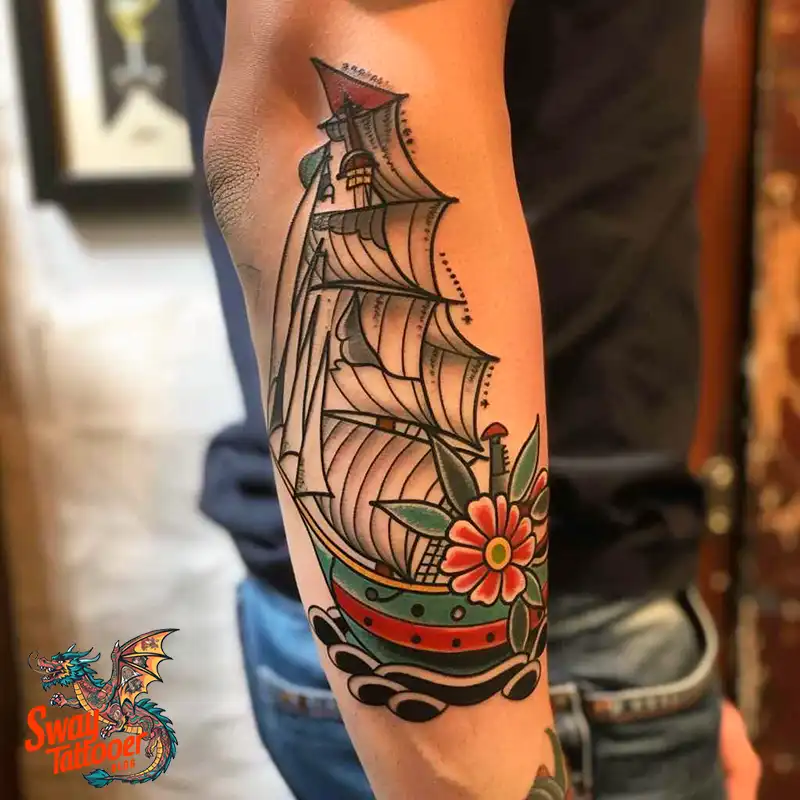
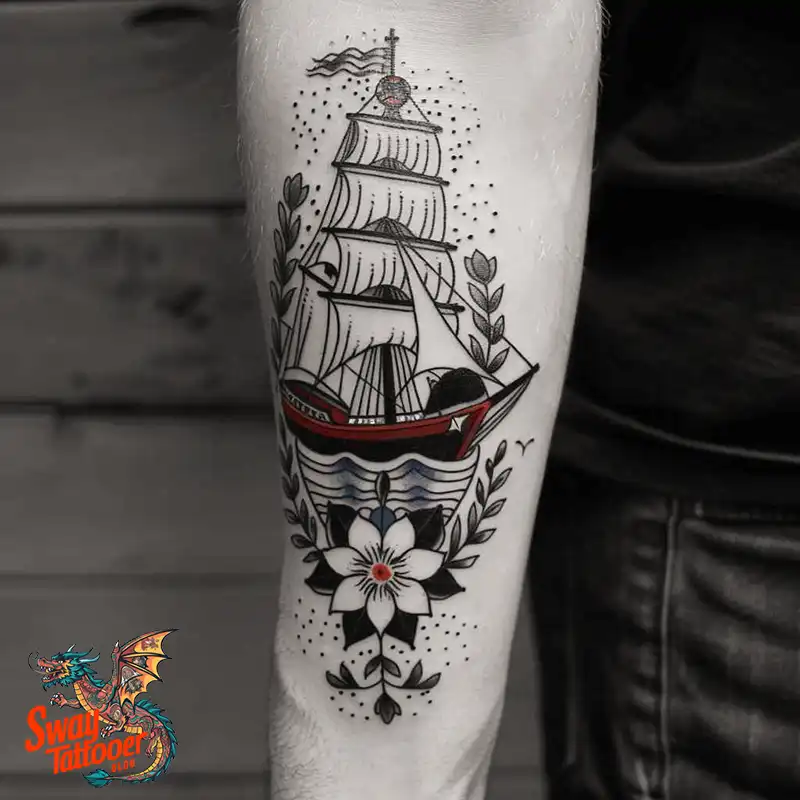
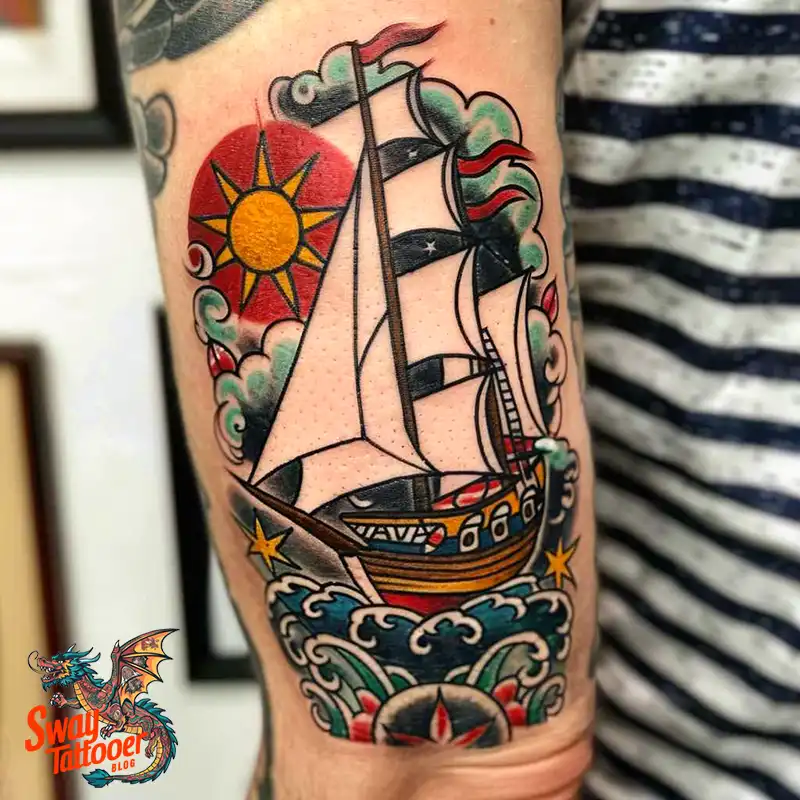
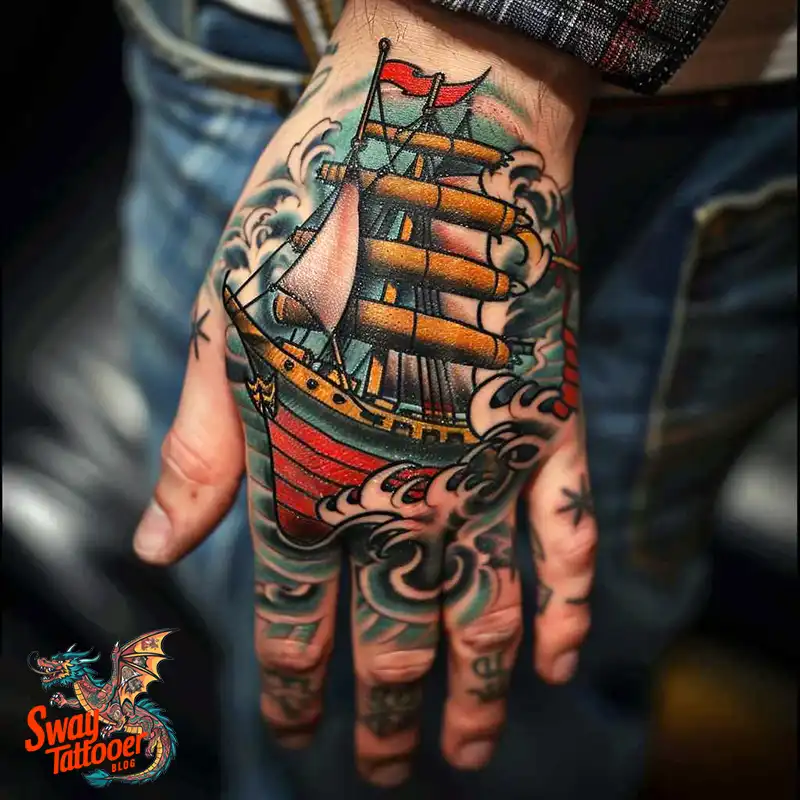
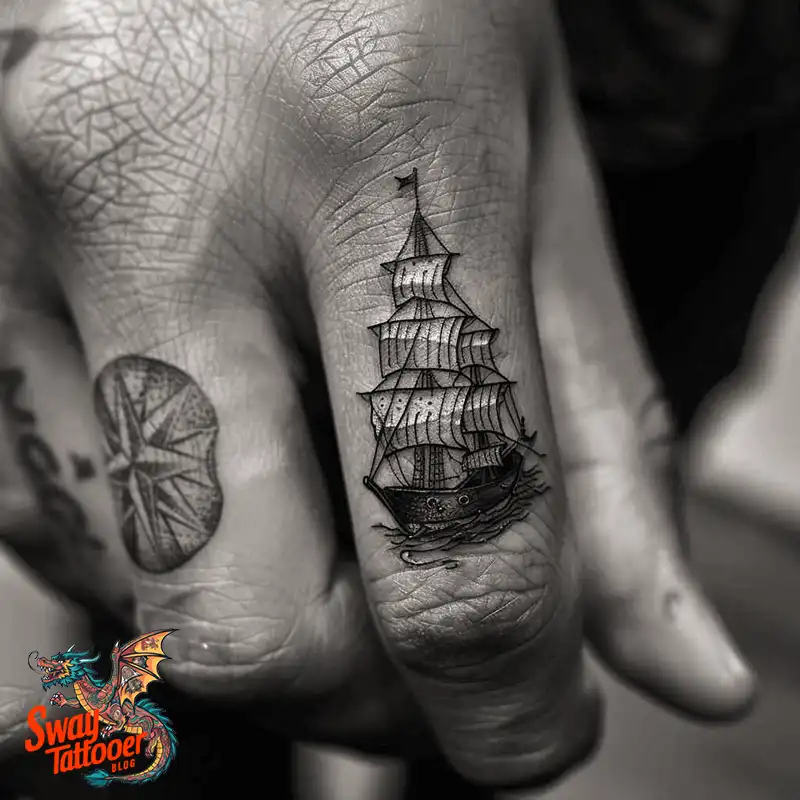
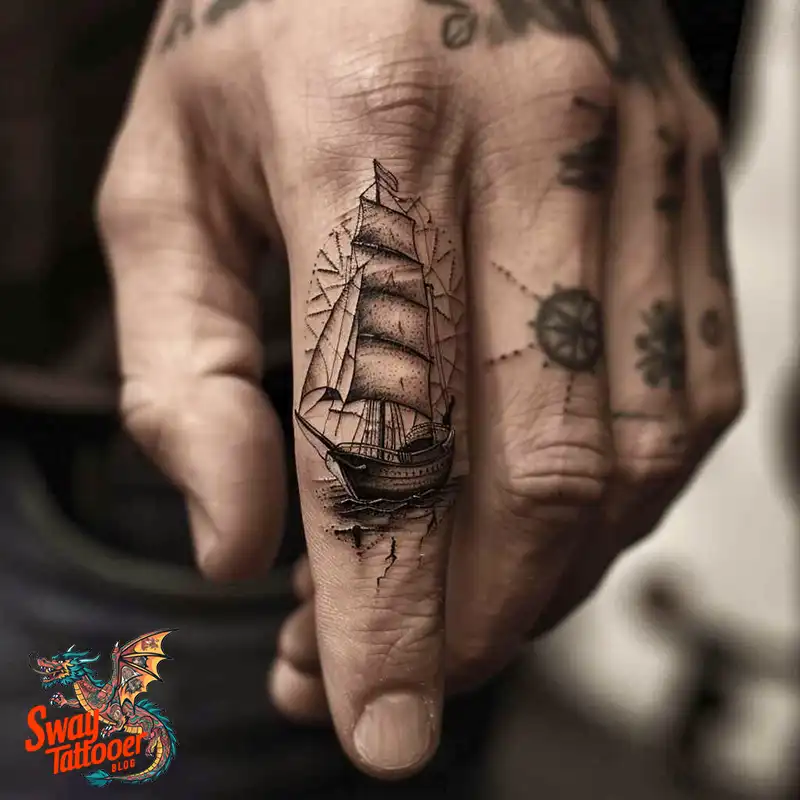
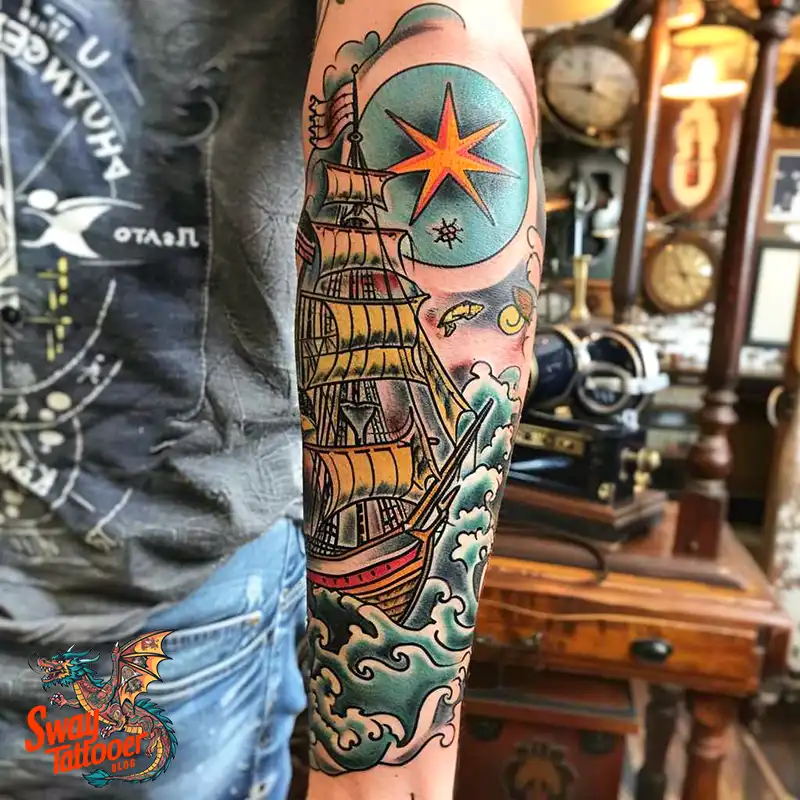
- A Fully Rigged Ship means you completed a dangerous journey, like sailing around Cape Horn.
- The Kraken (a huge sea creature) means the terrifying, unknown dangers of the deep ocean.
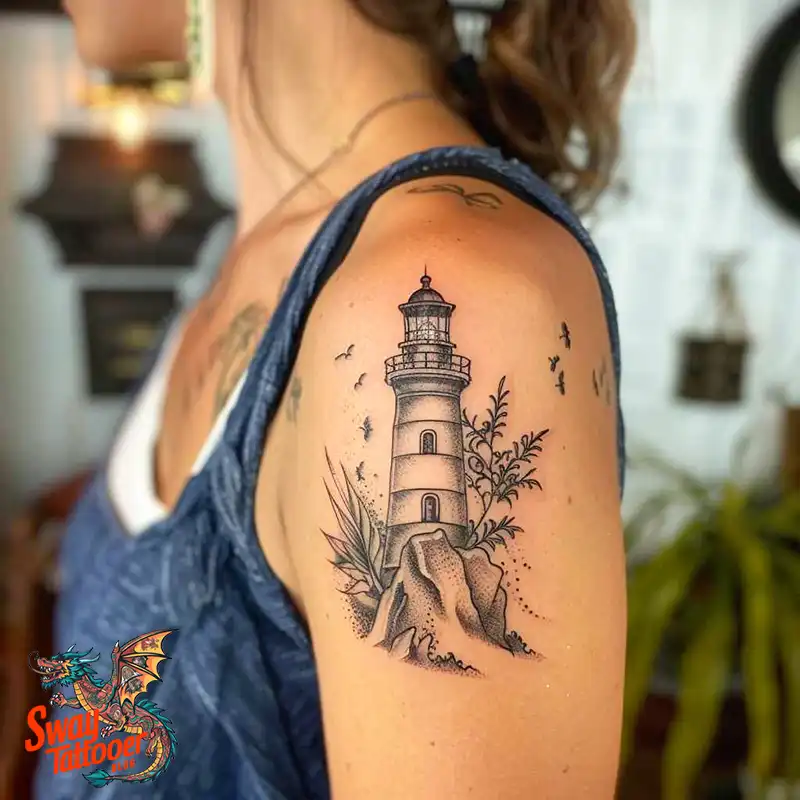
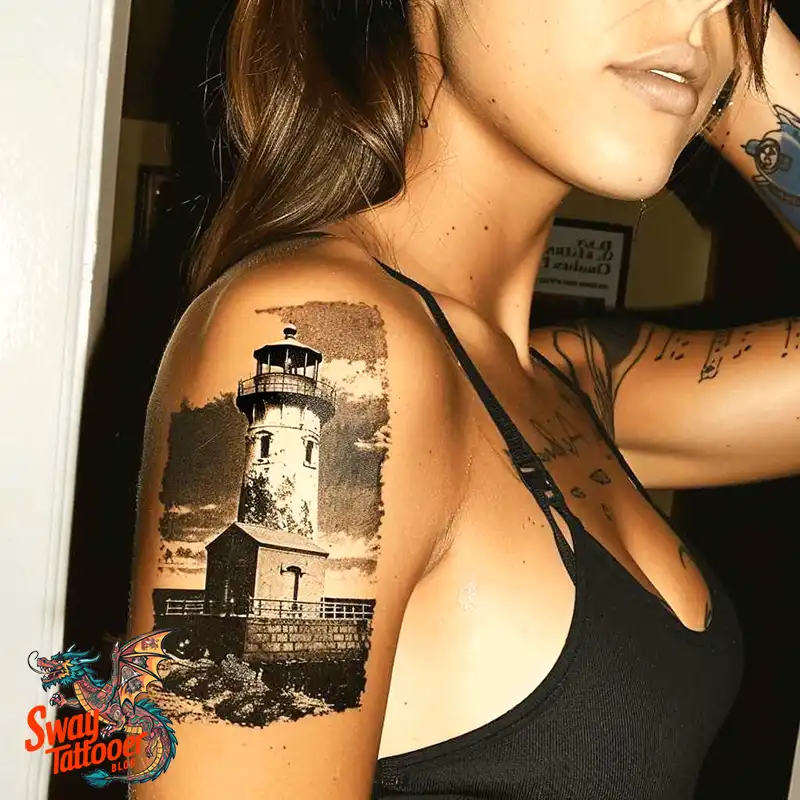
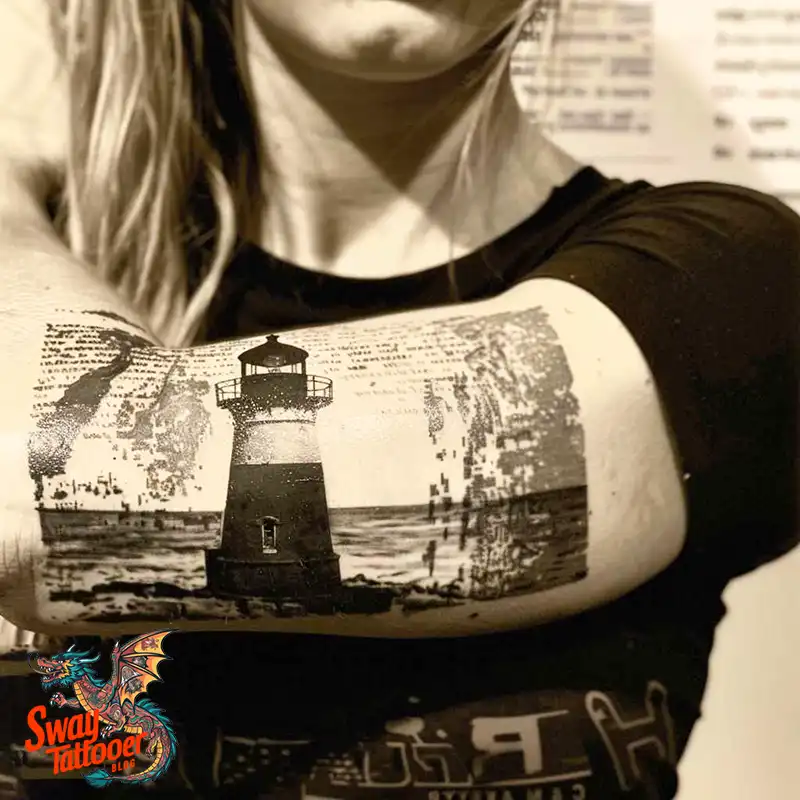
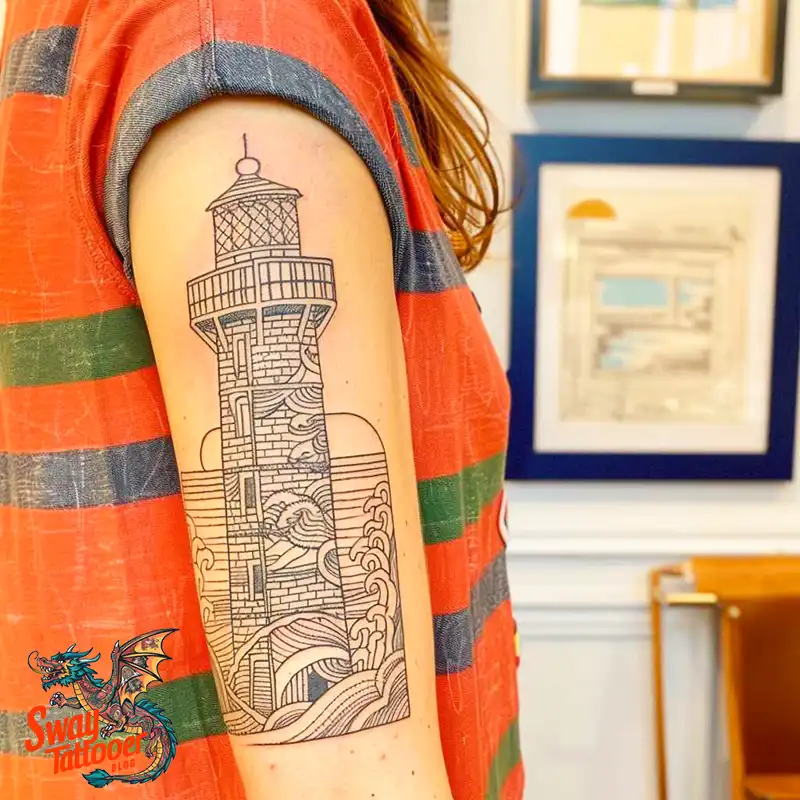
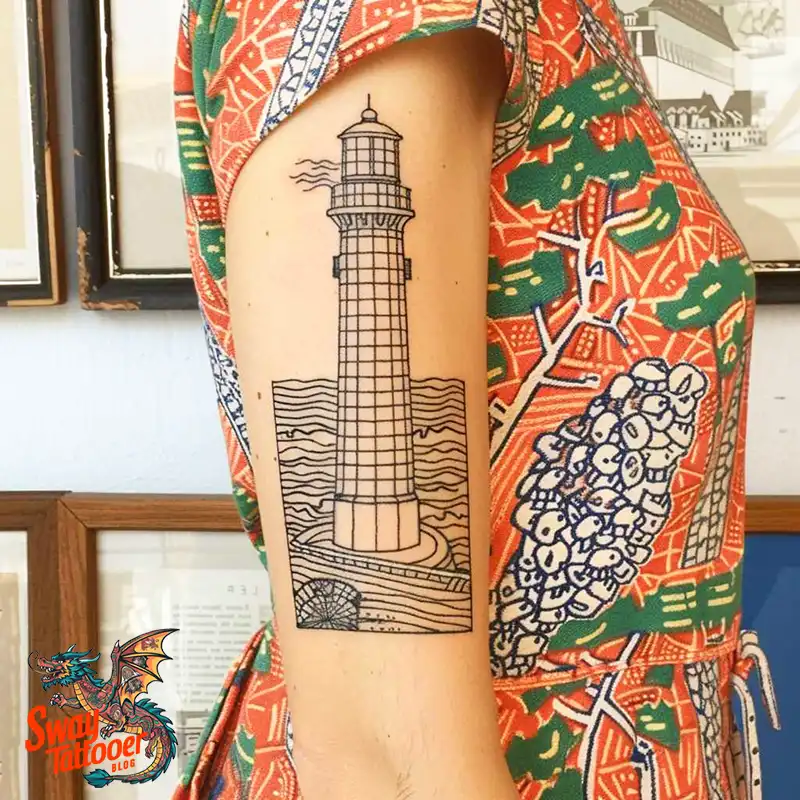
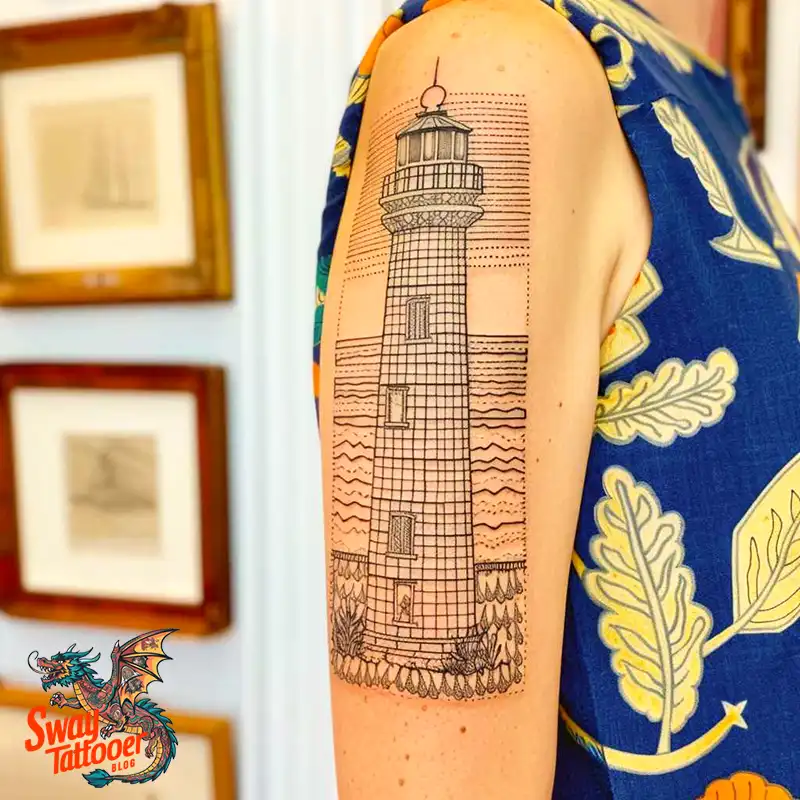
- The Lighthouse means hope, safety, and sanctuary. It symbolizes resilience and guides the way to a safe harbor.
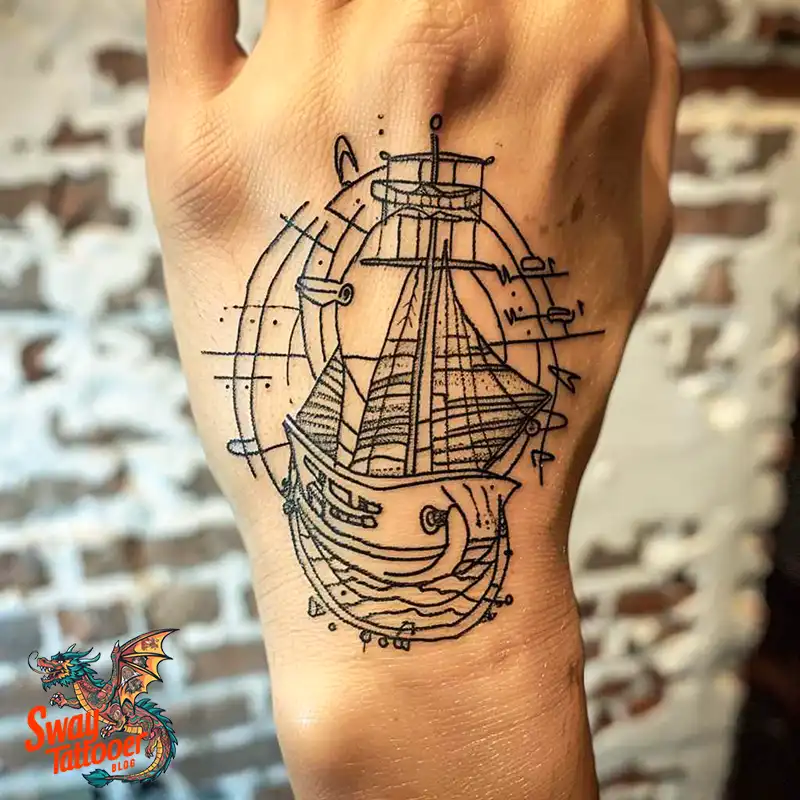
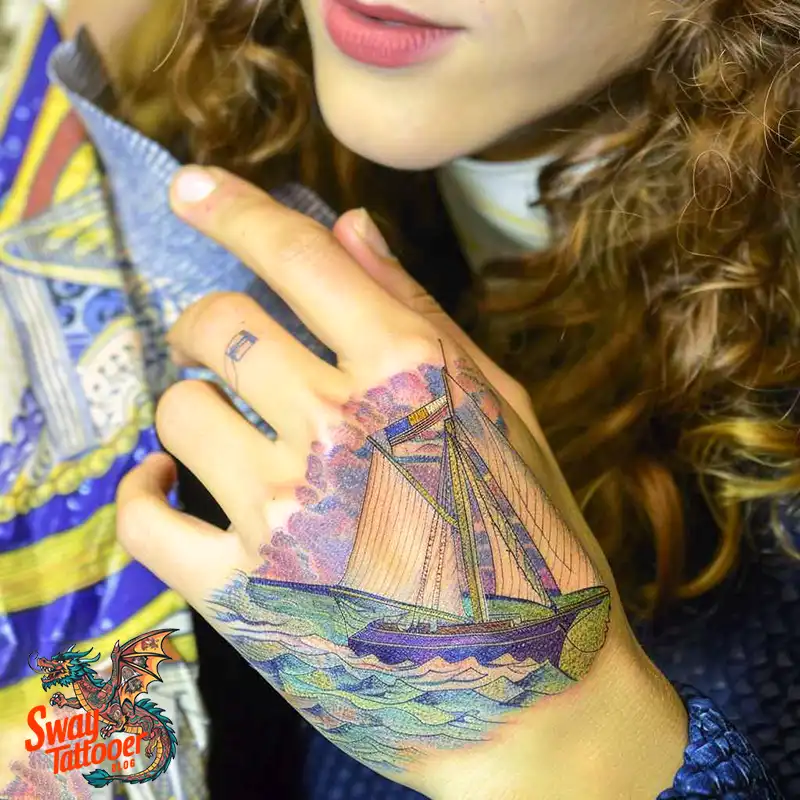
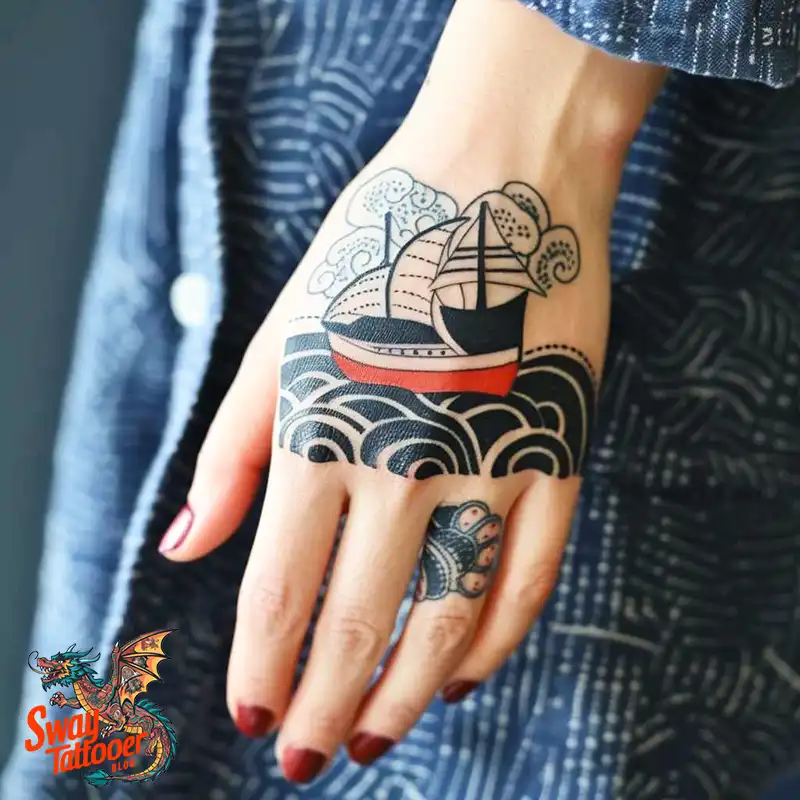
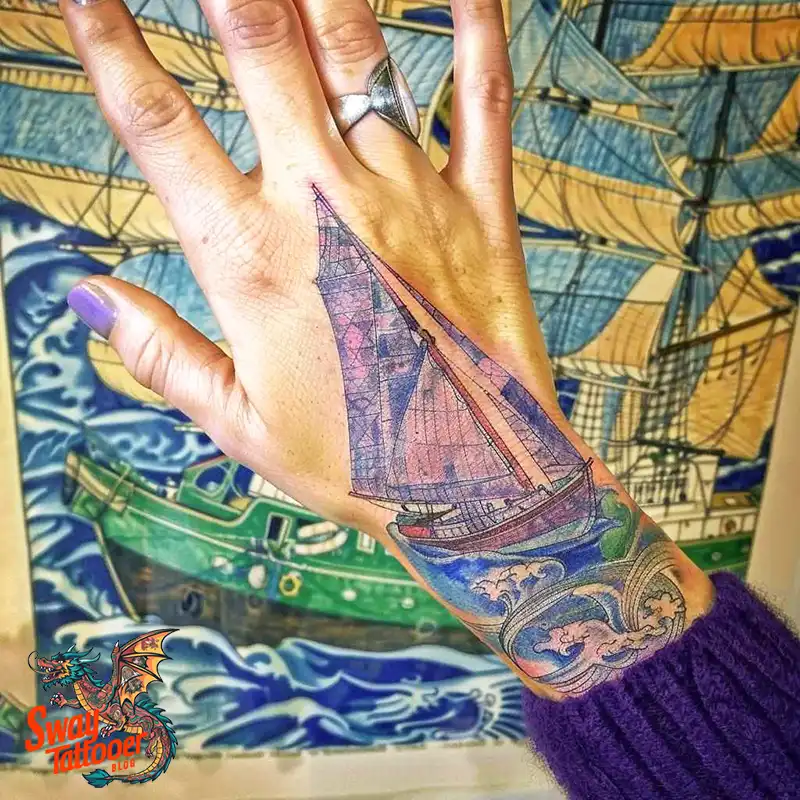



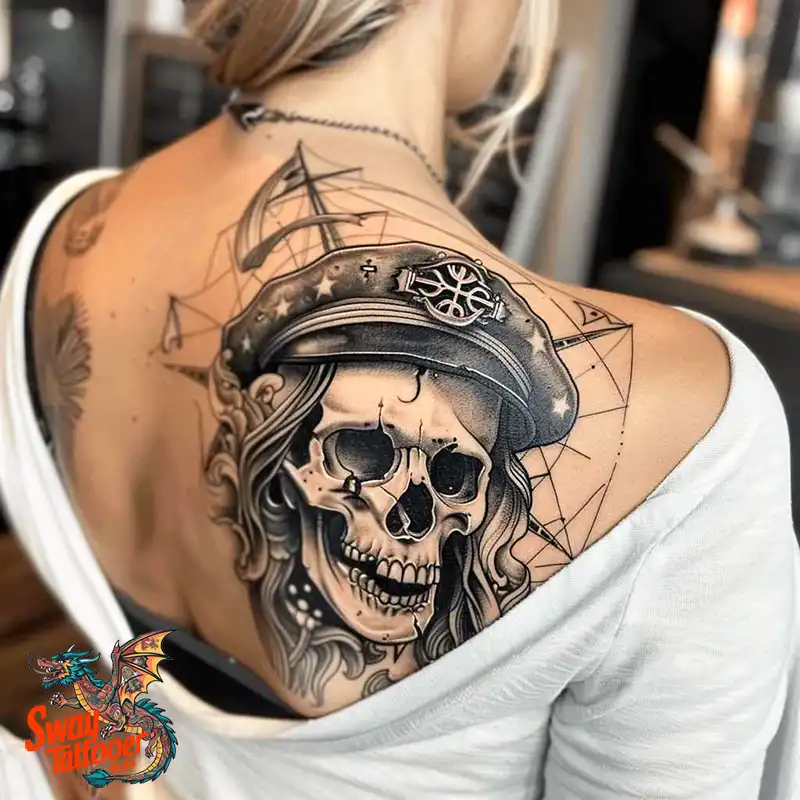
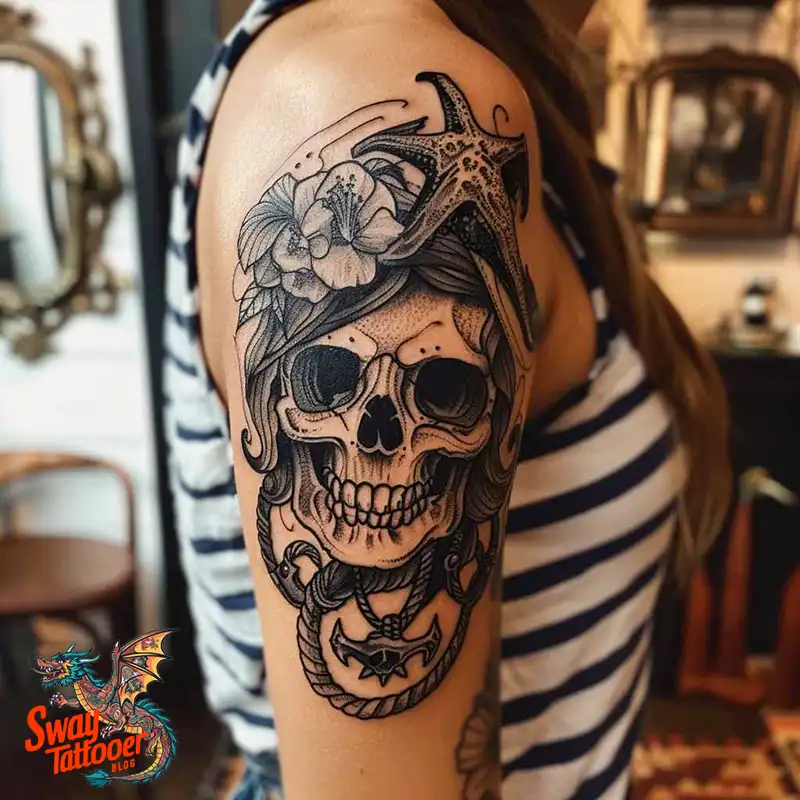
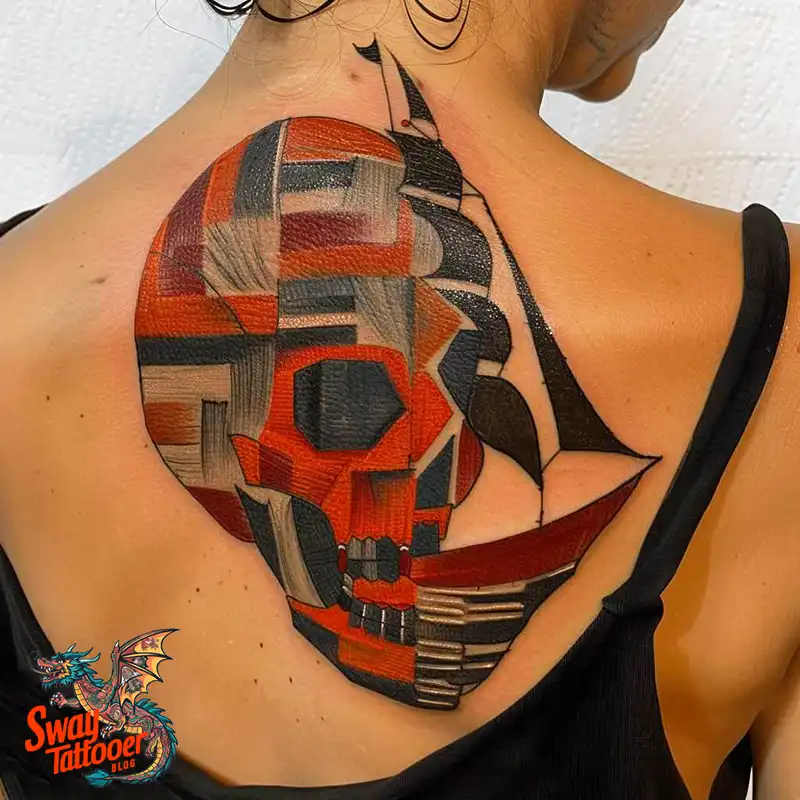
The Mariner’s Code: Core Nautical Tattoo Symbolism and Requirements
| Symbol | Historical Prerequisite | Traditional Placement | Modern Interpretation |
| Anchor | Crossing the Atlantic | Forearm, Chest | Stability, Groundedness, Hope, Resilience |
| Swallow (1) | 5,000 Nautical Miles Traveled | Upper Arm, Collarbone | Safe Return, Loyalty, Triumph over Adversity |
| Fully Rigged Ship | Rounding Cape Horn | Back, Chest, Sleeve | Completing a dangerous, life-altering journey |
| Pig & Rooster | Superstitious ward against drowning | On the Feet or Ankles | Luck, Connection to Home/Shore |
| Hold Fast | Deckhand/Boatswain (Grip command) | Knuckles (across 8 letters) | Perseverance, Endurance, Determination |
Style, Design, and Placement:
The look and long-term clarity of your nautical tattoo depend heavily on the style you choose. Nautical art can be drawn in many ways.
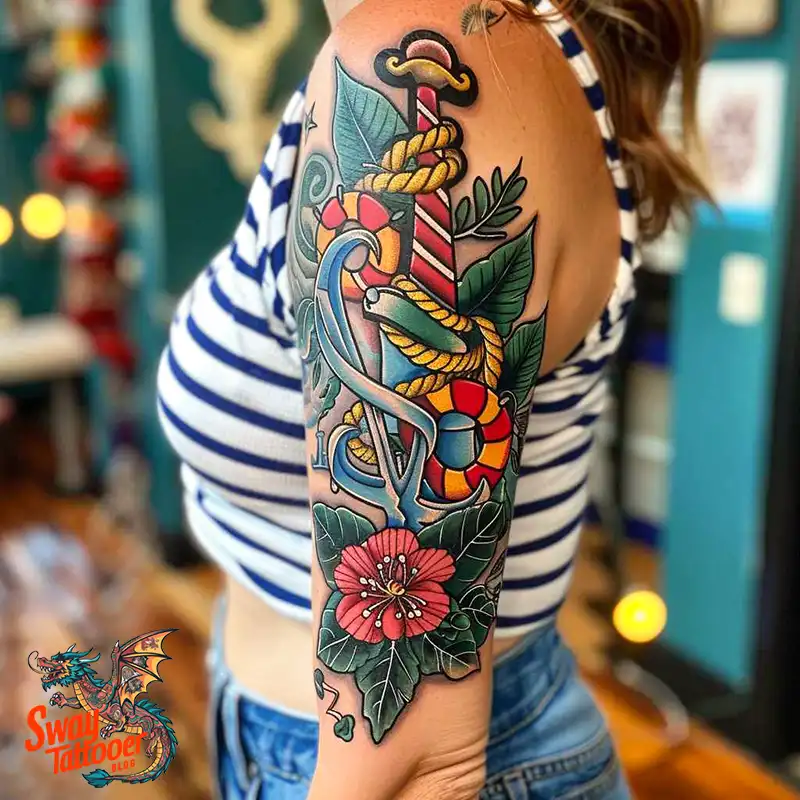
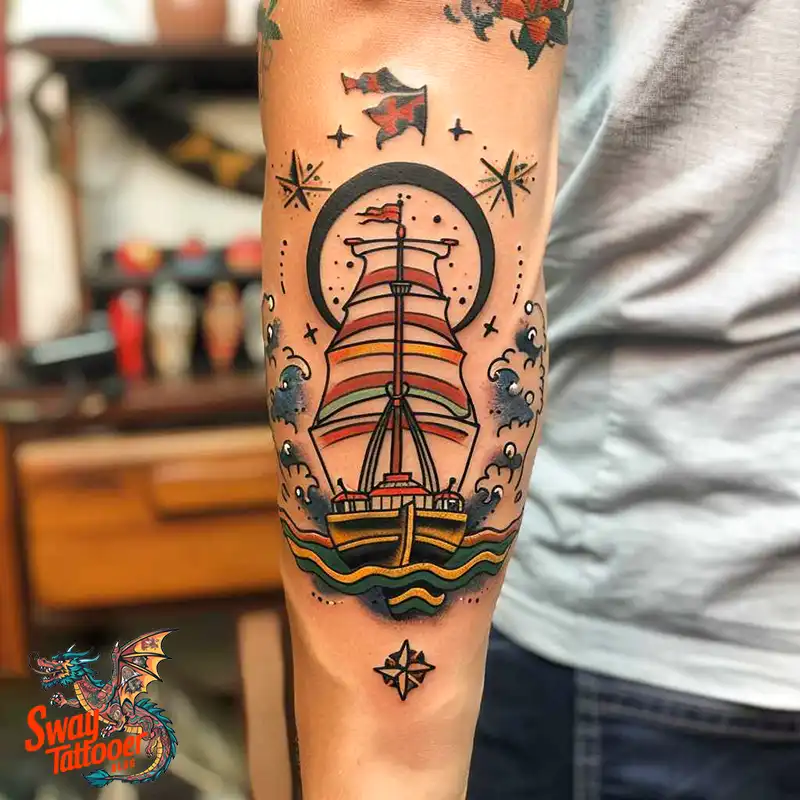
American Traditional (Old School)
This style is the original look for sailor tattoos.
- The Look: It uses bold, heavy black lines. It has minimal shading. Colors are bright but limited (red, blue, yellow, green).
- The Reason: This style was designed to last a very long time at sea. The thick lines resist fading. This keeps the tattoo readable for decades. Choosing this style shows you honor the original sailing history.
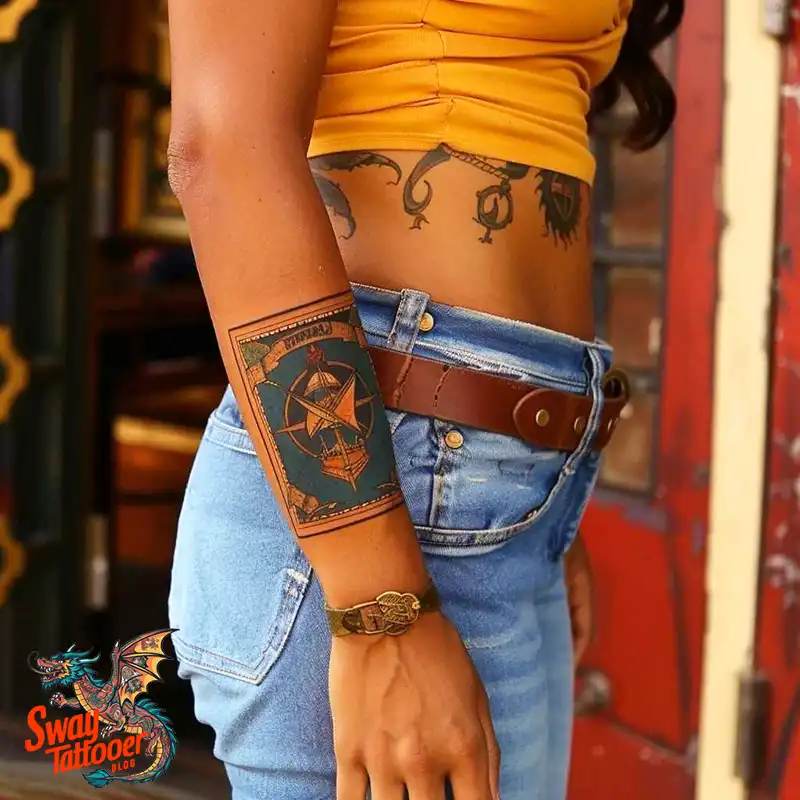
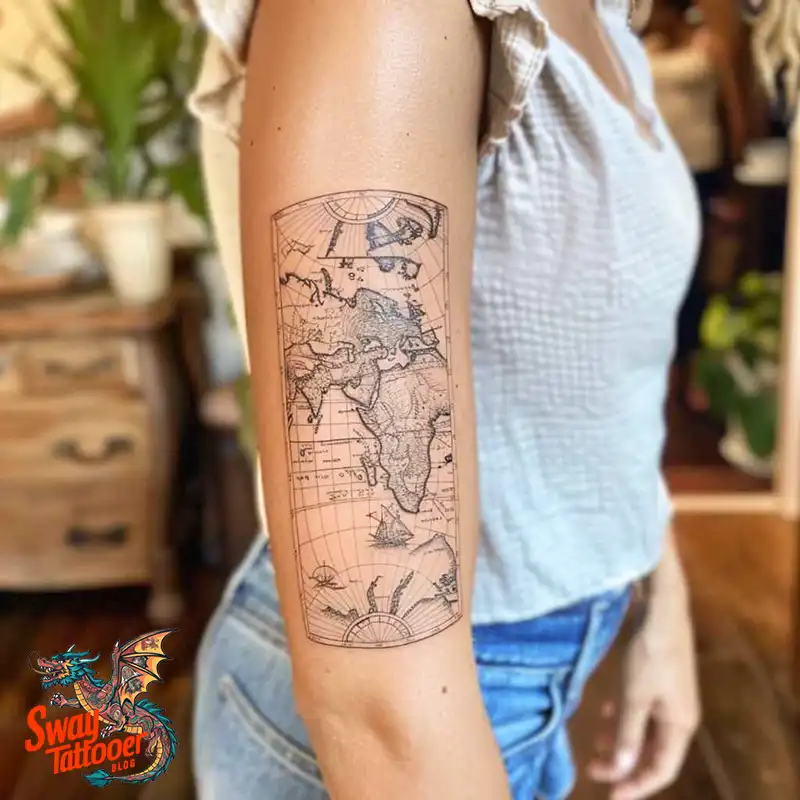
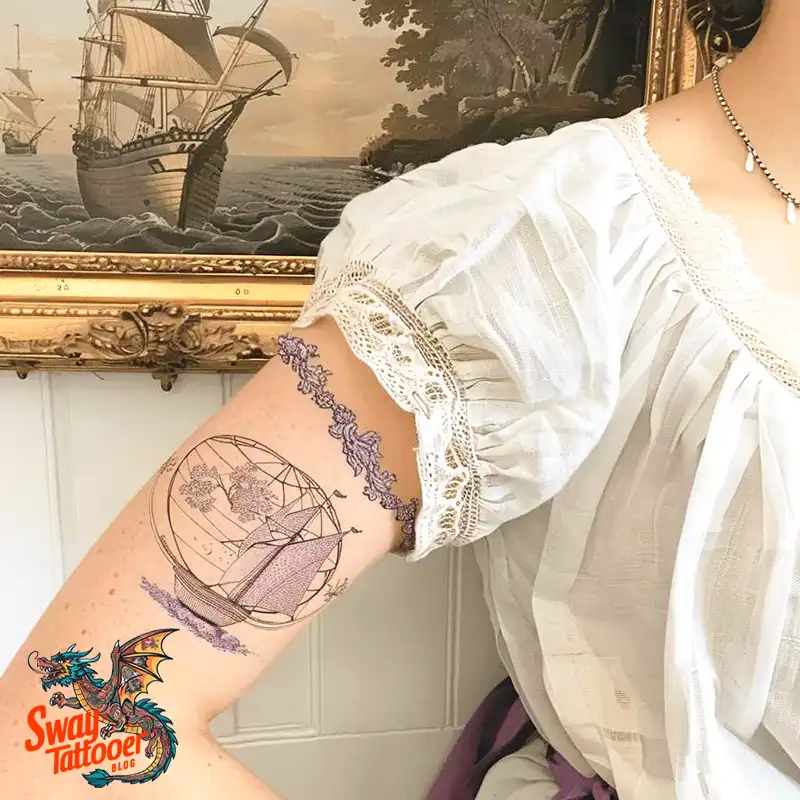

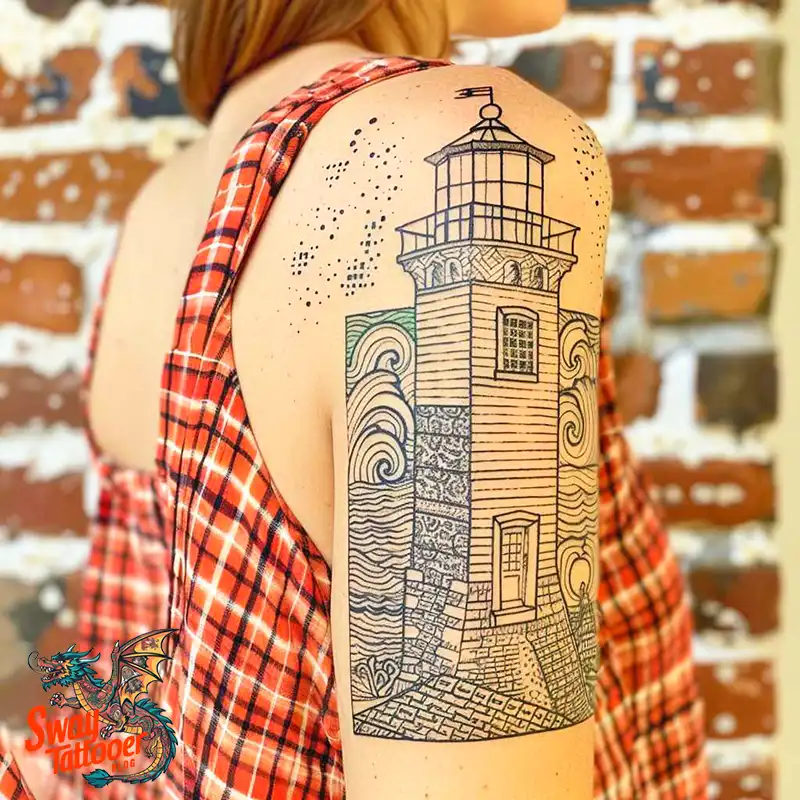
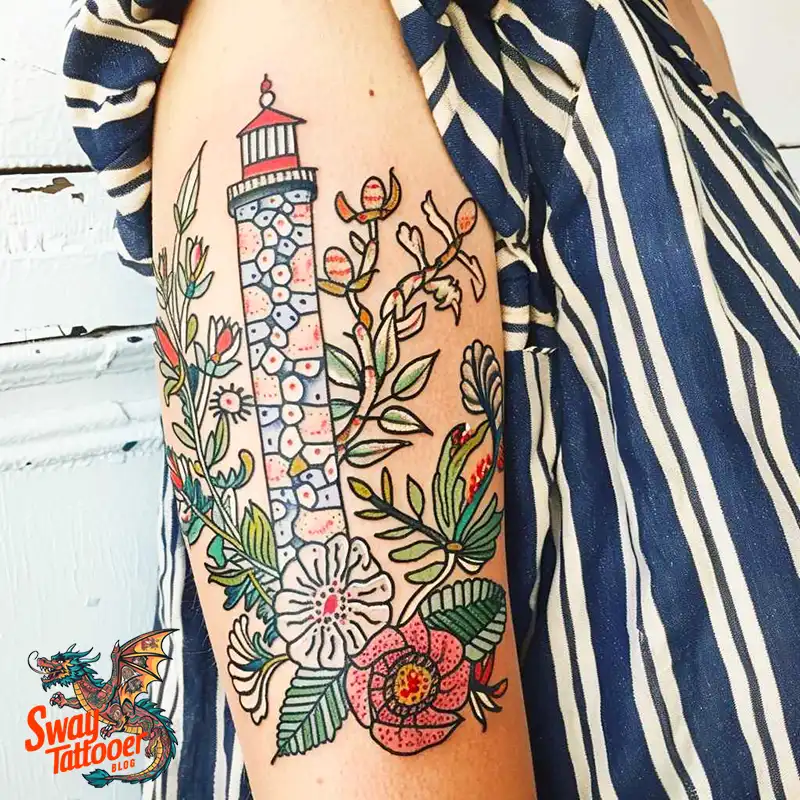
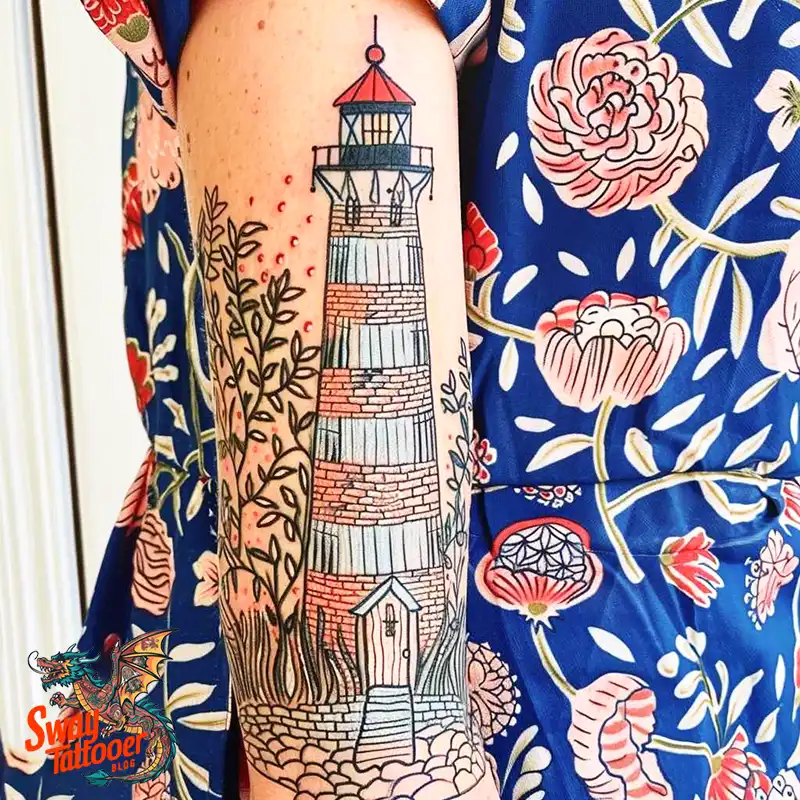
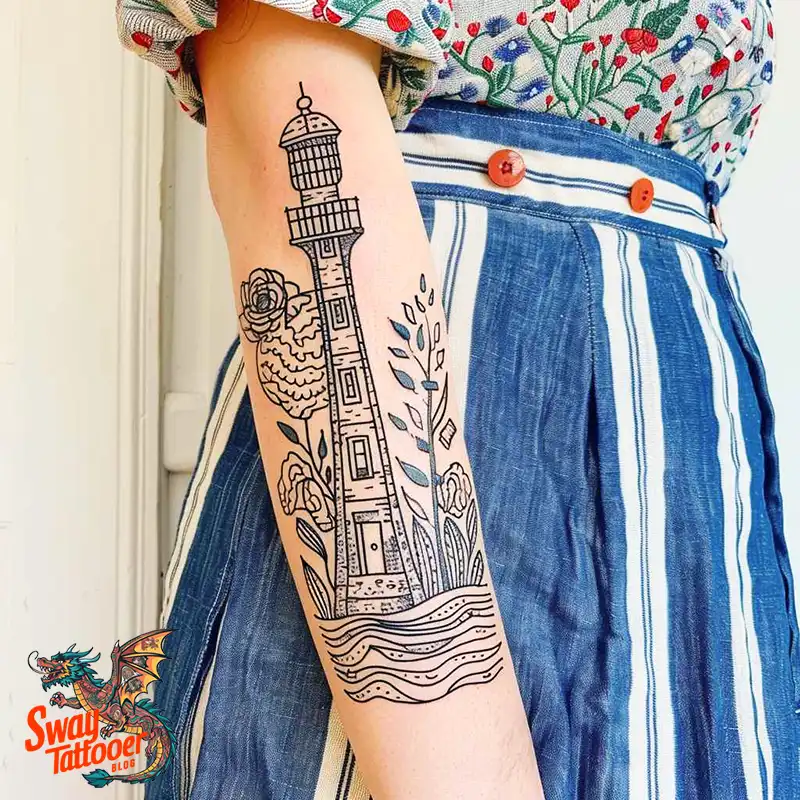

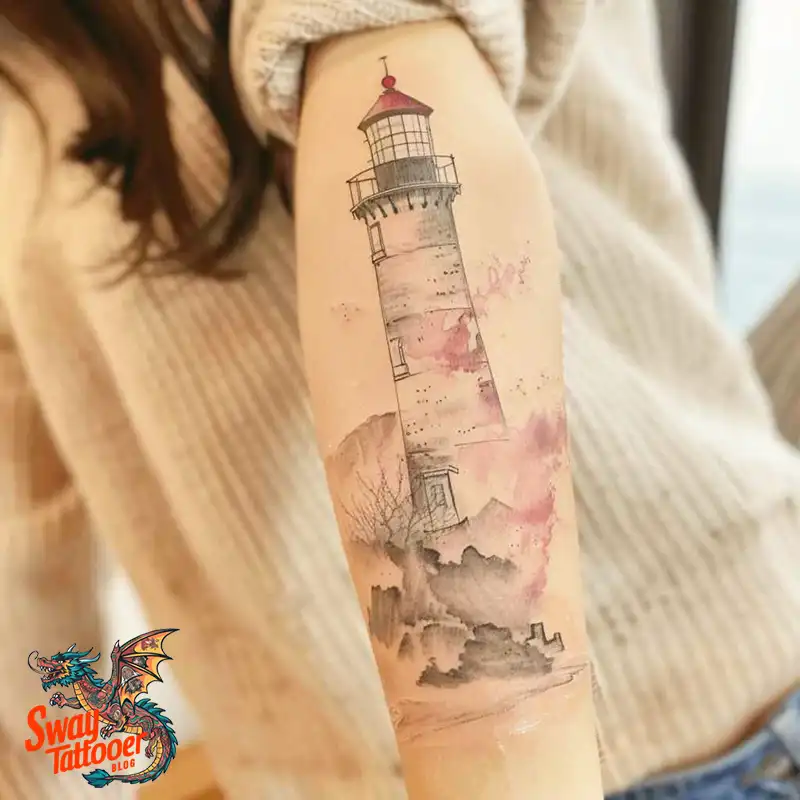
Neo-Traditional
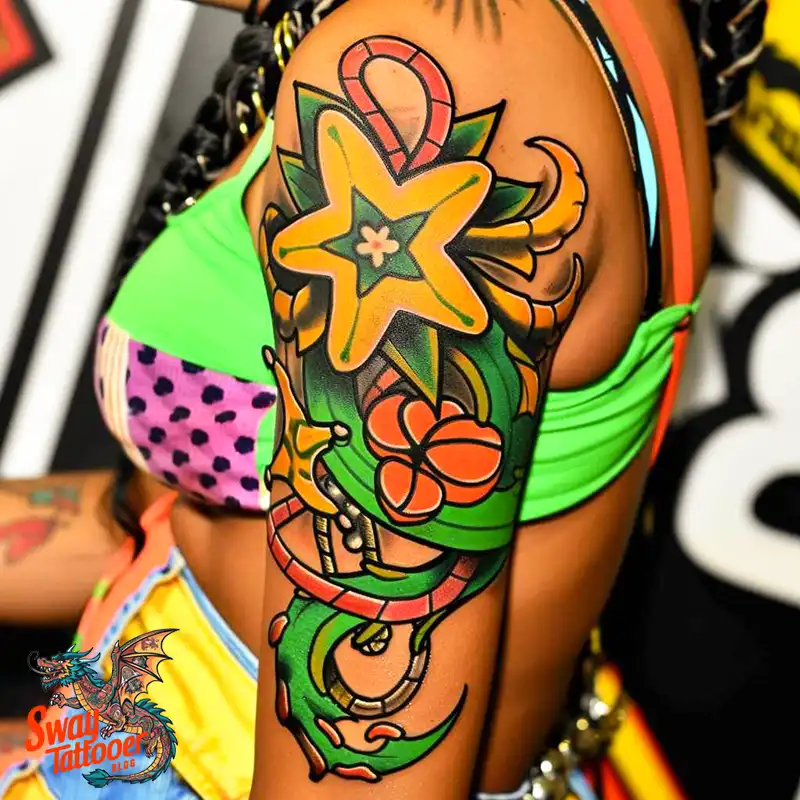
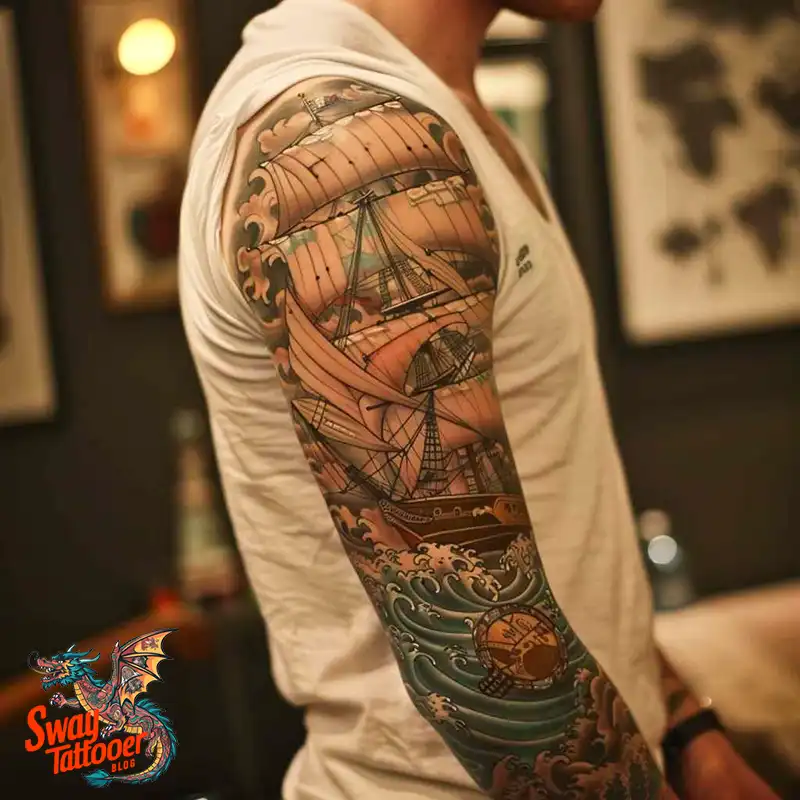
This style is an update to the classic look. It keeps the bold outlines but adds more detail and color blending.
- The Look: It uses richer, deeper colors. It allows for much finer detail.
- The Use: It is great for complex designs, like a detailed Lighthouse Compass or a dynamic Kraken Ship. This style helps tell a rich, detailed story.
Black and Grey & Realism
This style offers a mysterious, subtle look.
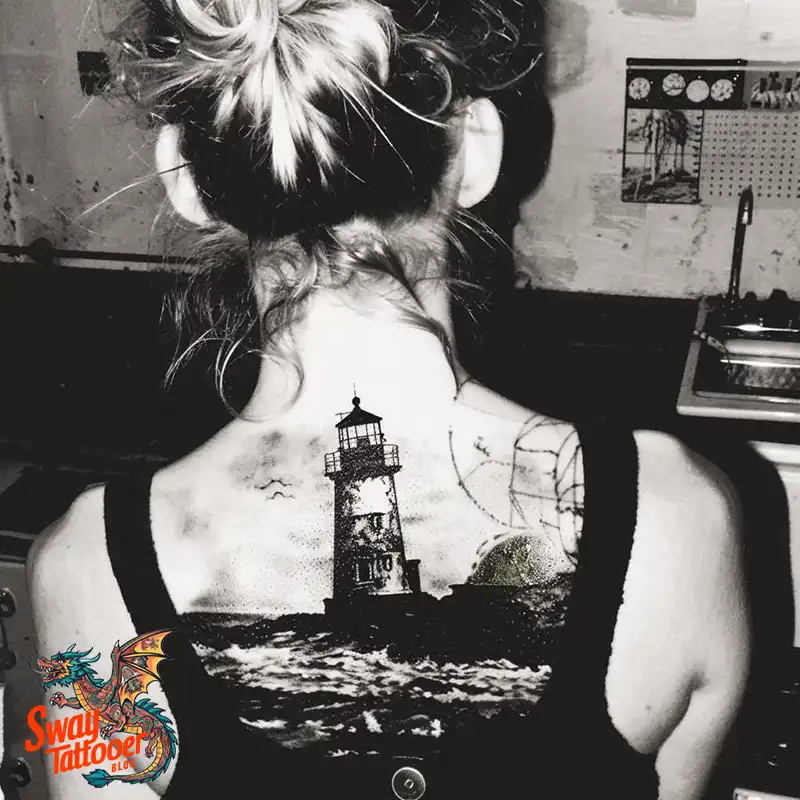
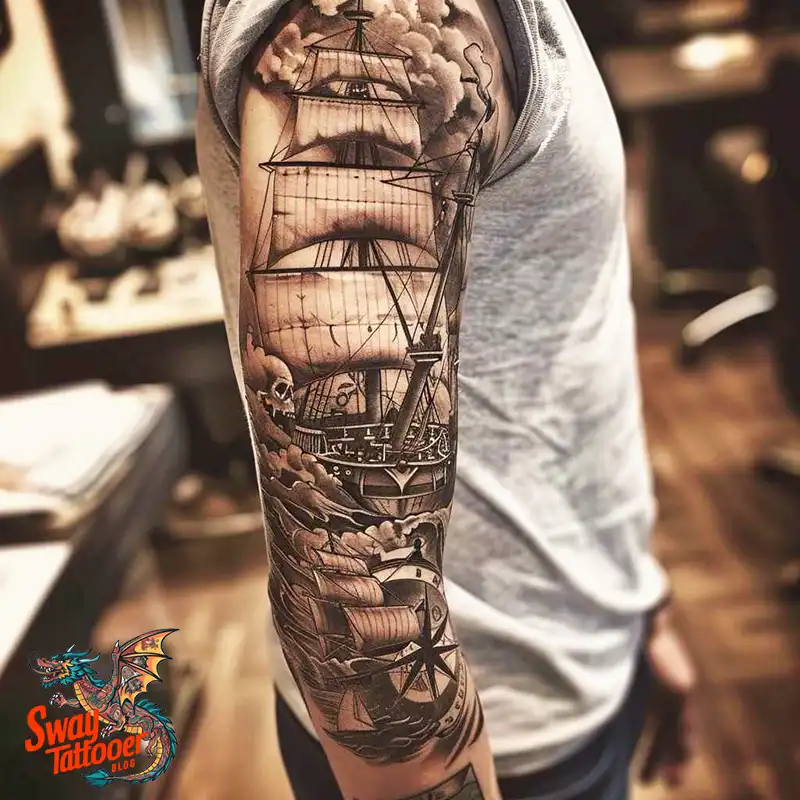
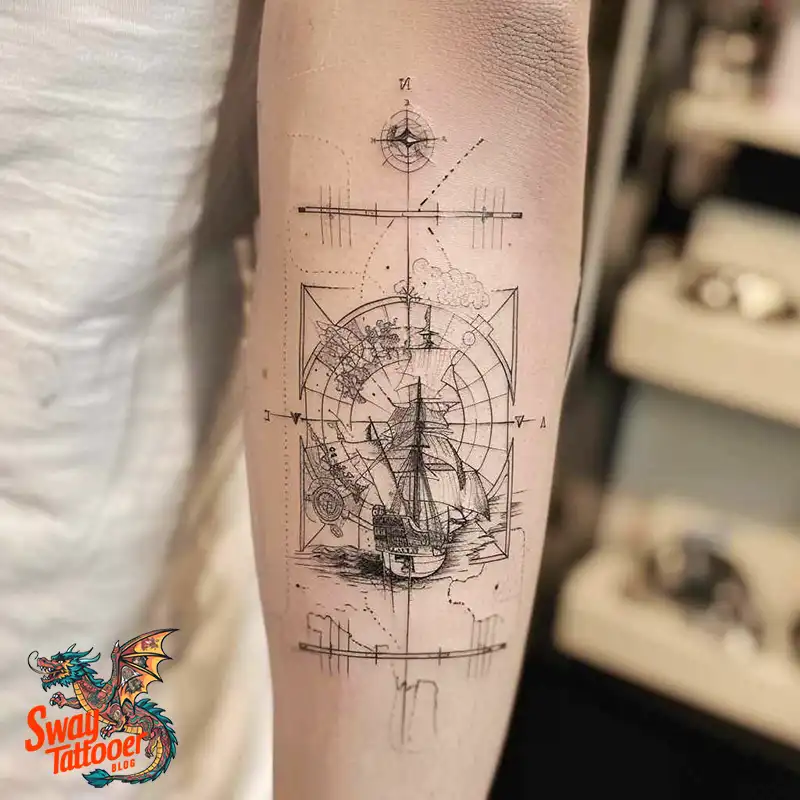
- The Look: It uses contrast and shadow instead of bright color. This makes the image look like a deep shadow.
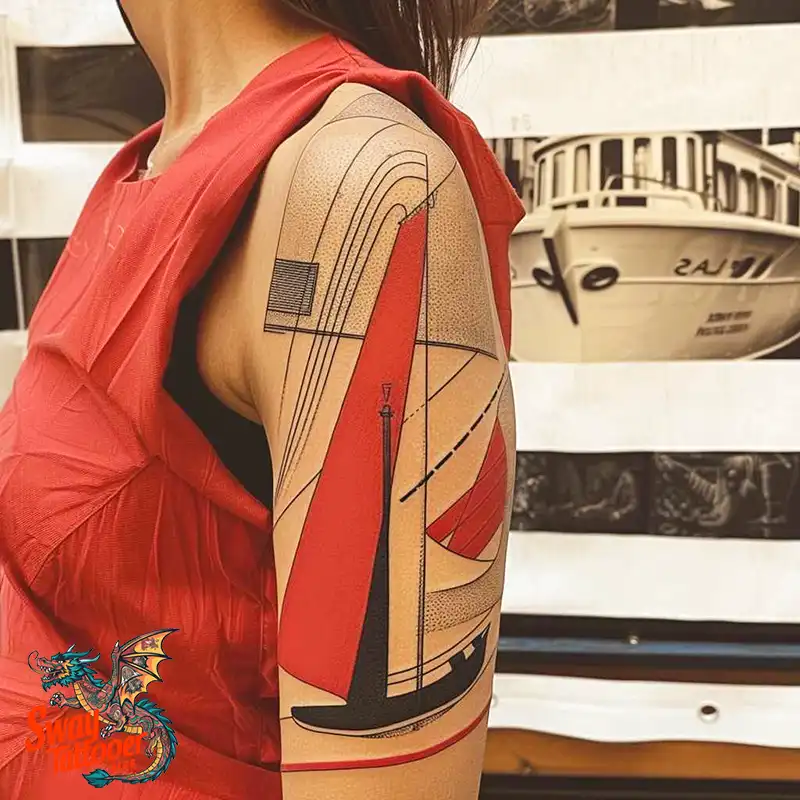
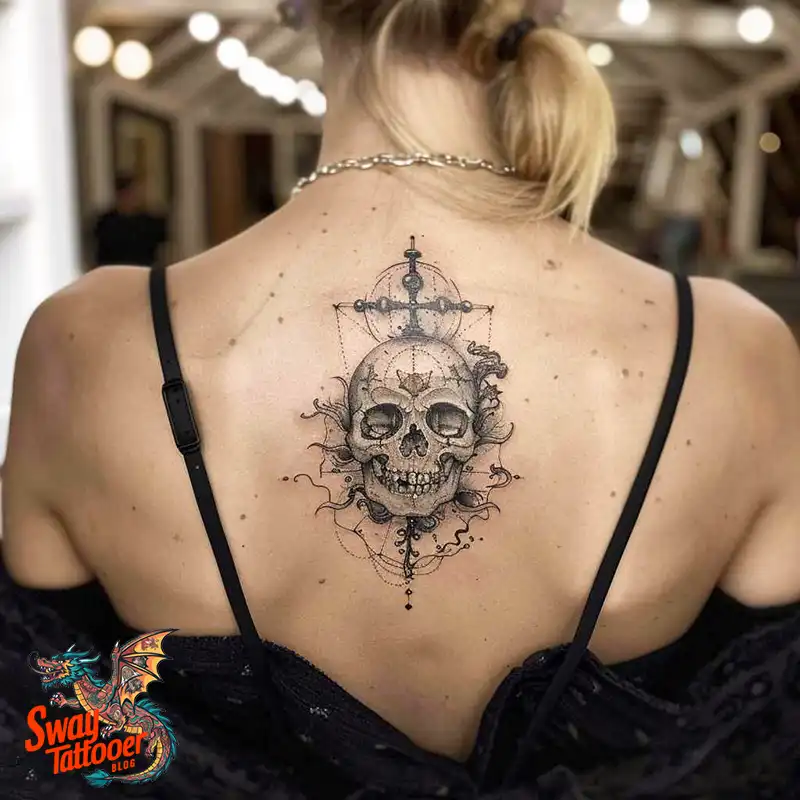
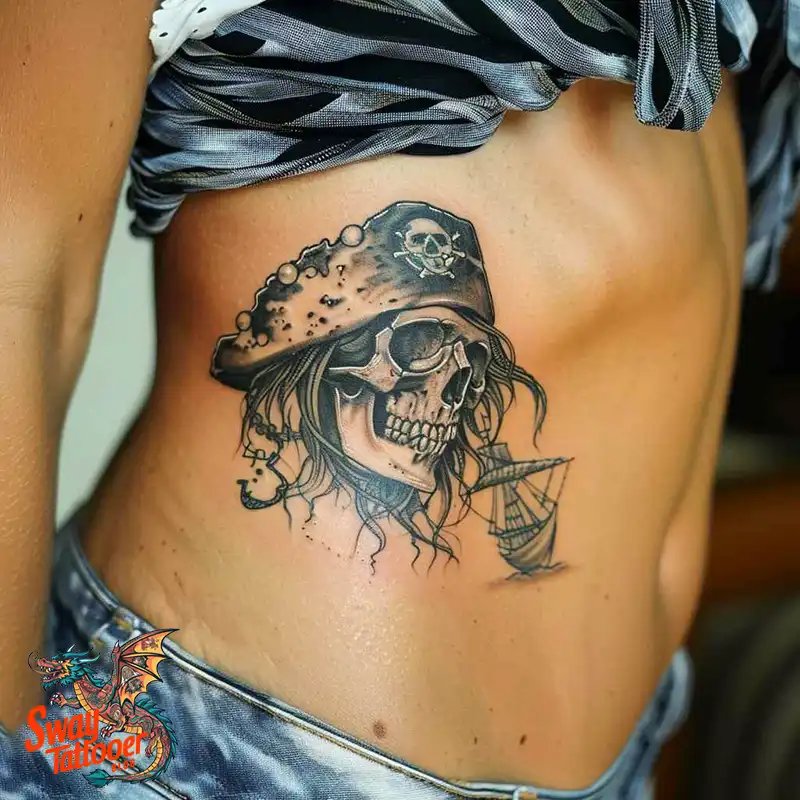
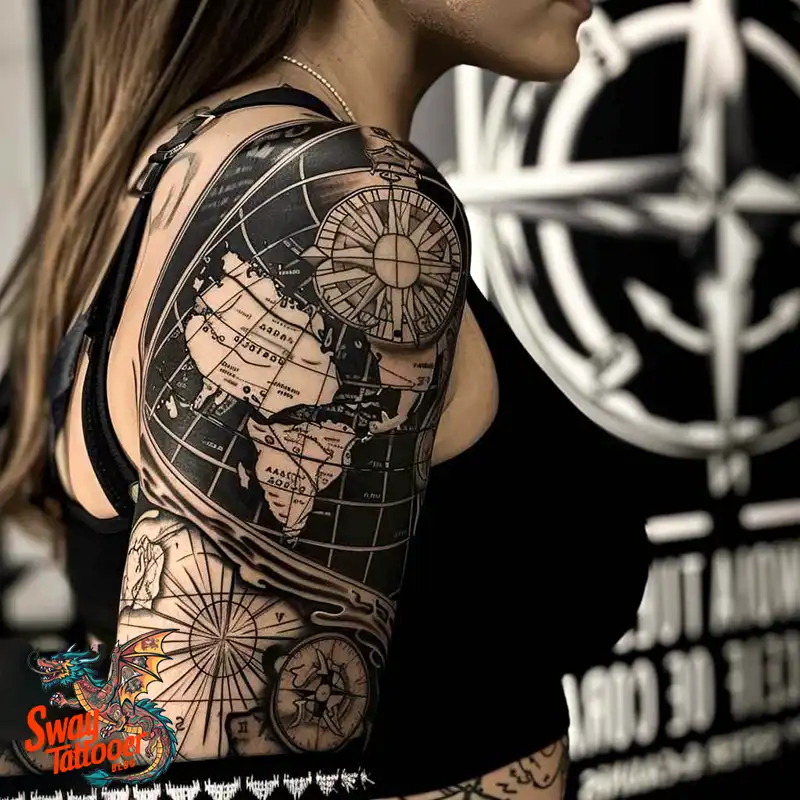
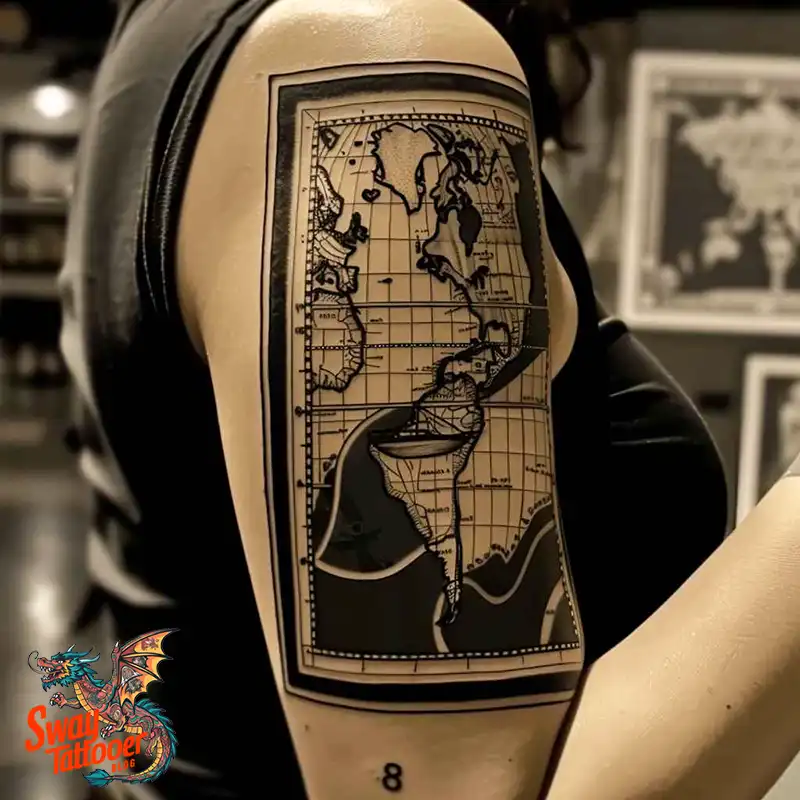
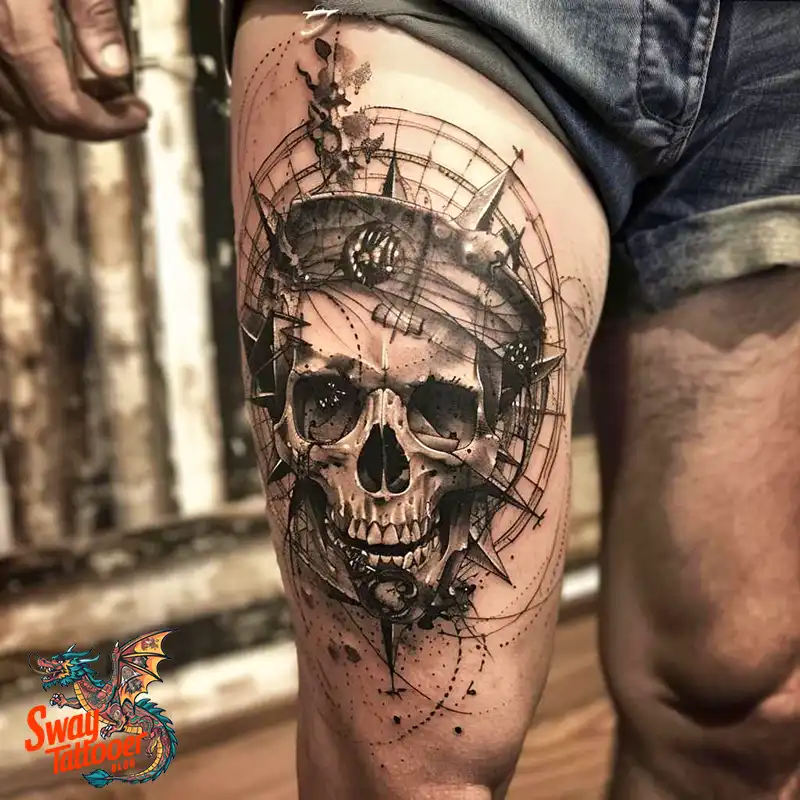
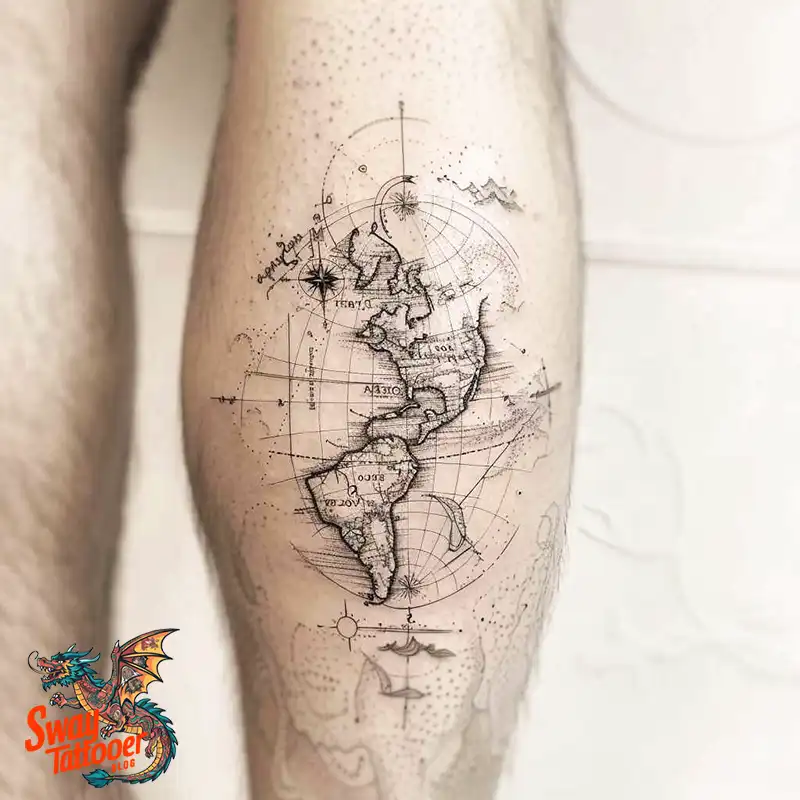
- The Use: It is perfect for dramatic scenes, like stormy seas or the vastness of the ocean. Realism can be used for detailed portraits or complex mechanical parts of a ship.
Strategic Placement:
The spot you choose for the tattoo is significant. It can reinforce the history or the meaning of the symbol.
High-Visibility Spots
The arms, shoulders, and chest are common spots for visible symbols.
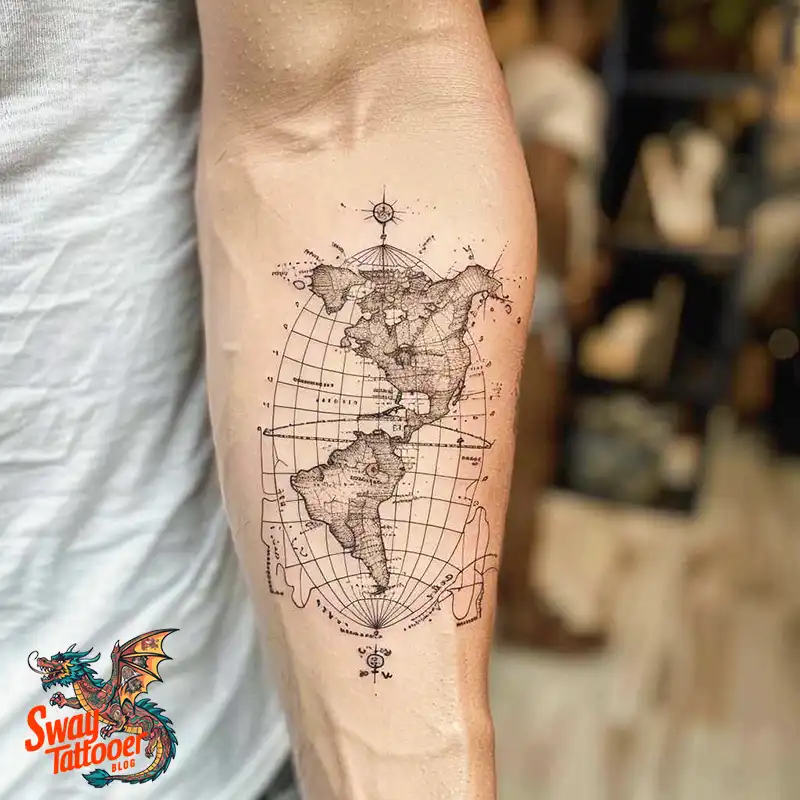
- Forearms and Collarbone: Anchors and Nautical Stars often go here. They are constant, easy-to-see reminders of guidance and stability.
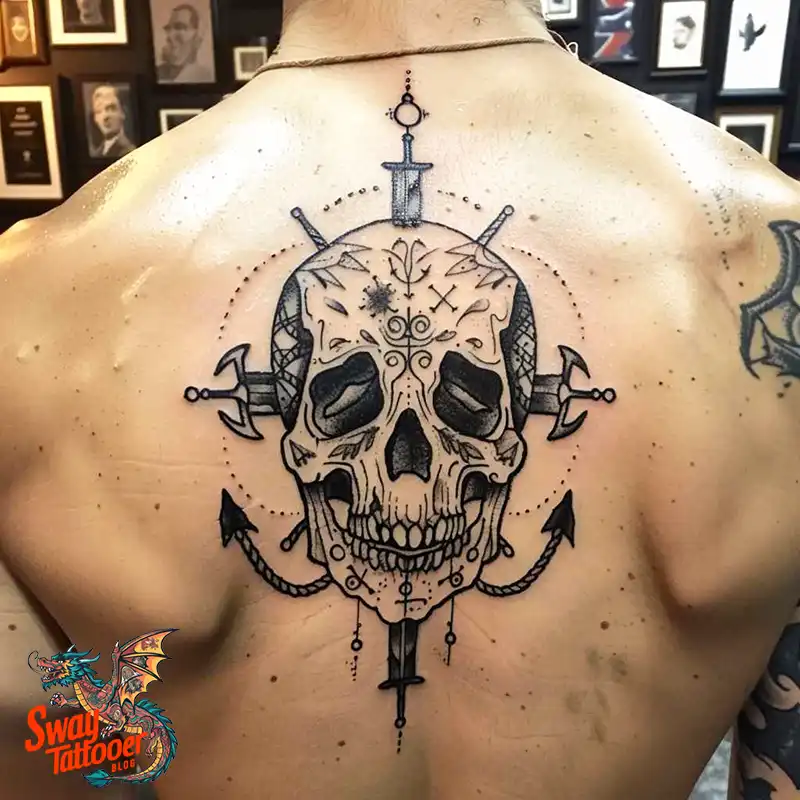
- Back and Shoulder: These are large areas. They are good for complex scenes, like a large Ship or a Kraken rising from the water.
Functional and Superstitious Placements
Some classic tattoos have a specific place on the body that honors their history.
- The Knuckles: The phrase “Hold Fast” was a command to hold tight to the rigging during a storm. Placing it on the knuckles is functional. It means perseverance and determination.
- Feet and Ankles: The Pig and Rooster tattoos were placed on the feet or ankles. Sailors believed this placement gave them luck to float and return to shore safely after a shipwreck.


Practical Considerations and Longevity
Nautical tattoos rely on bold lines and bright colors. To ensure they stay vibrant for decades, you need specialized and careful aftercare.
Immediate Healing Protocol
The first two weeks are vital for protecting the color ink.
- Cleanliness is Key: Gently wash the tattoo with lukewarm water and mild, unscented soap. Pat the area dry with clean paper towels.
- Moisturize Thinly: Use a thin layer of a recommended lotion or balm. Do not use too much. Too much cream can “smother” the tattoo and trap moisture.
- Avoid Soaking: Do not swim, use hot tubs, or take long baths until the tattoo is fully healed (about two weeks).
Long-Term Color Longevity: The UV Factor
Sunlight is the number one enemy of color tattoos.
- The Risk: The bright colors used in Traditional tattoos (red, yellow, and light blue) are the most easily faded by the sun.
- Sun Protection is Mandatory: Once the tattoo is healed, you must apply broad-spectrum SPF 50+ sunscreen to the area every single day it is exposed. Without this step, the bright colors will quickly fade.
FAQs:
What do common nautical tattoos symbolize, and why are they considered meaningful tattoos?
Nautical tattoos are meaningful tattoos because they come from a historical code of the sea. The symbols are all about stability, hope, and safe passage. For example, the Anchor means stability and hope. Sailors got one after a big, dangerous journey. The Nautical Star means guidance and protection, helping the wearer find their way home. The Swallow means loyalty and a safe return after traveling 5,000 miles.
Are Anchor or Compass Rose designs good ideas for arm tattoos for men or women?
Yes, Anchor and Compass Rose designs are very popular tattoo designs for men and women. They look great on the forearm or shoulder. They are perfect spots because they are easily visible. Placing a Compass Rose there serves as a constant reminder to stay focused and grounded. The arm is also a stable area for detailed art.
What style of nautical tattoo lasts the longest and is best for team logos or color tattoos?
The American Traditional tattoo style lasts the longest and is often called the “Old School” style. This style uses bold black lines and a limited set of saturated colors (red, blue, yellow). The thick lines are strong. They resist fading and keep the tattoo clear for decades. This is the best style for team logos or any color tattoos you want to keep sharp.
What is the historical meaning of the “Hold Fast” tattoo across the knuckles?
The phrase “Hold Fast” was a nautical command. Sailors tattooed it across their knuckles to remind them to hold the ropes tightly during a storm. Today, it is a symbol of perseverance, determination, and endurance—the traits needed to weather any challenge in life.
Are the ribs or chest a painful placement for nautical designs?
The rib cage and chest are two of the most painful areas to get a tattoo. This is because the skin is thin, and there is very little fat or muscle padding over the bones. While the rib cage is a great spot for a large, flowing design, be prepared for high pain levels.
How long do small tattoos like a Nautical Star outline last?
The longevity of small tattoos, including a Nautical Star outline, depends heavily on where they are placed. Tattoos on high-friction areas like the hands, fingers, or feet can fade significantly within a year. For longer clarity, choose a more stable place, like the inner forearm, and always use sunscreen and regular moisturizer.
How Much Do Nautical Tattoos Cost?
The cost is based on the artist’s expertise and the time needed for color work.
Medium Color Logo: A mid-sized, detailed logo (3–6 inches) costs between $350 and $850.
Hourly Rates: Experienced artists charge $150 to $300 per hour. The time needed for precise color application increases the cost.
Are Nautical Tattoos Still Relevant if I’m Not a Sailor?
Absolutely. The deep meaning of these symbols is now used by everyone. The core meanings—guidance, protection, resilience, and hope—apply to the journey of life for any person.
What is the difference between a Nautical Star and a Compass Rose?
The Nautical Star is a stylized, five-pointed symbol. It is strictly a symbol of guidance and protection.
The Compass Rose is a highly detailed, functional element from charts. It shows the cardinal directions (North, South, East, West). It means orientation and balance.
Conclusion
The nautical tattoo is a powerful and unique choice. It blends history, art, and meaning into one statement. By choosing a symbol like the Anchor or the Swallow, you connect yourself to a long tradition of mariners.
To ensure your art lasts, you must commit to quality. Use the bold lines of the American Traditional style. Most importantly, commit to daily UV protection for the bright colors. Whether you are sailing the seas or navigating life, your nautical tattoo is a permanent reminder to stay grounded and seek your safe return home.
Leave a Reply