

Staring at the water with a fresh piece of ink is a true test of patience. You are likely asking yourself: Is swimming with a tattoo after one week safe? The diplomatic short answer is generally NO—at this stage, your skin is likely still too fragile to fully withstand bacteria and chemicals. However, for those who refuse to stay on dry land, there are specific ways to waterproof a tattoo that might offer a necessary loophole.
Submerging your body art prematurely exposes what is essentially an open wound to infection and ink fallout. In this guide, we will navigate the dangers of different water sources—from chlorinated pools to the salty ocean—and evaluate the effectiveness of waterproof bandages and barrier films in protecting your design.
Don’t let a quick dip ruin a permanent masterpiece. Read on to uncover the definitive healing timeline and the expert-approved precautions you need to take to ensure your tattoo heals flawlessly, even if you absolutely have to get wet.
The Right Time to Swim After Getting a Tattoo
To understand if you can swim, we must look at how the skin heals. Naturally, the full healing phase of a tattoo takes several weeks. This generally means you should avoid submerging your ink in salty or chlorinated water during this time.
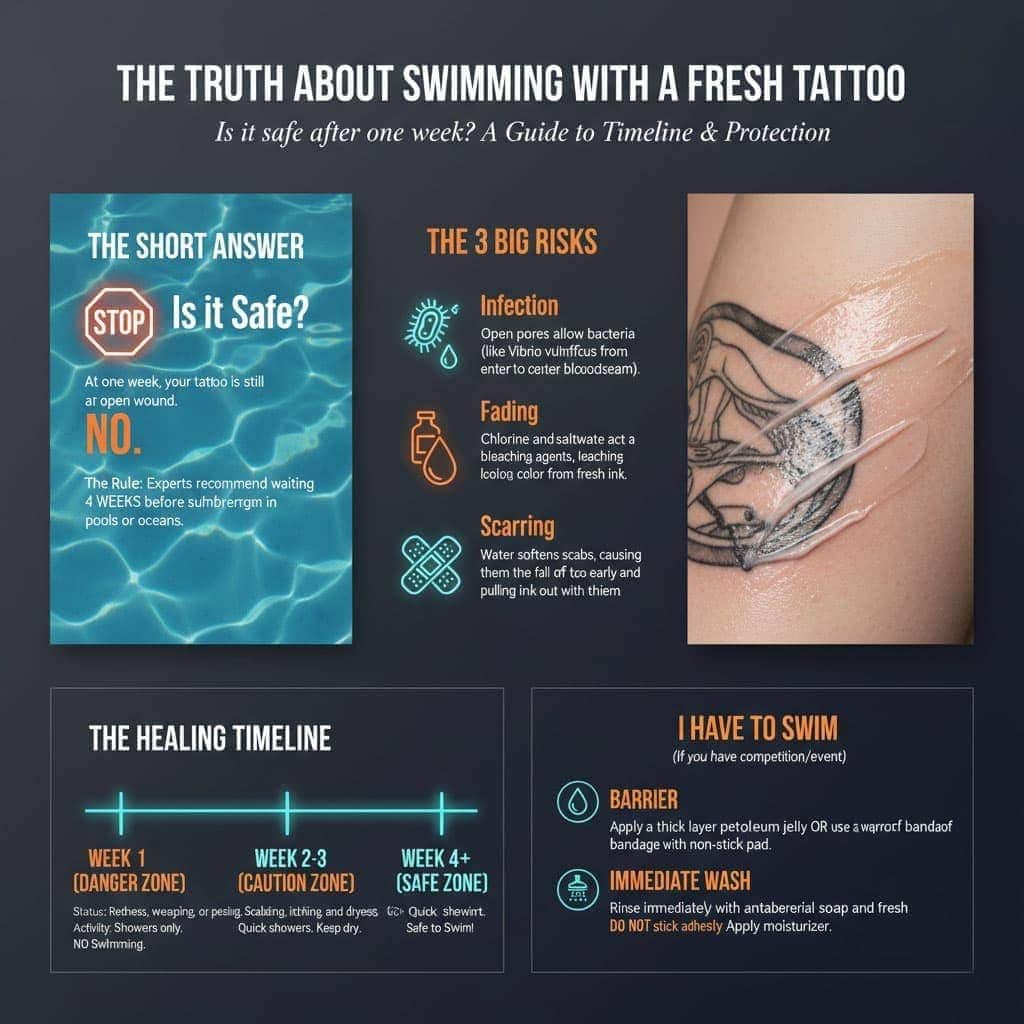
According to most tattoo artists and dermatologists, you should ideally wait at least four weeks before entering a swimming pool or open water. This prevents your fresh ink from getting infected or fading due to the interaction with chemicals and bacteria. Moreover, waiting gives you time to apply proper aftercare products. Note: Stick to unscented, water-based lotions or prescribed tattoo balms rather than heavy oils or Vitamin E during the first week to avoid clogging pores.
Week One: The Dangers of Swimming
Swimming just one week after getting inked is generally not a good idea. Biologically, after a week of healing, your tattoo is likely entering the “peeling phase.” If you introduce sea salt or chlorinated pool water now, you risk softening the scabs, causing them to fall off prematurely, which can pull out ink and leave scars.
While the initial redness may have subsided, a one-week-old tattoo is effectively an open wound that is peeling and sensitive. Unlike fully healed skin, it creates a gateway for bacteria. Submerging it without protection can turn a healing tattoo into an infectious wound. Therefore, it is highly recommended to avoid swimming within the first week.
Ocean Water and Tattoos
When your tattoo is exposed to the salty, untreated water of oceans and seas, the risks change. Research on ocean tattoo interaction shows that while saltwater is natural, it is teeming with bacteria.
One specific concern is Vibrio vulnificus, a bacterium found in ocean water that can cause severe infections in open wounds. Additionally, the high salt content can excessively dry out the healing skin, leading to cracking. While many swimmers desire to get back into the ocean, understanding these adverse effects is crucial.
How to Swim With a One-Week-Old Tattoo (If You Must)
We have advised against swimming with a tattoo that was inked only a week ago. However, there is a unique possibility that you might have a competition, such as a national-level final, in a few days.
In such situations where you are not left with a valid option, there are risky yet possible ways to waterproof your tattoo:
1. Using Waterproof Dressings Correctly
The most important step is to create a barrier. You can use waterproof bandages, but you must be careful.
- Warning: Since a one-week-old tattoo is likely scabbing or peeling, do not stick adhesive dressings (like Saniderm) directly onto the tattoo. Removing the adhesive will rip off the scabs and ruin the ink.
- The Solution: Use a bandage with a large non-stick pad that covers the tattoo completely, ensuring the adhesive tape only touches the healthy skin around the tattoo. Alternatively, for very short swims, apply a thick layer of a barrier ointment (like petroleum jelly) immediately before entering the water to repel moisture.
2. Cleansing Afterwards
Even if you have applied a waterproof dressing or barrier cream, you cannot ignore the aftercare. The moment you exit the water, remove the dressing and wash the area immediately. Use antibacterial soap and fresh water to remove any chlorine, salt, or bacteria. Pat the area dry with a clean paper towel and apply your recommended moisturizer.
Frequently Asked Questions:
Are swimming pools and ocean water harmful to healing tattoos?
Yes. If we look into the composition of ocean and pool water, it becomes clear that they are not safe for open wounds. Swimming pools contain harsh chemicals like chlorine that can bleach fresh ink, while ocean water contains microorganisms that pose a high risk of infection.
What is the appearance of a healed tattoo?
A fully healed tattoo looks and feels like the rest of your non-tattooed skin. There should be no scabs, peeling, redness, or shiny, waxy texture. When touched, the skin should feel smooth, with the ink settled beneath the surface.
How long should you wait before swimming after getting a tattoo?
Ideally, you should wait at least 3 to 4 weeks. This time allows the skin to close up completely, securing your tattoo from infection and preventing the design from fading or blurring.
Should I shower after a week of getting a tattoo?
Absolutely, you should shower! Hygiene is critical. However, you should take quick showers rather than baths. Avoid soaking the tattoo in the tub, as prolonged water exposure is what causes damage.
How does swimming with a new tattoo affect it?
Swimming with an unhealed tattoo increases the risk of bacterial infection and can ruin the aesthetic of the art. Water can soften the scabs, leading to ink loss and patchy healing.
Conclusion
So, is swimming with a tattoo after one week safe? The bottom line is that the tattoo is still in a critical healing stage. It should be protected from harsh water, chemicals, and infectious organisms. The best advice is to stay dry. However, if you absolutely must swim, strictly use waterproof protection that does not stick to the scabs, and clean the area immediately afterward. Thanks for reading.
Leave a Reply